Vegas Login
Vegas Login
In the modern industrial landscape, the ability to monitor material levels remotely has transitioned from a luxury to a fundamental requirement for operational efficiency. For engineers and plant managers, the term "Vegas Login" often refers to the gateway for accessing cloud-based inventory management systems and sensor configuration tools provided by VEGA, a prominent player in the level measurement sector. However, the broader context of this login involves the integration of sophisticated hardware—such as radar, ultrasonic, and hydrostatic sensors—with digital platforms that allow for real-time data visualization and process optimization.
This guide explores the technical foundations of these level measurement technologies, the role of digital interfaces in modern automation, and the critical factors to consider when implementing a cloud-connected level monitoring solution.
The Evolution of Digital Level Measurement
Traditional level measurement relied on local indicators or simple 4-20mA analog signals sent to a PLC (Programmable Logic Controller). While effective, these systems lacked the granular diagnostics and remote accessibility required for global supply chain management. The shift toward digital ecosystems, where a user performs a login to access sensor data, has been driven by the need for predictive maintenance and vendor-managed inventory (VMI).
Modern instruments now support protocols like HART, Profibus, and Foundation Fieldbus, alongside wireless technologies such as LoRaWAN and NB-IoT. These communication standards allow sensors to transmit not just the level value, but also internal temperature, signal strength, and error codes to a centralized server. Accessing this data through a secure portal ensures that stakeholders can make informed decisions without being physically present at the tank farm or processing plant.
Core Measurement Principles
Before selecting a digital platform or configuring a login for remote monitoring, it is essential to understand the physical principles governing the sensors. Different technologies are suited for different media and environmental conditions.
1. Radar Level Measurement (ToF)
Radar level meters utilize Time-of-Flight (ToF) technology. The sensor emits a high-frequency microwave signal (typically 26 GHz or 80 GHz) toward the medium. The signal reflects off the surface and returns to the antenna. The distance is calculated based on the time interval between emission and reception.
* Advantages: Non-contact, unaffected by pressure, vacuum, or temperature fluctuations.
* Best For: Corrosive chemicals, high-temperature liquids, and solids with dust.
2. Ultrasonic Level Sensors
Similar to radar, ultrasonic sensors use ToF but rely on sound waves rather than microwaves. The transducer emits an ultrasonic pulse that bounces off the surface of the medium.
* Advantages: Cost-effective for water and wastewater applications.
* Limitations: Sensitive to air temperature changes, foam, and heavy vapors which can attenuate the sound wave.
3. Hydrostatic Level Transmitters
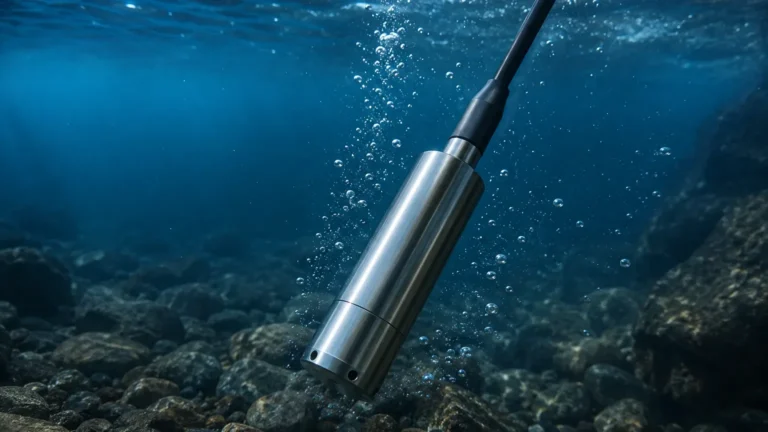
These sensors measure the pressure exerted by a liquid column. Since pressure is directly proportional to the height of the liquid (based on its specific gravity), the level can be accurately determined by a submerged or externally mounted pressure transducer.
* Advantages: Highly accurate for vented tanks and deep wells.
* Limitations: Requires contact with the media; density changes in the liquid affect the reading.
Digital Integration and the Role of Software Portals
When an operator uses a "Vegas Login" or a similar interface for a manufacturer like Welk, they are interacting with the Software-as-a-Service (SaaS) layer of the industrial internet of things (IIoT). These platforms serve several critical functions:
* Remote Configuration: Adjusting the range, damping, and linearization curves of a sensor located hundreds of kilometers away.
* Inventory Visualization: Viewing historical trends and current volumes across multiple sites on a single dashboard.
* Alert Management: Setting up SMS or email notifications for high-level (overflow) or low-level (reorder) conditions.
* Diagnostic Logs: Reviewing echo curves to identify potential build-up on the sensor or internal obstructions in the tank.
For those evaluating new hardware, it is helpful to Review product options and application support on the Main Page to ensure the chosen sensors are compatible with the intended digital architecture.
Practical Selection Table for Level Technologies
Choosing the right sensor is the first step toward a reliable digital monitoring system. The following table summarizes the suitability of various technologies based on common process conditions.
| Technology | Media Type | Range (Metric) | Accuracy | Key Limitation |
| :— | :— | :— | :— | :— |
| 80 GHz Radar | Liquids/Solids | Up to 120m | ±1mm | High initial cost |
| Ultrasonic | Liquids/Slurries | 0.25m – 15m | ±0.25% | Foam and heavy vapor |
| Hydrostatic | Liquids Only | 1m – 200m | ±0.1% | Media density changes |
| Magnetic Gauge | Clean Liquids | 0.3m – 6m | ±5mm | Moving parts (float) |
| Guided Wave Radar | Liquids/Powders | Up to 75m | ±2mm | Contact-based (probe) |

Installation and Connectivity Considerations
Successful integration into a cloud portal requires more than just a functional sensor. The physical installation and the communication path are where most errors occur.
Signal Integrity and Power
In remote locations, power availability is often limited. Many digital level meters are designed for low-power consumption, utilizing loop-powered (2-wire) 4-20mA/HART configurations. If the system uses a wireless gateway to facilitate the remote login, ensure the gateway is positioned to avoid "dead zones" caused by large metal structures or thick concrete walls.
Mounting Geometry
For non-contact sensors like radar and ultrasonic, the mounting position is critical. The sensor must be installed perpendicular to the liquid surface. Avoid mounting the sensor near the tank wall to prevent false reflections (side-lobe interference). If the tank has internal agitators or heating coils, a "false signal suppression" or "masking" procedure must be performed via the software interface during commissioning.
Cybersecurity and Data Privacy
Using a professional login portal introduces the need for robust cybersecurity. Ensure that the platform uses encrypted protocols (HTTPS/TLS) and that multi-factor authentication (MFA) is enabled for all users. In B2B environments, data sovereignty—knowing where your process data is stored—is a significant compliance requirement.
Common Risks and Limitations
While digital level monitoring provides immense value, engineers should be aware of the following risks:
1. Connectivity Latency: Cloud-based data is rarely "real-time" in the millisecond sense. There is usually a delay between the measurement and the dashboard update. For safety-critical high-level shutdowns, a hard-wired level switch should always be used as a secondary backup.
2. Environmental Interference: In outdoor silos, heavy rain or snow can accumulate on the sensor face, potentially causing a "loss of echo." Selecting sensors with self-cleaning faces or protective housings can mitigate this.
3. Firmware Compatibility: Ensure that the sensor firmware is compatible with the software version of the login portal. Incompatible versions can lead to missing parameters or incorrect data scaling.
Frequently Asked Questions (FAQ)
Q: Can I use a standard radar sensor for both liquids and solids?
A: While many modern 80 GHz radar sensors are versatile, solids require a sensor capable of handling low-dielectric constants and angled surfaces. Always check the manufacturer's specifications for solids-specific signal processing.
Q: How often should I calibrate my digital level meter?
A: For most non-contact sensors, calibration is stable for years. However, hydrostatic sensors may require annual zero-point checks to account for sensor drift or changes in liquid density.
Q: What happens to my data if the internet connection fails?
A: Most industrial gateways feature local data logging. Once the connection is restored, the gateway will "backfill" the data to the cloud portal, ensuring no gaps in your historical trends.
Q: Is a login required for local configuration?
A: Usually, no. Most instruments can be configured locally via a plug-in display module or a Bluetooth connection using a mobile app. The web-based login is primarily for centralized management and long-term data storage.
Conclusion
Navigating the complexities of industrial level measurement requires a balance between robust hardware and intuitive software. Whether you are managing a single water tank or a global network of chemical silos, understanding the relationship between the sensor on the tank and the data behind the login is essential. By selecting the appropriate measurement principle—be it radar, ultrasonic, or hydrostatic—and ensuring proper installation, businesses can leverage digital platforms to achieve unprecedented levels of process transparency and safety. For detailed technical specifications and support on integrating these systems into your facility, visit the Main Page to explore professional-grade measurement solutions.