Vecoax App Control Easier Than Thor
Vecoax App Control Easier Than Thor
In the modern landscape of industrial automation, the ease of device configuration has become as critical as the accuracy of the measurement itself. Engineers and plant operators are increasingly looking for user interfaces that mirror the simplicity of high-end consumer electronics. Within the niche of digital signal management and industrial monitoring, the sentiment that vecoax app control easier than thor has emerged as a benchmark for intuitive design. This transition toward app-based management is now a defining feature in the deployment of advanced level measurement instruments, where complex parameterization is replaced by streamlined, wireless interfaces.
For professional manufacturers like Welk, providing reliable, accurate, and cost-effective level measurement solutions requires more than just high-performance hardware. It necessitates a control ecosystem that reduces commissioning time and minimizes human error. This guide explores the principles of modern level measurement and how app-driven control is transforming industrial workflows.
Principles of Industrial Level Measurement
Before selecting a control interface, it is essential to understand the underlying physics of the sensors being managed. Industrial level measurement typically relies on four primary technologies, each with distinct operational requirements.
1. Radar Level Measurement (FMCW and TDR)
Radar level meters operate using electromagnetic waves. Frequency Modulated Continuous Wave (FMCW) radar emits a high-frequency signal (often in the 80GHz range) that increases in frequency over time. The difference between the emitted and received frequency is proportional to the distance. Alternatively, Guided Wave Radar (TDR) sends pulses down a physical probe. Radar is highly valued for its ability to ignore dust, vapor, and pressure changes.
2. Ultrasonic Level Sensors
Ultrasonic sensors utilize the "time-of-flight" principle. The sensor emits a mechanical sound pulse (usually between 40 kHz and 70 kHz) that reflects off the surface of the medium. By measuring the time interval between emission and reception, the device calculates the distance. This technology is ideal for water treatment and simple chemical storage but can be affected by heavy foam or extreme air turbulence.
3. Hydrostatic Level Transmitters
These sensors measure the pressure exerted by a liquid column. Based on the formula $P = \rho gh$ (where P is pressure, $\rho$ is density, g is gravity, and h is height), the transmitter converts the pressure at the bottom of a tank into a level reading. It is a robust solution for deep wells and vented tanks.
4. Magnetic Level Gauges and Switches
Magnetic gauges use a float containing a permanent magnet that moves with the liquid level. This magnet actuates external flags or switches. This is a purely mechanical and highly visual method, often used as a redundant safety system in high-pressure oil and gas applications.
The Shift to App-Based Control in Industrial Instrumentation
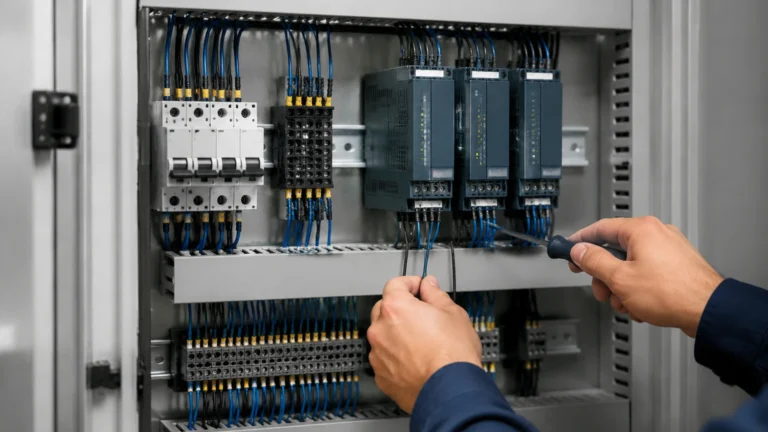
The comparison where vecoax app control easier than thor highlights a significant shift in user expectations. Traditionally, industrial level meters were configured using local HMI (Human Machine Interface) displays with four-button menus or complex HART (Highway Addressable Remote Transducer) communicators. These "Thor-style" legacy systems often required specialized handheld terminals and tedious menu navigation.
Modern app control, similar to the Vecoax philosophy, utilizes Bluetooth or Wi-Fi connectivity to allow engineers to configure sensors from a smartphone or tablet. This provides several advantages:
* Visualized Echo Curves: Instead of reading raw data, operators can see the radar echo curve in real-time on their mobile device, making it easier to identify and suppress false reflections from tank internals.
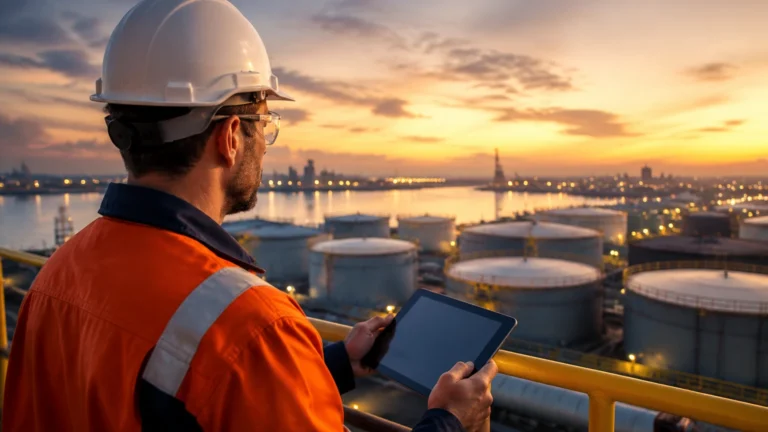
* Remote Commissioning: Technicians can stay on the ground while configuring a sensor mounted at the top of a 15-meter (approx. 49 ft) silo.
* Data Logging and Export: Configuration profiles can be saved, cloned, and emailed, ensuring consistency across multiple installations.
Practical Selection Table for Level Measurement
Choosing the right technology depends on the medium, the environment, and the required interface. The following table provides a general guideline for industrial applications.
| Technology | Typical Media | Max Range (m) | Accuracy | Preferred Interface |
| :— | :— | :— | :— | :— |
| 80GHz Radar | Liquids, Solids, Corrosives | 120m | ±1mm | App/Bluetooth |
| Ultrasonic | Water, Wastewater | 15m | ±0.25% | App/Local Display |
| Hydrostatic | Water, Oils, Fuels | 200m | ±0.1% | 4-20mA / HART |
| Guided Wave Radar | Low Dielectric Liquids | 30m | ±2mm | App/Modbus |
| Magnetic Gauge | High-Pressure Chemicals | 6m | ±5mm | Visual / Magnetic Switch |
Installation Considerations and Best Practices
To ensure that the ease of app control translates into accurate measurement, proper installation is paramount. Even the most intuitive interface cannot compensate for a poorly mounted sensor.
1. Avoid the "Dead Zone": Every non-contact sensor has a near-field blanking distance (dead zone). For ultrasonic sensors, this is typically 0.25m to 0.5m. Ensure the maximum liquid level never enters this zone.
2. Nozzle Geometry: For radar and ultrasonic units, the mounting nozzle should be as short and wide as possible. If the nozzle is too narrow, the signal may reflect off the nozzle walls rather than the product.
3. Obstruction Clearance: Ensure the signal beam (which spreads at a specific angle, e.g., 3° to 10°) does not hit ladders, agitators, or inflow pipes. App-based control is particularly useful here for setting "false signal suppression" to ignore these fixed objects.
4. Environmental Shielding: While radar is unaffected by temperature, the electronics of any level meter should be shielded from direct, extreme solar radiation in tropical climates to prevent overheating.

Limitations and Safety Constraints
While app control makes configuration easier, there are technical limitations and safety protocols to consider:
* Connectivity Range: Bluetooth-based app control typically has a limit of 10 to 15 meters. In large-scale industrial plants, this may require the technician to be within line-of-sight of the sensor.
* Cybersecurity: In sensitive infrastructure, wireless signals must be encrypted. Most industrial apps now require multi-factor authentication or physical "pairing" buttons on the device to prevent unauthorized access.
* Atmospheric Interference: Ultrasonic sensors should not be used in vacuum tanks or high-pressure environments (above 3 bar), as sound waves require a medium (air) to travel. In these cases, radar is the superior choice.
Frequently Asked Questions (FAQ)
Q: Can I use app control in hazardous (Ex) zones?
A: Yes, provided both the level meter and the mobile device are rated for the specific zone (e.g., ATEX/IECEx). Many operators use intrinsically safe tablets for this purpose.
Q: Is radar always better than ultrasonic?
A: Not necessarily. While radar is more versatile, ultrasonic sensors are often more cost-effective for simple water level monitoring where the environment is stable.
Q: How does app control handle power loss?
A: Configuration settings are stored in the sensor's non-volatile memory. If power is lost, the device retains its settings, and the app will re-sync once power is restored.
Q: What is the benefit of 80GHz over 26GHz radar?
A: 80GHz radar has a much narrower beam angle, which allows it to avoid internal tank obstructions more effectively and provides better measurement resolution.
Conclusion
The evolution of industrial instrumentation is moving toward greater accessibility and simplified user experiences. As the industry recognizes that vecoax app control easier than thor represents a new standard for interface efficiency, manufacturers are integrating these lessons into level measurement technology. By combining sophisticated measurement principles—such as 80GHz radar and high-precision hydrostatic sensing—with intuitive digital interfaces, Welk provides tools that are both powerful and easy to manage. For engineers looking to optimize their process automation, selecting the right instrument involves balancing physical measurement needs with the operational efficiency of the control system. To explore specific models and technical specifications for your application, visit the Main Page for a comprehensive overview of available solutions.