Radiation Monitoring System
Radiation Monitoring System
In the landscape of industrial process control, the radiation monitoring system—specifically nucleonic level and density measurement—represents the ultimate solution for applications where conventional instrumentation fails. When dealing with extreme temperatures, high pressures, corrosive media, or abrasive slurries, non-intrusive measurement becomes a necessity rather than a preference. These systems utilize the principle of gamma radiation attenuation to provide accurate, real-time data without ever coming into contact with the process material.
For engineers and plant managers, understanding the technical nuances of a radiation monitoring system is critical for ensuring both operational efficiency and site safety. This guide explores the measurement principles, component selection, installation requirements, and the regulatory framework surrounding these specialized instruments.
Principles of Operation: Gamma Attenuation
A radiation monitoring system for level or density measurement operates on the principle of absorption. The system consists of two primary components mounted on opposite sides of a vessel or pipe: a radioactive source and a highly sensitive detector.
The Physics of Measurement
The source emits gamma rays, which are high-energy electromagnetic waves. As these rays pass through the vessel walls and the process medium, they interact with the electrons of the material. This interaction causes a reduction in the intensity of the radiation reaching the detector, a phenomenon known as attenuation.
The relationship is governed by the Beer-Lambert Law:
$$I = I_0 \cdot e^{-\mu \rho d}$$
Where:
* I is the intensity measured at the detector.
* I₀ is the initial intensity of the source.
* μ is the mass absorption coefficient of the material.
* ρ is the density of the material.
* d is the path length (the distance the radiation travels through the medium).
In level applications, as the material rises and covers the path between the source and detector, the radiation intensity drops significantly. In density applications, the path length remains constant, but changes in the material’s density alter the absorption rate, allowing for precise concentration or gravity measurements.
Key Components of the System
1. The Radioactive Source
Most industrial systems use either Caesium-137 (Cs-137) or Cobalt-60 (Co-60).
* Cs-137: Preferred for most applications due to its long half-life (approximately 30 years), which ensures long-term stability and reduces the frequency of source replacement.
* Co-60: Used for very thick-walled vessels or high-density materials because it emits higher-energy gamma rays, though it has a shorter half-life (approximately 5.3 years).
2. The Source Holder (Shielding)
The source is housed in a robust, lead-lined steel container known as a source holder. This device serves two purposes: it directs the radiation in a narrow beam toward the detector and protects personnel by shielding radiation in all other directions. Source holders feature a mechanical shutter that can be locked in the "OFF" position during maintenance.
3. The Detector
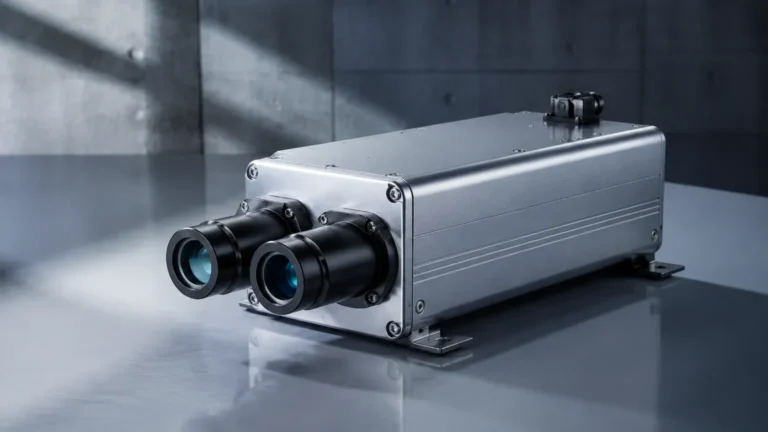
Modern radiation monitoring systems typically utilize scintillation detectors. These contain a crystal (often Sodium Iodide or a specialized plastic) that emits a faint flash of light when struck by a gamma photon. A photomultiplier tube (PMT) or a silicon photomultiplier (SiPM) converts these light flashes into electrical pulses, which the transmitter then processes into a usable signal (e.g., 4-20mA, HART, or Foundation Fieldbus).
Practical Selection Criteria
Choosing the right radiation monitoring system requires a detailed analysis of the process environment. The following table outlines the primary factors to consider during the specification phase:
| Criteria | Consideration | Impact on System Design |
| :— | :— | :— |
| Vessel Diameter | Distance between source and detector | Determines the required source activity (mCi/GBq). |
| Wall Thickness | Material and thickness of vessel/insulation | Affects the baseline attenuation; thicker walls require stronger sources. |
| Process Medium | Density and chemical composition | Determines the sensitivity required from the detector. |
| Measurement Range | Point level vs. continuous level | Dictates whether a single point source or a strip source/detector array is needed. |
| Ambient Temperature | External environment at the detector | Detectors may require water-cooling jackets if temperatures exceed 50°C (122°F). |
For applications where radiation is not the optimal choice, engineers should evaluate alternative technologies like radar or ultrasonic sensors by visiting the Main Page for a comprehensive overview of available measurement solutions.
Installation Considerations
Because a radiation monitoring system is non-intrusive, installation does not require shutting down the process or cutting into the vessel. However, precision in mounting is vital.
1. Alignment: The source beam must be perfectly aligned with the active area of the detector. Misalignment can lead to signal loss or inconsistent readings.
2. Mounting Brackets: Brackets must be rigid enough to prevent vibration, which can cause mechanical wear on the detector electronics over time.
3. External Obstructions: Any structural steel, ladders, or pipes between the source and detector must be accounted for during the initial calibration, as they will contribute to the baseline attenuation.
4. Safety Zones: The area around the source holder and the beam path must be clearly marked. Access should be restricted to authorized personnel when the shutter is open.
Advantages and Limitations
Advantages
* Non-Contact: Ideal for molten metals, highly abrasive slurries (like mining discharge), and ultra-pure chemicals.
* Extreme Conditions: Capable of measuring through vessel walls several inches thick, operating at pressures exceeding 500 bar and temperatures above 1,000°C.
* No Moving Parts: High reliability and low mechanical maintenance.
Limitations and Risks
* Regulatory Burden: Owners must comply with local atomic energy commissions, which involves licensing, periodic leak tests, and the appointment of a Radiation Safety Officer (RSO).
* Cost: The initial capital expenditure and the eventual cost of source disposal are higher than for radar or ultrasonic transmitters.
* Source Decay: While the electronics compensate for decay, the signal-to-noise ratio gradually decreases over decades, eventually requiring a source upgrade.
Safety and Regulatory Compliance
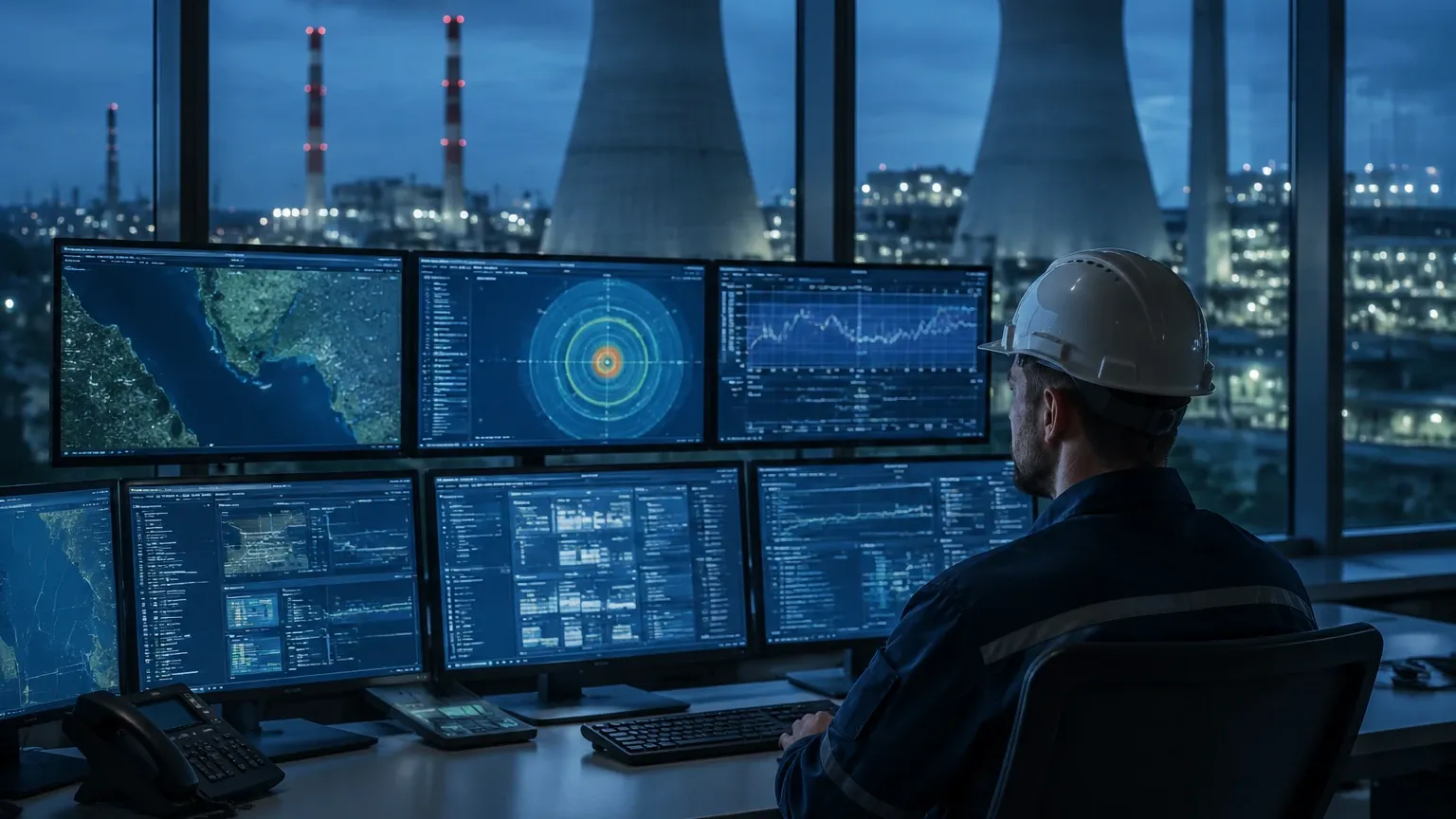
A radiation monitoring system is safe when managed correctly. The radiation levels outside the shielded source holder are typically comparable to or lower than the background radiation received during a high-altitude flight. However, strict protocols must be followed:
* Wipe Tests: Most jurisdictions require a "leak test" or "wipe test" every 6 to 36 months to ensure the radioactive capsule remains sealed within the holder.
* Shutter Procedures: A strict Lock-Out/Tag-Out (LOTO) procedure must be in place. If a worker needs to enter the vessel, the source shutter must be locked in the "OFF" position.
* Training: Personnel working near the equipment should receive basic radiation awareness training to understand the significance of the shielding and the beam path.
Comparison: Radiation vs. Other Technologies
While nucleonic gauges are powerful, they are often used as a last resort due to the regulatory requirements.
* Radar: Excellent for many high-temperature applications, but can be affected by heavy foam or internal vessel obstructions.
* Ultrasonic: Cost-effective for water and simple liquids but limited by vacuum or high-pressure vapors.
* Radiation: The only viable choice when the vessel cannot be breached or when the material inside would destroy any probe inserted into it.
To compare these technologies against specific project requirements, professionals can Review product options and application support to ensure the most cost-effective and reliable technology is selected.
Frequently Asked Questions (FAQ)
Q: Does the material being measured become radioactive?
A: No. The gamma energy used in industrial level measurement is not high enough to induce radioactivity in the process material. The material is only exposed to the radiation as it passes through the beam.
Q: How long does a typical source last?
A: A Cs-137 source has a half-life of 30.17 years. Most systems are designed with enough initial activity to provide a useful service life of 15 to 20 years before the signal becomes too weak for accurate measurement.
Q: Can the system measure the interface between two liquids?
A: Yes, provided there is a sufficient density difference between the two liquids (typically at least 0.1 g/cm³). The radiation monitoring system can detect the change in attenuation as the interface level moves across the beam path.
Q: What happens if the detector fails?
A: Modern detectors are designed with self-diagnostics. If the scintillation crystal or the PMT fails, the transmitter will typically drive the output to a fault state (e.g., 3.6mA or 21mA) to alert the control system.
Conclusion
The implementation of a radiation monitoring system is a strategic decision for complex industrial environments. By providing a window into the most challenging processes without physical contact, these systems ensure safety and continuity in sectors ranging from petrochemical refining to mineral processing. While the regulatory requirements are more stringent than those for standard instrumentation, the reliability and accuracy offered by nucleonic technology often provide the highest return on investment in critical applications.