Relation Between Density and Pressure
Relation Between Density and Pressure
In the field of industrial process control, understanding the relation between density and pressure is fundamental to achieving accurate level measurement. For engineers and technicians, this relationship is not merely a theoretical concept of fluid mechanics but the practical basis for calibrating hydrostatic transmitters and selecting the appropriate instrumentation for complex liquid environments. Whether managing water treatment facilities or chemical storage tanks, the interaction between a fluid's mass per unit volume and the force it exerts on a sensor determines the reliability of the entire automation system.
To explore the full range of instrumentation designed to handle these variables, you may visit the Main Page for technical specifications and product overviews.
Fundamental Principles of Fluid Pressure
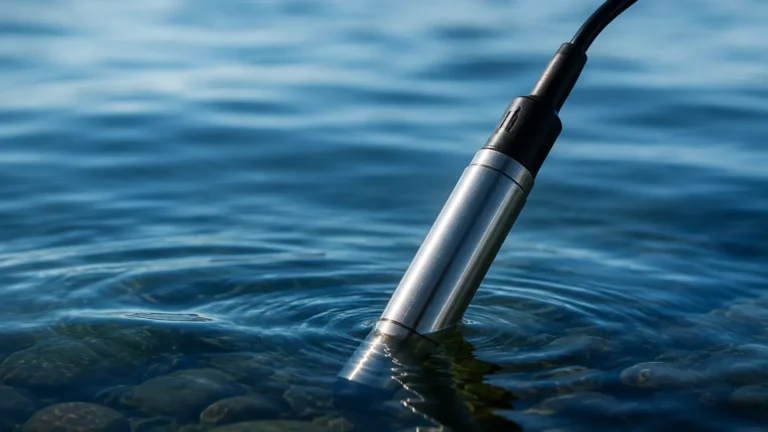
Pressure is defined as the force exerted perpendicular to the surface of an object per unit area over which that force is distributed. In a static liquid, this is referred to as hydrostatic pressure. The relation between density and pressure in this context is linear and direct: as the density of a fluid increases, the pressure exerted at any given depth also increases, provided gravity remains constant.
The Hydrostatic Equation
The mathematical representation of this relationship is expressed through the fundamental hydrostatic formula:
P = ρ · g · h
Where:
* P is the hydrostatic pressure (measured in Pascals, Pa, or bar).
* ρ (Rho) is the density of the liquid (measured in kg/m³).
* g is the acceleration due to gravity (approximately 9.81 m/s²).
* h is the height of the liquid column above the measurement point (measured in meters, m).
From this equation, it is clear that pressure is the product of density, gravity, and height. In industrial level measurement, we typically use a pressure sensor to solve for h. Therefore, the formula is rearranged as:
h = P / (ρ · g)
This rearrangement highlights a critical vulnerability in hydrostatic level measurement: if the density (ρ) of the liquid changes due to temperature fluctuations or composition shifts, and the transmitter is not recalibrated or compensated, the calculated height (h) will be incorrect, even if the actual physical level has not changed.
How Density Affects Measurement Accuracy
The relation between density and pressure dictates that any deviation in fluid density results in a proportional error in level reading for pressure-based sensors. This is particularly relevant in industries dealing with hydrocarbons, chemicals, and food processing where liquids are rarely pure water.
Specific Gravity and Calibration
In practice, engineers often use Specific Gravity (SG) instead of absolute density. Specific gravity is the ratio of the density of a substance to the density of a reference substance (usually water at 4°C). Since water has a density of approximately 1,000 kg/m³ (1 g/cm³), a liquid with an SG of 1.2 is 20% denser than water.
If a hydrostatic level transmitter is calibrated for water (SG = 1.0) but is used in a tank containing sulfuric acid (SG ≈ 1.8), the sensor will detect a much higher pressure for the same physical height. Without adjustment, the system would report a level 80% higher than reality. This underscores the necessity of knowing the precise relation between density and pressure for the specific media being measured.
Temperature-Induced Density Changes
Temperature is the primary driver of density fluctuations in a closed process. As most liquids heat up, they expand, causing their density to decrease. While the total mass in a tank remains constant, the volume increases, and the density drops. In an open tank, the pressure at the bottom remains the same (because the total weight of the liquid column is unchanged), but the physical level rises. Conversely, in a system where the level is maintained at a constant height by a control loop, a decrease in density will result in a decrease in measured pressure.
Selection Criteria for Level Measurement Technologies
Choosing the right instrument requires evaluating whether the process density is stable or variable. The following table compares common technologies and their sensitivity to the relation between density and pressure.
| Technology | Measurement Principle | Sensitivity to Density | Ideal Applications |
| :— | :— | :— | :— |
| Hydrostatic Transmitter | Pressure at bottom | High | Constant density, open/vented tanks |
| Radar (Non-Contact) | Time-of-Flight (Microwave) | None | Changing density, high temperature, vacuum |
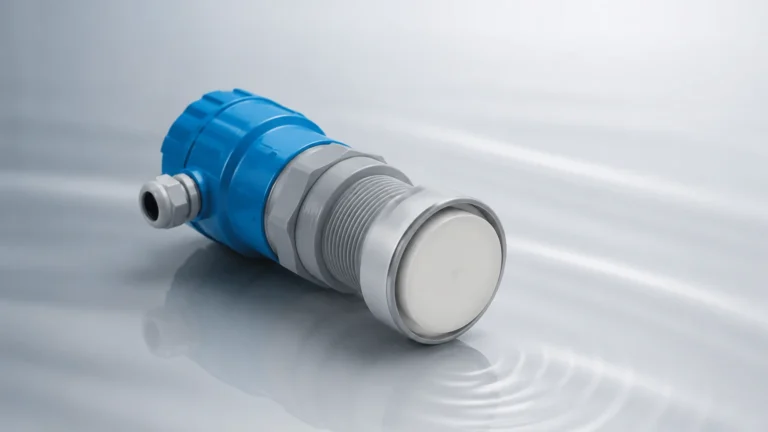
| Ultrasonic Sensor | Time-of-Flight (Sound) | None | Water treatment, open channels, non-foaming |
| Magnetic Level Gauge | Buoyancy/Displacement | High | Visual indication, high-pressure boilers |
| Differential Pressure | Pressure drop across height | High | Pressurized tanks, liquefied gas storage |
For applications where density varies significantly, such as in mixing tanks or chemical reactors, non-contact methods like radar are often preferred because they measure the surface position directly, independent of the fluid's physical properties. For a detailed comparison of these technologies, refer to the Main Page for technical data sheets.
Practical Installation and Compensation
When utilizing the relation between density and pressure for level measurement, several installation factors must be addressed to ensure long-term accuracy.
Atmospheric Pressure Compensation
In open tanks, the pressure sensor is exposed to both the liquid's hydrostatic pressure and the local atmospheric pressure. To isolate the liquid level, the sensor must be "vented" to the atmosphere, or a differential pressure (DP) transmitter must be used. In pressurized vessels, a DP transmitter is mandatory; one side measures the total pressure at the bottom (liquid + gas headspace), and the other side measures only the gas headspace pressure. The transmitter subtracts the headspace pressure to find the true hydrostatic pressure of the liquid.
Density Compensation Techniques
In processes where density changes are predictable (e.g., based on temperature), a secondary temperature sensor (RTD or Thermocouple) can be integrated into the control system. The PLC (Programmable Logic Controller) uses a look-up table or a polynomial equation to calculate the current density based on the temperature and then corrects the level reading in real-time.
Mounting Considerations
* Stilling Wells: In turbulent tanks, a stilling well protects the sensor from dynamic pressure changes that could interfere with the static pressure reading.
* Diaphragm Protection: For corrosive or viscous fluids, chemical seals or flush diaphragms prevent the process media from clogging the sensing element while still accurately transmitting the pressure.

Limitations and Risks
While pressure-based measurement is cost-effective and robust, it has inherent limitations linked to the relation between density and pressure:
1. Multi-Phase Liquids: If a tank contains layered liquids (e.g., oil floating on water), a single pressure sensor cannot distinguish between the two. It will provide a total pressure reading based on the combined weight, which may lead to incorrect volume calculations if the interface level is unknown.
2. Aeration and Bubbles: If a liquid is heavily aerated or contains micro-bubbles, its effective density decreases. The pressure sensor will read a lower level than the actual physical surface, which could lead to tank overflows.
3. Sedimentation: Build-up of solids or sludge at the bottom of a tank can cover a submerged pressure sensor, leading to sluggish response or complete failure to detect pressure changes.
Frequently Asked Questions (FAQ)
Q: Does the shape of the tank affect the relation between density and pressure?
A: No. Hydrostatic pressure depends only on the vertical height of the liquid and its density. Whether the tank is narrow, wide, or irregularly shaped, the pressure at a specific depth remains the same. However, tank shape is critical when converting that level measurement into a volume measurement.
Q: Can I use a hydrostatic sensor for boiling liquids?
A: It is generally not recommended. Boiling creates significant turbulence and introduces gas bubbles into the liquid, which drastically alters the effective density. Radar or guided wave radar is a much more reliable choice for boiling or steaming applications.
Q: How often should I recalibrate my sensor for density changes?
A: If the fluid composition is consistent, annual calibration is usually sufficient. However, if you switch process media (e.g., changing from a 10% brine solution to a 30% solution), the sensor must be recalibrated immediately to reflect the new density.
Q: What happens to the pressure if gravity changes?
A: While gravity is mostly constant on Earth, for high-precision laboratory applications or varying altitudes, the slight change in 'g' can affect the calculation. In standard industrial automation, 'g' is treated as a constant 9.80665 m/s².
Conclusion
The relation between density and pressure is the cornerstone of hydrostatic level measurement. By understanding that pressure is a function of density and height, engineers can better design systems that are resilient to process variations. While hydrostatic sensors offer a reliable and economical solution for many applications, the rise of density-independent technologies like radar provides alternatives for more volatile environments.
For professional assistance in selecting the right level measurement technology for your specific density and pressure requirements, please consult the resources available on our Main Page.