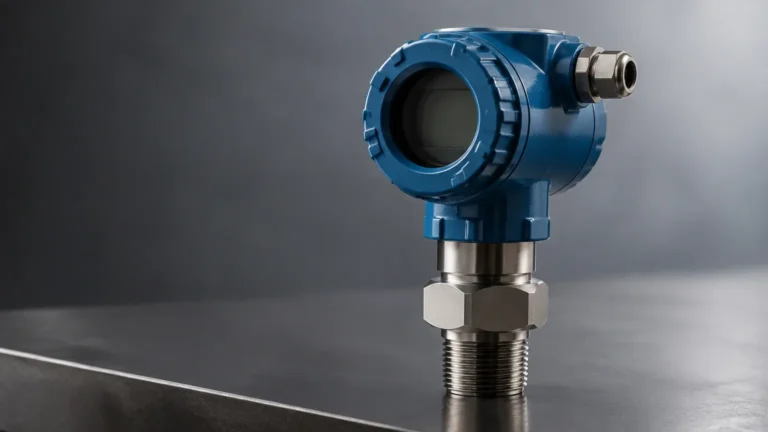
Endress and Hauser Level Probe
Endress and Hauser Level Probe
In the landscape of industrial process control, the selection of a level measurement instrument is a critical decision that impacts safety, efficiency, and product quality. The term "Endress and Hauser level probe" encompasses a wide range of technologies designed to monitor the quantity of liquids, pastes, or bulk solids within tanks, wells, and vessels. These instruments, ranging from hydrostatic pressure sensors to capacitance and conductive probes, are foundational to industries such as water treatment, chemical processing, and food production.
Selecting the correct probe requires a deep understanding of the underlying physics of measurement and the specific environmental conditions of the application. This guide provides a technical overview of the principles, selection criteria, and installation requirements for level probes, while highlighting how modern alternatives from manufacturers like Welk provide comparable accuracy and reliability for global industrial automation.
Core Measurement Principles of Level Probes
Before selecting an Endress and Hauser level probe or a similar industrial instrument, engineers must determine which physical principle best suits the medium. Level probes generally fall into three categories: hydrostatic, capacitance, and conductive.
Hydrostatic Level Measurement
Hydrostatic probes measure the pressure exerted by a liquid column. The principle is based on the formula:
P = ρ × g × h
*(Where P is pressure, ρ is the density of the medium, g is the gravitational constant, and h is the height of the liquid.)*
Because the pressure at the bottom of a tank is directly proportional to the height of the liquid above it, a submersible pressure transmitter (often referred to as a level probe) can provide continuous level readings. These are widely used in water reservoirs, deep wells, and wastewater treatment plants. They are valued for their robustness and ease of installation in open-vented vessels.
Capacitance Level Measurement
Capacitance probes utilize the electrical properties of the medium. The probe and the tank wall (or a second reference electrode) form a capacitor. As the level of the medium rises, the dielectric constant between the electrodes changes, resulting in a change in capacitance. This change is converted into an electrical signal proportional to the level. This technology is highly effective for both continuous measurement and point level detection in liquids and solids, particularly where the medium is non-conductive or has a stable dielectric constant.
Conductive Level Measurement
Conductive probes are primarily used for point level detection in conductive liquids. The measurement is based on the closing of an electrical circuit between the probe tip and the tank wall (or a ground electrode) when the liquid makes contact. This is a simple, cost-effective solution for overflow protection or pump control in water-based applications.
Key Evaluation Criteria for Level Probes
When evaluating an Endress and Hauser level probe for a specific project, several technical parameters must be confirmed to ensure long-term operational stability.
1. Medium Properties: Is the liquid corrosive, abrasive, or prone to foam? Hydrostatic probes require the density of the liquid to remain constant for accurate readings. If the density fluctuates due to temperature or chemical composition changes, the measurement will drift.
2. Process Temperature and Pressure: Standard probes are often rated for ambient temperatures, but specialized versions are required for high-temperature chemical reactors or pressurized vessels. For instance, hydrostatic probes used in deep wells must withstand significant external pressure on the cable and housing.
3. Accuracy Requirements: While hydrostatic probes offer excellent reliability, radar or ultrasonic sensors might be preferred for high-precision custody transfer applications. However, for most industrial monitoring, an accuracy of 0.1% to 0.5% of the full scale is sufficient.
4. Material Compatibility: The probe housing and cable must be compatible with the medium. Common materials include 316L stainless steel, Hastelloy, or PVDF for highly corrosive environments.
Practical Selection Table
The following table outlines the suitability of different probe technologies based on common industrial scenarios.
| Application | Recommended Probe Type | Key Advantage | Limitation |
| :— | :— | :— | :— |
| Deep Well / Borehole | Hydrostatic (Submersible) | Easy to lower into narrow pipes | Sensitive to density changes |
| Acid Storage Tank | Capacitance (PTFE Coated) | No moving parts; chemical resistance | Requires calibration for different media |
| Wastewater Sump | Hydrostatic or Ultrasonic | Handles turbulence well | Build-up can affect sensor face |
| Food & Beverage | Conductive / Capacitance | Hygienic designs available | Foam can trigger false positives |
| Oil/Water Interface | Capacitance | Can distinguish between layers | Complex setup required |
For engineers seeking a broader range of options, reviewing the Main Page of specialized manufacturers like Welk can provide insights into radar and ultrasonic alternatives that complement traditional probe technologies.
Installation Considerations and Engineering Best Practices
The performance of any level probe is heavily dependent on the quality of the installation. Poorly positioned probes are the most common cause of measurement error and premature failure.
Mounting Position
Probes should be installed away from tank inlets to avoid turbulence and the direct impact of filling streams. If a hydrostatic probe is used in a tank with an agitator, it should be installed within a stilling well (a perforated pipe) to prevent the probe from moving and to dampen the effects of waves.
Cable Management
For submersible probes, the cable is a critical component. It contains a vent tube that allows the internal pressure sensor to compensate for changes in atmospheric pressure. This vent tube must not be kinked or blocked. In outdoor installations, a moisture filter or a specialized junction box should be used to prevent condensation from entering the vent tube, which would cause measurement drift.
Grounding and Lightning Protection
Because level probes are often installed in large metal tanks or deep wells, they are susceptible to electrical surges and lightning strikes. Ensuring the probe is properly grounded and using surge protection modules is essential for protecting the electronics, particularly in high-altitude or open-field applications.
Limitations and Risks
While an Endress and Hauser level probe is a high-quality instrument, every technology has its boundaries:
* Build-up and Scaling: In applications involving wastewater or lime milk, material can build up on the probe surface. In capacitance probes, this can cause the sensor to "stick" at a high level. Regular cleaning or the use of probes with "active shield" technology is required.
* Density Sensitivity: As noted, hydrostatic probes measure weight, not volume. If the temperature of a liquid increases, its density decreases, and the probe will report a lower level even if the volume remains the same.
* Electromagnetic Interference (EMI): Capacitance probes can be sensitive to nearby high-voltage equipment or VFDs (Variable Frequency Drives) if not properly shielded and grounded.
Advancing Beyond Traditional Probes
While traditional probes are effective, many modern facilities are transitioning toward non-contact measurement technologies. Radar level meters, for example, offer the advantage of having no components in contact with the medium, which eliminates issues related to corrosion and build-up. As a professional manufacturer, Welk offers a comprehensive suite of radar and ultrasonic sensors that serve as high-performance alternatives to traditional probe-based systems.
These modern instruments often feature digital communication protocols such as HART, Modbus, or Profibus, allowing for remote diagnostics and integration into Industry 4.0 environments. When a project requires high accuracy in challenging conditions—such as high-pressure steam or vacuum—radar technology often provides a more robust solution than a standard level probe.
Frequently Asked Questions (FAQ)
Q: How often should a hydrostatic level probe be calibrated?
A: In stable environments like clean water storage, annual calibration is usually sufficient. However, in chemical applications where the sensor diaphragm may experience slight degradation, semi-annual checks are recommended.
Q: Can I cut the cable of a submersible level probe to length?
A: Most hydrostatic probes are ordered with a specific cable length. While some models allow for field-shortening, it is risky because the vent tube must be handled carefully. It is always better to coil and secure excess cable rather than cutting it.
Q: What is the difference between a level probe and a level transmitter?
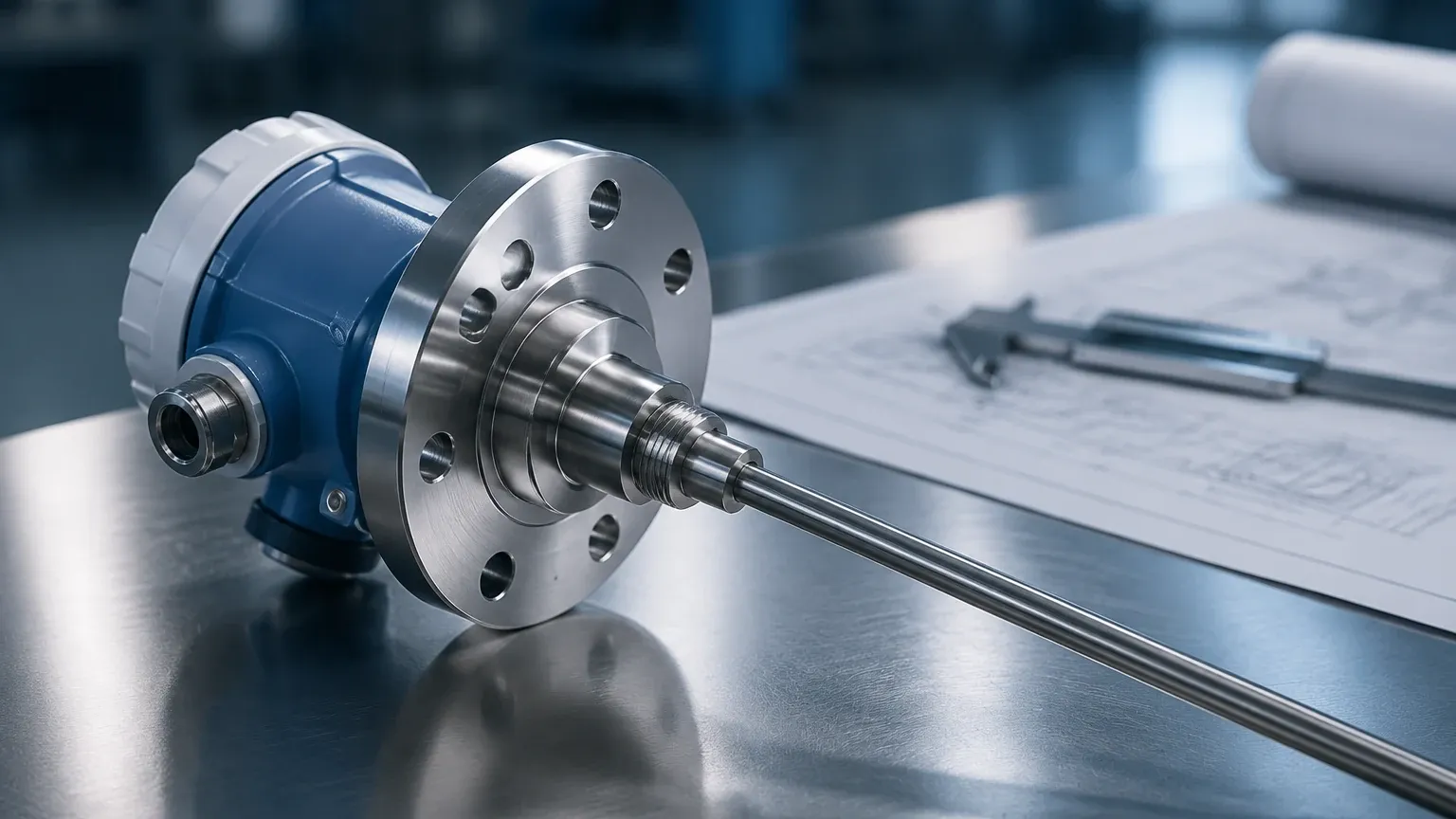
A: In common industry parlance, a "probe" often refers to the sensing element that enters the tank (like a rod or a submersible sensor), while a "transmitter" refers to the entire assembly that converts the sensor signal into a 4-20mA or digital output. Most modern Endress and Hauser level probes are integrated transmitters.
Q: How do I handle foam in my tank?
A: If foam is present, conductive probes may trigger prematurely. In such cases, a hydrostatic probe (which ignores foam and measures the liquid weight) or a high-frequency radar sensor is a better choice.
Conclusion
The Endress and Hauser level probe remains a staple of industrial level measurement due to its versatility and established track record. However, successful implementation requires careful consideration of the measurement principle, the chemical compatibility of the materials, and the physical constraints of the installation site. By understanding these factors and considering modern alternatives like those found at Welk, engineers can ensure accurate, reliable, and cost-effective level control for any industrial application.