Endress Level Transmitter
Endress Level Transmitter
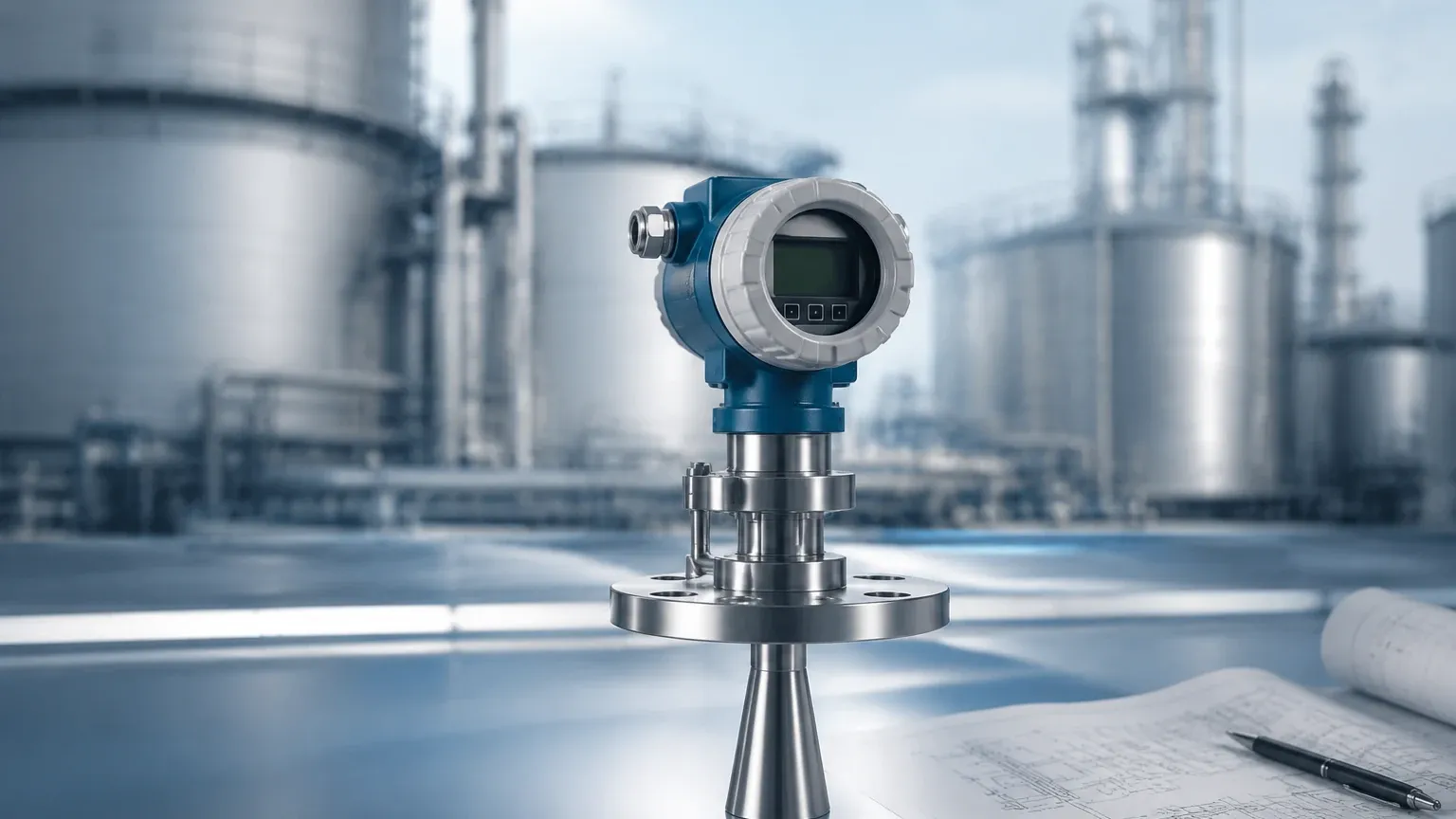
In the landscape of industrial automation, precise level measurement is fundamental to process safety, inventory management, and operational efficiency. The term endress level transmitter often serves as a benchmark in the industry, representing a category of high-precision instruments designed to monitor liquids, solids, and slurries across diverse sectors such as water treatment, chemical processing, and oil and gas. For engineers and procurement specialists, understanding the technical nuances of these devices—and the available alternatives—is essential for optimizing plant performance.
As a professional manufacturer, Welk provides a comprehensive range of industrial level measurement instruments that align with the rigorous standards expected in global markets. Whether you are looking for radar, ultrasonic, or hydrostatic solutions, exploring the Main Page of our product catalog provides a clear path to finding the right technology for your specific application.
Core Measurement Principles in Industrial Level Sensing
Before selecting a specific model of an endress level transmitter or a Welk equivalent, it is vital to understand the underlying physics that govern these devices. Different process conditions require different sensing methodologies.
1. Radar Level Measurement (Time-of-Flight)
Radar transmitters utilize high-frequency electromagnetic waves, typically in the 26 GHz or 80 GHz range. The device emits a signal toward the medium, which reflects off the surface and returns to the sensor.
* FMCW (Frequency Modulated Continuous Wave): The transmitter emits a continuous signal with a constantly changing frequency. The difference between the emitted and received frequency is proportional to the distance.
* Pulse Radar: The transmitter sends short microwave pulses and measures the time taken for the pulse to travel to the surface and back.
Radar is highly valued because it is non-contact and largely unaffected by changes in temperature, pressure, or the presence of vapors and dust.
2. Ultrasonic Level Measurement
Similar to radar, ultrasonic transmitters use Time-of-Flight (ToF) principles but rely on sound waves rather than electromagnetic waves. A transducer emits an ultrasonic pulse (usually between 20 kHz and 200 kHz). The pulse reflects off the target and returns to the transducer.
Because sound speed is affected by air temperature, these sensors include integrated temperature compensation. They are cost-effective solutions for open-channel flow and liquid storage in ambient conditions, though they are sensitive to heavy foam and vacuum conditions.
3. Hydrostatic Level Measurement
This principle relies on the relationship between the height of a liquid column and the pressure it exerts at the base. The formula used is $P = \rho \cdot g \cdot h$, where $P$ is pressure, $\rho$ (rho) is the density of the liquid, $g$ is gravity, and $h$ is the height.
By measuring the pressure at the bottom of a tank and knowing the density of the fluid, the transmitter accurately calculates the level. This is a "contact" method and is highly reliable for vented tanks or deep wells.
4. Guided Wave Radar (GWR)
GWR is a variation of radar technology where the microwave pulse is guided along a physical probe (rod or cable). This focuses the energy and allows for accurate measurement even in liquids with low dielectric constants or in narrow tanks with internal obstructions.
Key Evaluation Criteria for Selecting a Level Transmitter
When evaluating an endress level transmitter or considering a Welk alternative, several technical factors must be weighed to ensure the device survives the process environment and provides repeatable data.
Process Environment and Media
* Dielectric Constant ($ε_r$): For radar and GWR, the reflectivity of the surface depends on the dielectric constant. Materials with low $ε_r$ (like oils) reflect less energy than those with high $ε_r$ (like water).
* Corrosivity: Chemical applications require wetted parts made from PTFE, PVDF, or high-grade stainless steel (316L).
* Turbulence and Foam: Heavy foam can absorb ultrasonic and radar signals. In such cases, GWR or hydrostatic transmitters are often preferred.
Physical Tank Constraints
* Nozzle Dimensions: The height and diameter of the mounting nozzle can cause "ringing" or false reflections if not properly managed.
* Internal Obstructions: Agitators, heating coils, and ladders can interfere with non-contact signals. Advanced transmitters offer "false echo suppression" to ignore these fixed objects.
Accuracy and Range Requirements
Industrial applications typically demand accuracy between ±2mm and ±10mm. The required range can vary from a few centimeters in a small dosing tank to 70 meters (approx. 230 ft) in large grain silos or oil storage tanks.
Technical Comparison and Selection Table
The following table provides a generalized comparison of the most common technologies used in high-end level transmitters.
| Technology | Typical Accuracy | Max Range (Metric) | Best For | Main Limitation |
| :— | :— | :— | :— | :— |
| 80GHz Radar | ±1 mm | 120 m | Precise liquid/solid measurement | Higher initial cost |
| 26GHz Radar | ±3 mm | 30 m | General process tanks | Sensitive to large nozzles |
| Ultrasonic | ±0.25% of range | 15 m | Water/Wastewater, Acids | Affected by foam/vapor |
| Guided Wave Radar | ±2 mm | 45 m | Low dielectric fluids, foam | Contact method (fouling) |
| Hydrostatic | ±0.1% to 0.5% | 200 m (depth) | Deep wells, vented tanks | Density must remain constant |
Installation Best Practices
Proper installation is as critical as the technology itself. Even a premium endress level transmitter will fail to provide accurate readings if the installation geometry is flawed.
1. Beam Angle and Obstructions: For non-contact radar and ultrasonic sensors, ensure the signal beam does not intersect with the tank wall or internal structures. The "keep-out zone" expands as the distance increases.
2. Nozzle Positioning: Avoid mounting the transmitter in the center of a tank with a domed top, as this can create a focal point for multiple reflections (parabolic effect). Instead, mount the sensor at 1/3 of the tank radius.
3. Inflow Avoidance: Never install a level sensor directly above the filling inlet. The turbulence and falling material will cause erratic readings.
4. Stilling Wells: In tanks with heavy agitation or surface ripples, using a stilling well (a bypass pipe) can provide a calm surface for the transmitter to measure.
5. Environmental Shielding: While many transmitters are IP67 or IP68 rated, providing a sunshade for outdoor installations can prevent electronics from overheating and reduce the impact of extreme temperature swings on accuracy.
Operational Limitations and Risk Mitigation
No single level measurement technology is universal. Understanding the limitations helps in mitigating risks during the engineering phase.
* Signal Attenuation: In ultrasonic systems, heavy dust or steam can scatter the sound waves. If your process involves high-pressure steam, switching to a high-frequency radar is recommended.
* Build-up and Coating: For contact methods like GWR or hydrostatic sensors, viscous materials can coat the probe or diaphragm. Selecting a flush-mounted diaphragm or a non-contact radar can eliminate maintenance issues related to cleaning.
* Vacuum Conditions: Ultrasonic waves require a medium (air/gas) to travel. In a vacuum, ultrasonic sensors will not function. Radar, which uses electromagnetic waves, is the standard choice for vacuum applications.
* Density Fluctuations: Hydrostatic transmitters assume a constant fluid density. If the temperature changes significantly or if different fluids are mixed, the level reading will drift. In these scenarios, a pressure-compensated system or a radar transmitter is more reliable.
Frequently Asked Questions (FAQ)
Q: Can I use a radar level transmitter for solids like cement or grain?
A: Yes, but it is recommended to use an 80GHz radar with a high dynamic range. Solids have uneven surfaces that scatter signals, and 80GHz technology provides better focus and stronger reflections from these materials.
Q: How does an endress level transmitter handle corrosive chemicals?
A: Most high-end transmitters offer various wetted material options. For highly corrosive acids, a non-contact radar with a PTFE-encapsulated antenna is often the best choice as no metal parts come into contact with the vapor or liquid.
Q: What is the difference between a level transmitter and a level switch?
A: A level transmitter provides continuous measurement (e.g., 4-20mA or digital signal representing 0-100% full), whereas a level switch only provides a discrete signal (on/off) when a specific level is reached.
Q: Is calibration required frequently?
A: Modern digital transmitters are factory-calibrated. However, "field mapping" or "empty tank spectrum" recording is often done during commissioning to teach the device to ignore internal tank obstructions.
Conclusion
Selecting the right level measurement solution requires a balance between technical requirements, environmental constraints, and budget. While the endress level transmitter is a well-known option in the global market, manufacturers like Welk offer robust, accurate, and cost-effective alternatives that meet the demands of modern industrial automation.
By understanding the principles of radar, ultrasonic, and hydrostatic measurement, and by following strict installation guidelines, process engineers can ensure long-term reliability and safety. For detailed specifications on industrial-grade level sensors, including radar and ultrasonic models, please refer to our Main Page for comprehensive technical support and product documentation.