Endress and Hauser Level Sensor
Endress and Hauser Level Sensor
In the landscape of industrial process automation, precise level measurement is a cornerstone for operational safety, inventory management, and process efficiency. Among the global leaders in this field, the Endress and Hauser level sensor portfolio represents a benchmark for reliability and technological sophistication. For engineers and procurement specialists, selecting the right instrumentation requires a deep understanding of the physical principles governing measurement, the specific constraints of the application environment, and the long-term maintenance requirements of the chosen technology.
As a professional manufacturer of industrial level measurement instruments, Welk provides a range of solutions—from radar level meters to ultrasonic sensors—that align with these high industrial standards. This guide serves as a practical engineering reference for evaluating level measurement technologies, using the industry-standard Endress and Hauser level sensor range as a point of comparison for technical excellence and application suitability.
Understanding Industrial Level Measurement Principles
Before selecting a specific instrument, it is essential to understand the physics behind the measurement. Level sensors generally fall into two categories: continuous measurement and point level detection. Within these categories, several distinct principles are employed.
Time-of-Flight (ToF) Radar
Radar level measurement relies on the emission of electromagnetic pulses. These pulses travel at the speed of light, reflect off the surface of the medium, and return to the sensor. The distance is calculated based on the time it takes for the pulse to complete this round trip.
* Free-Space Radar: These sensors (like the Micropilot series) emit signals through the air. High-frequency radar, such as 80 GHz, offers narrow beam angles, which are critical for avoiding internal tank obstructions like agitators or heating coils.
* Guided Wave Radar (GWR): These sensors (like the Levelflex series) use a physical probe to guide the pulse to the surface. This is particularly effective in applications with low dielectric constants or where heavy foam and turbulence are present.
Ultrasonic Measurement
Ultrasonic sensors emit sound waves that reflect off the product surface. While cost-effective and reliable for many liquid applications, they are sensitive to environmental factors such as temperature fluctuations, wind (in open channels), and vapors that can alter the speed of sound. Welk’s ultrasonic level sensors are frequently utilized in water treatment and chemical storage where these conditions are controlled.
Hydrostatic Pressure
This principle measures the weight of the liquid column above the sensor. The pressure is proportional to the height of the liquid and its density. Hydrostatic sensors are robust and widely used in open tanks or deep wells, though they require compensation if the tank is pressurized or if the density of the liquid changes significantly.
Vibronic and Capacitance (Point Level)
For overfill protection or dry-run prevention, vibronic sensors (using a tuning fork principle) or capacitance probes are used. These detect the presence or absence of a medium at a specific point, providing a digital signal to the control system.
Key Evaluation Criteria for Sensor Selection
When evaluating an Endress and Hauser level sensor or a Welk equivalent, several technical parameters must be cross-referenced with the process conditions.
1. Media Characteristics: The dielectric constant (DC) of the medium is the most critical factor for radar. Materials with low DC values (like oils or liquefied gases) reflect less energy, requiring more sensitive electronics or guided wave technology. For hydrostatic sensors, the chemical compatibility of the diaphragm with the medium is paramount.
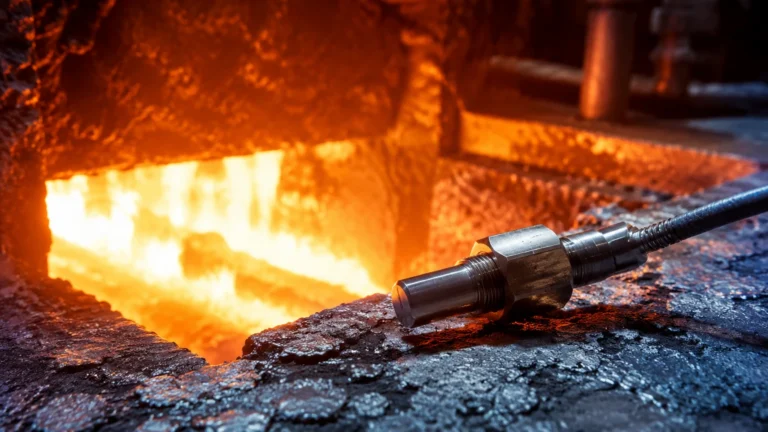
2. Process Temperature and Pressure: Standard sensors may operate up to 80°C, but specialized high-temperature versions can handle extremes exceeding 400°C. Similarly, pressure ratings must match the vessel's design, often requiring specialized process connections or ceramic cells for vacuum applications.
3. Accuracy and Repeatability: In custody transfer or high-value chemical dosing, an accuracy of ±1 mm may be required. For simple inventory monitoring in a water tank, ±10 mm or even a percentage of the full scale may suffice.
4. Vessel Geometry: The height of the tank, the presence of internal structures, and the mounting location (nozzle height and diameter) dictate whether a free-space radar, guided wave radar, or ultrasonic sensor is appropriate.
Technical Selection Table
The following table provides a generalized comparison of common level measurement technologies used in industrial applications.
| Technology | Typical Accuracy | Max Range | Media Suitability | Key Advantage |
| :— | :— | :— | :— | :— |
| 80 GHz Radar | ±1 mm | 125 m | Liquids & Solids | Narrow beam, ignores obstructions |
| Guided Wave Radar | ±2 mm | 45 m | Liquids, Interface | Works in foam and low DC media |
| Ultrasonic | ±0.2% of range | 15 m | Water/Chemicals | Non-contact, cost-effective |
| Hydrostatic | ±0.1% of span | 400 m (H2O) | Liquids | Simple, reliable for deep wells |
| Capacitance | ±1% | 20 m | Liquids & Solids | Robust, no moving parts |
For a comprehensive review of available hardware and application-specific support, engineers should consult the Main Page of the manufacturer’s technical catalog.
Installation Guidelines and Best Practices
Even the most advanced Endress and Hauser level sensor will underperform if installed incorrectly. Proper engineering during the installation phase prevents 90% of field failures.
Nozzle Considerations
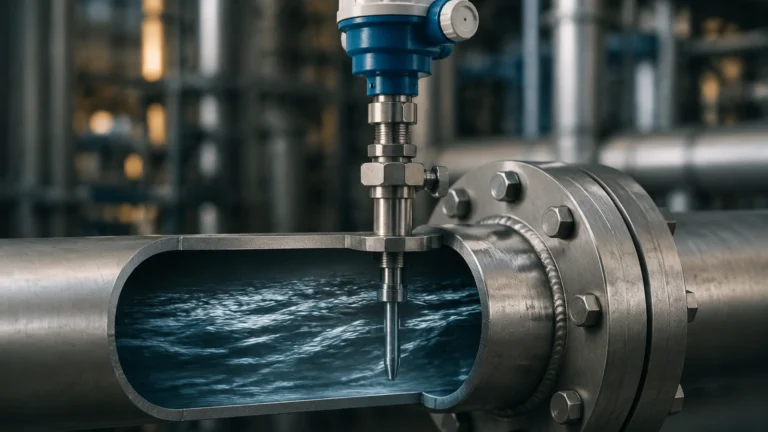
For radar and ultrasonic sensors, the nozzle should be as short as possible. If the nozzle is too long or narrow, the signal may reflect off the nozzle walls before reaching the tank interior, creating a "dead zone" or false echoes. For 80 GHz radar, the narrow beam allows for smaller nozzles, but the sensor face should still ideally sit flush with or slightly below the tank ceiling.
Avoiding Obstructions
Sensors should be mounted away from the filling stream to avoid interference from falling material. Furthermore, the signal beam must have a clear path to the surface. If an agitator is present, the software must be configured with an "envelope curve" or "false echo suppression" to map out the static reflections from the blades.
Environmental Protection
In outdoor installations, sunshields are recommended to prevent electronic overheating and to minimize temperature-induced drift in ultrasonic sensors. For hydrostatic sensors, the capillary tube in the cable (used for atmospheric pressure compensation) must be kept clear of moisture and debris.

Common Risks and Operational Limitations
While modern instrumentation is highly advanced, certain conditions remain challenging:
* Heavy Foam: Thick, dense foam can absorb radar and ultrasonic signals, leading to signal loss. In these cases, guided wave radar or hydrostatic transmitters are preferred.
* Steam and Condensation: While radar is generally unaffected by steam, heavy condensation on the antenna of an ultrasonic or radar sensor can attenuate the signal. Integrated air purging or specialized lens antennas (like those found in Welk radar meters) can mitigate this.
* Build-up: Sticky or viscous media can coat probes or antennas. While many sensors have "build-up compensation," extreme coating will eventually require manual cleaning or the use of non-contact sensors with high-gain antennas.
Information to Confirm Before Procurement
Before finalizing the specification for an Endress and Hauser level sensor or a Welk instrument, project teams should confirm the following:
1. Safety Certifications: Does the site require ATEX, IECEx, or SIL2/3 certification for functional safety?
2. Communication Protocols: Is the control system using 4-20mA HART, PROFIBUS, FOUNDATION Fieldbus, or Modbus?
3. Material Traceability: For food or pharmaceutical applications, are 3.1 material certificates and FDA-compliant seals required?
4. Maintenance Access: Is the sensor mounted in a location where it can be safely accessed for calibration or replacement without a full process shutdown?
Frequently Asked Questions (FAQ)
Q: Can a radar sensor measure the level of solids like cement or grain?
A: Yes, but it requires a high-frequency radar (typically 80 GHz) and often a swiveling flange to aim the beam at the material's angle of repose. Solids also require sensors with higher sensitivity due to the diffuse reflection of the signal.
Q: What is the difference between a level transmitter and a level switch?
A: A transmitter provides continuous measurement (e.g., 0-100% level), whereas a switch provides a discrete signal at a specific point (e.g., "tank full").
Q: How often should an industrial level sensor be calibrated?
A: This depends on the criticality of the process. For standard inventory, an annual check is typical. For regulated industries or custody transfer, semi-annual or quarterly calibration may be mandatory.
Conclusion
Selecting an Endress and Hauser level sensor involves more than just matching a part number; it requires a holistic view of the process environment and the physical limitations of the measurement technology. By applying the principles of Time-of-Flight, hydrostatic pressure, and vibronic detection correctly, facilities can ensure long-term accuracy and safety. As a dedicated provider in this space, Welk continues to support global industries with robust, cost-effective, and highly accurate level measurement solutions tailored to specific industrial needs. For further technical specifications and product options, visit the Main Page to explore our full range of instrumentation.