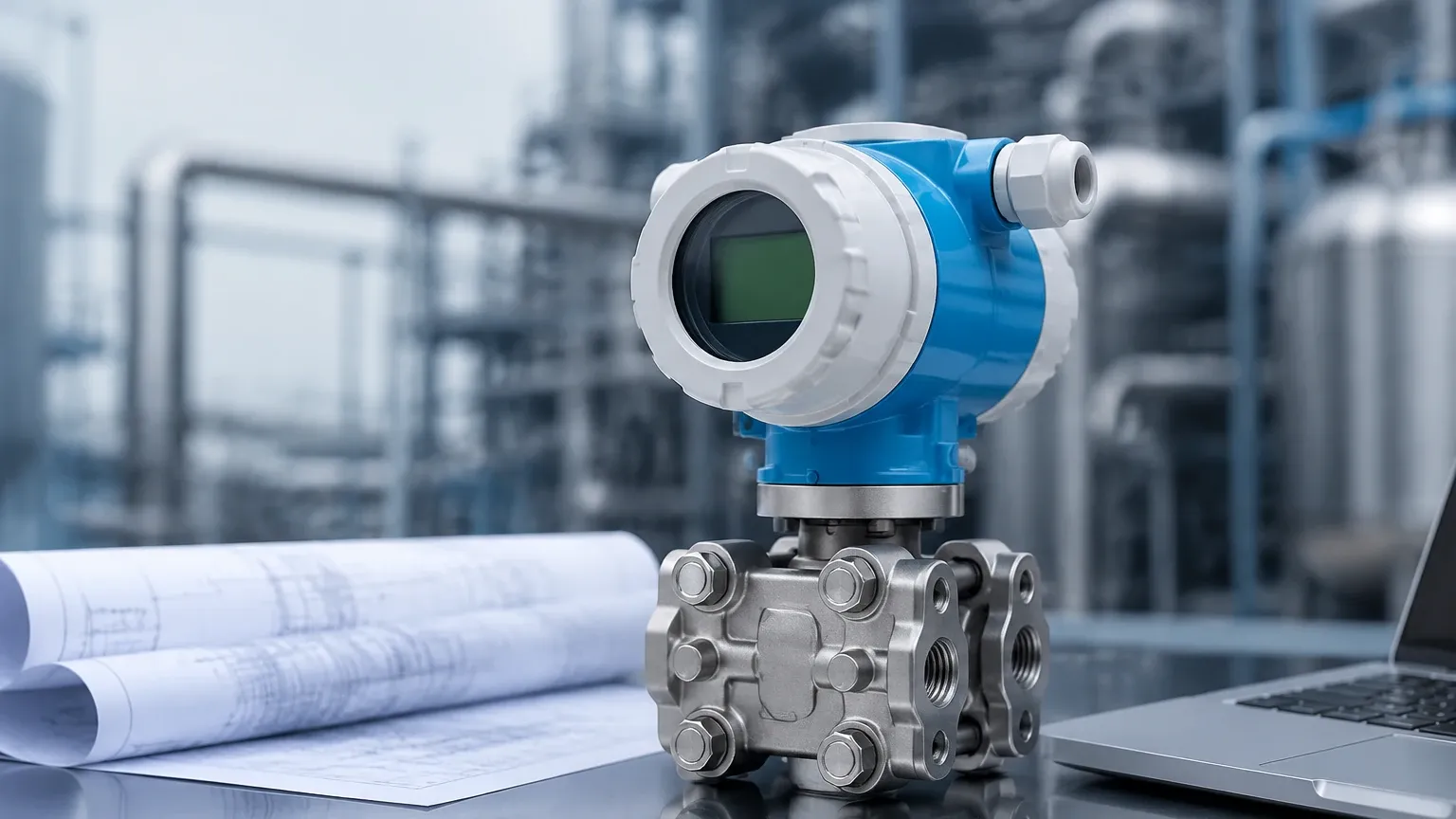
Endress Pressure Transmitter
Endress Pressure Transmitter
In the landscape of industrial process automation, the measurement of pressure is a fundamental requirement for safety, efficiency, and quality control. An Endress pressure transmitter is a precision instrument designed to convert physical pressure into an electrical signal, typically 4-20 mA or a digital communication protocol like HART, PROFIBUS, or FOUNDATION Fieldbus. These devices are utilized across diverse sectors, including water treatment, chemical processing, and oil and gas, to monitor gases, vapors, and liquids.
While pressure measurement is a distinct field, it is inextricably linked to level measurement through the principle of hydrostatics. For engineers and plant managers seeking comprehensive solutions for tank monitoring, understanding the technical nuances of these transmitters is essential for selecting the right technology for their specific application. For a broader overview of industrial measurement solutions, you can visit the Main Page.
Measurement Principles of Pressure Transmitters
To select the appropriate instrument, one must first understand the underlying physical principles used to detect pressure changes. Most industrial transmitters, including the Endress pressure transmitter range, utilize one of three primary sensing technologies.
1. Piezoresistive Sensors
This technology relies on the change in electrical resistance of a semiconductor (usually silicon) when it is subjected to mechanical strain. The sensing element is typically protected by a metallic diaphragm and a fill fluid (such as silicone oil). When process pressure acts on the diaphragm, it is transmitted through the fluid to the silicon chip, causing a resistance change proportional to the pressure. Piezoresistive sensors are highly sensitive and suitable for high-pressure applications and steam measurement.
2. Ceramic Capacitive Sensors
In a ceramic sensor, the process pressure acts directly on a robust ceramic diaphragm. This diaphragm forms one plate of a capacitor, while a fixed substrate forms the other. As the diaphragm moves under pressure, the capacitance changes. Because ceramic is extremely hard and chemically inert, these sensors are ideal for vacuum applications, abrasive media, and highly corrosive environments where metallic diaphragms might fail.
3. Differential Pressure (DP) Measurement
Differential pressure transmitters measure the difference between two pressure points. The device contains two pressure chambers separated by a measuring diaphragm. This technology is versatile; it is used to measure flow (via pressure drop across an orifice plate), level in pressurized tanks, and filter monitoring. In level measurement, the DP cell compares the pressure at the bottom of the tank with the pressure in the headspace to calculate the liquid height accurately.
Hydrostatic Level Measurement Applications
One of the most common uses for a pressure transmitter in industrial automation is hydrostatic level measurement. This method is based on the principle that the pressure at a specific depth in a liquid is proportional to the height of the liquid column above it, provided the density remains constant.
The formula used is:
P = ρ × g × h
* P: Hydrostatic pressure (Pa or bar)
* ρ (rho): Density of the liquid (kg/m³)
* g: Gravitational acceleration (approx. 9.81 m/s²)
* h: Height of the liquid (m)
In an open tank, a standard gauge pressure transmitter is mounted at the bottom. In a closed or pressurized tank, a differential pressure transmitter is required to subtract the top-side gas pressure from the total pressure measured at the bottom. This ensures that only the pressure exerted by the liquid column is used to determine the level.
Key Evaluation Criteria for Selection
When evaluating an Endress pressure transmitter or a similar industrial-grade instrument, several technical factors must be confirmed before procurement.
Accuracy and Long-term Stability
Industrial processes often require high precision. Accuracy is typically expressed as a percentage of the calibrated span (e.g., ±0.075%). However, long-term stability—the ability of the device to maintain its calibration over years—is equally important for reducing maintenance costs and ensuring consistent process quality.
Turndown Ratio
The turndown ratio (or rangeability) refers to the ratio between the maximum measuring range and the minimum span the device can measure while maintaining its accuracy. A high turndown ratio allows a single model of transmitter to be used across various applications, simplifying spare parts inventory.
Material Compatibility
The wetted parts (the diaphragm and process connection) must be compatible with the process media. Common materials include:
* 316L Stainless Steel: Standard for water and non-corrosive liquids.
* Alloy C (Hastelloy): Used for aggressive chemicals and acids.
* Ceramic (Al₂O₃): Excellent for abrasive slurries and vacuum conditions.
* Gold Plating: Used in hydrogen applications to prevent hydrogen embrittlement.
Environmental and Safety Ratings
Transmitters must often operate in hazardous areas. Ensure the device carries the necessary certifications such as ATEX, IECEx, or FM for explosive atmospheres. Furthermore, Ingress Protection (IP) ratings (e.g., IP66/68) are vital for outdoor or wash-down environments.
Technical Comparison Table
| Feature | Piezoresistive (Silicon) | Ceramic (Capacitive) | Differential Pressure |
| :— | :— | :— | :— |
| Primary Use | High pressure, Steam, Oil | Corrosive, Abrasive, Vacuum | Level in closed tanks, Flow |
| Overload Resistance | Moderate | Very High | High |
| Wetted Material | Metallic diaphragms | Ceramic (99.9% pure) | Various (Metal/Plastic) |
| Typical Accuracy | 0.05% to 0.1% | 0.075% to 0.1% | 0.035% to 0.075% |
| Vacuum Resistance | Limited | Excellent | Moderate |
Installation and Commissioning Considerations
Proper installation is critical to the performance of any pressure transmitter. Incorrect mounting can lead to measurement errors or premature device failure.
1. Mounting Position: For liquid applications, the transmitter should ideally be mounted below the process tap to ensure the impulse lines remain full of liquid. For gas applications, it should be mounted above the tap to allow condensate to drain back into the process.
2. Impulse Lines: Use appropriate tubing and ensure there are no leaks. In differential pressure setups, the high-pressure and low-pressure lines should be kept at the same temperature to avoid density-induced errors.
3. Manifolds: The use of a 3-way or 5-way valve manifold is highly recommended. Manifolds allow for the isolation of the transmitter from the process, zero-point checking, and safe removal for calibration without shutting down the entire process line.
4. Venting and Bleeding: Ensure the sensor chamber is properly vented of air (in liquid service) or drained of liquid (in gas service) before commissioning.
5. Zero-Point Adjustment: Once installed, the transmitter should be zeroed at atmospheric pressure (for gauge transmitters) or with equal pressure on both sides (for DP transmitters) to account for any mounting-position-related offsets.
Common Risks and Limitations
While an Endress pressure transmitter is a highly reliable tool, certain conditions can compromise measurement accuracy:
* Density Variations: In hydrostatic level measurement, if the temperature of the liquid changes significantly, its density will change. Since the transmitter measures pressure, not actual height, a change in density will result in a level error unless temperature compensation is applied.
* Diaphragm Clogging: In applications with high solids content or viscous media (like paper pulp or heavy crude), the process connection or the diaphragm itself can become clogged or coated. In these cases, flush-mounted diaphragms or diaphragm seals should be used.
* Ambient Temperature Effects: Extreme changes in ambient temperature can affect the electronics and the fill fluid within the sensor. High-quality transmitters include internal temperature sensors to compensate for these effects.
* Overpressure Events: Sudden pressure spikes (water hammer) can damage the sensing diaphragm. Selecting a sensor with high overpressure resistance or installing a siphon/snubber can mitigate this risk.
Frequently Asked Questions (FAQs)
Q: What is the difference between gauge pressure and absolute pressure?
A: Gauge pressure is measured relative to the local atmospheric pressure. Absolute pressure is measured relative to a perfect vacuum. Gauge transmitters are used for most tank and pipe applications, while absolute transmitters are used in vacuum distillation or meteorological applications.
Q: When should I use a diaphragm seal?
A: Diaphragm seals are used when the process media is too hot, too corrosive, too viscous, or too hazardous to come into direct contact with the transmitter's internal sensor. The seal uses a flexible diaphragm and a capillary tube filled with transmission fluid to relay the pressure to the sensor.
Q: How often should a pressure transmitter be calibrated?
A: Calibration frequency depends on the criticality of the process and the stability of the device. Most modern transmitters have excellent stability and may only require a calibration check every 1 to 3 years. However, safety-critical loops (SIL-rated) may require more frequent proof testing.
Q: Can a pressure transmitter measure the level of a boiling liquid?
A: Yes, but it requires careful engineering. In a boiling liquid, the density is often unstable, and the vapor pressure in the headspace must be accounted for using a differential pressure transmitter with a dry or wet leg (or electronic DP).
Conclusion
Selecting the right pressure measurement technology requires a thorough understanding of the process conditions, the physical properties of the media, and the mechanical requirements of the installation. Whether utilizing a piezoresistive or ceramic capacitive sensor, an Endress pressure transmitter provides the accuracy and reliability needed for modern industrial automation. By considering factors such as material compatibility, turndown ratios, and proper installation techniques, engineers can ensure long-term operational success. For further technical specifications and to explore a wide range of level and pressure measurement instruments, please refer to our Main Page.