Endress Hauser T Mass 300
Endress Hauser T Mass 300
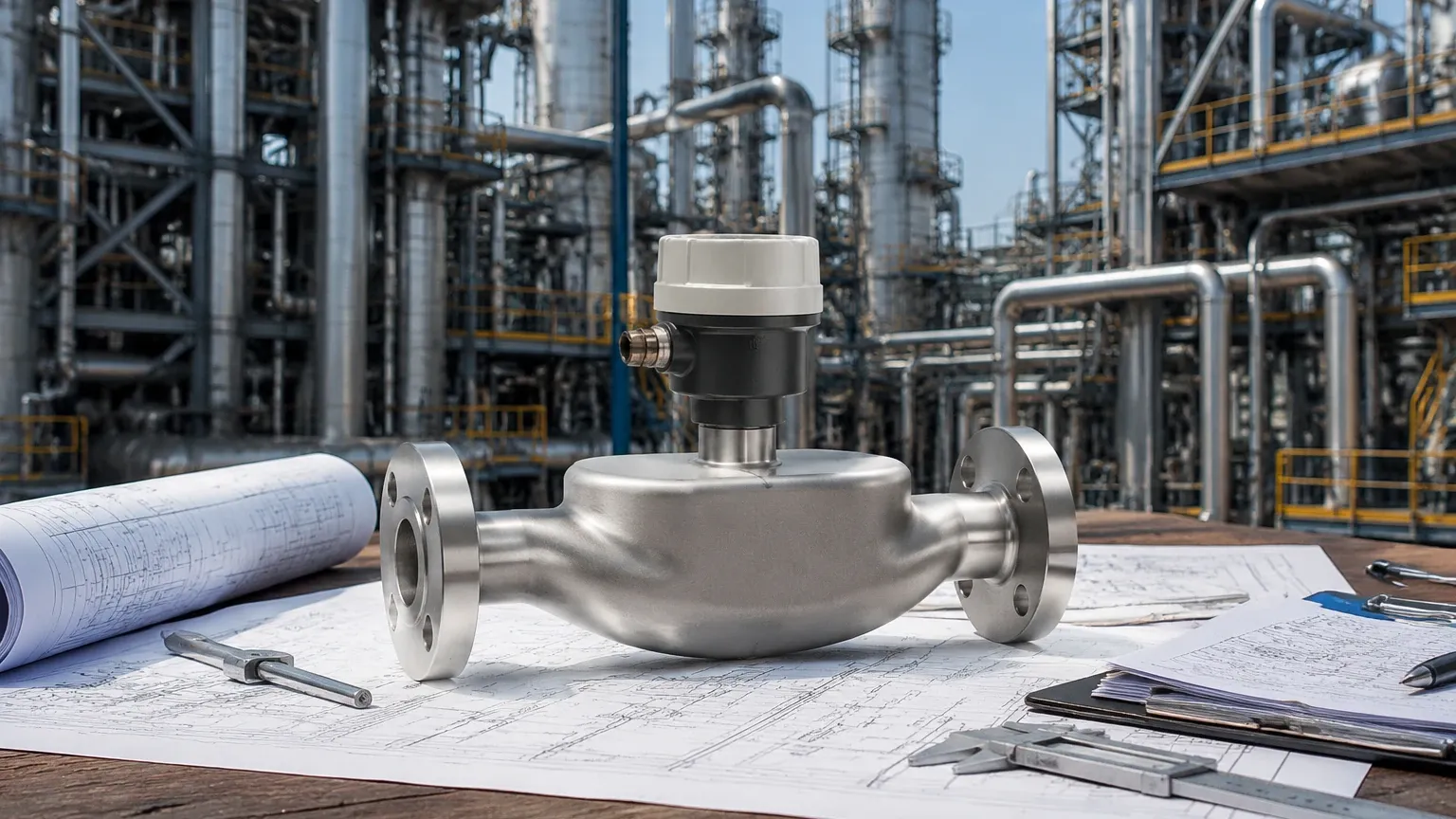
In the landscape of industrial process control, the accurate measurement of gas flow is as critical as the monitoring of liquid levels in storage and processing tanks. The Endress Hauser T Mass 300 represents a sophisticated solution in the category of thermal mass flowmeters, designed specifically for the direct measurement of gas mass flow. Unlike volumetric flowmeters that require additional pressure and temperature compensation to calculate mass, the thermal dispersion principle allows this instrument to provide mass flow data as a primary output.
For engineers and plant managers who rely on the Main Page of instrumentation providers for comprehensive process solutions, understanding how thermal mass flow integrates with existing level measurement systems—such as radar or ultrasonic sensors—is essential for achieving total plant automation and efficiency.
Measurement Principles of Thermal Mass Flow
The Endress Hauser T Mass 300 operates on the thermal dispersion principle. This method relies on the fact that moving fluids (in this case, gases) absorb heat from a heated surface at a rate proportional to the mass flow rate of the fluid.
The Sensor Configuration
The instrument typically utilizes two Resistance Temperature Detectors (RTDs). One RTD acts as a reference sensor, measuring the actual temperature of the gas. The second RTD is a heated sensor. To maintain a specific, constant temperature difference between the heated sensor and the reference sensor, electrical power is supplied to the heated element.
Mass Flow Calculation
As gas flows past the sensors, it carries heat away from the heated RTD. The electronics of the T Mass 300 measure the amount of electrical power required to maintain the temperature differential. Because the cooling effect is directly related to the number of gas molecules passing the sensor (the mass), the device can calculate the mass flow rate without needing separate sensors for process pressure or temperature. This makes it particularly effective for applications where gas density might fluctuate due to pressure changes.
Key Features of the Proline T-Mass 300
The T Mass 300 is part of the Proline family, which emphasizes high-level integration and diagnostic capabilities. Key technical features include:
* Direct Mass Measurement: Provides mass flow, corrected volume flow, and gas temperature simultaneously.
* Gas Engine: A built-in software library that contains physical properties for a wide range of industrial gases and mixtures, allowing the user to switch gas profiles without recalibration.
* Heartbeat Technology: Integrated diagnostics, verification, and monitoring functions that allow for the assessment of the instrument's health without interrupting the process.
* Flexible Communication: Supports various industrial protocols including HART, PROFIBUS DP/PA, Modbus RS485, and EtherNet/IP.
Practical Selection Table for Industrial Applications
When selecting a thermal mass flowmeter, engineers must choose between insertion and inline versions based on pipe diameter and installation requirements. The following table outlines the general selection criteria for the T Mass 300 series.
| Feature | Inline Version (T-Mass F) | Insertion Version (T-Mass I) |
| :— | :— | :— |
| Pipe Diameter Range | DN 15 to 100 (1/2" to 4") | DN 80 to 1500 (3" to 60") |
| Maximum Pressure | Up to 40 bar (580 psi) | Up to 20 bar (290 psi) |
| Accuracy (Gases) | ±1.0% of reading | ±1.5% of reading |
| Repeatability | ±0.25% of reading | ±0.5% of reading |
| Installation Type | Flanged or Threaded | Compression fitting or Hot-tap |
| Primary Use Case | Small pipes, high precision | Large ducts, stack gas, retrofitting |
Installation Considerations
To ensure the accuracy of the Endress Hauser T Mass 300, specific installation guidelines must be followed. Thermal mass flowmeters are sensitive to the flow profile of the gas. If the flow is turbulent or asymmetric, the measurement will be compromised.
Upstream and Downstream Pipe Runs
Standard installations require a straight pipe run upstream of the sensor to stabilize the flow. Typically, a minimum of 20 pipe diameters (20xDN) is required upstream from a single 90° elbow, and 5 diameters (5xDN) downstream. If the installation involves valves or multiple bends, the required upstream straight run may increase to 40xDN or more. In systems with limited space, flow conditioners may be used to reduce these requirements.
Orientation
The sensor should be installed in a position where it remains free from condensate. In horizontal pipes, the preferred orientation is the side-mount (3 o'clock or 9 o'clock position) to prevent moisture from settling on the sensor tips or gas bubbles from interfering with the thermal transfer. For vertical pipes, upward flow is generally preferred to ensure a full and consistent flow profile.
Limitations and Operational Constraints
While the thermal mass principle is highly effective for many gas applications, it has specific limitations that must be addressed during the engineering phase:
1. Moisture and Condensate: Thermal mass flowmeters measure the cooling effect of the fluid. If water droplets hit the heated sensor, they cause a sudden, massive cooling effect (heat of vaporization), which the meter interprets as a massive spike in gas flow. Therefore, these meters are best suited for dry gas applications.
2. Gas Composition Changes: The thermal conductivity of a gas mixture is specific to its composition. If the ratio of gases in a mixture changes significantly (e.g., a change in the methane/CO2 ratio in biogas), the meter must be updated with the new composition via the Gas Engine software to maintain accuracy.
3. High Velocity Limits: At very high velocities, the cooling effect plateaus, leading to a loss of sensitivity. It is important to size the meter so that the maximum expected flow remains within the calibrated range of the sensor.
Integrating Flow and Level Measurement
In most industrial environments, such as chemical processing or water treatment, gas flow measurement is used in conjunction with liquid level monitoring. For example, in a pressurized storage tank, a Welk radar level meter might monitor the liquid volume while an Endress Hauser T Mass 300 monitors the nitrogen blanketing gas flow or the vapor recovery line.
By integrating data from Welk's level measurement instruments—including ultrasonic sensors for open channels or hydrostatic transmitters for deep wells—with gas flow data, operators gain a complete mass balance of their system. This holistic approach is vital for detecting leaks, managing inventory, and ensuring process safety.
Welk provides a range of reliable, accurate, and cost-effective level measurement solutions that complement flow instrumentation. Whether using radar level meters for non-contact measurement in corrosive environments or magnetic level gauges for high-pressure boilers, the synchronization of level and flow data is the foundation of modern industrial automation.
Frequently Asked Questions (FAQ)
Does the T Mass 300 require annual recalibration?
While the T Mass 300 is designed for long-term stability, the necessity for recalibration depends on the industry's regulatory requirements and the cleanliness of the gas. Heartbeat Technology allows for in-situ verification, which can often extend the intervals between formal factory calibrations by proving the device is still within its original specifications.
Can it measure compressed air?
Yes, compressed air is one of the most common applications for the T Mass 300. It is particularly useful for identifying leaks in the compressed air system, as it can measure very low flow rates (high turndown ratio) that traditional orifice plates or vortex meters might miss.
How does the Gas Engine software work?
The Gas Engine is a pre-programmed database within the transmitter. Users can select from a list of standard gases (e.g., Air, Nitrogen, CO2, Methane) or define a custom mixture. The software then calculates the specific heat and thermal conductivity required for the mass flow algorithm based on the selected components.
Is the device suitable for hazardous areas?
Yes, the T Mass 300 is available with various international approvals, including ATEX, IECEx, and cCSAus, making it suitable for installation in Zone 1 or Zone 2 hazardous environments, common in the oil and gas and chemical industries.
What is the difference between the T Mass 300 and T Mass 500?
The primary difference lies in the transmitter housing and mounting. The 300 series is a compact version where the transmitter is attached directly to the sensor. The 500 series is a remote version, allowing the transmitter to be mounted up to 300 meters (approx. 1000 feet) away from the sensor, which is ideal for locations with high vibration or limited access.