Promass 83
Promass 83
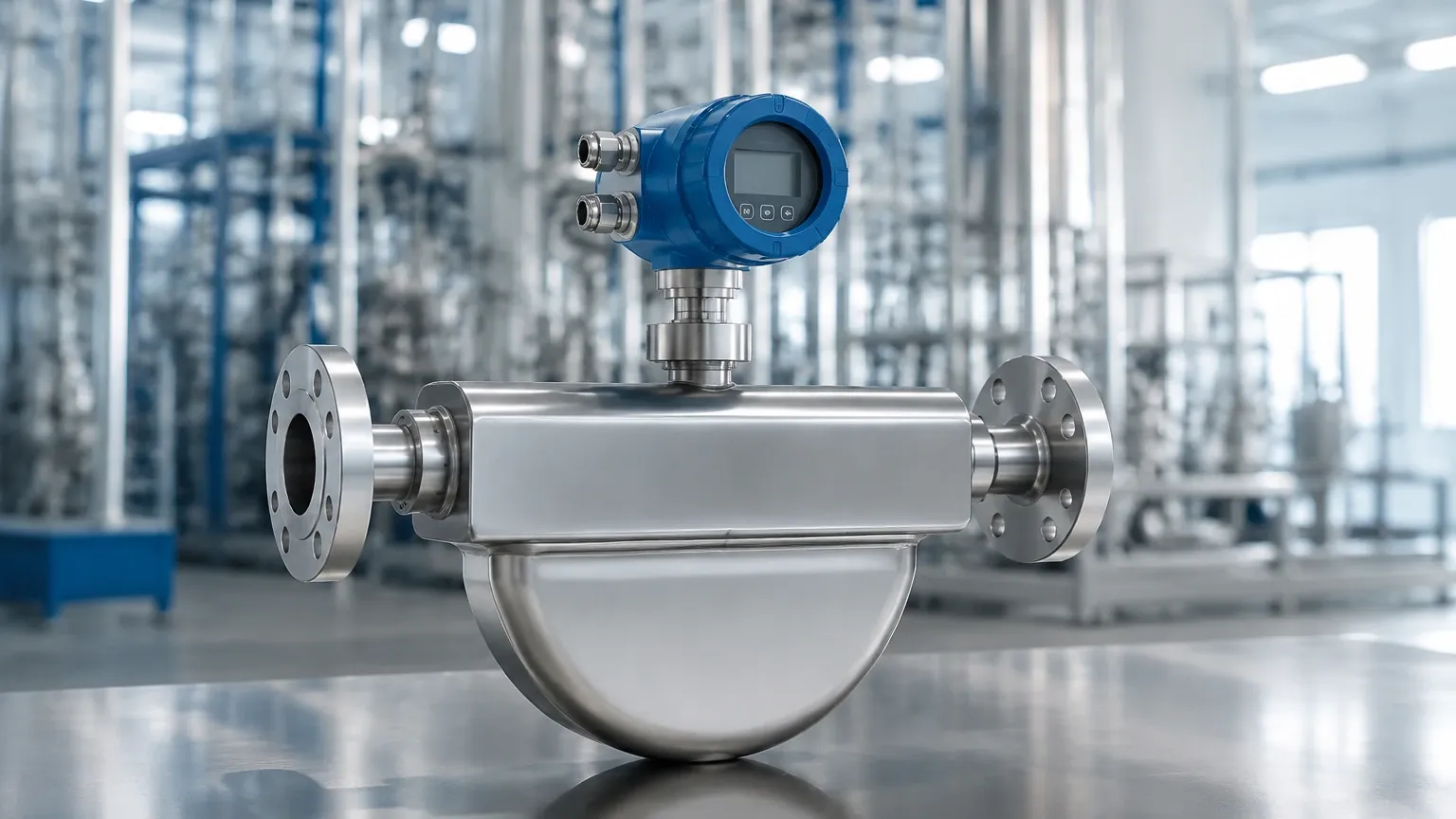
In the landscape of industrial process control, the Promass 83 stands as a sophisticated transmitter designed for Coriolis mass flowmeters. While primarily recognized for its precision in measuring mass flow, its ability to simultaneously capture density and temperature makes it an invaluable tool for complex process environments. For engineers focused on comprehensive tank management and fluid dynamics, understanding how the Promass 83 operates is essential for integrating flow data with level measurement systems, such as those found on the Main Page.
This article provides a technical overview of the Promass 83, its underlying measurement principles, selection criteria, and practical installation considerations for industrial applications.
Understanding the Coriolis Measurement Principle
The Promass 83 operates on the Coriolis principle, which allows for the direct measurement of mass flow without the need for external pressure or temperature compensation for the fluid's state.
Mass Flow Measurement
When a fluid moves through a vibrating tube, it experiences a Coriolis force. The transmitter utilizes a sensor consisting of one or two measuring tubes. An oscillation is induced in these tubes at their resonant frequency. As fluid flows through the tubes, the Coriolis force causes a phase shift in the vibration between the inlet and outlet sections.
This phase difference ($Δt$) is directly proportional to the mass flow rate. Because mass is an intrinsic property that does not change with temperature or pressure, Coriolis meters provide a higher degree of accuracy compared to volumetric flowmeters in applications where fluid properties vary.
Density and Temperature Measurement
The Promass 83 also measures fluid density by monitoring the resonant frequency of the measuring tubes. The frequency of vibration changes depending on the mass of the tubes and the fluid inside them; a denser fluid results in a lower resonant frequency.
Additionally, the transmitter incorporates a Pt1000 temperature sensor to monitor the tube temperature. This data is used to compensate for thermal expansion or contraction of the measuring tubes, ensuring that the mass flow and density calculations remain accurate across a wide temperature range. For engineers using hydrostatic level transmitters, this real-time density data is critical for converting pressure readings into accurate level measurements.
Technical Features of the Promass 83 Transmitter
The Promass 83 is the "brains" of the Coriolis system, offering advanced signal processing and a variety of output options. It is designed to handle multi-parameter measurement, providing data on mass flow, volume flow, density, and temperature through a single device.
Data Management and HistoROM
One of the defining features of this transmitter is the HistoROM/T-DAT system. This is a dedicated data storage module that contains the device's configuration and calibration data. If a transmitter module needs replacement, the T-DAT can be moved to the new unit, allowing for an immediate upload of settings without the need for manual reconfiguration. This minimizes downtime in critical industrial processes.
User Interface and Diagnostics
The device typically features a liquid crystal display (LCD) with touch control, allowing operators to configure the device through the glass housing. This is particularly useful in hazardous areas where opening the enclosure is restricted. The Promass 83 also provides comprehensive diagnostic functions, identifying issues such as inhomogeneous media (entrained air) or sensor damage, which helps in predictive maintenance strategies.
Sensor Compatibility and Selection Criteria
The Promass 83 transmitter is compatible with a wide range of Coriolis sensors, each tailored to specific industrial needs. Selecting the right combination depends on the fluid type, flow rate, and process conditions.
| Sensor Series | Primary Application | Key Characteristics |
| :— | :— | :— |
| Promass F | Universal application | High accuracy, robust design for diverse fluids. |
| Promass E | Basic applications | Cost-effective solution for standard flow measurement. |
| Promass I | Viscous/shear-sensitive | Straight-tube design, easy to clean, low pressure drop. |
| Promass H | Chemically aggressive | High corrosion resistance (Zirconium or Tantalum). |
| Promass P | Life Sciences | Dedicated to sterile/hygienic applications. |
| Promass O | Oil & Gas | High-pressure applications, rugged build. |
Evaluation Factors
When selecting a system, engineers must confirm the following:
1. Mass Flow Range: Ensure the nominal diameter (DN) of the sensor matches the expected flow rates (typically measured in kg/h or t/h).
2. Fluid Compatibility: Check the wetted parts (e.g., 316L Stainless Steel, Alloy C22) against the chemical properties of the medium.
3. Process Temperature and Pressure: Standard models often handle up to 200°C, but specialized sensors are required for cryogenic or high-heat applications.
4. Accuracy Requirements: While Coriolis meters are highly accurate (often ±0.1% for liquids), specific calibration may be needed for gas applications.
Installation Guidelines for Process Accuracy
To maintain the high accuracy of the Promass 83, proper installation is paramount. Unlike many other flow measurement technologies, Coriolis meters do not require long straight runs of pipe before or after the sensor. However, they are sensitive to mechanical stress and mounting orientation.
Mounting Orientation
* Liquids: For liquid measurement, the sensor should ideally be installed in a vertical pipe with upward flow. This ensures the tubes remain full and prevents the accumulation of gas bubbles. If horizontal installation is necessary, the tubes should point downward to avoid gas entrapment.
* Gases: For gas measurement, the sensor should be installed in a horizontal pipe with the tubes pointing upward. This allows any condensate to drain out of the measuring tubes.
Mechanical Stress and Vibration
The sensor must be supported by the piping, but it should not be subjected to excessive mechanical stress. Use pipe supports on both the inlet and outlet sides of the meter. While Coriolis meters are designed to be resistant to external plant vibrations, they should not be installed near heavy machinery that vibrates at frequencies close to the sensor's resonant frequency.
Avoiding Cavitation
Cavitation can occur if the pressure at the meter outlet drops below the vapor pressure of the liquid. This creates gas bubbles that disrupt the vibration of the tubes, leading to significant measurement errors. To prevent this, ensure that the system pressure remains sufficiently high, particularly when measuring volatile liquids.
Limitations and Environmental Factors
While the Promass 83 is a versatile instrument, it is not without limitations. Understanding these boundaries is crucial for avoiding project failures.
1. Entrained Air: The presence of gas bubbles in a liquid (two-phase flow) can dampen the tube vibration. While the Promass 83 has advanced software to mitigate this, extreme aeration will result in a loss of measurement or "slug flow" errors.
2. Pressure Drop: Coriolis sensors, especially those with curved tubes, introduce a pressure drop into the system. This must be accounted for during the hydraulic design of the piping system.
3. Initial Cost: Compared to ultrasonic or electromagnetic flowmeters, Coriolis systems represent a higher initial investment. However, this is often offset by their multi-parameter capability and low maintenance requirements.
4. Weight: Larger DN sizes (e.g., DN150 or DN250) are significantly heavy and require substantial structural support during installation.
The Role of Mass and Density in Level Measurement Systems
In many B2B industrial settings, flow measurement and level measurement are treated as separate disciplines. However, the data provided by the Promass 83 is often a critical input for level instrumentation.
For instance, in hydrostatic level measurement, the pressure at the bottom of a tank is used to calculate the level. This calculation requires an accurate density value ($Level = Pressure / (Density × Gravity)$). If the fluid density changes due to temperature fluctuations or mixing, the level reading will drift. By integrating the real-time density data from a Promass 83 into the control system, the level measurement can be dynamically corrected.
Furthermore, for inventory management, measuring the mass of fluid entering and leaving a vessel allows for a "mass balance" approach. This provides a redundancy check against radar or ultrasonic level sensors, ensuring that leaks or measurement errors are detected early. For more information on how level sensors complement these flow systems, visit the Main Page.
Frequently Asked Questions (FAQ)
Q: Can the Promass 83 measure bidirectional flow?
A: Yes, the Promass 83 is capable of measuring flow in both directions. The transmitter can be configured to output a positive or negative value depending on the flow direction, or to provide a totalized value for both directions.
Q: How often does the Promass 83 need to be recalibrated?
A: Because there are no moving parts to wear out, the zero point of the meter is very stable. Recalibration intervals depend on industry regulations and the criticality of the process, but many users find that a zero-point check during a scheduled shutdown is sufficient.
Q: Is the Promass 83 suitable for high-viscosity fluids?
A: Yes, Coriolis meters are excellent for high-viscosity fluids like syrups, bitumen, or resins. However, the pressure drop through the meter will be higher, so the sensor size should be selected carefully.
Q: What communication protocols are supported?
A: The Promass 83 supports a wide range of industrial protocols, including HART, PROFIBUS PA/DP, FOUNDATION Fieldbus, and MODBUS RS485, allowing for seamless integration into most PLC and DCS environments.
Q: Can it be used for custody transfer?
A: Yes, when paired with the appropriate sensor (such as the Promass F) and calibrated according to local weights and measures standards, the Promass 83 is frequently used for custody transfer of liquids and gases.
By carefully considering the measurement principles and installation requirements outlined above, engineers can ensure that the Promass 83 provides reliable, high-accuracy data for both flow and density-related level applications.