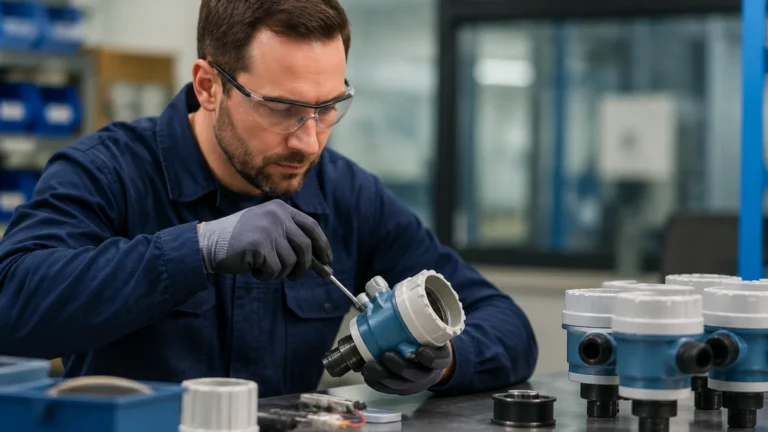
Instrumentation as a Service
Instrumentation as a Service
In the current landscape of industrial automation, the method by which facilities acquire and maintain measurement hardware is undergoing a significant shift. Traditionally, level measurement instruments—such as radar level meters, ultrasonic sensors, and hydrostatic transmitters—were treated as capital expenditures (CAPEX). However, the emergence of instrumentation as a service (IaaS) is redefining this approach, allowing companies to transition to an operational expenditure (OPEX) model. This guide explores the technical foundations of level measurement, the mechanics of the service-based model, and the practical considerations for engineering teams evaluating these solutions.
Understanding the Core Measurement Principles
Before evaluating a service-based procurement model, it is essential to understand the physics and engineering principles behind the instruments being deployed. Reliable data is the foundation of any IaaS agreement, and the choice of technology directly impacts the reliability of that data.
Radar Level Measurement
Radar level meters utilize electromagnetic waves to determine the distance to a material surface. There are two primary methods: Pulse Radar and Frequency Modulated Continuous Wave (FMCW).
* Pulse Radar: The instrument emits a microwave pulse that reflects off the medium and returns to the sensor. The time-of-flight (ToF) is measured to calculate distance.
* FMCW Radar: The sensor emits a continuous signal with a constantly changing frequency. The difference in frequency between the emitted and received signal is proportional to the distance. FMCW is generally preferred in IaaS models due to its higher accuracy and better signal-to-noise ratio in complex environments.
Radar is a non-contact technology, making it ideal for corrosive or high-temperature applications where contact-based sensors would require frequent maintenance.
Ultrasonic Level Sensors
Ultrasonic sensors function similarly to radar but use sound waves instead of microwaves. A piezoelectric crystal within the sensor converts electrical energy into sonic pulses. These pulses bounce off the liquid or solid surface and return to the transducer.
* Considerations: Sound speed is affected by air temperature, requiring integrated temperature compensation. Ultrasonic sensors also have a "blanking zone" (dead band) directly beneath the transducer where measurements cannot be taken. They are highly effective for water treatment and open-channel flow applications.
Hydrostatic Level Transmitters
Hydrostatic measurement is based on the principle that the pressure at a specific point in a static liquid is proportional to the height of the liquid column above it. The formula used is $P = \rho \cdot g \cdot h$, where $P$ is pressure, $\rho$ is the density of the fluid, $g$ is gravity, and $h$ is the height.
* Implementation: These sensors are typically submerged or mounted at the bottom of a tank. They are robust and simple but require the density of the fluid to remain relatively constant for accurate level calculation.
Magnetic Level Gauges and Switches
Magnetic level gauges use a float containing a magnet that moves with the liquid level. This float interacts with an external indicator or a series of reed switches. This provides both a visual local indication and a discrete or continuous electrical signal for remote monitoring.
The Mechanics of Instrumentation as a Service
Instrumentation as a service is a business and technical model where the provider remains the owner of the physical hardware, while the end-user pays for the availability of the measurement or the data generated. This model often includes the sensor hardware, connectivity (IoT gateways), data platform access, and ongoing maintenance or calibration.
In a typical IaaS deployment, the service provider is responsible for:
1. Technology Selection: Ensuring the sensor type (e.g., 80GHz Radar vs. Hydrostatic) matches the application.
2. Lifecycle Management: Handling repairs, firmware updates, and hardware refreshes.
3. Data Integrity: Guaranteeing that the level readings meet a specified accuracy threshold.
For many facilities, this reduces the burden on internal maintenance teams and ensures that the plant is always utilizing modern, high-precision instruments from a professional manufacturer like Welk.
Technical Selection Criteria for Level Instruments
When choosing instruments within an IaaS framework, the following table provides a comparison of common technologies used in industrial automation.
| Technology | Accuracy | Media Type | Temp. Range | Maintenance Requirement | Ideal IaaS Use Case |
| :— | :— | :— | :— | :— | :— |
| FMCW Radar | ±1 mm to ±5 mm | Liquids, Solids, Slurries | -40°C to +250°C | Very Low | High-value chemical storage and volatile liquids. |
| Ultrasonic | ±0.25% of range | Liquids, Coarse Solids | -40°C to +80°C | Low | Water/Wastewater and sumps. |
| Hydrostatic | ±0.1% to ±0.5% | Clean Liquids | -20°C to +100°C | Moderate (Cleaning) | Constant density tanks and deep wells. |
| Magnetic Gauge | ±5 mm to ±10 mm | Clean Liquids | -40°C to +400°C | Moderate | High-pressure boilers and oil-water separators. |
| Level Switches | N/A (Point) | Most Media | -50°C to +150°C | Low | Overfill protection and pump dry-run prevention. |
Installation and Engineering Considerations
For instrumentation as a service to be effective, the physical installation must be performed according to strict engineering standards. Since the service provider often guarantees uptime, the installation phase is critical.
Radar and Ultrasonic Positioning
* Beam Angle: Both radar and ultrasonic sensors have a beam angle. The sensor must be mounted away from the tank wall and internal obstructions (like ladders or agitators) to prevent false echoes.
* Nozzle Geometry: The nozzle height should be minimized to prevent the signal from reflecting off the nozzle's internal edges before reaching the process media.
* Orientation: The sensor face must be parallel to the product surface for maximum signal return.
Hydrostatic Mounting
* Atmospheric Venting: For vented tanks, the transmitter must have a vent tube in the cable to compensate for changes in atmospheric pressure.
* Sediment Avoidance: In applications with solids or sludge, the sensor should be mounted slightly above the bottom of the tank to prevent the diaphragm from being buried or damaged.
Connectivity and Power
IaaS models frequently rely on wireless data transmission (such as LoRaWAN, NB-IoT, or 4G/5G). Engineers must verify:
* Signal Strength: Conduct a site survey to ensure the gateway can receive signals from the sensors.
* Power Supply: While many IaaS sensors are battery-powered to simplify installation, high-frequency radar units may require 24V DC loop power for continuous high-speed sampling.

Limitations and Risk Management
While instrumentation as a service offers numerous benefits, engineers and procurement officers must be aware of specific limitations:
1. Data Sovereignty and Security: When measurement data is sent to a provider's cloud, the facility must ensure that the data transmission complies with local cybersecurity regulations and corporate IT policies.
2. Connectivity Dependency: If the service relies on cellular or satellite networks, a loss of connectivity may result in a "data gap." Local data logging or secondary analog outputs (4-20mA) are often required for critical control loops.
3. Long-term Cost Analysis: While IaaS reduces upfront costs, the cumulative service fees over 10 years may exceed the cost of purchasing and maintaining the equipment internally. The value must be found in the reduced downtime and expert support.
4. Process Compatibility: Not all processes are suitable for a "set and forget" service model. Highly bespoke applications with extreme pressures or exotic materials may still require specialized, owned equipment.
Frequently Asked Questions (FAQ)
Q: How does IaaS handle sensor calibration?
A: In most service agreements, the provider is responsible for periodic calibration. This is often tracked via digital twins or asset management software, ensuring the instrument remains within the specified accuracy tolerance without the user needing to schedule the service.
Q: Can IaaS be integrated into an existing PLC/SCADA system?
A: Yes. Most modern IaaS solutions provide APIs or gateways that can output standard industrial protocols like Modbus TCP, OPC UA, or even traditional 4-20mA signals for local control integration.
Q: What happens if a sensor fails in an IaaS model?
A: The service level agreement (SLA) typically dictates the response time. Because the provider owns the hardware, they are incentivized to replace or repair the unit quickly to maintain the data stream and fulfill the contract.
Q: Is instrumentation as a service suitable for hazardous areas?
A: Yes, provided the hardware used is appropriately certified (e.g., ATEX, IECEx, or UL Class/Div). The service model does not change the requirement for intrinsically safe or explosion-proof hardware in classified environments.
Conclusion
The transition toward instrumentation as a service reflects a broader trend in industrial automation toward data-centric operations. By focusing on the quality and availability of level measurement rather than the ownership of the hardware, facilities can achieve higher operational efficiency and better resource allocation. However, the success of this model depends on a deep understanding of the underlying measurement principles—whether radar, ultrasonic, or hydrostatic—and a rigorous approach to installation and data integration.
For engineers and project managers looking to explore high-performance level measurement hardware that can be integrated into modern service frameworks, reviewing the technical specifications and application support available on our Main Page is a recommended next step. Selecting the right technology at the outset ensures that any service-based model is built on a foundation of accuracy and reliability.