Flow Meter Service Felton Ca
Flow Meter Service Felton Ca
In the industrial landscape of Central California, precise fluid management is a cornerstone of operational efficiency. For facilities in Felton, CA, and the surrounding Santa Cruz County, maintaining the accuracy of flow and level measurement systems is not merely a maintenance task but a critical requirement for regulatory compliance, resource conservation, and process optimization. Whether managing municipal water systems in the San Lorenzo Valley or overseeing specialized industrial processes, understanding the technical nuances of instrumentation is essential for selecting the right flow meter service in Felton, CA.
Industrial level and flow measurement instruments, such as those manufactured by Welk, rely on sophisticated physics to provide real-time data. When these instruments drift or fail, the resulting inaccuracies can lead to significant financial losses or environmental hazards. This guide explores the principles of measurement, selection criteria for instrumentation, and the technical requirements for professional servicing in the local region.
Principles of Level and Flow Measurement
Before engaging a flow meter service in Felton, CA, engineers must understand the underlying principles of the equipment currently in use or required for a new installation. In many industrial applications, level measurement and flow measurement are intrinsically linked, particularly in open-channel flow scenarios where the level of a liquid behind a weir or flume is used to calculate the volumetric flow rate.
Radar Level Measurement (FMCW)
Radar level meters utilize Frequency Modulated Continuous Wave (FMCW) technology. The instrument emits a high-frequency signal (typically in the 80GHz range) that travels to the surface of the medium and reflects back. By measuring the frequency difference between the emitted and received signals, the device calculates the distance with extreme precision. This non-contact method is ideal for corrosive or volatile liquids and remains unaffected by temperature or pressure fluctuations.
Ultrasonic Level Sensors
Ultrasonic sensors operate on the "time-of-flight" principle. The sensor transmits an ultrasonic pulse that bounces off the liquid surface. The time taken for the echo to return is proportional to the distance. While cost-effective, ultrasonic sensors require careful installation to avoid interference from foam, heavy vapors, or internal tank obstructions. They are frequently used in water treatment facilities for monitoring tank levels and open-channel flow.
Hydrostatic Pressure Transmitters
Hydrostatic measurement determines the level by sensing the pressure exerted by a liquid column. The pressure at the bottom of a tank is directly proportional to the height of the liquid and its density. These sensors are robust and reliable for deep wells or large storage tanks, provided the density of the fluid remains constant. For accurate readings, atmospheric pressure compensation is required, often achieved through a vented cable.
Magnetic Level Gauges
Magnetic level gauges provide a visual indication and can be equipped with transmitters for remote monitoring. They use a float containing a magnet that moves with the liquid level, flipping bicolored flags or activating reed switches. This mechanical-magnetic coupling ensures a clear, fail-safe reading even during power outages.
The Relationship Between Level and Flow
In many Felton-based applications, particularly in environmental monitoring and wastewater management, "flow meter service" often refers to the calibration of level sensors used in conjunction with primary flow elements. In an open channel, the flow rate (Q) is a function of the liquid level (H). Professional service technicians must ensure that the level sensor is perfectly aligned with the zero-point of the flume or weir to prevent exponential errors in flow calculation.
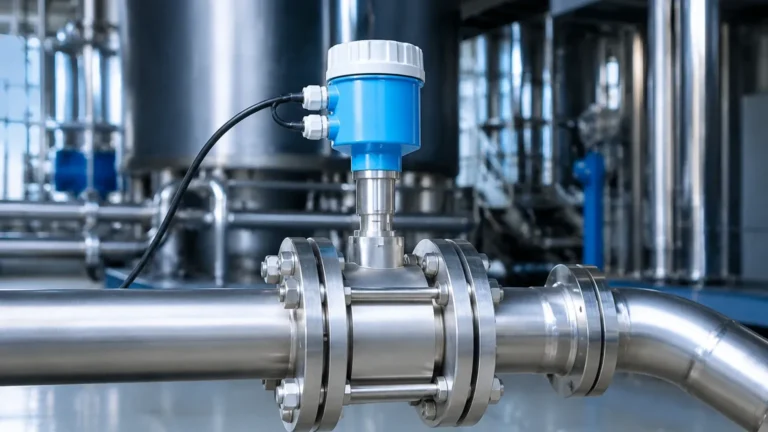
For closed-pipe systems, electromagnetic or ultrasonic flow meters are more common. However, the fundamental need for periodic calibration and verification remains the same. Selecting a flow meter service in Felton, CA, requires a partner who understands both the electronic calibration of the transmitter and the physical hydraulics of the installation site.
Technical Selection Criteria
Choosing the correct instrumentation or service protocol depends on several process variables. The following table provides a comparison of common technologies used in industrial level and flow applications.
| Technology | Accuracy | Medium Type | Contact Type | Best Use Case |
| :— | :— | :— | :— | :— |
| Radar (80GHz) | ±1 mm (0.04 in) | Liquids/Solids | Non-contact | Chemical tanks, high-precision storage |
| Ultrasonic | ±0.25% of range | Clear Liquids | Non-contact | Water treatment, open channels |
| Hydrostatic | ±0.1% to 0.5% | Liquids | Contact | Deep wells, pressurized vessels |
| Magnetic Gauge | ±5 mm (0.2 in) | Liquids | Contact | Visual monitoring, high-temp/pressure |
| Level Switch | N/A (Point) | Liquids/Solids | Contact | Overfill protection, pump control |
Installation Considerations for Felton Facilities
Proper installation is the primary factor in the longevity and accuracy of any measurement system. When performing a flow meter service in Felton, CA, technicians often find that issues attributed to "instrument failure" are actually the result of poor installation geometry.
1. Blocking Distance (Dead Zone): Every non-contact sensor (Radar and Ultrasonic) has a minimum distance it cannot measure, typically ranging from 0.1 m to 0.5 m (4 in to 20 in). The sensor must be mounted high enough to ensure the maximum liquid level never enters this zone.
2. Beam Angle and Obstructions: Sensors emit signals in a cone. If this cone intersects with ladders, agitators, or the tank wall, it creates false echoes. 80GHz radar offers a narrower beam angle (as small as 3 degrees), which minimizes these interference risks compared to older 26GHz models or ultrasonic sensors.
3. Stilling Wells: In turbulent tanks or those with heavy foam, installing the sensor inside a vertical pipe (stilling well) can stabilize the liquid surface and provide a much cleaner signal for hydrostatic or radar sensors.
4. Environmental Protection: Given the coastal and mountainous climate near Felton, outdoor installations must account for moisture ingress and temperature swings. Using IP67 or IP68-rated enclosures and sunshields is recommended to protect the electronics.
Maintenance and Calibration Protocols
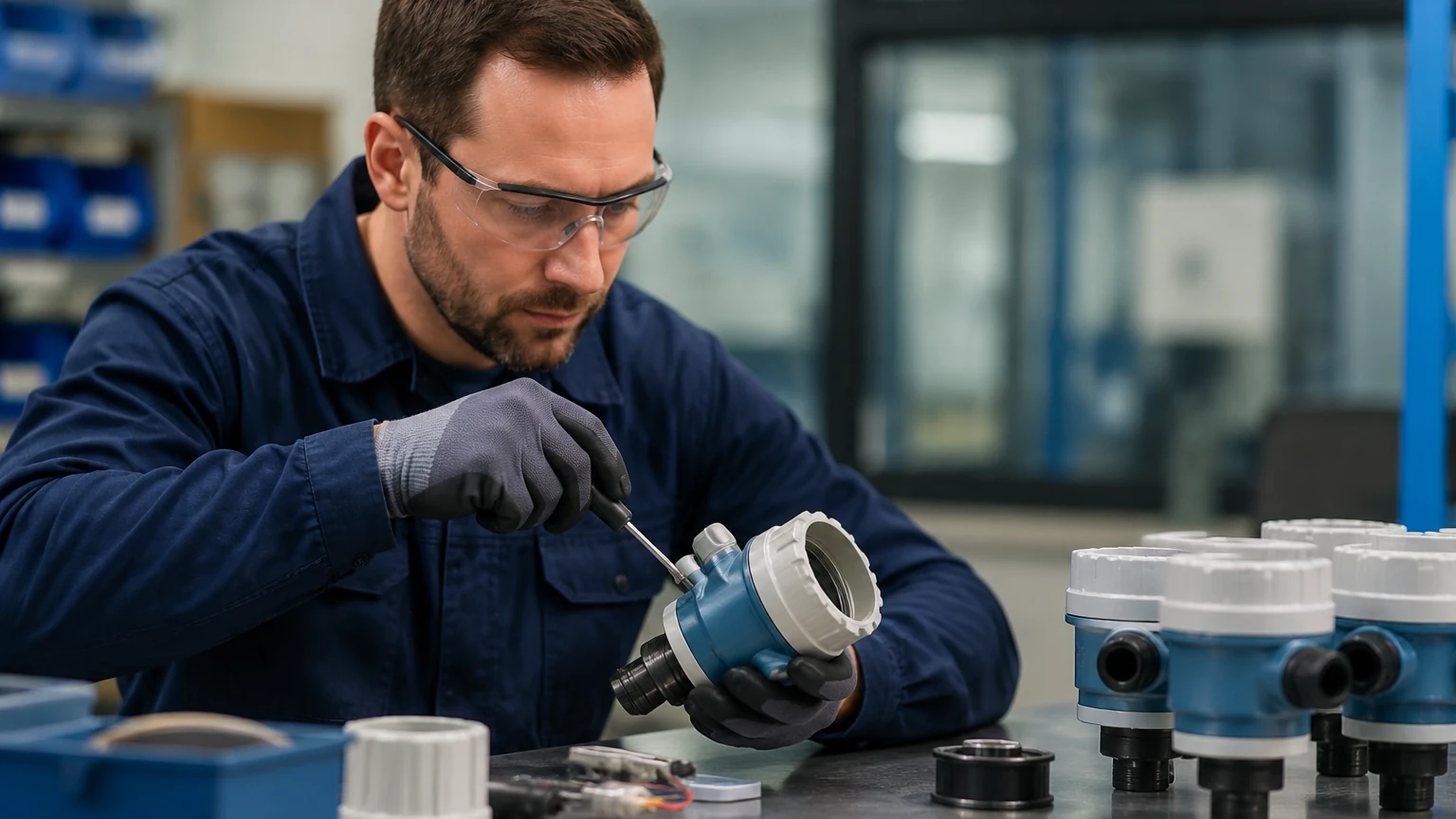
To maintain the integrity of process data, a regular service schedule is mandatory. A comprehensive flow meter service in Felton, CA, should include the following steps:
* Visual Inspection: Checking for corrosion on wetted parts, integrity of cable seals, and build-up on sensor faces.
* Zero-Point Calibration: Verifying that the instrument reads zero when the tank is empty or the flow has stopped. This is particularly critical for hydrostatic transmitters where sensor drift can occur over time.
* Span Verification: Testing the instrument at multiple points (e.g., 25%, 50%, 75%, and 100% of range) using a reference standard or manual measurements.
* Signal Strength Analysis: For radar and ultrasonic devices, reviewing the echo curve to ensure the signal-to-noise ratio remains within acceptable limits.
For facilities requiring high-level documentation for ISO or environmental audits, calibration should be performed using NIST-traceable equipment. For comprehensive product data and technical support, professionals can visit the Main Page to explore the full range of Welk instrumentation and global service standards.
Limitations and Common Challenges
No single technology is a universal solution. Engineers must be aware of the following limitations:
* Vapor and Dust: While radar can penetrate most vapors, heavy dust or steam can attenuate ultrasonic signals, leading to "lost echo" errors.
* Dielectric Constant: Radar depends on the dielectric constant (εr) of the material. Low-dielectric fluids (like certain oils) reflect less energy, requiring more sensitive radar units or the use of guided wave radar (GWR).
* Density Changes: Hydrostatic sensors measure mass, not volume. If the temperature of a liquid changes significantly, its density changes, which will cause a level error unless the transmitter is programmed with temperature compensation.
Frequently Asked Questions (FAQ)
Q: How often should I service my flow meters in Felton, CA?
A: Most industrial standards recommend an annual calibration. However, in critical applications like chemical dosing or custody transfer, semi-annual or quarterly checks may be required to maintain accuracy.
Q: Can I use an ultrasonic sensor for flow measurement in a pipe?
A: Yes, clamp-on ultrasonic flow meters can measure flow in a full pipe by using the Doppler shift or Transit-time methods. However, for open channels, the ultrasonic sensor measures the level, which is then converted to flow via a programmed formula.
Q: What is the benefit of 80GHz radar over older 26GHz models?
A: 80GHz radar provides a much narrower beam, higher resolution, and a smaller antenna size. This allows it to be used in smaller tanks and provides better accuracy in vessels with internal obstructions.
Q: How do I handle foam on the surface of my liquid?
A: Foam can absorb ultrasonic and radar signals. If the foam is light, high-frequency radar often works. For heavy, dense foam, a hydrostatic transmitter or a guided wave radar (which uses a physical probe) is generally more reliable.
Conclusion
Reliable measurement is the foundation of industrial automation. For those seeking flow meter service in Felton, CA, the focus should be on technical proficiency and an understanding of the specific environmental conditions of the region. By selecting the appropriate technology—whether it be the precision of 80GHz radar or the robustness of hydrostatic pressure transmitters—and adhering to a strict maintenance schedule, facilities can ensure long-term operational success. For more information on selecting the right hardware for your specific application, please refer to the Main Page for detailed specifications and engineering resources.