Phosphate Analyzer
Phosphate Analyzer
In industrial water chemistry and process automation, the phosphate analyzer serves as a critical diagnostic tool for maintaining system integrity and environmental compliance. Phosphate monitoring is essential across diverse sectors, from preventing scale and corrosion in high-pressure boilers to managing nutrient discharge in wastewater treatment plants. While physical parameters like volume and height are managed by advanced level measurement technologies, the chemical composition of the liquid—specifically orthophosphate concentration—requires specialized analytical instrumentation to ensure operational efficiency.
This guide provides a comprehensive technical overview of phosphate analyzer technology, its underlying measurement principles, selection criteria, and its integration into broader industrial monitoring systems.
Measurement Principles of Phosphate Analyzers
Most industrial phosphate analyzers utilize colorimetric (photometric) methods to determine the concentration of orthophosphate in a liquid sample. These methods rely on a chemical reaction that produces a color change, the intensity of which is proportional to the phosphate concentration according to the Beer-Lambert Law.
The Molybdenum Blue Method
This is the most common principle for low-range phosphate detection, typically used in boiler water and high-purity applications.
1. Reaction: Ammonium molybdate reacts with orthophosphate in an acidic medium to form phosphomolybdic acid.
2. Reduction: A reducing agent (such as ascorbic acid or amino-naphthol-sulfonic acid) is added, which reduces the phosphomolybdic acid to an intensely colored "molybdenum blue" complex.
3. Measurement: The analyzer passes a light beam through the sample at a specific wavelength (usually around 700 nm to 880 nm). The absorbance is measured by a photoelectric cell and converted into a concentration value in mg/L or ppm.
The Vanadomolybdate Method (Yellow Method)
This method is generally preferred for higher concentration ranges, such as those found in wastewater or industrial process water.
1. Reaction: In an acidic solution, orthophosphate reacts with ammonium molybdate and ammonium metavanadate to form a yellow-colored vanadomolybdophosphoric acid.
2. Measurement: The intensity of the yellow color is measured at wavelengths between 400 nm and 470 nm. This method is robust and less sensitive to temperature fluctuations than the blue method, though it is less sensitive at very low concentrations.
Key Applications in Process Industries
Power Plant Cycle Chemistry
In power generation, phosphate is often added to boiler drum water to maintain a specific pH and to coordinate the precipitation of scale-forming calcium as a soft sludge. A phosphate analyzer ensures that the phosphate levels remain within a narrow control band (typically 1–3 mg/L). Under-dosing leads to corrosion, while over-dosing can cause "hide-out" phenomena or carryover into the steam turbines.
Wastewater Treatment and Nutrient Removal
Environmental regulations strictly limit the amount of phosphorus discharged into natural water bodies to prevent eutrophication. Analyzers monitor the effluent of biological nutrient removal (BNR) processes or chemical precipitation stages where alum or ferric chloride is added. Real-time data allows for the optimization of chemical dosing, reducing waste and ensuring regulatory compliance.
Cooling Tower Management
Phosphate-based corrosion inhibitors are frequently used in open recirculating cooling systems. Monitoring the orthophosphate concentration helps maintain the protective film on heat exchanger surfaces while preventing the formation of calcium phosphate scale.
Technical Selection Criteria
When selecting a phosphate analyzer for an industrial facility, engineers must balance sensitivity requirements with the operational environment. The following table outlines typical selection parameters based on application type:
| Application | Typical Range (mg/L) | Preferred Method | Accuracy Requirements | Measurement Frequency |
| :— | :— | :— | :— | :— |
| High-Pressure Boiler | 0 – 5 mg/L | Molybdenum Blue | ±2% of reading | Continuous / Batch |
| Wastewater Effluent | 0 – 20 mg/L | Vanadomolybdate | ±5% of reading | 10–15 minute cycles |
| Cooling Water | 0 – 50 mg/L | Vanadomolybdate | ±5% of reading | 15–30 minute cycles |
| Drinking Water | 0 – 2 mg/L | Molybdenum Blue | ±0.05 mg/L | Continuous |
| Process Water | Variable | Method dependent | Variable | Application specific |
Key Considerations for Evaluation:
* Detection Limit: For ultrapure water, the analyzer must be capable of detecting concentrations as low as 1 ppb (0.001 mg/L).
* Reagent Consumption: Automated analyzers require periodic reagent replenishment. Evaluating the cost and shelf life of reagents is vital for calculating the Total Cost of Ownership (TCO).
* Sample Conditioning: Analyzers often require the incoming sample to be at a specific temperature (usually 20°C to 30°C) and pressure (less than 0.5 bar). High-temperature boiler samples require cooling coils and pressure-reducing valves.
Installation and Engineering Considerations
Proper installation is paramount to the reliability of a phosphate analyzer. Because these instruments involve fluid handling and chemical reactions, they are more sensitive to environmental conditions than standard physical sensors.
1. Sampling Line Integrity: Sample lines should be as short as possible to minimize lag time. Use stainless steel or high-density polyethylene (HDPE) tubing to prevent phosphate adsorption onto the pipe walls.
2. Filtration: For wastewater applications, a robust primary filtration system (typically 50–100 microns) is necessary to prevent clogging of the analyzer’s internal capillaries and valves.
3. Environmental Protection: Analyzers should be installed in a temperature-controlled environment or a heated/cooled enclosure. Extreme cold can cause reagents to crystallize, while excessive heat can degrade the chemical indicators.
4. Waste Management: Colorimetric analyzers produce a small amount of chemical waste (the reacted sample). This waste must be collected and disposed of according to local environmental regulations, especially if it contains acidic reagents or heavy metals.

Integration with Level Measurement Systems
In a complete process control loop, chemical analysis does not exist in isolation. For instance, in a chemical dosing station, the phosphate analyzer provides the "quality" data (concentration), while level instruments provide the "quantity" data (volume).
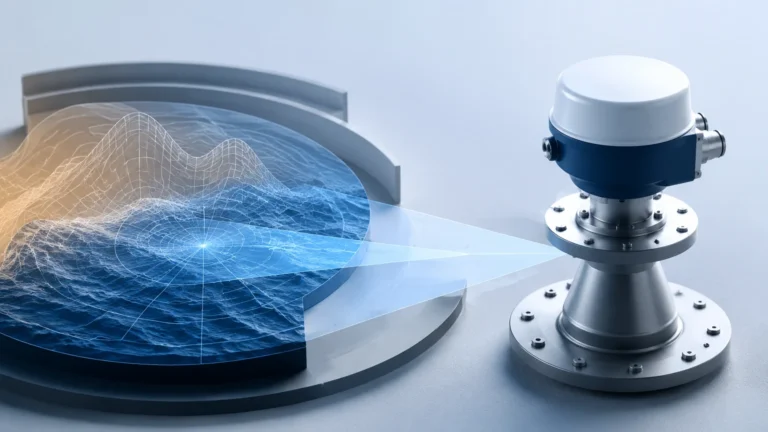
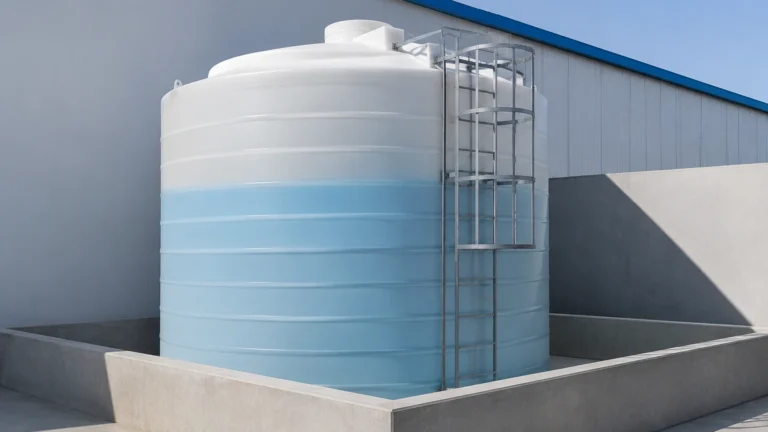
Reliable automated dosing requires knowing how much chemical is left in the storage tank to prevent the pumps from running dry. For high-accuracy inventory management of these reagents and process tanks, engineers often consult the Main Page of specialized manufacturers to select the appropriate radar or ultrasonic level sensors. Integrating the 4-20mA or Modbus output from both the phosphate analyzer and the level meter into a PLC/SCADA system allows for fully automated, closed-loop control of the water treatment process.
Limitations and Potential Risks
While highly accurate, phosphate analyzers have specific limitations that must be addressed during the engineering phase:
* Interferences: High concentrations of silica can interfere with the molybdenum blue reaction, leading to false-positive readings. Modern analyzers often include a pre-treatment step or use specific wavelengths to mitigate this.
* Turbidity: Since the measurement is optical, high turbidity in the raw sample can scatter light and cause errors. Effective filtration or an automated "blanking" cycle (measuring the sample before reagents are added) is necessary.
* Mechanical Wear: Peristaltic pump tubing and injection valves are wear items. A preventative maintenance schedule is required to replace these components before they fail and cause leakage or inaccurate dosing.
Frequently Asked Questions (FAQs)
Q: How often does a phosphate analyzer need calibration?
A: Most industrial analyzers feature an automated calibration function. Depending on the stability of the reagents and the criticality of the process, a weekly or bi-weekly automated calibration using a known standard solution is typical. A manual validation with a laboratory-grade spectrophotometer should be performed monthly.
Q: Can a phosphate analyzer measure total phosphorus?
A: Standard phosphate analyzers measure "orthophosphate" (reactive phosphorus). To measure "total phosphorus," the sample must first undergo a digestion process (usually heat and a strong oxidant like potassium persulfate) to convert organic and polyphosphates into orthophosphate. Some advanced online analyzers include an integrated digestion module for this purpose.
Q: What is the typical response time?
A: Colorimetric analysis is a batch process. Depending on the reaction time required for color development, the measurement cycle typically ranges from 5 to 15 minutes. This is generally sufficient for most water treatment and boiler control loops.
Q: Are there reagent-free phosphate analyzers?
A: There are UV-absorbance sensors that can estimate phosphate levels in certain conditions, but they are highly susceptible to interference from other organic compounds. For regulated reporting and precise process control, reagent-based colorimetric analyzers remain the industry standard due to their specificity and accuracy.
By understanding the chemical principles and mechanical requirements of the phosphate analyzer, plant engineers can ensure that their water chemistry remains within optimal parameters, protecting expensive capital equipment and meeting environmental mandates. When paired with robust level measurement solutions, these analyzers form the backbone of modern industrial fluid management.