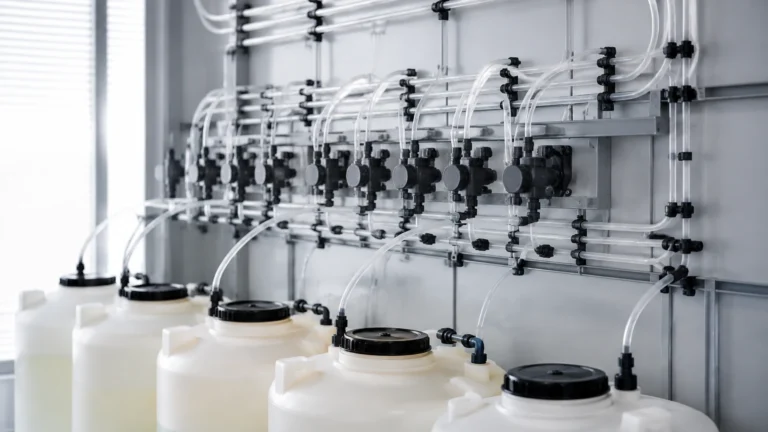
Bleach Storage Tank
Bleach Storage Tank
Storing sodium hypochlorite, commonly known as bleach, presents one of the most significant challenges in industrial chemical management. As a powerful oxidizing agent, bleach is highly corrosive to many metals and can degrade quickly when exposed to heat, UV light, or certain contaminants. For engineers and plant managers, maintaining a reliable bleach storage tank system requires a deep understanding of material compatibility and the precise application of level measurement technologies.
Accurate level monitoring is essential not only for inventory management but also for safety, preventing overfills that could lead to hazardous spills and environmental contamination. This guide explores the technical requirements for bleach storage and the measurement principles used to ensure operational efficiency.
Understanding the Bleach Storage Environment
Sodium hypochlorite is typically stored in concentrations ranging from 5% to 15%. At these levels, the chemical is highly reactive. It naturally decomposes over time, releasing oxygen gas and forming salt crystals. This decomposition is accelerated by temperatures exceeding 30°C (86°F) and exposure to sunlight.
Material Compatibility
Because bleach is an aggressive oxidizer, the choice of materials for both the bleach storage tank and the instrumentation is critical. Common tank materials include:
* Fiberglass Reinforced Plastic (FRP): Often used with a high-grade resin liner (such as vinyl ester) to resist chemical attack.
* High-Density Polyethylene (HDPE): A cost-effective solution for smaller volumes, though it can become brittle over time due to oxidation.
* Lined Steel: Carbon steel tanks lined with rubber or specialized polymers, used for very large-scale industrial storage.
For level sensors, any wetted parts must be constructed from non-reactive materials like PTFE (Teflon), PVDF (Kynar), or high-purity ceramics. Standard stainless steel (304 or 316) is generally unsuitable for direct contact with concentrated bleach as it will suffer from pitting and rapid corrosion.
Measurement Principles for Bleach Level Monitoring
Selecting the correct measurement technology depends on the tank geometry, the concentration of the bleach, and the presence of fumes. Before making a final selection, it is helpful to Review product options and application support on the Welk Main Page to align technical specifications with specific site requirements.
1. Ultrasonic Level Measurement (Non-Contact)
Ultrasonic sensors work by emitting high-frequency sound pulses that travel through the air, bounce off the liquid surface, and return to the transducer. The sensor calculates the distance based on the time-of-flight.
* Principle: $Distance = (Speed of Sound \times Time) / 2$.
* Suitability for Bleach: Ultrasonic sensors are popular because they are non-contact. However, bleach outgasses oxygen. These fumes can change the density of the air in the tank's vapor space, potentially altering the speed of sound and causing measurement errors if the sensor does not have advanced compensation algorithms.
2. Radar Level Measurement (Non-Contact)
Radar sensors, particularly high-frequency 80GHz models, use electromagnetic waves instead of sound.
* Principle: The sensor transmits a continuous wave signal. The frequency difference between the transmitted and received signal (FMCW) is proportional to the distance.
* Suitability for Bleach: Radar is often the superior choice for a bleach storage tank. Unlike sound waves, electromagnetic waves are not affected by the fumes or vapor density changes caused by sodium hypochlorite decomposition. Using a PVDF-encapsulated antenna ensures the sensor remains immune to the corrosive atmosphere.
3. Hydrostatic Pressure Measurement (Contact)
This method measures the pressure exerted by the liquid column at the bottom of the tank.
* Principle: $Pressure (P) = \rho (density) \times g (gravity) \times h (height)$.
* Suitability for Bleach: Hydrostatic transmitters must be equipped with a chemical-resistant diaphragm (e.g., Tantalum or Ceramic). A significant limitation is that the density of bleach changes as it degrades into salt and water. If the density ($\rho$) is not constant, the height ($h$) calculation will be inaccurate unless the system is recalibrated frequently.
Technical Selection Criteria
When evaluating instrumentation for a bleach application, engineers should use the following table to compare the most common technologies used in industrial environments.
| Feature | Ultrasonic Sensors | 80GHz Radar | Hydrostatic Transmitters |
| :— | :— | :— | :— |
| Contact Type | Non-contact | Non-contact | Contact (Submersible or Flanged) |
| Material | PVDF / UPVC | PVDF / PTFE | Ceramic / Tantalum |
| Effect of Fumes | High (may require compensation) | Negligible | None |
| Effect of Density | None | None | High (affects accuracy) |
| Maintenance | Low | Very Low | Moderate (cleaning required) |
| Typical Range | 0.25m – 15m (0.8ft – 49ft) | 0.1m – 30m (0.3ft – 98ft) | 1m – 20m (3.2ft – 65ft) |
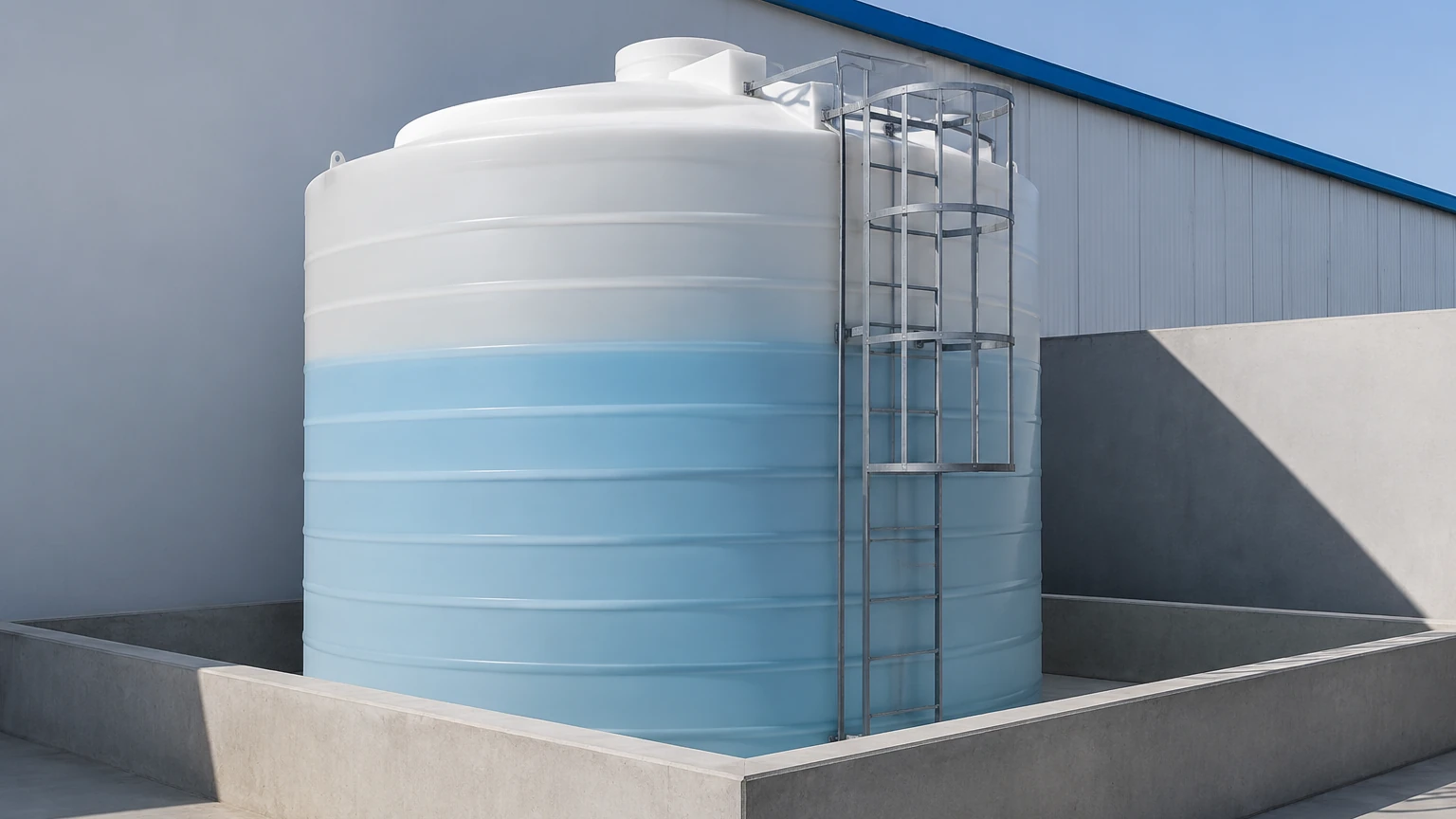
Installation Considerations for Bleach Storage Tanks
Proper installation is as important as sensor selection. In a bleach storage tank, the corrosive nature of the environment dictates specific mounting practices.
Avoiding the "Dead Zone"
All non-contact sensors (ultrasonic and radar) have a "dead zone" or "blocking distance" near the face of the sensor where measurements cannot be taken. Ensure the sensor is mounted high enough (often using a nozzle or standpipe) so that the maximum liquid level never enters this zone. For a typical radar sensor, this might be 100mm (4 inches), while ultrasonic sensors may require 250mm to 500mm (10 to 20 inches).
Fume Management and Sealing
Bleach fumes can migrate into the sensor's electronics housing if the conduit entries are not properly sealed. Use gas-tight cable glands and ensure the housing is rated NEMA 4X or IP67/68. If using a hydrostatic sensor, ensure the vent tube in the cable is protected by a desiccant filter to prevent moisture and corrosive vapors from entering the internal electronics.
Turbulence and Inlets
Avoid mounting the level sensor directly above the fill inlet. Turbulence and splashing can cause erratic readings in ultrasonic sensors and physical wear on hydrostatic diaphragms. If the tank has an internal agitator, radar sensors with narrow beam angles (e.g., 3 degrees) are preferred to avoid false reflections from the blades.
Limitations and Operational Risks
While modern instrumentation is highly reliable, the specific chemistry of bleach introduces unique risks:
1. Crystallization: As sodium hypochlorite decomposes, it forms sodium chloride (salt) crystals. These can build up on hydrostatic diaphragms or the face of ultrasonic transducers. Periodic inspection and cleaning with water are necessary to maintain accuracy.
2. Temperature Sensitivity: Bleach is often stored outdoors. Diurnal temperature swings can affect the pressure in sealed tanks and the speed of sound for ultrasonic sensors. Radar is largely immune to these fluctuations.
3. Venting Requirements: Bleach storage tank systems must be properly vented to prevent pressure buildup from oxygen release. If a tank is under vacuum or pressure, a standard hydrostatic sensor will give a false reading unless a differential pressure (DP) transmitter is used.
Frequently Asked Questions (FAQ)
Q: Can I use a standard stainless steel level switch for high-level alarms in a bleach tank?
A: No. Concentrated bleach will cause stress corrosion cracking and pitting in stainless steel. It is recommended to use a point level switch made of PVDF or a vibrating fork coated with PFA/ECTFE.
Q: How does the concentration of bleach affect hydrostatic level readings?
A: 15% sodium hypochlorite has a higher specific gravity (approx. 1.2) than 5% bleach (approx. 1.07). If your sensor is calibrated for 15% and the bleach degrades to 5%, the sensor will report a level lower than the actual height. Non-contact methods like radar are unaffected by these density changes.
Q: Is it necessary to use a stilling well?
A: A stilling well can help if there is excessive foam or surface turbulence. However, for bleach, the stilling well must be made of a compatible plastic (like PVC) and must have vent holes to ensure the liquid level inside the pipe matches the level outside.
Q: What is the best way to prevent overfilling?
A: Redundancy is key. Use a continuous level transmitter (like radar) for inventory and a separate, independent high-level switch (like an ultrasonic gap switch or a float switch made of chemical-resistant plastic) wired directly to an emergency shut-off valve.
For more detailed technical specifications and to find the right instrument for your specific chemical application, visit the Welk Main Page to explore our full range of radar, ultrasonic, and hydrostatic solutions. Proper measurement in a bleach storage tank is not just about inventory; it is a fundamental component of plant safety and environmental stewardship.