Thermal Gas Flow Meter
Thermal Gas Flow Meter
In the landscape of industrial process control, the accurate measurement of gas flow is as critical as monitoring liquid levels. While many facilities focus on hydrostatic or radar level measurement for their storage assets, the management of gas phases—whether for combustion, aeration, or blanketing—requires specialized instrumentation. The thermal gas flow meter stands as a cornerstone technology for these applications, offering direct mass flow measurement without the need for additional pressure or temperature compensation.
As a professional manufacturer of industrial instruments, Welk recognizes that integrating reliable flow data with level measurement provides a comprehensive view of process efficiency. This guide explores the engineering principles, selection criteria, and installation requirements for thermal gas flow meters in modern B2B industrial environments.
Understanding the Thermal Dispersion Principle
Thermal gas flow meters operate based on the physical principle of thermal dispersion, or thermal conduction. Unlike mechanical flow meters that rely on moving parts or differential pressure devices that measure velocity, thermal meters measure the heat transfer from a heated surface to the flowing fluid.
The Sensor Configuration
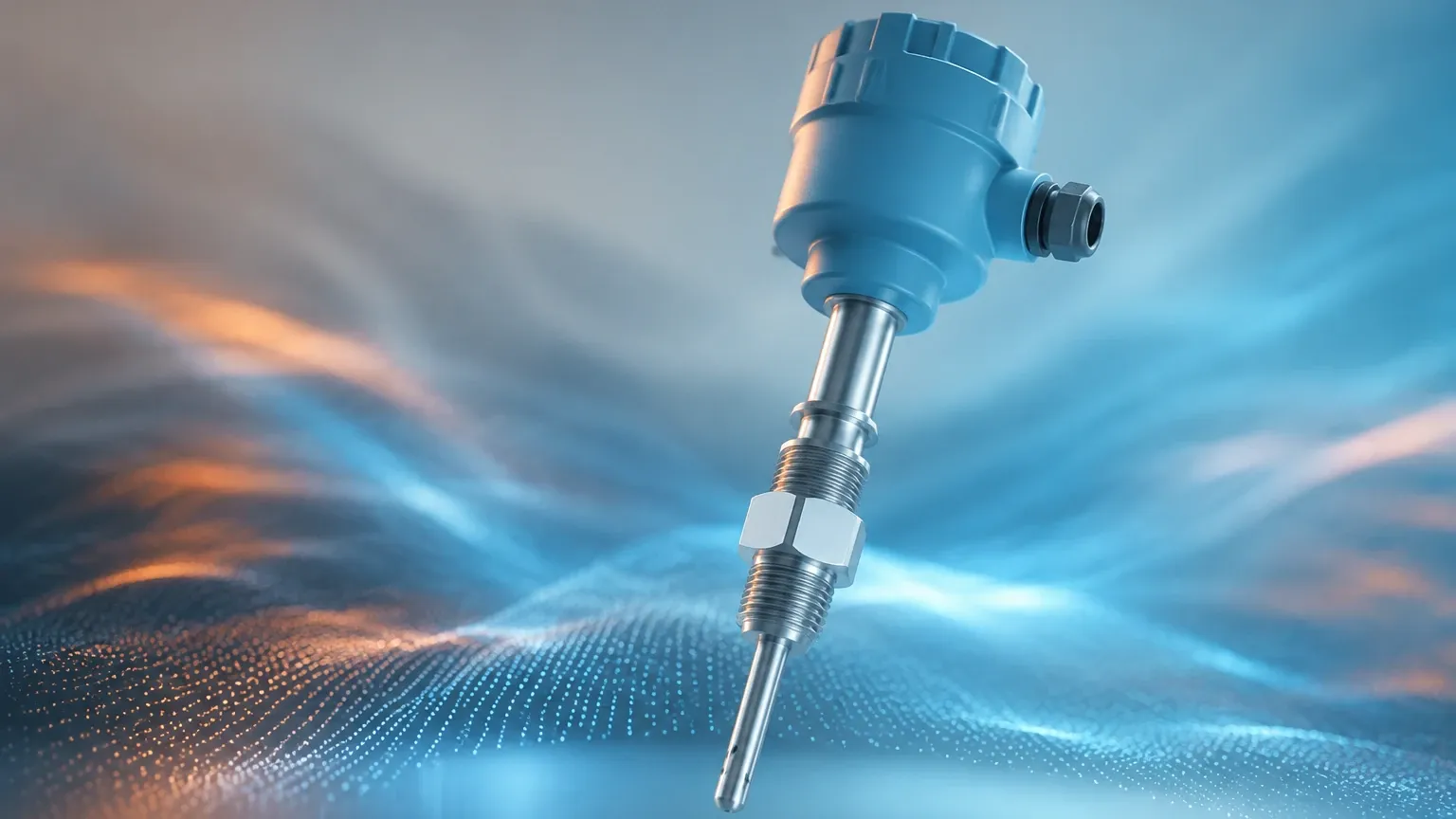
Most industrial thermal mass flow meters utilize two high-precision Resistance Temperature Detectors (RTDs) as sensors. These are typically housed within robust stainless steel or Hastelloy thermowells to protect them from the process media.
1. The Reference Sensor: This RTD measures the actual process temperature of the gas.
2. The Active (Heated) Sensor: This RTD is supplied with a controlled amount of electrical power to maintain a specific temperature differential above the reference sensor.
The Physics of Measurement
As gas molecules pass over the heated sensor, they carry away heat. This cooling effect is directly related to the mass of the gas passing through the pipe. In a "Constant Temperature Differential" design, the electronics increase the power to the heated sensor to maintain the set temperature difference. The electrical power required to maintain this equilibrium is proportional to the mass flow rate.
Because heat transfer is dependent on the density and thermal properties of the gas, the resulting measurement is a true mass flow reading. This eliminates the need for separate pressure and temperature transmitters, which are required by volumetric meters (like vortex or turbine meters) to calculate standardized flow rates (e.g., Nm³/h or SCFM).
Key Advantages in Industrial Applications
Thermal gas flow meters are preferred in many B2B sectors, including wastewater treatment, chemical processing, and power generation, due to several distinct advantages:
* High Turndown Ratio: These meters can often achieve a 100:1 turndown ratio, allowing them to measure extremely low flow rates (leak detection) and high-demand peaks with the same instrument.
* Low Pressure Drop: Because the sensors present minimal obstruction to the flow, the permanent pressure loss is negligible, reducing energy costs in compressed air or gas distribution systems.
* No Moving Parts: The absence of bearings or gears reduces maintenance requirements and increases the instrument's lifespan in harsh industrial environments.
* Direct Mass Flow: For gases like nitrogen, oxygen, or carbon dioxide, mass is the most relevant unit for inventory and process control. Direct mass measurement simplifies the instrumentation architecture.
Technical Specifications and Selection Criteria
Selecting the correct thermal gas flow meter requires a detailed understanding of the process conditions. Engineers should evaluate the following parameters before procurement.
Selection Table: Typical Performance Parameters
| Feature | Specification Range (Typical) |
| :— | :— |
| Accuracy | ±1% of reading + 0.5% of full scale |
| Repeatability | ±0.2% to 0.5% of full scale |
| Pipe Sizes | DN15 to DN6000 (Insertion) / DN15 to DN100 (In-line) |
| Max Operating Pressure | Up to 4.0 MPa (40 bar) |
| Temperature Range | -40°C to +200°C (High-temp versions available) |
| Output Signals | 4-20mA, Pulse, RS485 (Modbus), HART |
| Power Supply | 24V DC or 220V AC |
Insertion vs. In-line Designs
* In-line Flow Meters: These include a calibrated flow body and are typically used for smaller pipe diameters (usually below 100 mm). They offer the highest accuracy because the flow profile is controlled within the factory-calibrated section.
* Insertion Flow Meters: These are designed for large pipes and ducts. The probe is inserted through a flange or a ball valve (hot-tap). They are cost-effective for large-scale applications like stack gas monitoring or large aeration headers in water treatment plants.
Gas Composition
Thermal meters are gas-specific. Because the measurement relies on the thermal conductivity and specific heat of the gas, the meter must be calibrated for the specific gas or gas mixture (e.g., 70% CH4 and 30% CO2 for biogas). If the gas composition changes significantly, the accuracy of the meter will be affected unless the electronics support multiple gas profiles.
Installation Best Practices for Accurate Measurement
To ensure the reliability of the data provided by a thermal gas flow meter, strict adherence to installation guidelines is mandatory. Much like the installation of level sensors on the Main Page of a process control strategy, flow meter placement determines the quality of the signal.
Straight Pipe Run Requirements
Thermal meters require a fully developed flow profile to measure accurately. Turbulence caused by elbows, valves, or reducers can lead to significant errors.
* Upstream: Minimum of 15 to 20 pipe diameters (D) of straight, unobstructed pipe.
* Downstream: Minimum of 5 pipe diameters (D) of straight pipe.
If these distances are not available, the use of a flow conditioner (vane or perforated plate) is recommended to stabilize the flow profile.
Orientation and Positioning
* Horizontal Pipes: The sensor should ideally be installed at the 2 o'clock or 10 o'clock position. This prevents moisture or condensate from settling on the sensor tips (at the bottom) and avoids air pockets or sediment (at the top).
* Vertical Pipes: Flow should ideally be in the upward direction to ensure a consistent gas density and to prevent the accumulation of liquids.
Moisture and Particulates
Thermal dispersion technology is sensitive to moisture droplets. If a water droplet hits the heated sensor, it causes a sudden "spike" in the flow reading as the energy required to evaporate the droplet is misinterpreted as high gas flow. In applications like raw biogas or wet compressed air, moisture separators or heated sensor tips may be necessary.
Limitations and Environmental Considerations
While highly versatile, thermal gas flow meters have specific limitations that engineers must account for during the design phase:
1. Gas Mixture Sensitivity: As noted, they are not suitable for applications where the gas components fluctuate unpredictably.
2. Liquid Coating: If the gas contains heavy oils or sticky particulates that coat the sensor, the heat transfer rate will change, leading to drift. Regular cleaning of the sensor probe is required in these environments.
3. High Velocity Limits: At very high velocities, the cooling effect plateaus, and the meter may lose sensitivity. It is essential to size the meter based on the maximum expected flow velocity (typically up to 60-90 m/s depending on the gas).
Comparison with Other Flow Measurement Technologies
In the B2B industrial sector, choosing between a thermal gas flow meter and other technologies often comes down to the specific goals of the project.
* Thermal vs. Vortex: Vortex meters are excellent for high-velocity steam and gas but have a "cut-off" at low flows where the vortex shedding stops. Thermal meters excel at the low end where vortex meters fail.
* Thermal vs. Differential Pressure (DP): DP meters (like orifice plates) have limited turndown (usually 4:1) and cause significant pressure drops. Thermal meters offer 100:1 turndown and almost no pressure drop.
* Thermal vs. Coriolis: Coriolis meters provide the highest accuracy and are independent of gas composition. However, they are significantly more expensive and physically heavy, making them less practical for large pipe diameters where insertion thermal meters thrive.
Integration with Level Measurement Systems
In many Welk customer applications, flow and level measurement work in tandem. For example, in a chemical storage tank, a radar level meter monitors the liquid volume while a thermal gas flow meter monitors the nitrogen blanketing gas. By tracking the nitrogen consumption relative to the liquid level changes, operators can detect tank seal leaks or optimize gas usage.
For more information on coordinating these measurement technologies, engineers are encouraged to review the comprehensive instrumentation resources available on our Main Page.
Frequently Asked Questions (FAQ)
Q: Can a thermal gas flow meter measure steam?
A: Generally, no. Standard thermal dispersion meters are not designed for steam due to the high temperatures and the phase-change nature of the fluid. Vortex or differential pressure meters are the industry standard for steam.
Q: How often does a thermal flow meter need calibration?
A: For clean gas applications like nitrogen or compressed air, a factory recalibration every 2 to 3 years is typical. In corrosive or dirty environments, annual verification is recommended.
Q: Does the pressure of the gas affect the reading?
A: While the thermal mass flow principle is largely independent of pressure, extremely high pressures (above 2.0 MPa) can change the thermal properties of certain gases. Most modern meters include compensation algorithms for these effects if the operating pressure is specified at the time of order.
Q: Can I use one meter for both Oxygen and Natural Gas?
A: No. The meter must be calibrated and, more importantly, cleaned for oxygen service to prevent combustion risks. A meter used for natural gas will have different internal scaling and safety certifications (ATEX/IECEx) than one intended for oxygen.
Conclusion
The thermal gas flow meter is an indispensable tool for modern industrial automation, providing precise mass flow data with minimal maintenance and high reliability. By understanding the underlying thermal dispersion principles and adhering to strict installation standards, facilities can significantly improve their process efficiency and energy management. Whether you are managing wastewater aeration or industrial gas distribution, selecting the right flow technology is as vital as choosing the correct level measurement solution. For further technical specifications and product support, please visit our Main Page.