Temp Element
Temp Element
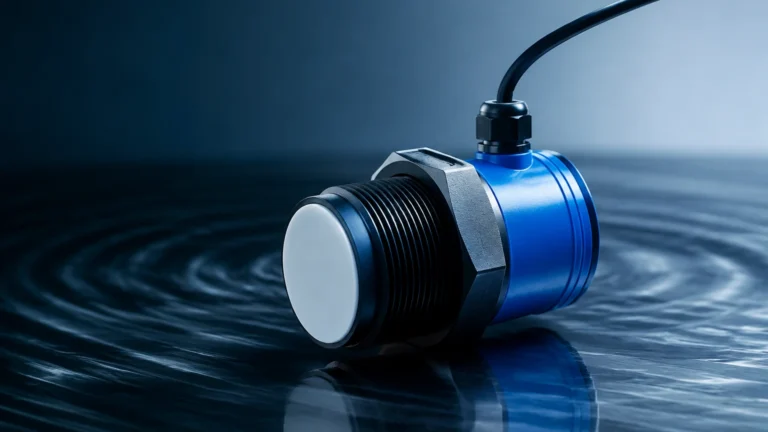
In the landscape of industrial process control, the temperature element, or "temp element," serves as the primary sensing component responsible for detecting thermal energy and converting it into a measurable signal. While often viewed as a standalone instrument, the temp element is an indispensable partner in accurate level measurement. For engineers and system integrators, understanding the nuances of these elements is critical, as temperature fluctuations directly impact the physical properties of the media being measured—be it through density changes in liquids or variations in the speed of sound in gases.
At Welk, a professional manufacturer of industrial level measurement instruments, we recognize that precision in level detection is frequently dependent on the integrity of the integrated or external temp element. This article provides a technical deep dive into the principles, selection, and application of temperature elements within the context of industrial automation and level sensing.
Measurement Principles of Common Temperature Elements
Before selecting a temp element for a specific application, it is essential to understand the physics governing the most common sensing technologies. In industrial environments, the choice typically narrows down to Resistance Temperature Detectors (RTDs) and Thermocouples.
Resistance Temperature Detectors (RTDs)
RTDs operate on the principle that the electrical resistance of a metal increases as its temperature rises. This relationship is highly predictable and repeatable. The most common material used is platinum, leading to the industry-standard Pt100 and Pt1000 sensors.
* Pt100: This element has a resistance of 100 ohms at 0°C. It is the most common temp element in process industries due to its balance of sensitivity and stability.
* Pt1000: With 1000 ohms at 0°C, this element offers higher resolution and is less affected by lead wire resistance, making it ideal for battery-powered or low-power applications.
RTDs are known for their exceptional accuracy and linearity over a range of -200°C to approximately 600°C. They are the preferred choice when precision is the primary requirement.
Thermocouples
Thermocouples function based on the Seebeck effect, where a voltage is generated at the junction of two dissimilar metals when exposed to a temperature gradient. Different combinations of metals (Types K, J, T, E, N, R, S, B) allow for various temperature ranges and environmental resistances.
* Type K (Chromel-Alumel): The most common general-purpose thermocouple, suitable for temperatures up to 1260°C.
* Type J (Iron-Constantan): Often used in vacuum or reducing atmospheres, with a range up to 760°C.
While thermocouples are less linear and slightly less accurate than RTDs, they are significantly more rugged, have faster response times, and can measure much higher temperatures (up to 1700°C or more).
The Critical Role of Temp Elements in Level Measurement
Level measurement is rarely a direct physical measurement; it is often a calculation based on other physical properties. The temp element provides the data necessary to correct these calculations in real-time.
Ultrasonic Level Sensors and the Speed of Sound
Ultrasonic level sensors measure the time it takes for a sound pulse to travel to the liquid surface and back. However, the speed of sound in air is highly dependent on temperature. The formula for the speed of sound ($v$) in dry air is approximately:
$v \approx 331.3 + 0.606 \times T$
Where $T$ is the temperature in degrees Celsius. A change of just 1°C can result in a 0.17% error in distance measurement. Without an accurate temp element to provide compensation, an ultrasonic sensor in an outdoor tank could fluctuate significantly between day and night, even if the liquid level remains constant.
Hydrostatic Level Transmitters and Density
Hydrostatic pressure sensors determine level by measuring the pressure exerted by a liquid column ($P = \rho gh$). The density ($\rho$) of almost all liquids changes with temperature. For example, as water heats up, it expands and its density decreases. If the level transmitter assumes a constant density but the temperature rises, the calculated level will be lower than the actual physical level. Integrating a temp element allows the control system to adjust the density value dynamically, maintaining accuracy across wide thermal ranges.
Radar Level Meters and Thermal Expansion
While radar signals (microwaves) are largely unaffected by air temperature, the physical tank and the mounting components are subject to thermal expansion. In high-precision custody transfer applications, a temp element is used to calculate the expansion of the tank shell, ensuring that the "zero point" of the measurement remains accurate regardless of environmental heating.
Practical Selection Table for Temperature Elements
Choosing the right temp element involves balancing accuracy, range, and durability. The following table serves as a general guide for process engineers.
| Feature | RTD (Pt100/Pt1000) | Thermocouple (Type K/J) | Thermistor |
| :— | :— | :— | :— |
| Temperature Range | -200°C to 600°C | -200°C to 1700°C+ | -40°C to 150°C |
| Accuracy | High (Class A/B) | Moderate | Medium to High |
| Linearity | Excellent | Fair | Poor (Non-linear) |
| Stability | Excellent | Fair (Drifts over time) | Fair |
| Response Time | Slower (0.5 to 5s) | Fast (0.1 to 1s) | Fast |
| Durability | Fragile (Vibration sensitive) | Rugged | Moderate |
| Cost | Moderate to High | Low | Low |
For most level measurement applications in water treatment or chemical processing, a Pt100 RTD is the standard recommendation due to its long-term stability and ease of integration with modern Main Page electronics.
Installation Considerations and Best Practices
The accuracy of a temp element is only as good as its installation. If the sensor is not properly coupled to the process, it will measure the ambient air or the temperature of the tank wall rather than the media.
1. Thermowell Usage
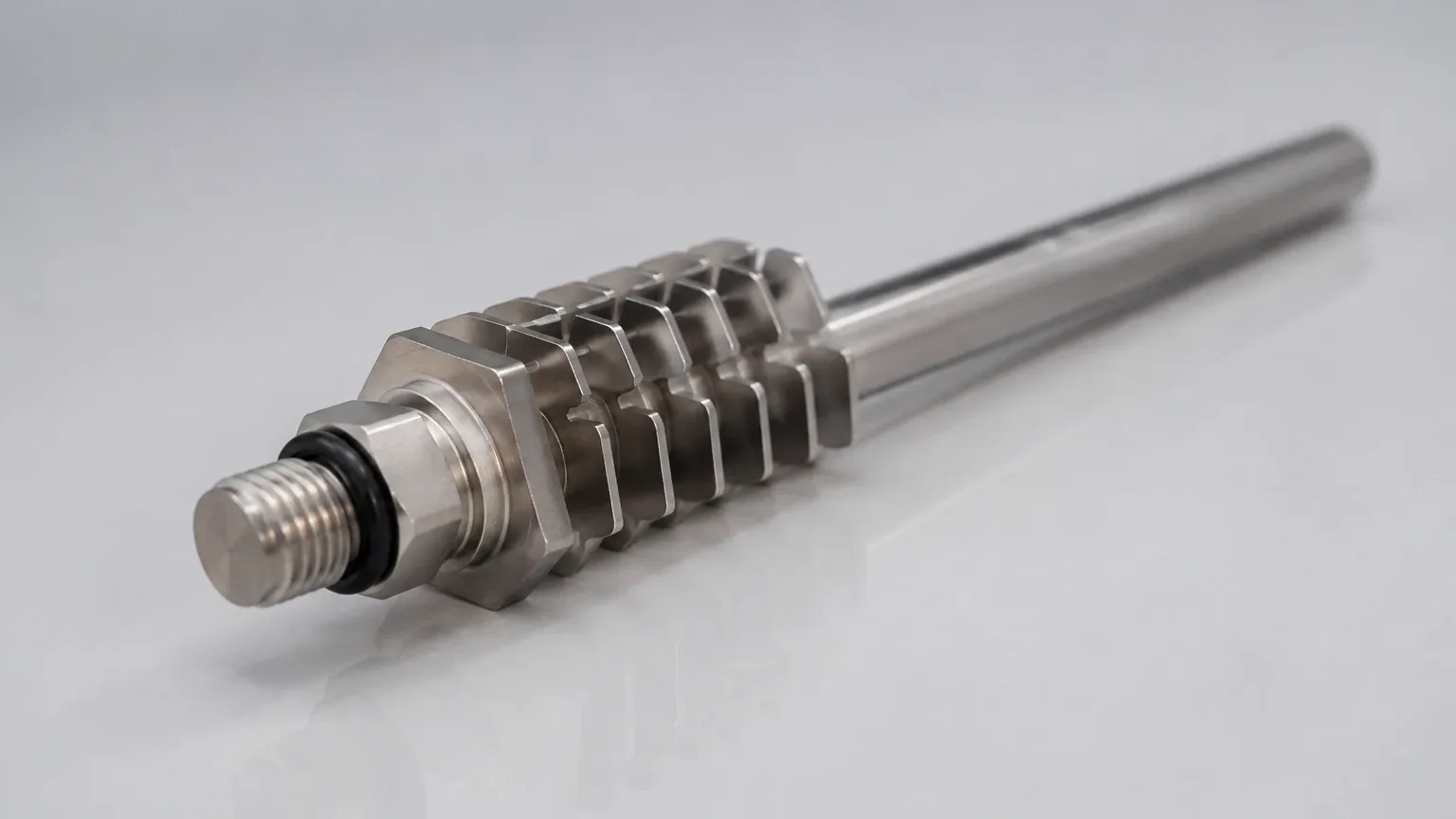
In most industrial applications, the temp element should not be in direct contact with corrosive or high-pressure media. A thermowell—a cylindrical fitting installed into the process vessel—protects the sensor.
* Material Compatibility: Ensure the thermowell material (e.g., 316L Stainless Steel, Hastelloy, or PTFE coating) matches the chemical properties of the fluid.
* Insertion Length: The element must be inserted deep enough to avoid "stem conduction" errors, where heat conducts along the sensor body to the outside environment. A rule of thumb is an insertion depth of at least 10 times the thermowell diameter.
2. Wiring and Signal Integrity
RTDs are sensitive to lead wire resistance. For industrial level systems, 3-wire or 4-wire configurations are preferred over 2-wire setups.
* 3-Wire: Uses a third wire to cancel out the resistance of the leads, suitable for most industrial distances.
* 4-Wire: The most accurate, completely eliminating lead wire resistance, typically used in laboratory or high-precision calibration environments.
3. Placement Relative to Level Sensors
For ultrasonic sensors, the temp element should be placed as close to the acoustic path as possible but shielded from direct sunlight. If the sensor is mounted in a nozzle, the temperature inside the nozzle may differ from the temperature near the liquid surface. Advanced level meters from Welk often feature built-in temperature compensation directly at the transducer face to mitigate this discrepancy.
Limitations and Potential Risks
While temp elements are robust, they are not immune to failure. Engineers should be aware of the following risks:
* Calibration Drift: Over time, especially when exposed to extreme temperatures or mechanical shock, the resistance-temperature relationship of an RTD can shift. Regular calibration checks are necessary for ISO-compliant processes.
* Sensor Lag: In rapidly changing thermal environments, the temp element may lag behind the actual process temperature due to the thermal mass of the thermowell. This can cause temporary inaccuracies in level readings.
* Vibration Fatigue: In applications involving heavy agitation or high-flow bypass pipes, the fine wires inside a temp element can break. Using vibration-resistant thin-film RTDs or ruggedized thermocouples is essential in these scenarios.
* Corrosion: Even with a thermowell, chemical attack can eventually breach the protection. Periodic inspection of the thermowell integrity is a critical maintenance task.
Frequently Asked Questions (FAQs)
Q: Can I use an external temp element instead of the one built into my level sensor?
A: Yes. Most advanced level transmitters allow for an external input (e.g., 4-20mA or HART) from a dedicated temperature transmitter. This is often more accurate in large tanks where temperature stratification occurs.
Q: What is the difference between a Class A and Class B RTD?
A: These classes define the tolerance of the sensor. A Class A Pt100 has a tolerance of ±(0.15 + 0.002|t|)°C, while Class B is ±(0.3 + 0.005|t|)°C. Class A is preferred for high-precision chemical dosing or custody transfer.
Q: How do I know if my temp element has failed?
A: Most modern transmitters will output an error code or a specific current signal (e.g., 21mA or 3.5mA) to indicate an open or short circuit. If the reading is "frozen" regardless of process changes, the element may have suffered a mechanical break.
Q: Do radar level meters require a temp element?
A: For standard level monitoring, radar is largely immune to temperature. However, for mass flow calculations or high-accuracy volume measurement in large tanks, temperature data is required to account for the thermal expansion of the liquid and the vessel itself.
Conclusion
The temp element is a foundational component of modern industrial instrumentation. Whether it is a Pt100 RTD ensuring the accuracy of an ultrasonic level sensor or a Type K thermocouple monitoring a high-temperature reactor, the choice of element dictates the reliability of the entire control loop. By understanding the measurement principles and following rigorous installation standards, facilities can ensure their level measurement systems provide the precision required for safe and efficient operations. For those seeking integrated solutions, exploring the Main Page of professional manufacturers like Welk provides access to high-performance instruments designed to withstand the rigors of industrial environments.