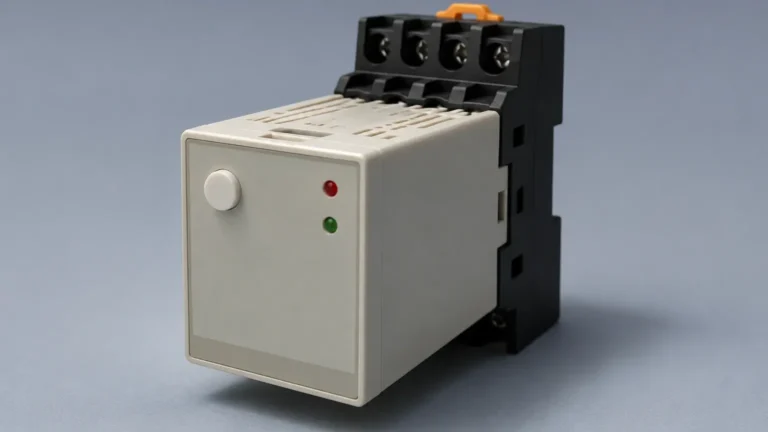
Level Sensor Air Suspension
Level Sensor Air Suspension
In modern industrial logistics, heavy-duty transport, and precision automation, air suspension systems play a pivotal role in maintaining stability, protecting sensitive cargo, and ensuring operational safety. At the heart of these systems is the level sensor air suspension, a critical component that provides the feedback necessary for active height control. Whether used in heavy-duty vehicles, automated guided vehicles (AGVs), or industrial vibration isolation platforms, these sensors ensure that the system maintains a consistent ride height regardless of the load being carried.
Effective level management in pneumatic systems involves more than just measuring height; it requires a robust integration of continuous level sensors and safety-oriented Level Switches to prevent over-pressurization or mechanical bottoming out. This article explores the engineering principles, selection criteria, and installation best practices for level sensing technology within air suspension environments.
Understanding Air Suspension Systems and Level Control
Air suspension replaces traditional steel springs with flexible air bellows or bags. By adjusting the air pressure within these bellows, the system can raise or lower the chassis or platform. The "level" in this context refers to the distance between the sprung mass (the load/chassis) and the unsprung mass (the axle or ground).
To automate this adjustment, a control unit requires real-time data. The level sensor air suspension acts as the "eyes" of the system, detecting deviations from the setpoint. If a heavy load is placed on a platform, the sensor detects a decrease in height, signaling the compressor to add air. Conversely, when the load is removed, the sensor detects an increase in height and triggers the release of air. This closed-loop control is essential for maintaining aerodynamic efficiency, headlight alignment in vehicles, and precise height matching in industrial loading docks.
Measurement Principles for Air Suspension Level Sensing
Different industrial applications require different sensing technologies. The choice of measurement principle depends on the required accuracy, environmental conditions, and mechanical constraints.
1. Potentiometric and Hall Effect (Linkage-Based)
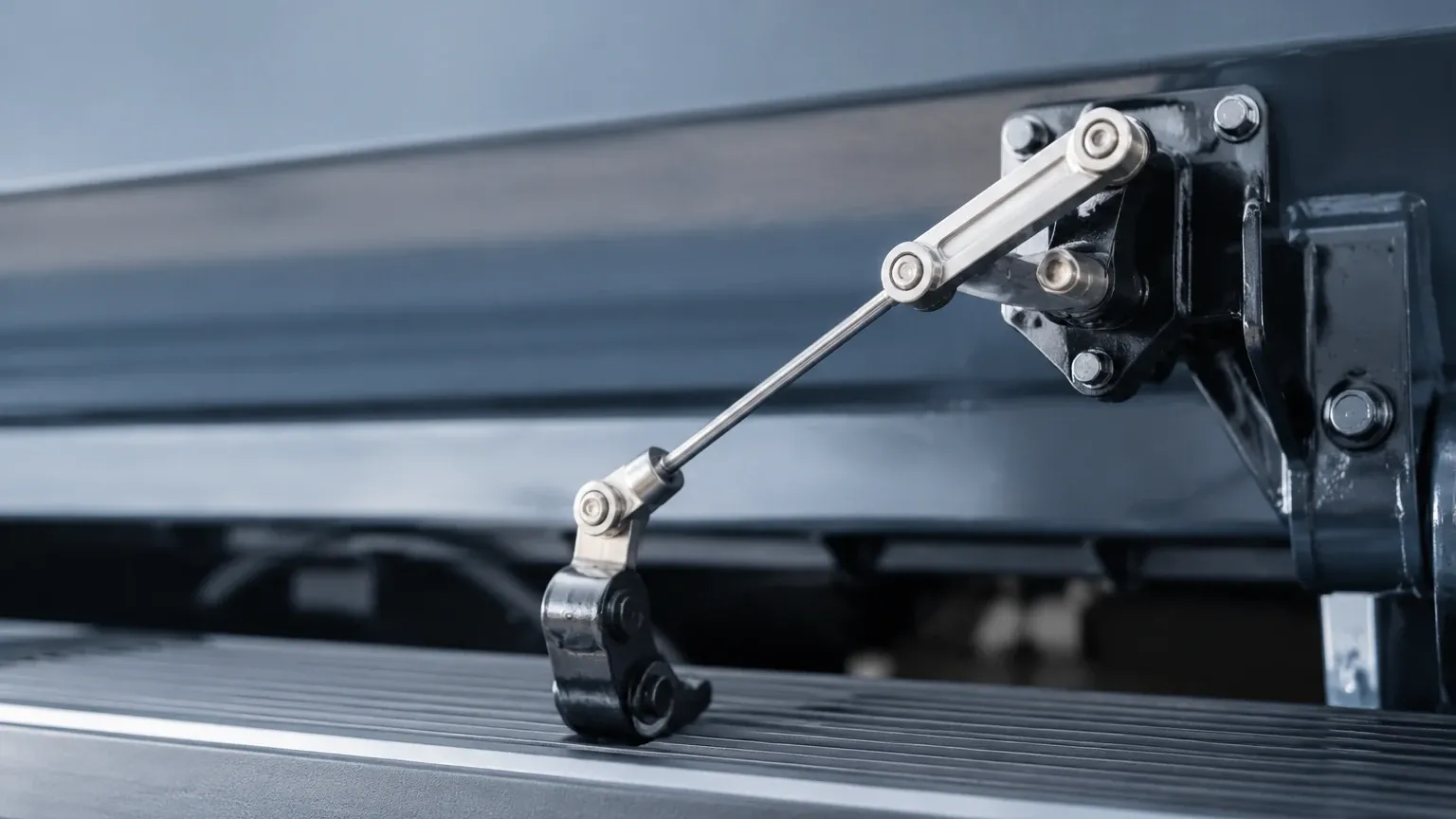
Most traditional air suspension systems use a mechanical linkage connected to a rotary sensor. As the suspension moves up and down, the linkage rotates a shaft inside the sensor.
* Potentiometric Sensors: These use a resistive track. While cost-effective, they are prone to wear over millions of cycles due to physical contact.
* Hall Effect Sensors: These are the modern standard for linkage-based sensing. They use a non-contact magnetic principle to detect the angle of rotation. Since there is no internal friction, they offer a significantly longer service life and higher resistance to vibration.
2. Ultrasonic Level Sensing
In some industrial platform applications, non-contact ultrasonic sensors are used to measure the distance between the platform and the ground. The sensor emits a high-frequency sound pulse and measures the time it takes for the echo to return. This is particularly useful in stationary or slow-moving industrial equipment where mechanical linkages are difficult to install.
3. Laser and Optical Sensing
For high-precision industrial applications, such as vibration isolation tables used in semiconductor manufacturing, laser-based distance sensors provide sub-millimeter accuracy. These sensors measure the time-of-flight or phase shift of a light beam reflected off a target surface.
4. Pressure-Based Level Estimation
While not a direct measurement of height, pressure sensors can be used to infer the level based on the known relationship between air bag pressure and load. However, this method is often used as a secondary check rather than a primary level control because air temperature and bellows elasticity can introduce variables that affect accuracy.
The Role of Level Switches in Pneumatic Safety
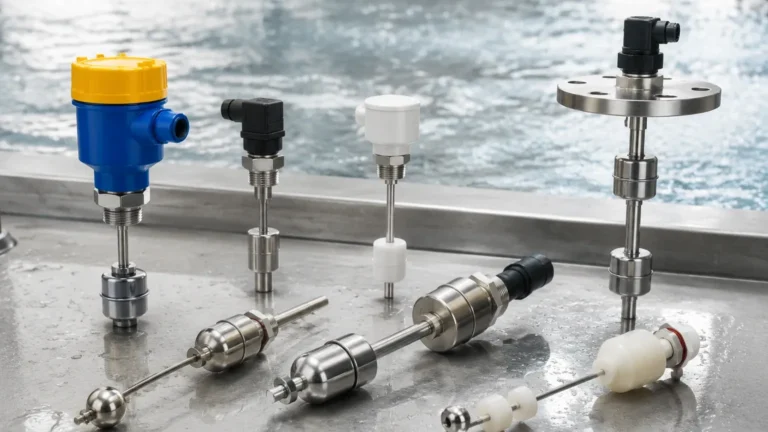
While continuous level sensors provide the data for height adjustment, Level Switches serve a vital role as safety interlocks and limit controllers within the wider pneumatic circuit. In industrial air suspension setups, these switches are often integrated into the air preparation and storage units.
For example, a condensate level switch is frequently installed in the air reservoir or water trap. As air is compressed, moisture precipitates; if this water reaches a certain level, the switch triggers an automatic drain valve. This prevents moisture from entering the air bellows, which could lead to internal corrosion or freezing in cold climates. Furthermore, high/low-limit switches can be used as redundant safety measures to shut down the compressor if the suspension reaches an unsafe mechanical limit that the primary level sensor failed to detect.
Selection Criteria for Industrial Air Suspension Sensors
Selecting the right level sensor air suspension requires a detailed analysis of the operating environment. Engineers should consider the following factors:
Environmental Protection (IP Rating)
Sensors mounted on the underside of vehicles or in industrial wash-down areas must have high Ingress Protection (IP) ratings. IP67 is the minimum requirement, while IP69K is preferred for systems exposed to high-pressure steam cleaning or heavy road spray.
Signal Output
* Analog (0.5V – 4.5V or 4-20mA): Common in simpler systems, providing a continuous voltage or current proportional to the height.
* PWM (Pulse Width Modulation): Offers better noise immunity than simple analog voltage.
* CAN Bus (J1939): The standard for heavy-duty vehicle and industrial networking, allowing for digital communication, diagnostics, and easier integration with the main vehicle control unit (VCU).
Accuracy and Hysteresis
In precision industrial platforms, a resolution of ±0.5 mm may be required. In heavy trucking, a resolution of ±2 mm is usually sufficient. Hysteresis—the difference in sensor output when approaching a point from different directions—must be minimized to prevent "hunting" in the control system.
Durability and Vibration Resistance
Industrial sensors must withstand constant vibration and occasional mechanical shocks. Specifying sensors with potted electronics and robust connector interfaces (such as M12 or Deutsch DT connectors) is essential for long-term reliability.
Comparison of Level Sensing Technologies
| Technology | Accuracy | Durability | Cost | Best Use Case |
| :— | :— | :— | :— | :— |
| Hall Effect (Rotary) | Medium | High | Low-Medium | Heavy trucks, buses, AGVs |
| Ultrasonic | Medium | Medium | Medium | Stationary industrial platforms |
| Laser/Optical | Very High | Low-Medium | High | Cleanroom vibration isolation |
| Magnetostrictive | High | High | High | Integrated hydraulic/pneumatic cylinders |
Installation Considerations and Calibration
Proper installation is as important as the sensor technology itself. A poorly mounted level sensor air suspension will provide erratic data, leading to system instability.
1. Linkage Geometry
For rotary sensors, the geometry of the linkage arm must be calculated to ensure the sensor operates within its linear range. The arm should ideally be horizontal at the "nominal" or target ride height. This ensures that upward and downward movements produce symmetrical changes in the sensor output.
2. Mounting Location
Sensors should be mounted in areas protected from direct mechanical impact (e.g., flying debris on a road). In industrial settings, they should be clear of moving parts that could snag the wiring or linkage. Using shielded cables is recommended to prevent Electromagnetic Interference (EMI) from nearby motors or compressors.
3. Calibration Procedures
Once installed, the system must be calibrated. This typically involves three steps:
* Zero Point/Nominal Height: Setting the target level when the system is at its standard operating state.
* Maximum Extension: Recording the sensor value when the air bags are fully inflated.
* Maximum Compression: Recording the sensor value when the air bags are fully deflated.
These values are stored in the Electronic Control Unit (ECU) to define the operational boundaries of the system.
Limitations and Environmental Challenges
Despite their reliability, level sensor air suspension systems face several challenges:
* Temperature Fluctuations: Extreme cold can make rubber bellows stiff, while extreme heat can affect the air density. High-quality sensors include temperature compensation circuitry to maintain accuracy from -40°C to +85°C.
* Contamination: In mining or construction environments, the buildup of mud or ice on mechanical linkages can restrict movement. In such cases, non-contact sensors or protective bellows for the linkages are necessary.
* Dynamic Loading: On a moving vehicle, the level sensor will detect every bump in the road. The control software must use digital filtering (such as a moving average) to ignore these high-frequency oscillations and only respond to sustained changes in load or level.
Frequently Asked Questions (FAQ)
Q: Can I use a standard level switch for air suspension height control?
A: A simple level switch is generally not sufficient for primary height control because it only provides a binary (on/off) signal. Air suspension requires a continuous level sensor to monitor the exact position. However, Level Switches are excellent for backup safety limits and reservoir moisture management.
Q: What happens if the level sensor air suspension fails?
A: Most modern systems feature a "limp home" mode. If the ECU detects an out-of-range signal or a loss of communication (via CAN bus), it will typically freeze the current air pressure or exhaust the air to a safe mechanical stop to prevent unpredictable handling.
Q: How often should these sensors be maintained?
A: For mechanical linkage sensors, a visual inspection every 50,000 km (or 1,000 operating hours) is recommended to check for loose hardware or worn bushings. Non-contact sensors should be checked for cleanliness and secure mounting.
Q: Are ultrasonic sensors better than Hall Effect sensors?
A: Not necessarily. Ultrasonic sensors are better for measuring distance to a flat surface without mechanical contact, but they can be affected by wind, air temperature gradients, and surface texture. Hall Effect sensors with linkages are generally more robust for mobile equipment.
Conclusion
The level sensor air suspension is a fundamental component in achieving the balance of comfort, safety, and efficiency required in modern industrial and transport applications. By understanding the underlying measurement principles—from non-contact Hall Effect sensing to the integration of safety-critical level switches—engineers can design more resilient and accurate pneumatic systems. When selecting a solution, prioritizing environmental protection, signal integrity, and mechanical durability ensures that the system remains operational even in the most demanding conditions.