Level Sensor Audi
Level Sensor Audi
In the realm of high-precision engineering, the term "level sensor audi" often evokes the stringent standards of the automotive industry, where accuracy, reliability, and durability are non-negotiable. Whether managing fuel levels in a high-performance vehicle or overseeing the complex fluid dynamics in an automotive manufacturing plant, level sensing technology serves as the critical interface between physical states and digital control systems. For industrial professionals and engineers, understanding the transition from automotive-grade precision to industrial-scale application is essential for maintaining operational efficiency.
Industrial level measurement, much like the systems found in Audi’s sophisticated vehicle architectures, relies on a variety of physical principles to provide real-time data. This guide explores the core technologies behind level sensors and Level Switches, their application in automotive manufacturing environments, and the technical criteria necessary for selecting the right instrumentation.
Core Measurement Principles
Before selecting a level sensor for industrial or automotive-adjacent applications, it is vital to understand the underlying physics of the technology. Each principle offers distinct advantages depending on the medium—liquid, slurry, or solid—and the environmental conditions.
1. Ultrasonic Level Sensing
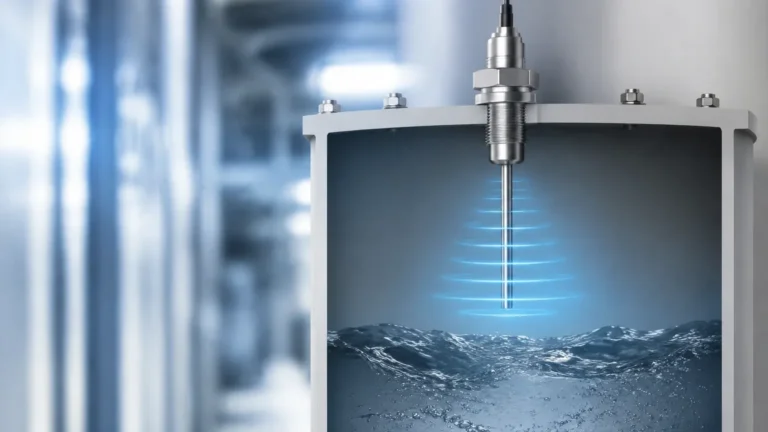
Ultrasonic sensors operate on the Time-of-Flight (ToF) principle. The sensor emits high-frequency sound waves (typically 20 kHz to 200 kHz) that travel through the air, reflect off the surface of the medium, and return to the transducer. By measuring the time interval between emission and reception, the system calculates the distance to the material surface.
* Best for: Non-contact measurement of liquids and granulates in open or closed tanks.
* Limitation: Performance can be affected by heavy foam, dust, or extreme temperature gradients that alter the speed of sound.
2. Radar (Microwave) Level Measurement
Similar to ultrasonic sensors, radar sensors use ToF but employ electromagnetic waves rather than sound. These waves travel at the speed of light and are less susceptible to environmental interference such as vacuum conditions, high pressure, or vapor.
* Best for: High-precision industrial tanks, chemical processing, and environments where contact with the medium must be avoided.
* Frequency Range: Commonly 6 GHz, 26 GHz, or 80 GHz, with higher frequencies offering narrower beam angles for better accuracy in narrow vessels.
3. Hydrostatic Pressure Sensing
Hydrostatic sensors measure the pressure exerted by a liquid column at a specific point. Since pressure is directly proportional to the height of the liquid and its density ($P = \rho \cdot g \cdot h$), the level can be determined with high accuracy.
* Best for: Deep wells, water treatment facilities, and vented tanks where liquid density remains relatively constant.
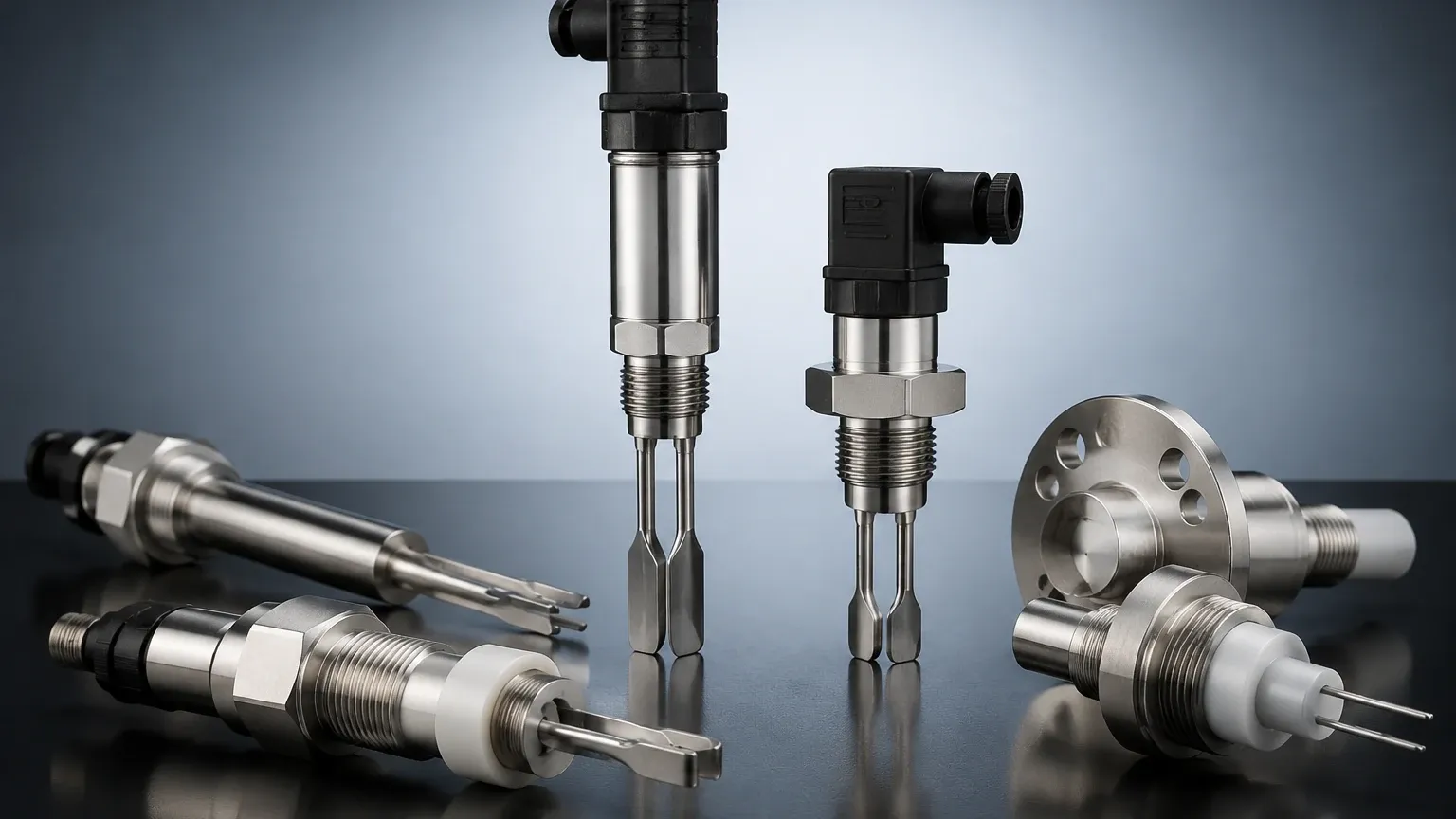
4. Vibrating Fork (Tuning Fork) Switches
Used primarily for point-level detection, these sensors utilize a fork-shaped element that vibrates at its natural resonant frequency in air. When the fork is submerged in a liquid or solid, the frequency shifts. This shift is detected by the electronics, which then trigger a switch output.
* Best for: Overfill protection, high/low-level alarms, and pump dry-run prevention.
The Role of Level Sensors in Automotive Manufacturing
In the context of "level sensor audi" standards, the focus often shifts from the vehicle component to the industrial infrastructure that supports automotive production. Automotive assembly plants utilize a vast array of level measurement instruments to manage fluids essential for production.
Paint Shop Applications
In automotive paint shops, precise level control of solvents, paints, and deionized water is critical. Ultrasonic or radar sensors are often preferred here to avoid contamination of the fluids. Accurate level monitoring ensures that the dipping tanks and spray systems operate without interruption, maintaining the high-quality finish expected of premium brands.
Coolant and Lubricant Management
Centralized coolant systems in machining centers require robust level switches to manage the flow of cutting fluids. If levels drop too low, tools can overheat, leading to costly production halts. Level Switches provide the necessary fail-safe to trigger automated refills or emergency shutdowns.
Wastewater Treatment in Production
Automotive manufacturing generates significant industrial wastewater that must be treated before discharge. Hydrostatic transmitters and ultrasonic sensors are commonly used in these treatment plants to monitor neutralization tanks and sludge levels, ensuring compliance with environmental regulations.
Technical Selection Criteria
Choosing the correct level sensor requires a detailed analysis of the process conditions. The following table provides a comparison of common technologies used in industrial and automotive manufacturing contexts.
| Technology | Measuring Range | Accuracy | Typical Operating Temp | Pressure Limit | Recommended Medium |
| :— | :— | :— | :— | :— | :— |
| Ultrasonic | Up to 30 m | ±0.25% | -40°C to +80°C | Up to 3 bar | Water, Chemicals, Slurries |
| Radar (80GHz) | Up to 120 m | ±1 mm | -40°C to +200°C | Up to 40 bar | Corrosive Liquids, Solids |
| Hydrostatic | Up to 200 m | ±0.1% to 0.5% | -10°C to +80°C | N/A (Submersible) | Clean Water, Fuel, Oils |
| Vibrating Fork | Point Level | High Repeatability | -50°C to +150°C | Up to 64 bar | Most Liquids and Powders |
Installation and Engineering Considerations
To ensure the longevity and accuracy of a level sensor, several installation factors must be addressed during the engineering phase.
1. Dead Band (Blocking Distance): Ultrasonic and radar sensors have a minimum distance near the sensor face where measurements cannot be taken. For example, an ultrasonic sensor might have a dead band of 250 mm. The sensor must be mounted high enough so that the maximum liquid level never enters this zone.
2. Mounting Position: Sensors should be mounted away from the tank wall to prevent false reflections (echoes). For radar and ultrasonic units, a distance of at least 200 mm to 500 mm from the wall is usually recommended, depending on the beam angle.
3. Internal Obstructions: In tanks with agitators, heating coils, or ladders, the sensor must be positioned so that the signal beam does not strike these objects. Modern radar sensors often include "false echo suppression" software to ignore these fixed obstructions.
4. Process Connections: Standard industrial connections include threaded (G1", NPT) or flanged (DN50, DN80) types. In hygienic automotive applications (like high-purity water), Tri-clamp connections may be required to prevent bacterial growth.
Limitations and Environmental Challenges
While modern sensors are highly advanced, certain conditions can challenge their performance:
* Vapor and Steam: High concentrations of steam can attenuate ultrasonic signals. In such cases, high-frequency radar (80 GHz) is a more reliable alternative as it penetrates vapor effectively.
* Turbulence: Rapidly moving liquid surfaces can scatter signals. Using a stilling well or a sensor with integrated signal averaging software can mitigate this issue.
* Build-up: In sticky or viscous media, material may accumulate on the sensor face. Vibrating fork switches are relatively resistant to build-up, but non-contact radar is the gold standard for avoiding maintenance issues related to coating.
Frequently Asked Questions (FAQ)
What is the difference between a level sensor and a level switch?
A level sensor (or transmitter) provides continuous measurement of the fluid level, usually outputting a 4-20mA or digital signal (HART, Modbus) representing 0% to 100% of the tank volume. A Level Switch is a point-level device that triggers a discrete signal (on/off) when the medium reaches a specific height.
How do I calibrate an ultrasonic level sensor?
Most modern sensors are calibrated by setting the "Empty" and "Full" distances via a local display or a handheld communicator. For example, if a tank is 5 meters deep, you set the 4mA point at 5000 mm and the 20mA point at the desired maximum fill height (e.g., 500 mm from the sensor face).
Can industrial level sensors be used for automotive fuel testing?
Yes. Industrial-grade hydrostatic or guided wave radar sensors are frequently used in automotive R&D labs and fuel testing rigs where high precision and chemical compatibility with various fuel blends (gasoline, diesel, ethanol) are required.
Why is 80 GHz radar becoming the standard for industrial tanks?
80 GHz radar offers a much narrower beam angle compared to older 6 GHz or 26 GHz models. This allows the sensor to be installed in small openings and prevents the signal from hitting tank walls or internal structures, resulting in a much higher signal-to-noise ratio and better accuracy.
Conclusion
Whether you are managing the fluid levels in a precision-engineered vehicle or overseeing the massive storage tanks of a production facility, the principles of level measurement remain the same. By understanding the specific requirements of the medium and the environment, engineers can select instrumentation that mirrors the reliability and performance associated with the "level sensor audi" standard. For those looking to implement robust point-level detection or overfill protection, exploring high-quality Level Switches is the first step toward a safer and more efficient automated process.