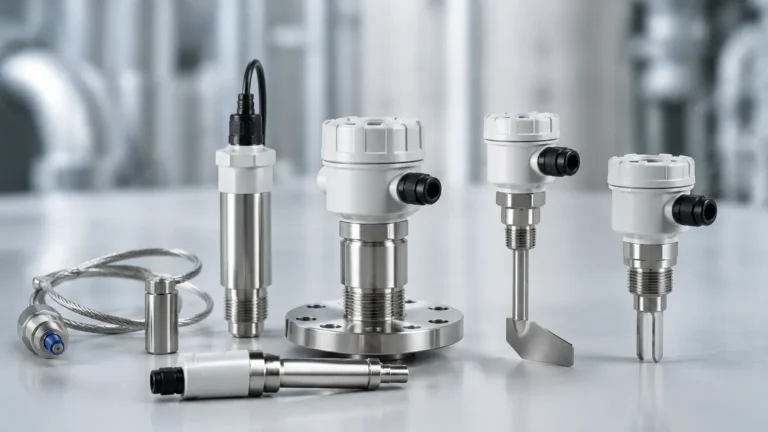
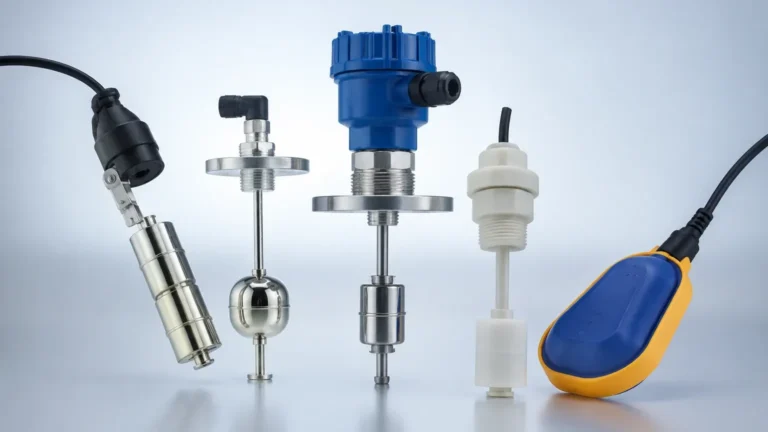
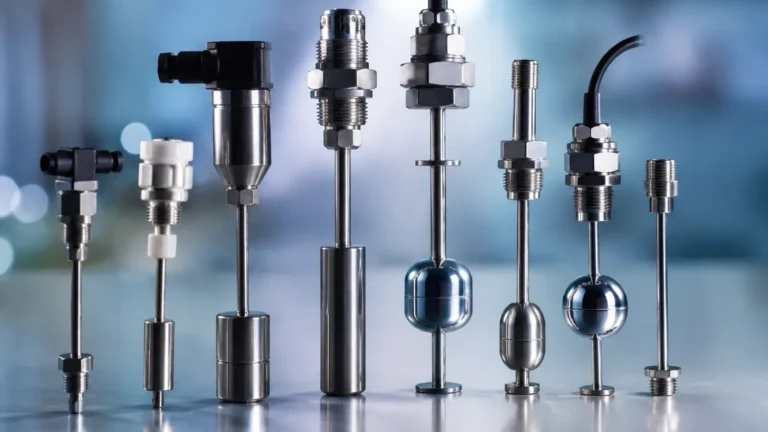
8 Switches
8 Switches
In the landscape of industrial automation, point level detection serves as the primary line of defense against tank overfills, dry-run pump damage, and inventory mismanagement. Unlike continuous level transmitters that provide a constant stream of data regarding the exact volume of a vessel, level switches are binary devices. They trigger an electrical signal—typically a relay or transistor output—when a substance reaches a specific height.
Choosing the correct technology from the vast array of available Level Switches is critical for operational safety. This guide examines 8 switches commonly utilized in modern process industries, detailing their measurement principles, ideal applications, and technical limitations to assist engineering teams in making informed procurement decisions.
Understanding the Role of Point Level Detection
Before selecting one of the 8 switches described below, it is essential to understand the fundamental mechanics of point level detection. These devices are designed to change state (from open to closed, or vice versa) when they contact—or in some cases, come into proximity with—the process media.
In a typical industrial setup, these switches are used for:
* High-Level Alarms: Preventing environmental hazards and product loss by stopping a fill cycle before an overflow occurs.
* Low-Level Alarms: Protecting pumps from cavitation or ensuring a manufacturing process does not run out of raw materials.
* Pump Control: Using two switches (High and Low) to automate the emptying or filling of a sump or tank.
1. Float Level Switches
Float switches are among the most established technologies in the industry. Their operation is based on Archimedes' Principle of buoyancy.
Measurement Principle
A buoyant body (the float) is designed to be less dense than the process liquid. As the liquid level rises, the float moves upward. This movement is mechanically or magnetically coupled to a switch. In the most common industrial design, a permanent magnet is housed inside the float. As the float slides up a stem, the magnet actuates a hermetically sealed reed switch located within the stem itself.
Applications and Limitations
Float switches are ideal for clean liquids like water, oils, and chemicals that do not exhibit high viscosity or crystallization. However, they are susceptible to mechanical failure if the media contains debris that can jam the float. They are generally not recommended for wastewater with high solid content or highly turbulent tanks unless a stilling well is installed.
2. Magnetic Level Switches (Side-Mounted)
While similar to float switches, side-mounted magnetic switches are engineered for heavy-duty process vessels where top-down access is restricted.
Measurement Principle
These devices typically utilize a hinged float arm. As the liquid level reaches the float, the arm rises, pivoting a magnet toward a switch mechanism located outside the pressure boundary. This magnetic coupling allows the electrical components to remain completely isolated from the process media, providing an extra layer of safety in high-pressure environments.
Key Advantages
* Pressure Resistance: Often rated for pressures exceeding 40 bar.
* Isolation: No direct contact between the electrical switch and the fluid, reducing the risk of leaks in hazardous chemical applications.
3. Conductivity Level Switches
Conductivity switches offer a low-cost, solid-state solution for detecting the level of conductive liquids.
Measurement Principle
These switches use a low-voltage, AC signal between two or more electrodes (probes). When a conductive liquid (such as water, acids, or caustic soda) touches the probes, it completes an electrical circuit. The control unit detects this change in resistance and triggers the output. AC is used instead of DC to prevent electrolysis and electrode corrosion.
Considerations
Conductivity switches cannot be used with non-conductive fluids like hydrocarbons, oils, or pure deionized water. They are highly effective in boiler water level control and wastewater treatment due to their lack of moving parts.
4. Capacitance Level Switches
Capacitance technology is versatile, capable of sensing both liquids and bulk solids (powders and granules).
Measurement Principle
The sensor probe and the tank wall (or a second ground probe) act as the two plates of a capacitor. The process material acts as the dielectric. As the material covers the probe, the dielectric constant changes, causing a shift in the measured capacitance. Once this shift crosses a calibrated threshold, the switch changes state.
Advanced Features
Modern capacitance switches often include "active shield" technology, which allows the sensor to ignore material buildup on the probe. This makes them suitable for sticky materials like syrups or moist powders that might cause false triggers on simpler sensors.
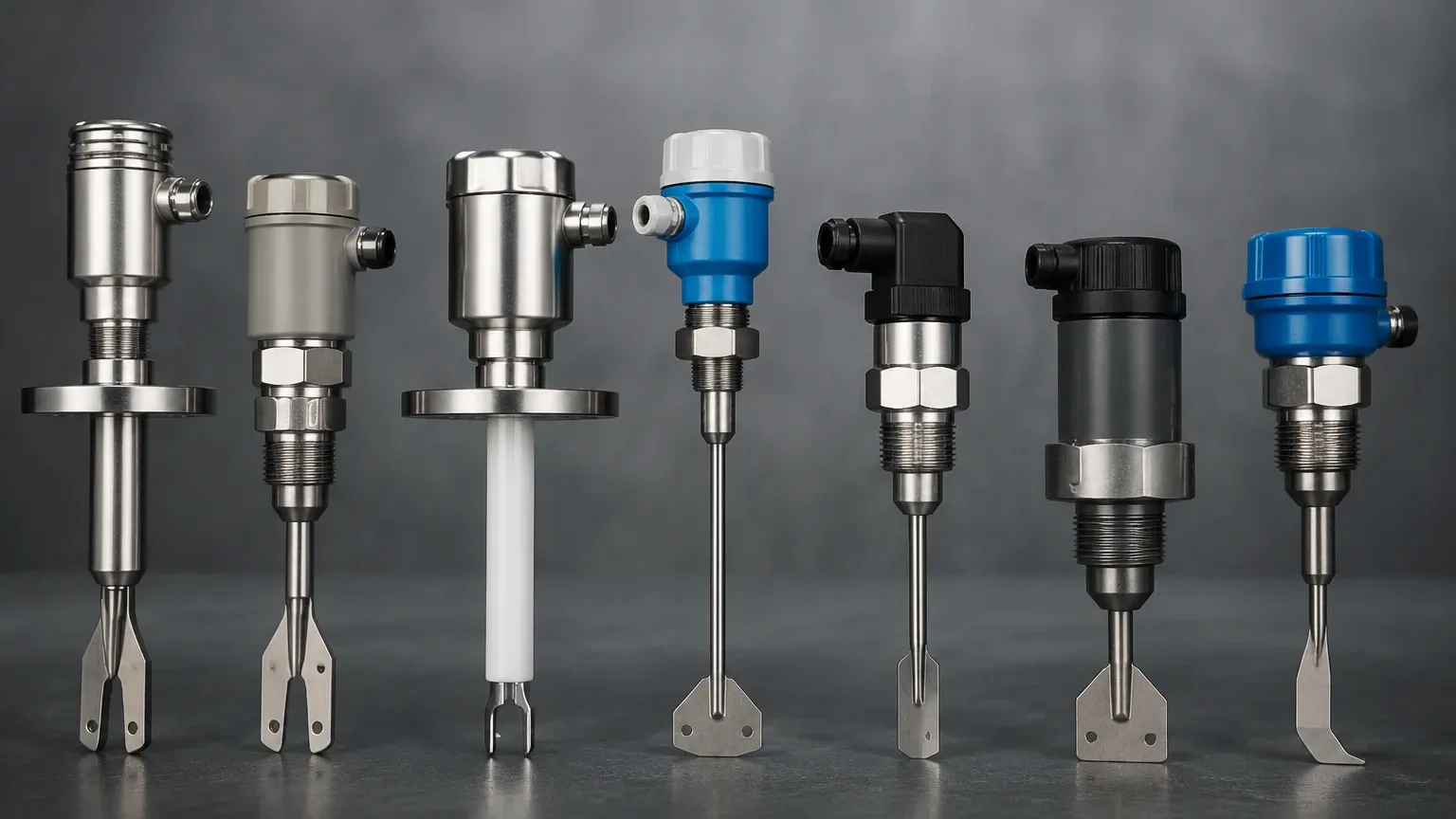
5. Tuning Fork (Vibrating) Level Switches
Vibrating level switches, often called tuning forks, are renowned for their reliability and "plug-and-play" nature.
Measurement Principle
A piezoelectric crystal excites the fork tines to vibrate at their natural resonant frequency in air. When the tines are submerged in a liquid or covered by a solid, the frequency of vibration changes or the vibration is dampened entirely. The internal electronics detect this frequency shift and trigger the alarm.
Why Engineers Choose Tuning Forks
* Universal Use: They are largely unaffected by the flow, turbulence, bubbles, or foam.
* No Calibration: Most units do not require calibration for different media densities, making them excellent for multi-product tanks.
6. Optical Level Switches
Optical switches are compact, point-level sensors used primarily in clean liquid applications where space is at a premium.
Measurement Principle
The sensor contains an Infrared (IR) LED and a light receiver. These are housed within a plastic or glass prism at the tip of the sensor. When the tip is in air, the IR light reflects internally within the prism back to the receiver. When the tip is immersed in liquid, the light refracts into the liquid, and the receiver detects a loss of signal, triggering the switch.
Limitations
Optical switches can be affected by heavy coating or extremely high ambient light. They are best suited for leak detection in double-walled tanks or small vessel high-level alarms.
7. Ultrasonic Level Switches (Gap Style)
While ultrasonic technology is famous for continuous measurement, it is also used in high-reliability point level switches.
Measurement Principle
A gap-style ultrasonic switch features a sensor head with a small physical gap between a transmitter and a receiver. An ultrasonic signal is sent across the gap. If the gap is filled with air, the signal is too weak to reach the receiver. When liquid fills the gap, the ultrasonic energy is efficiently transmitted through the fluid, completing the signal path and actuating the switch.
Applications
These are frequently used in the oil and gas industry for high-level shutoff because they are solid-state and can withstand significant vibration and pressure without the fatigue risks associated with mechanical floats.
8. Rotary Paddle Level Switches
Specifically designed for bulk solids, the rotary paddle switch is the standard for silos and hoppers containing grains, plastic pellets, or ores.
Measurement Principle
A low-speed motor rotates a paddle. When the level of the solid material rises to meet the paddle, it creates mechanical resistance. This resistance causes the motor to pivot on its mounting, tripping a microswitch that stops the motor and provides an output signal. Once the material level drops, a spring returns the motor to its original position, and the paddle begins rotating again.
Selection for Solids
When selecting a rotary paddle switch, the density of the material is the primary factor. Heavier materials like gravel require a robust paddle, while light powders like sawdust require a larger paddle surface area to create enough torque to trip the switch.
Technical Selection Table
The following table provides a comparative overview of the 8 switches to assist in the initial screening process.
| Technology | Media Type | Moving Parts | Buildup Resistance | Typical Max Temp (°C) | Typical Max Pressure (bar) |
| :— | :— | :— | :— | :— | :— |
| Float | Clean Liquids | Yes | Low | 150°C | 30 bar |
| Magnetic (Side) | Liquids | Yes | Moderate | 250°C | 40+ bar |
| Conductivity | Conductive Liquids | No | Low | 100°C | 10 bar |
| Capacitance | Liquids/Solids | No | High (with Shield) | 200°C | 100 bar |
| Tuning Fork | Liquids/Solids | No | High | 150°C | 40 bar |
| Optical | Clean Liquids | No | Low | 125°C | 50 bar |
| Ultrasonic (Gap) | Liquids | No | Moderate | 150°C | 60 bar |
| Rotary Paddle | Bulk Solids | Yes | Moderate | 80°C (Standard) | 0.5 bar |
Installation Considerations
Proper installation is as critical as selecting the right technology. When installing any of the 8 switches, consider the following:
1. Turbulence and Agitation: In tanks with mixers, avoid placing switches directly in the path of the flow. For float or tuning fork switches, a stilling well (a vertical pipe with vent holes) may be necessary to prevent mechanical damage or false triggers.
2. Nozzle Length: For capacitance and tuning fork switches, ensure the sensor extends far enough into the vessel. If the sensor is recessed too far into a mounting nozzle, material may bridge across the nozzle opening, causing the switch to stay in the "on" state even when the level has dropped.
3. Orientation: While many switches can be mounted horizontally or vertically, some (like certain float designs) are gravity-dependent. Always verify the manufacturer's allowed mounting angles.
4. Electrical Interference: Ensure that signal cables are shielded and separated from high-voltage power lines to prevent EMI (Electromagnetic Interference) from causing false alarms, particularly in capacitance and conductivity systems.
Limitations and Common Risks
No single switch is universal. Engineers must be aware of the specific failure modes associated with their chosen technology:
* Mechanical Wear: Float and rotary paddle switches have moving parts that will eventually wear out. Regular inspection intervals are required.
* Coating and Scaling: In the chemical industry, many liquids leave a residue. If this residue is conductive or thick enough to dampen vibrations, it can lead to "stuck" switches. Tuning forks and capacitance switches with coating rejection are the preferred solutions here.
* Density Changes: Float switches rely on a specific gravity difference. If the process fluid changes (e.g., switching from water to a light oil), the float may no longer function correctly.
Frequently Asked Questions (FAQ)
Q: Can I use a level switch for continuous monitoring?
No. A level switch only tells you if the material is above or below a specific point. For continuous data (0-100% full), you require a radar, ultrasonic, or hydrostatic level transmitter.
Q: What is the difference between NPN and PNP outputs in electronic switches?
These refer to the type of transistor output. PNP switches provide a positive voltage when triggered (sourcing), while NPN switches provide a connection to ground (sinking). The choice depends on the input requirements of your PLC (Programmable Logic Controller).
Q: How do I test if a level switch is working without filling the tank?
Many modern electronic switches, such as tuning forks, include a "test" magnet or button that simulates a dampening effect. For mechanical float switches, manual actuation of the float is necessary during a dry inspection.
Q: Are there switches suitable for hygienic (food/pharma) applications?
Yes. Look for switches with 3-A or EHEDG certification. These typically feature stainless steel construction (SS316L) and specialized process connections like Tri-Clamp to ensure there are no crevices where bacteria can grow.
Conclusion
Selecting the right device from the 8 switches discussed requires a deep understanding of the process media, vessel geometry, and environmental conditions. Whether you are managing a simple water storage tank or a high-pressure chemical reactor, the reliability of your point level detection system is paramount. For detailed technical specifications and to explore a wide range of industrial-grade solutions, you can review product options and application support for Level Switches to ensure your facility remains safe and efficient.