Level Switches Manufacturer
Level Switches Manufacturer
In the landscape of industrial automation, level switches serve as the fundamental guardians of process safety and efficiency. Unlike continuous level transmitters that provide a constant stream of data regarding the exact height of a medium, level switches are designed for point-level detection. They act as binary sensors, triggering an alarm or control action when a substance reaches a specific threshold. Selecting a reliable level switches manufacturer is critical for engineers who must ensure that these devices operate without fail in challenging environments, ranging from wastewater treatment plants to high-pressure chemical reactors.
Understanding Level Switch Measurement Principles
Before selecting a specific device or partnering with a level switches manufacturer, it is essential to understand the physics behind the various sensing technologies. Each principle offers distinct advantages depending on the physical properties of the medium being measured.
1. Vibrating Level Switches (Tuning Fork)
Vibrating switches utilize a fork-shaped sensing element that vibrates at its natural resonant frequency in air. When the fork is immersed in a liquid or solid, the frequency changes or the vibration is damped. An electronic circuit detects this shift and converts it into a switching signal. These are highly versatile and unaffected by flow, turbulence, bubbles, or foam.
2. Float Level Switches
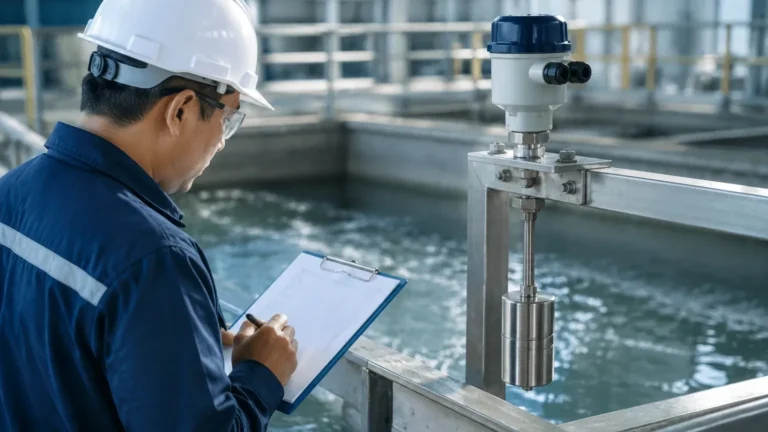
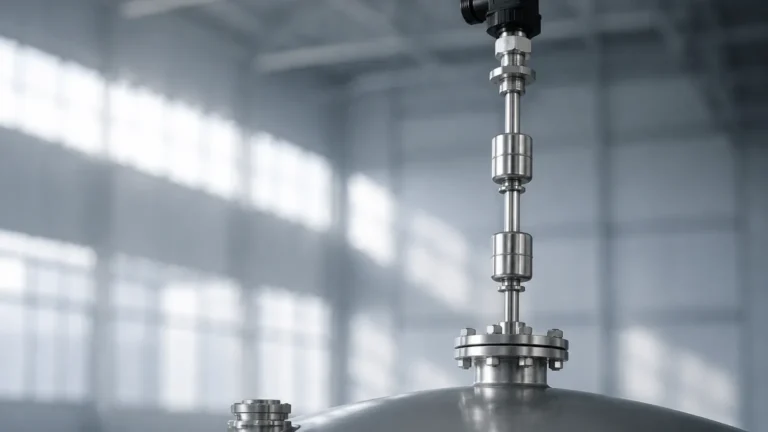
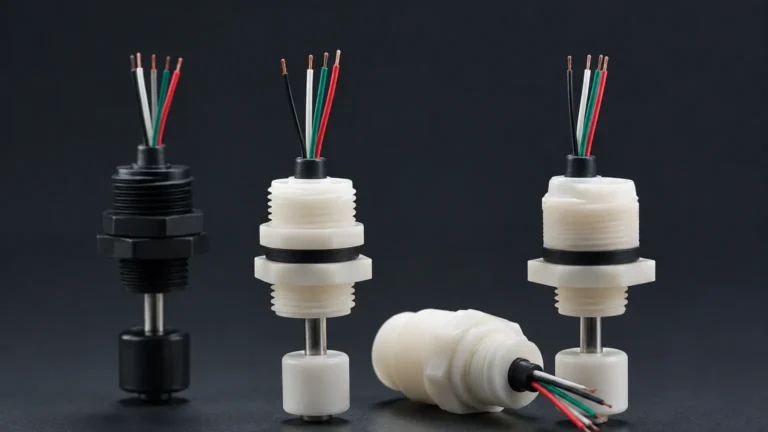
Operating on the principle of buoyancy, a float containing a magnet moves with the liquid level. When the float reaches a predetermined point, the magnetic field actuates a reed switch located within the stationary stem. This is a purely mechanical-electrical interface, making it a cost-effective solution for clean, non-coating liquids.
3. Capacitance Level Switches
These sensors treat the probe and the vessel wall (or a second probe) as two plates of a capacitor. As the medium rises and displaces air, the dielectric constant between the plates changes, altering the capacitance. The electronics detect this change to trigger the switch. Capacitance switches are excellent for both liquids and solids but require calibration based on the material's dielectric properties.
4. Ultrasonic Level Switches
Ultrasonic point-level sensors use a pair of crystals: one to transmit a high-frequency sound wave across a gap and another to receive it. When the gap is filled with liquid, the sound transmission improves significantly, signaling the presence of the medium. These are ideal for hazardous or corrosive liquids where non-contact or minimal contact is preferred.
5. Conductivity Level Switches
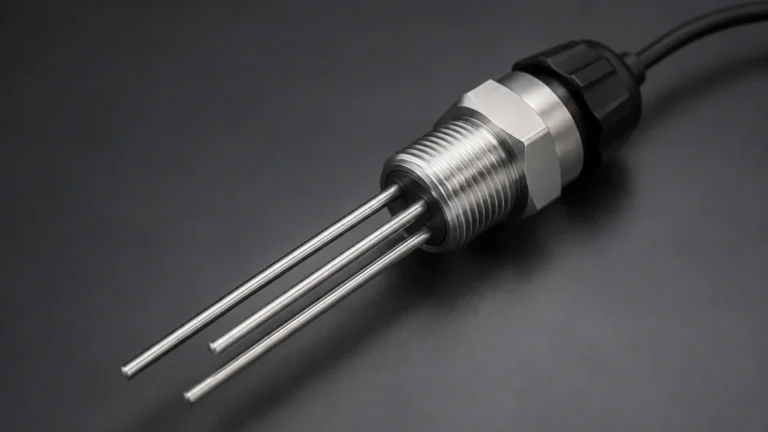
Specifically for conductive liquids, these sensors use low-voltage electrodes. When the liquid touches the electrode, it completes an electrical circuit between the probe and the tank wall (or a reference electrode). This is a simple, robust method often used in boiler water level control.
Selection Criteria for Industrial Applications
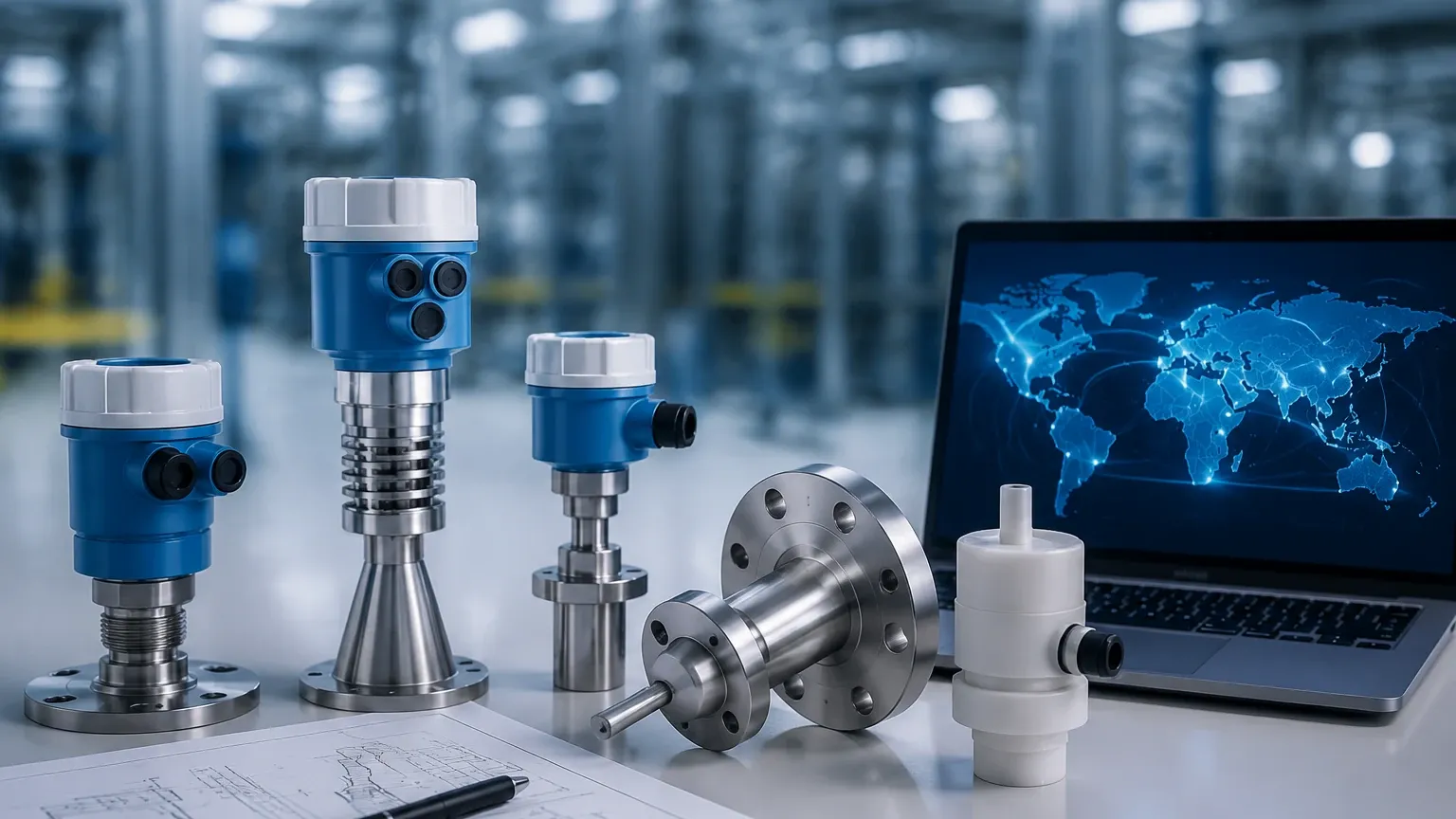
Choosing the correct technology requires a deep dive into the process conditions. A professional level switches manufacturer like Welk provides various configurations to meet these specific needs. Engineers should evaluate the following parameters:
* Medium State: Is the material a liquid, a slurry, or a bulk solid (granules/powders)?
* Physical Properties: Consider viscosity, density, and dielectric constant. For example, highly viscous liquids may cause "clinging" on float switches, making vibrating forks a better choice.
* Process Temperature and Pressure: Standard switches might handle up to 80°C (176°F), but specialized high-temperature versions are required for steam applications or molten materials, sometimes exceeding 250°C (482°F).
* Chemical Compatibility: The wetted parts (the components in direct contact with the medium) must be resistant to corrosion. Common materials include 316L Stainless Steel, PTFE (Teflon), and PP (Polypropylene).
* Installation Constraints: Space limitations might dictate a side-mounted horizontal switch versus a top-mounted vertical probe.
Technical Comparison Table
The following table provides a general reference for comparing common Level Switches technologies used in industrial automation.
| Technology | Suitable Media | Max Pressure (Approx.) | Max Temp (Approx.) | Key Advantage |
| :— | :— | :— | :— | :— |
| Vibrating Fork | Liquids / Solids | 40 bar (580 psi) | 150°C (302°F) | Maintenance-free; ignores foam |
| Float Switch | Clean Liquids | 20 bar (290 psi) | 120°C (248°F) | Simple; no power required (Reed) |
| Capacitance | Liquids / Solids | 64 bar (928 psi) | 200°C+ (392°F+) | Handles high pressure/temp |
| Conductivity | Conductive Liquids | 10 bar (145 psi) | 100°C (212°F) | Very low cost; multi-point |
| Ultrasonic | Liquids | 40 bar (580 psi) | 135°C (275°F) | No moving parts; high reliability |
Evaluating a Level Switches Manufacturer
When sourcing instrumentation for critical infrastructure, the choice of manufacturer is as important as the technology itself. A reputable level switches manufacturer should offer more than just a product; they should provide engineering certainty.
1. Quality Assurance and Certification
Ensure the manufacturer adheres to international standards such as ISO 9001. For hazardous environments, look for ATEX, IECEx, or UL certifications. These ensure the device will not become an ignition source in explosive atmospheres.
2. Customization and OEM/ODM Services
Industrial processes are rarely "one size fits all." A capable manufacturer like Welk offers customized probe lengths, specialized process connections (NPT, BSP, Flanged), and various output options (Relay, PNP/NPN, 2-wire) to integrate seamlessly into existing PLC or SCADA systems.
3. Technical Documentation and Support
Comprehensive manuals, wiring diagrams, and 3D CAD models are essential for the design phase. Furthermore, post-purchase support for calibration and troubleshooting ensures long-term operational success.
Installation Best Practices
Even the highest quality level switch will fail if installed incorrectly. Follow these engineering guidelines to ensure reliable performance:
* Avoid Turbulence: Do not install switches directly under a fill pipe. If turbulence is unavoidable, use a stilling well or a baffle to protect the sensor.
* Orientation Matters: While many vibrating forks can be mounted horizontally or vertically, float switches are often orientation-specific. Ensure the swing or travel path of the float is not obstructed by tank internals like ladders or agitators.
* Wiring and Sealant: Use proper cable glands to maintain the IP (Ingress Protection) rating of the housing. In outdoor or wash-down environments, creating a "drip loop" in the wiring prevents moisture from traveling down the cable into the sensor head.
* Positioning for Solids: When measuring bulk solids, the switch should be positioned to avoid the direct impact of falling material, which can cause mechanical damage or false triggers.
Limitations and Operational Challenges
While level switches are robust, they are not invincible. Engineers must be aware of the following limitations:
* Material Build-up: In sticky or viscous applications, material can accumulate on the sensor. While some technologies (like certain capacitance or vibrating switches) are designed to ignore coating, others may require regular cleaning.
* Minimum Density: Vibrating and float switches rely on the density of the medium. If the medium is too light (e.g., very low-density foam or fine powder), the switch may not detect it.
* Electromagnetic Interference (EMI): Electronic switches, particularly capacitance and ultrasonic types, can be affected by heavy electrical noise from nearby high-voltage equipment. Proper shielding and grounding are mandatory.
Frequently Asked Questions (FAQ)
Q: Can a level switch be used for continuous level measurement?
A: No. A level switch only detects if the material has reached a specific point. For continuous tracking (0-100%), you would require a radar, ultrasonic, or hydrostatic level transmitter.
Q: What is the difference between a "Normally Open" (NO) and "Normally Closed" (NC) contact?
A: In an NO configuration, the switch circuit is open (off) when the level is low and closes (on) when the level reaches the switch. In an NC configuration, the circuit is closed when the level is low and opens when the level is reached. NC is often preferred for "fail-safe" high-level alarms, as a broken wire will trigger the alarm.
Q: How do I handle foaming liquids?
A: Foam can be problematic for ultrasonic and capacitance switches. Vibrating fork switches are generally the best choice here, as they are tuned to ignore the low-density foam and only react when the liquid phase contacts the fork.
Q: Is maintenance required for level switches?
A: Mechanical switches (like floats) should be inspected periodically for debris or scale that might impede movement. Solid-state switches (like vibrating forks or ultrasonic) are virtually maintenance-free, though occasional cleaning of the sensing element may be necessary in coating applications.
By partnering with an experienced level switches manufacturer and carefully matching the sensing technology to the process environment, industrial operators can achieve high levels of reliability and safety in their fluid and solid handling systems.