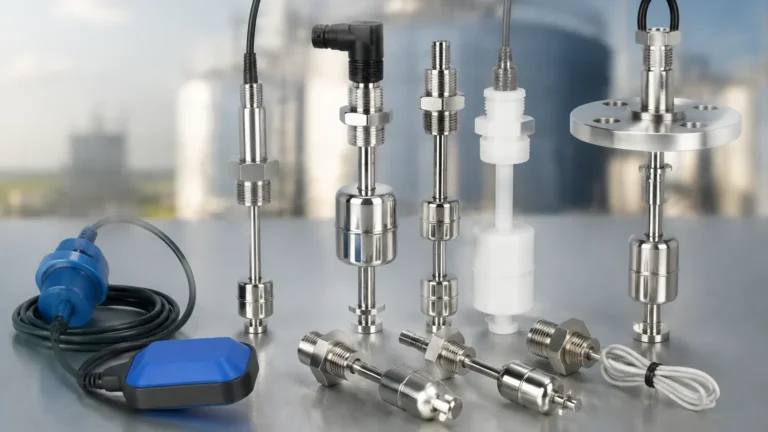
Level Switch for Oil Tank
Level Switch for Oil Tank
In industrial fluid management, the reliable detection of liquid levels in oil storage tanks is a fundamental requirement for operational safety and efficiency. Whether managing crude oil, diesel, lubricating oils, or hydraulic fluids, engineers rely on point level detection to prevent tank overfills, protect pumps from dry running, and automate filling processes. A level switch for oil tank applications serves as a critical safeguard, providing a discrete signal when the liquid reaches a predetermined height.
Unlike continuous level transmitters that provide a constant data stream of the volume or height, a level switch acts as a binary sensor. When the oil level makes contact with the sensing element (or reaches a specific proximity), the switch changes state—opening or closing an electrical circuit. This article explores the various technologies used for oil level switching, their operating principles, and the technical criteria necessary for selecting the correct instrument.
Measurement Principles for Oil Level Detection
Selecting the appropriate level switch requires an understanding of how different sensing technologies interact with the physical properties of oil, such as viscosity, dielectric constant, and density.
1. Magnetic Float Level Switches
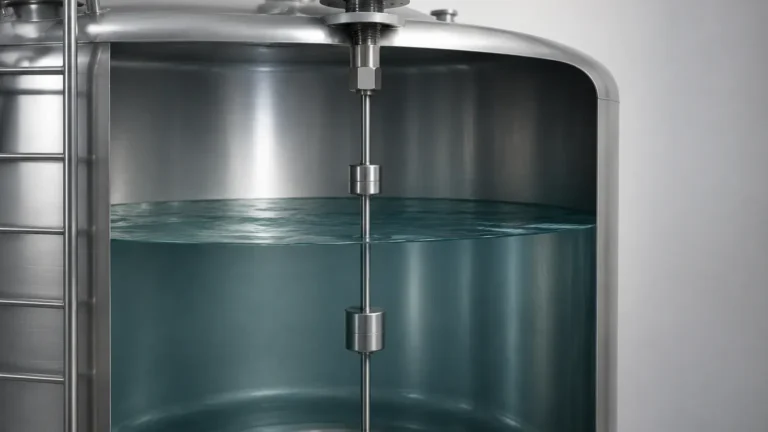
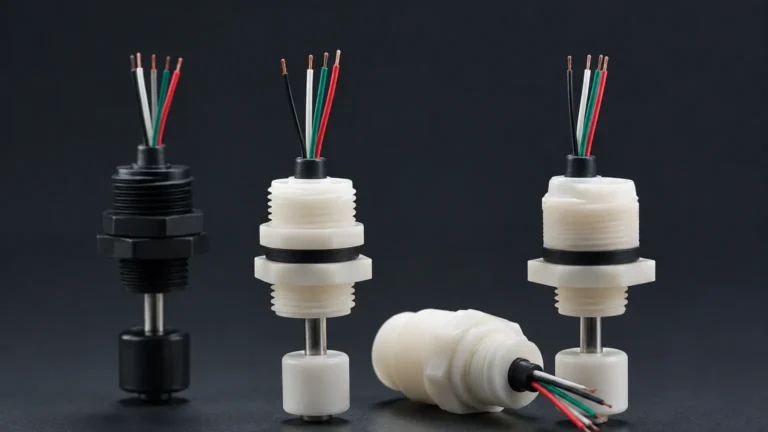
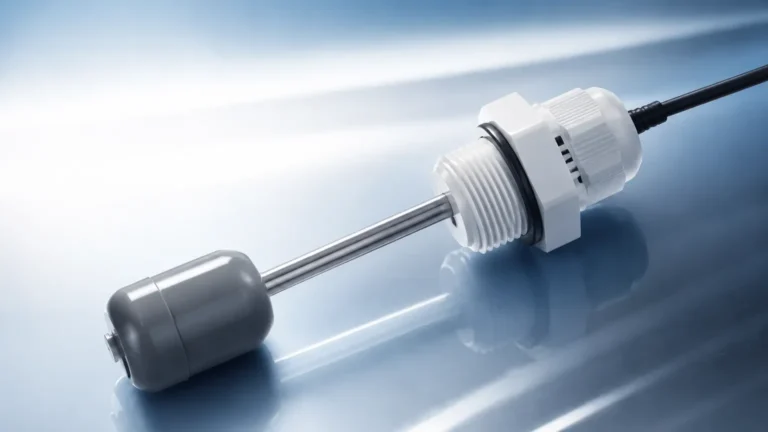
The magnetic float switch is one of the most common technologies for oil tanks due to its simplicity and cost-effectiveness. It operates on the principle of buoyancy (Archimedes' Principle). A float containing an internal magnet moves up and down a guide stem as the oil level changes. Inside the stem, a hermetically sealed reed switch is positioned at the desired alarm point. When the float's magnetic field aligns with the reed switch, the circuit is completed or interrupted.
* Suitability: Best for clean, low-viscosity oils like diesel or light lubricants.
* Limitation: Susceptible to mechanical sticking if the oil contains heavy paraffin wax or debris.
2. Vibrating Tuning Fork Level Switches
Vibrating switches utilize piezoelectric crystals to vibrate a metal fork at its natural resonance frequency in air. When the fork is submerged in oil, the frequency of vibration changes or the amplitude is dampened. The internal electronics detect this frequency shift and trigger the switch output.
* Suitability: Highly versatile and resistant to changes in fluid density, pressure, or temperature. It is often the preferred Level Switches technology for high-level alarms in fuel tanks.
* Limitation: Extremely high-viscosity oils (e.g., heavy crude or bitumen) can cause "bridging" between the forks, leading to false readings.
3. Capacitance Level Switches
Capacitance sensors treat the oil as a dielectric material. The probe and the tank wall (or a reference electrode) act as the two plates of a capacitor. As oil replaces air around the probe, the capacitance changes because oil has a different dielectric constant ($ε_r ≈ 2.0$ to $2.5$) than air ($ε_r ≈ 1.0$).
* Suitability: Effective for high-temperature oil applications and tanks where mechanical moving parts are undesirable.
* Limitation: Requires calibration based on the specific oil type and can be affected by moisture or water contamination in the oil.
4. Optoelectronic Level Switches
These sensors use an infrared LED and a light receiver housed within a glass or plastic prism. When the sensor is in air, the IR light is reflected internally within the prism back to the receiver. When submerged in oil, the refractive index of the liquid allows the light to escape into the fluid, breaking the internal reflection path.
* Suitability: Excellent for small tanks and leak detection in double-walled oil tanks.
* Limitation: Not suitable for oils that leave a thick, opaque coating on the sensor tip.
Technical Selection Criteria for Oil Tanks
When specifying a level switch for oil tank installations, engineers must evaluate several environmental and chemical factors to ensure long-term reliability.
Viscosity and Coating
Oil viscosity varies significantly with temperature. A switch that works for hydraulic oil at 40°C may fail if the oil thickens at 0°C. For heavy oils, tuning forks or high-power ultrasonic gap switches are preferred over small floats, which may become stuck in thickened media. If the oil is prone to leaving a film (coating), capacitance switches with "active shield" technology or vibrating forks are recommended to ignore the buildup.
Specific Gravity (Density)
For float-based switches, the float must be less dense than the oil to remain buoyant. Most oils have a specific gravity between 0.70 and 0.95. If a float is designed for water (SG 1.0), it may sink in light diesel (SG 0.83), failing to trigger the switch. Always verify that the float's minimum SG rating is lower than the lowest expected density of the oil.
Hazardous Area Classifications
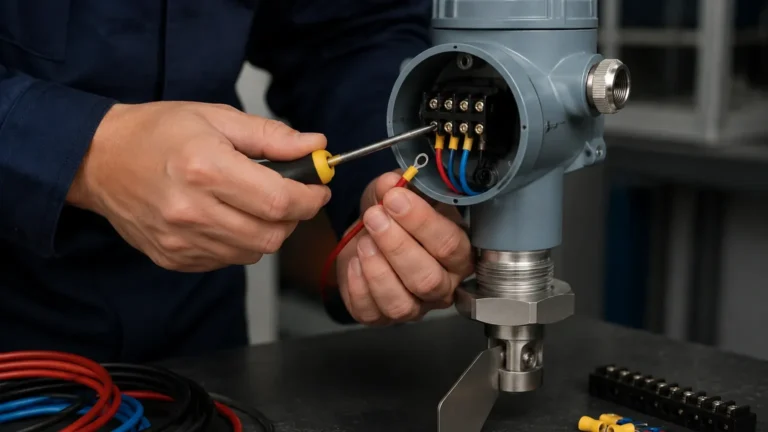
Oil and fuel storage environments are often classified as hazardous areas (ATEX, IECEx, or Class I Div 1). Level switches used in these zones must be intrinsically safe or housed in explosion-proof enclosures. This is especially critical for gasoline and light crude oil tanks where flammable vapors are present.
Pressure and Temperature
Storage tanks are typically atmospheric, but process oil tanks (such as those in hydraulic power units or lubrication systems) may be pressurized. Ensure the switch housing and seals (O-rings) are compatible with the operating pressure and the maximum temperature of the oil, which can exceed 100°C in industrial machinery.
Selection Table for Oil Level Switches
| Technology | Best Application | Viscosity Limit | Dielectric Sensitivity | Pros | Cons |
| :— | :— | :— | :— | :— | :— |
| Magnetic Float | Clean fuel/diesel storage | Low (< 500 cSt) | None | Low cost; no power required (reed only) | Moving parts; prone to sticking |
| Vibrating Fork | High/Low alarm for most oils | Medium (< 10,000 cSt) | None | Highly reliable; no calibration | Bridging risk in very thick oils |
| Capacitance | High-temp process oil | High | High | No moving parts; compact | Requires calibration; affected by water |
| Optoelectronic | Small tanks / Leak detection | Low | None | Very small; fast response | Affected by heavy coating/dirt |
| Hydrostatic | Deep oil sumps | Medium | None | Robust; handles turbulence | Higher cost; requires density compensation |
Installation Considerations
Proper installation is as important as technology selection. Poorly positioned sensors can lead to false alarms or failure to trigger during an emergency.
1. Avoid Turbulence: Do not install the level switch directly under an oil inlet pipe. The falling liquid can cause mechanical damage to floats or trigger false "full" signals in vibrating forks. If turbulence is unavoidable, use a stilling well (a perforated pipe) to protect the sensor.
2. Side vs. Top Mounting: Top-mounted switches are ideal for high-level alarms because they allow for easy adjustment of the switch point by changing the length of the probe or cable. Side-mounted switches are common for low-level pump protection in smaller reservoirs.
3. Orientation of Forks: For vibrating fork switches installed horizontally, the forks should be oriented so that the oil can drain off easily. If the flat side of the fork faces upward, oil may pool on the surface, causing a delayed "off" signal.
4. Grounding: For capacitance-based switches, ensure the tank is properly grounded. If the tank is plastic or fiberglass, a reference rod or ground strap must be used.
Limitations and Common Risks
While level switches are robust, they are not "set and forget" devices. Engineers should be aware of the following risks:
* Paraffin and Wax Buildup: In crude oil applications, wax can precipitate out of the oil and coat the sensor. This is a common cause of failure for float switches and optical sensors. In these cases, heated probes or high-frequency vibrating sensors are necessary.
* Interphase Layers: If a tank contains an oil-water interface, a standard float may float on the water but sink in the oil. Specialized "interface floats" are required to detect the specific boundary between the two liquids.
* Electrical Arcing: Reed switches in float sensors have limited current capacity. If they are used to directly drive a high-power pump motor without a relay, the contacts can weld shut, leading to a permanent "on" or "off" state.
Maintenance and Testing
For safety-critical applications, such as overfill prevention, regular functional testing is mandatory. Many modern vibrating fork switches include a "test" button or a magnetic test point that allows technicians to simulate a high-level condition without filling the tank. For float switches, manual lifting of the float during scheduled shutdowns is the most effective way to ensure the mechanical components move freely.
Frequently Asked Questions (FAQs)
Q: Can I use a water level switch for an oil tank?
A: It depends on the technology. A vibrating fork or capacitance switch can often be used for both, though the capacitance switch will need recalibration. However, a standard water float switch may not work because oil is less dense than water; the float might not have enough buoyancy to rise in oil.
Q: What is the best level switch for a hydraulic oil reservoir?
A: Vibrating tuning forks or side-mounted magnetic float switches are the industry standards for hydraulic reservoirs. They are compact and handle the vibration of the machinery well.
Q: How do I prevent false alarms caused by foam in the oil tank?
A: Foam is a common issue in rapidly circulating oil systems. Vibrating fork switches are generally excellent at ignoring foam and only triggering when they contact the actual liquid. Capacitance switches can also be tuned to ignore low-dielectric foam.
Q: Are there wireless level switches for remote oil tanks?
A: Yes, many manufacturers offer battery-powered level switches that communicate via LoRaWAN, NB-IoT, or WirelessHART, which are ideal for remote fuel tanks where cabling is cost-prohibitive.
For more information on selecting the right instrumentation for your specific application, you can Review product options and application support to compare technical specifications and housing materials.