Omron Level Switches
Omron Level Switches
In industrial automation and process control, point level detection is a fundamental requirement for protecting equipment, preventing overflows, and managing pump cycles. Omron level switches, particularly their conductive series, have established a significant presence in the market due to their reliability in water-based applications. Understanding the engineering principles behind these devices, as well as their specific limitations, is essential for selecting the correct instrumentation for a given industrial environment.
This guide examines the technical specifications of Omron level switches, compares them with broader industrial technologies, and provides practical installation guidance for engineering teams.
Measurement Principles of Point Level Detection
Before selecting a specific model, it is vital to understand the physics of the measurement. Level switches generally fall into two categories: contact and non-contact. Omron primarily specializes in contact-based technologies, specifically conductive and float-type mechanisms.
Conductive Level Measurement
Conductive level switches operate on the principle of electrical conductivity in liquids. The system consists of a level controller and an electrode probe set. The controller applies a low AC voltage—typically between 8V and 24V—to the electrodes. When the liquid level rises and touches the electrodes, the circuit is completed through the liquid. This small current is detected by the controller, which then triggers a relay output.
Using AC voltage is a critical design feature; it prevents electrolysis, which would otherwise lead to the rapid corrosion of the electrodes and the buildup of gases. This technology is highly effective for conductive liquids such as tap water, wastewater, seawater, and certain chemical acids or alkalis.
Float-Based Level Measurement
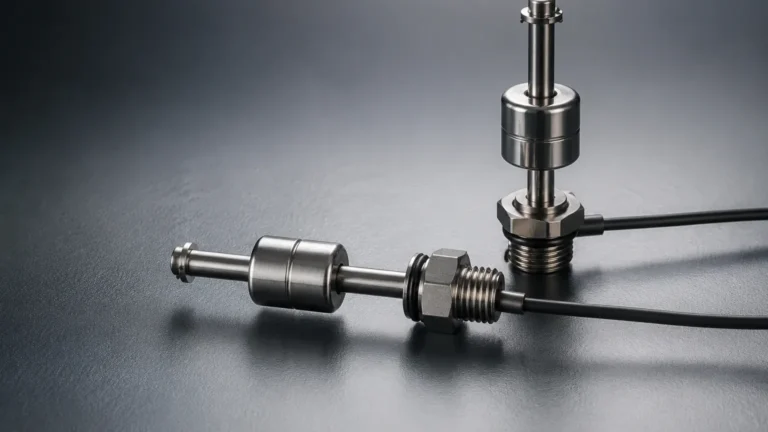
Float switches utilize buoyancy. A float containing a magnet moves along a stem as the liquid level changes. Inside the stem, a reed switch is positioned at a specific height. When the magnet in the float reaches the reed switch, the magnetic field closes (or opens) the circuit. Omron’s float switches are often used in simpler applications where the liquid may not be conductive enough for electrode-based systems.
Overview of Omron Level Switch Series
Omron’s portfolio is categorized by the environment and the specific control logic required for the application. The most common series include the 61F, K7L, and various float models.
The 61F Series (Conductive Controllers)
The 61F series is the industry standard for conductive level control. It is available in several configurations:
* Compact/Plug-in Types: Designed for space-saving in control panels, often used for simple automatic supply and drainage control.
* High-Sensitivity Models: Used for liquids with low conductivity, such as distilled water or liquids in high-temperature environments where resistance increases.
* Long-Distance Models: Designed for applications where the controller is located far from the electrodes (e.g., up to 4 km or 2.48 miles), common in municipal water distribution.
The K7L Series (Liquid Leakage Sensors)
The K7L is a specialized level switch designed for leak detection. It utilizes a sensing cable or a point sensor to detect the presence of even small amounts of liquid (such as water or chemicals) on a floor or inside a double-contained pipe. It is frequently employed in semiconductor manufacturing and data centers.
Practical Selection Table
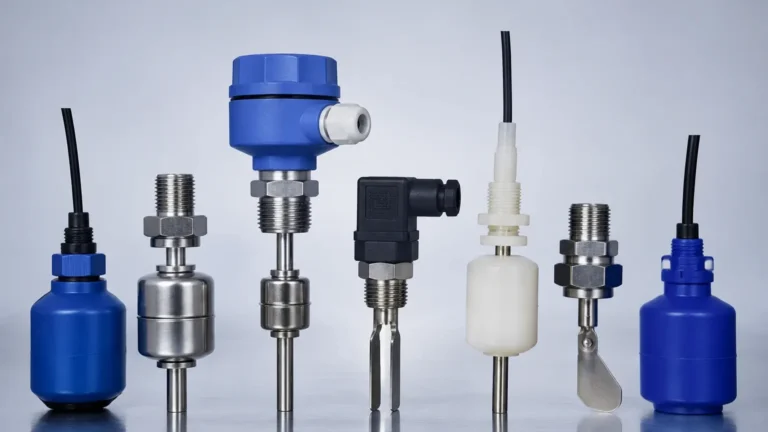
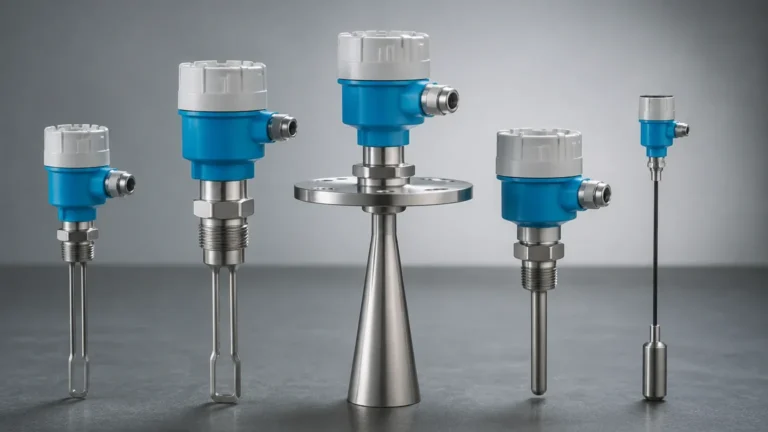
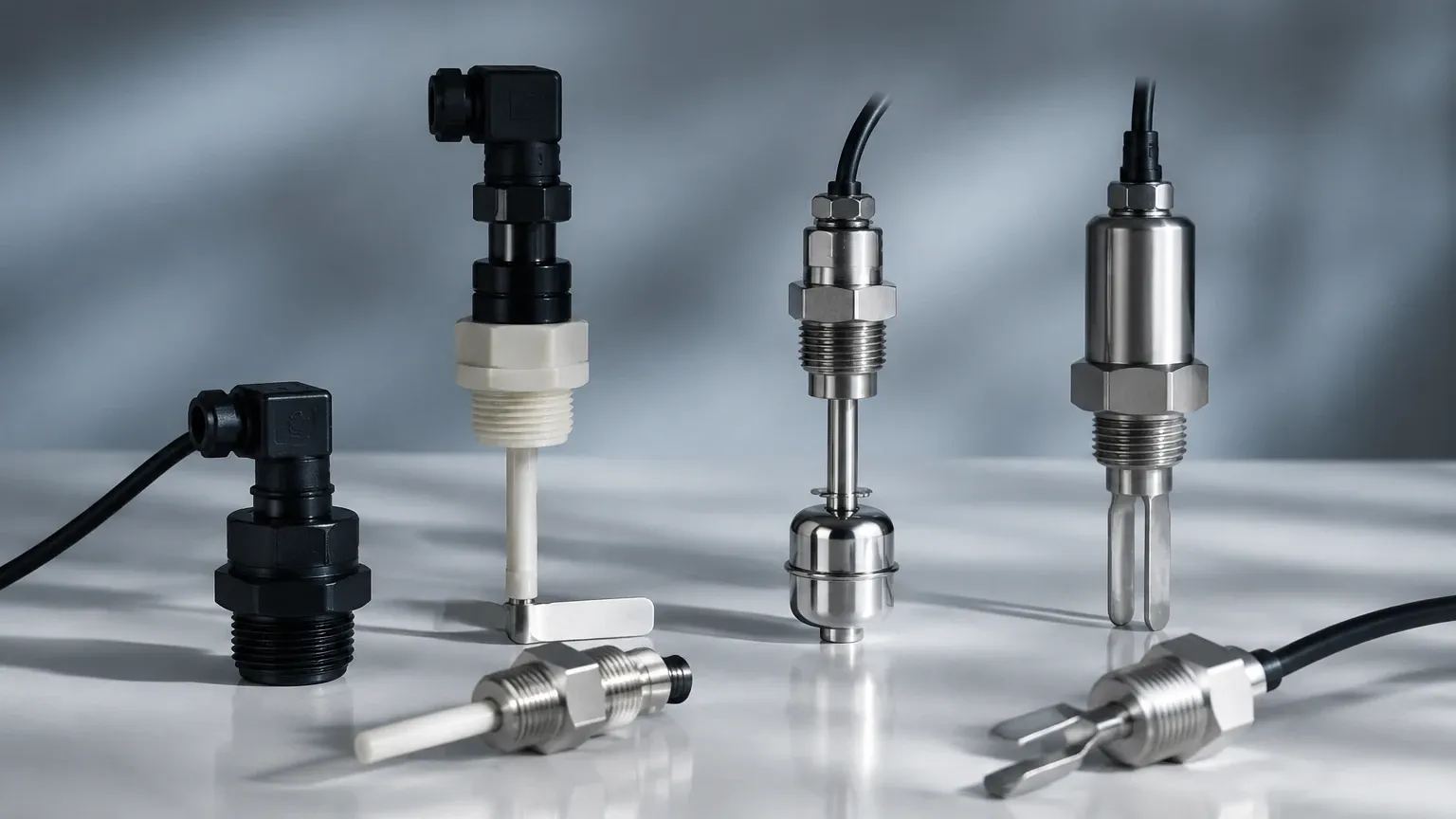
Choosing the right technology requires balancing the media properties with the operational environment. For a wider range of industrial Level Switches, including those suited for non-conductive or high-viscosity media, engineers should compare these conductive options with ultrasonic or vibration-based sensors.
| Feature | Conductive (Omron 61F) | Float Switch | Ultrasonic Switch | Vibration/Tuning Fork |
| :— | :— | :— | :— | :— |
| Best Media | Water, Wastewater, Acids | Clean Water, Oils | Corrosive Chemicals | Powders, Slurries, Liquids |
| Conductivity Req. | > 5-10 μS/cm | None | None | None |
| Moving Parts | None | Yes | None | Yes (Micro-vibration) |
| Max Temp (Standard) | 70°C (158°F) | 60°C – 100°C | 80°C (176°F) | 150°C+ (302°F+) |
| Fouling Resistance | Moderate | Low | High | High |
| Typical Application | Pump Control | Sumps | Chemical Tanks | High/Low Alarm |
Engineering Installation Considerations
Correct installation is the most significant factor in the longevity of a level switch system. When working with Omron level switches, several technical factors must be addressed during the design phase.
Electrode Configuration and Holders
For conductive switches, the electrodes must be mounted in an electrode holder (such as the PS-3S or BF series). The length of the electrodes determines the trigger points.
1. Reference Electrode (Longest): This electrode must always be in contact with the liquid to provide a common ground.
2. Start/Stop Electrodes: These are cut to specific lengths to define the "ON" and "OFF" levels.
3. Spacing: Electrodes should be spaced at least 10 mm (0.39 inches) apart to prevent accidental short-circuiting caused by debris or surface tension.
Turbulence and Wave Action
In tanks with high turbulence or agitators, the liquid surface may fluctuate rapidly, causing "chattering" of the relay. To mitigate this, engineers should:
* Use a stilling well (a pipe surrounding the electrodes) to stabilize the liquid level.
* Select a controller with a built-in time delay or adjust the hysteresis settings.
* Ensure the electrode holder is securely mounted to prevent mechanical stress from the moving fluid.
Wiring and Cable Length
For conductive probes, the wiring between the electrode holder and the controller must be shielded if the distance exceeds 100 meters (328 feet). This prevents induced noise from power lines from triggering false level detections. The resistance of the wire must also be factored into the total sensitivity of the controller.
Limitations and Common Risks
While Omron level switches are robust, they are not universal solutions. Engineers must be aware of the following limitations:
1. Non-Conductive Liquids: Conductive level switches will not work with oils, diesel, pure hydrocarbons, or highly purified distilled water. In these cases, a float switch or a capacitive sensor is required.
2. Coating and Scaling: If the liquid is prone to leaving deposits (such as calcium scaling or heavy grease), a film may form over the electrodes. This film acts as an insulator, preventing the system from detecting the liquid. Regular maintenance or the use of non-contact ultrasonic sensors may be necessary for coating-prone media.
3. Electrode Corrosion: Although AC voltage reduces electrolysis, the electrodes themselves must be compatible with the chemical composition of the liquid. Standard electrodes are often 304 or 316 stainless steel, but aggressive chemicals may require titanium or Hastelloy probes.
4. Pressure Constraints: Most standard conductive electrode holders are designed for atmospheric or low-pressure tanks. For high-pressure boilers or pressurized chemical reactors, specialized high-pressure holders must be sourced.
Maintenance and Troubleshooting
To ensure reliable operation, a semi-annual inspection schedule is recommended for contact-based level switches.
* Electrode Cleaning: Remove any buildup of scale or organic matter using a fine abrasive or chemical cleaner compatible with the probe material.
* Insulation Resistance Test: Check the insulation between the electrodes and the tank wall (if metal) using a megohmmeter. Low insulation resistance often indicates moisture ingress in the electrode holder head.
* Relay Testing: Manually bridge the electrodes at the controller to ensure the output relay and connected pumps or valves are functioning correctly.
Frequently Asked Questions (FAQ)
Q: Can I use Omron conductive switches for food and beverage applications?
A: Yes, provided the electrodes and holders are made of food-grade materials (like 316L stainless steel) and the mounting interface meets sanitary standards (e.g., Tri-Clamp fittings). However, be cautious of foam, as conductive probes may detect foam as a liquid level.
Q: How do I handle multi-point detection in a single tank?
A: For multi-point detection (e.g., low-level alarm, pump start, pump stop, and high-level alarm), you can use a single electrode holder with up to five electrodes. Each pair of levels will require its own controller or a multi-channel controller like the 61F-G2.
Q: What happens if the liquid is highly turbulent?
A: Turbulence can cause the relay to cycle rapidly. The best solution is to install the electrodes inside a perforated pipe (stilling well) which allows the level to rise and fall slowly while blocking waves and splashes.
Q: Can these switches be used in hazardous (Ex) zones?
A: Standard conductive controllers are not typically rated for explosive atmospheres. For hazardous zones, you must use an intrinsically safe barrier between the controller and the electrodes to limit the energy available in the sensing circuit.
Conclusion
Omron level switches offer a dependable, cost-effective solution for point level control in conductive liquids. By understanding the electrical principles of the 61F series and the mechanical requirements of float systems, engineers can design robust control loops for water treatment and general industrial processes. However, for applications involving non-conductive fluids, high-pressure environments, or heavy coating, it is essential to evaluate alternative technologies such as ultrasonic, radar, or magnetic level gauges to ensure system reliability and safety.