Level Switch Magnetic Type
Level Switch Magnetic Type
In the field of industrial automation and process control, point-level detection is a fundamental requirement for safety, inventory management, and pump control. Among the various technologies available, the level switch magnetic type remains one of the most widely adopted solutions due to its simplicity, reliability, and the inherent safety of its hermetically sealed design. This guide examines the principles, selection criteria, and installation best practices for magnetic level switches in modern industrial environments.
Principles of Operation
The operation of a level switch magnetic type is based on two primary physical principles: buoyancy and magnetism. Unlike continuous level transmitters that provide a constant signal (such as 4-20mA), a level switch is a discrete device designed to open or close an electrical circuit at a specific liquid level.
The Reed Switch Mechanism
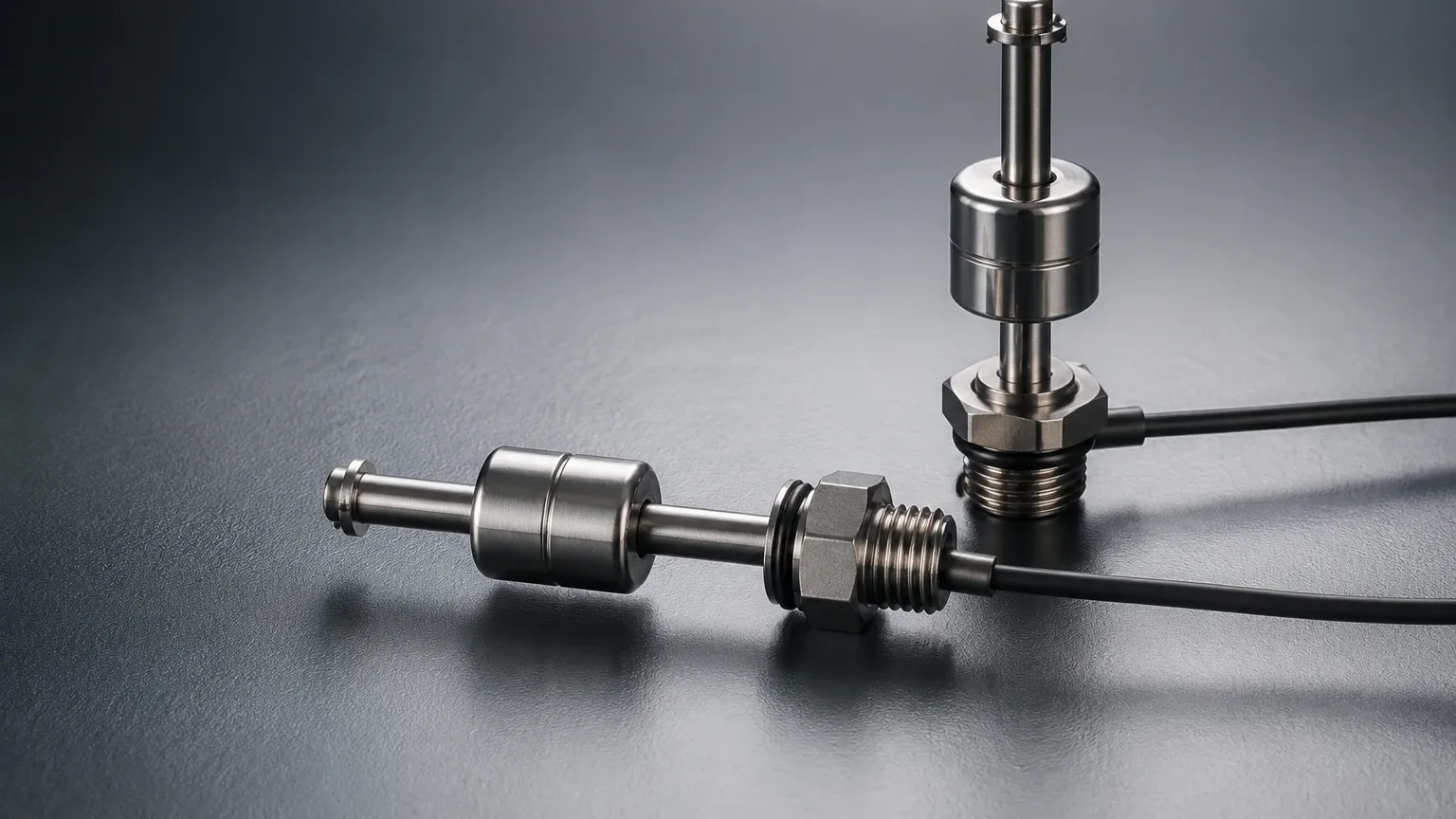
At the core of the device is a reed switch, which consists of two overlapping, ferromagnetic blades (reeds) sealed within a glass tube filled with inert gas. This glass tube is placed inside a non-magnetic stationary stem (usually made of stainless steel or plastic). Because the switch is hermetically sealed, the electrical contacts are protected from oxidation, moisture, and the process media itself.
Magnetic Coupling
A float, containing a permanent magnet, is designed to slide up and down the stem as the liquid level changes. As the float approaches the internal reed switch, the magnetic field pulls the reeds together (for a Normally Open configuration) or pushes them apart (for a Normally Closed configuration). Because the interaction is magnetic, there is no physical contact between the moving float and the electrical components, which significantly reduces mechanical wear and the risk of electrical sparking in volatile environments.
Common Configurations and Types
Depending on the tank geometry and the number of control points required, several variations of the magnetic level switch are utilized in industrial applications.
1. Single-Point Vertical Switches
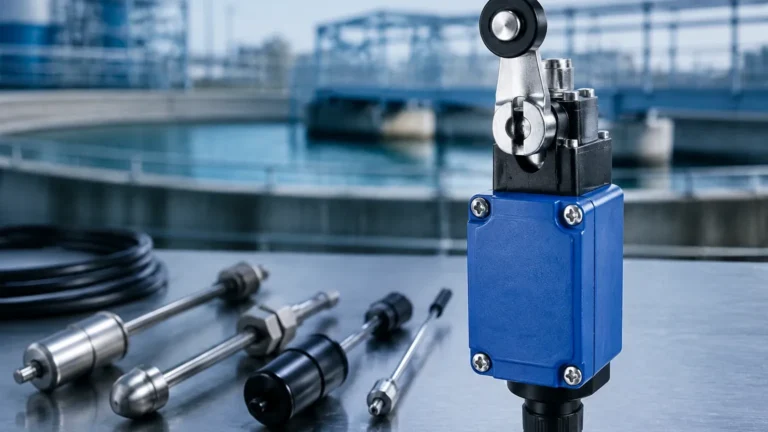
These are the most common variants, typically mounted through the top or bottom of a tank. They are used for simple high-level alarms or low-level dry-run protection for pumps.
2. Multi-Point Magnetic Switches
A significant advantage of the magnetic design is the ability to house multiple reed switches within a single stem. A single instrument can monitor high-high, high, low, and low-low levels. Each level corresponds to a specific float and switch position, reducing the number of tank penetrations required.
3. Side-Mounted (Horizontal) Switches
In applications where top access is restricted, side-mounted switches are used. These often employ a hinged float arm. As the liquid rises, the arm pivots, bringing a magnet into proximity with a reed switch located inside the mounting housing.
4. Magnetic Level Gauges with Switch Modules
For visual indication combined with electrical switching, magnetic level gauges (bypass chambers) are used. These feature an external chamber connected to the tank. A float inside the chamber moves with the liquid, and magnetic switch modules can be clamped to the outside of the chamber at any desired height. This allows for easy adjustment of switch points without process downtime.
Technical Selection Criteria
Selecting the correct Level Switches requires an analysis of both the fluid properties and the vessel's physical constraints. The following table provides a general framework for evaluating a level switch magnetic type.
| Parameter | Consideration | Typical Range/Options |
| :— | :— | :— |
| Material Compatibility | Must resist corrosion from the process media. | 316L Stainless Steel, PP, PVC, PVDF, PTFE |
| Specific Gravity (S.G.) | The liquid must be dense enough to buoy the float. | Standard floats: S.G. > 0.8; Interface floats: S.G. > 0.45 |
| Operating Temperature | High temperatures can demagnetize components or melt seals. | -40°C to +200°C (Standard); up to 400°C (Specialized) |
| Operating Pressure | High pressure can crush hollow floats. | Atmospheric to 40 bar (Standard); up to 100+ bar (Custom) |
| Contact Rating | Must match the control system or relay load. | 10W to 70W; 0.5A to 1.5A AC/DC |
| Connection Size | Must fit existing tank nozzles. | G1/2", G1", G2", or Flanged (DN25, DN50) |
Specific Gravity and Float Buoyancy
The most critical factor in magnetic level switch selection is the specific gravity of the liquid. A float designed for water (S.G. 1.0) may sink in light hydrocarbons or oils (S.G. 0.7). Engineers must ensure the float's displacement volume and weight are calibrated so that the magnet aligns perfectly with the reed switch at the trip point.
Installation and Engineering Best Practices
To ensure the longevity and accuracy of a level switch magnetic type, specific installation guidelines must be followed:
1. Avoid Magnetic Interference: Do not install magnetic switches near large motors, transformers, or high-voltage cables. Strong external magnetic fields can cause false triggering of the reed switches.
2. Turbulence Management: In tanks with heavy agitation or splashing, the float may "bounce," leading to rapid cycling of the switch (chatter). In such cases, a stilling well (a perforated pipe surrounding the stem) should be installed to dampen the liquid movement.
3. Orientation: Vertical switches must be installed within a specific tolerance of the vertical axis (usually ±20°). Excessive tilting can increase friction between the float and the stem, leading to sticking.
4. Ferrous Contamination: If the process liquid contains iron filings or magnetic particles, they will adhere to the float's magnet. This buildup can eventually weigh down the float or cause it to jam. For these applications, a non-magnetic technology (like ultrasonic or tuning fork) is preferred.
5. Contact Protection: Reed switches are sensitive to inductive loads (like solenoid valves or motor starters). Always use a protective relay or a varistor/RC circuit to prevent contact welding caused by back-EMF.
Limitations and Risks
While highly reliable, the level switch magnetic type is not a universal solution. Engineers should be aware of the following limitations:
* Mechanical Movement: Because it is a moving-part technology, the float can become stuck if the liquid is highly viscous, contains heavy solids, or tends to crystallize (e.g., sugar syrups or heavy crude).
* Coating and Build-up: Thick coatings on the stem can impede the float's movement. Regular cleaning is required in "dirty" applications.
* Shock and Vibration: Extreme mechanical vibration can cause the fragile glass envelope of the reed switch to fracture or cause the contacts to vibrate, creating signal noise.
Comparison: Magnetic vs. Other Point-Level Technologies
| Feature | Magnetic Level Switch | Ultrasonic Switch | Tuning Fork (Vibrating) |
| :— | :— | :— | :— |
| Moving Parts | Yes (Float) | No | No (Vibrating Tines) |
| Power Required | No (Passive) | Yes | Yes |
| Viscosity Limit | Low to Medium | Medium | High |
| Foam Sensitivity | Low (Measures liquid) | High (May fail) | Moderate |
| Cost | Low | Moderate | Moderate to High |
Maintenance and Troubleshooting
Routine maintenance for a level switch magnetic type is generally minimal but essential for safety-critical loops.
* Visual Inspection: Check the float for signs of pitting, corrosion, or deformation (crushing). A crushed float will lose buoyancy and stay at the bottom of the tank.
* Manual Function Test: During tank cleaning or downtime, manually slide the float along the stem while monitoring the continuity of the electrical circuit. This confirms both the magnetic coupling and the integrity of the reed switch.
* Check for Leakage: In high-pressure applications, ensure that the process fluid has not bypassed the seals and entered the electrical terminal box.
Frequently Asked Questions (FAQs)
Q: Can a magnetic level switch be used in hazardous (Ex) areas?
A: Yes. Because the reed switch is hermetically sealed, many models are certified as "Simple Apparatus" for use in intrinsically safe circuits. Explosion-proof housings are also available for Zone 0 and Zone 1 environments.
Q: How do I change the switch logic from Normally Open (NO) to Normally Closed (NC)?
A: For many single-point vertical switches, the logic can be reversed by removing the float, flipping it 180 degrees, and reinstalling it on the stem. This reverses the position of the internal magnet relative to the switch.
Q: What is the maximum length for a vertical magnetic level switch?
A: Stems can be manufactured up to 4 or 6 meters in length. However, for lengths exceeding 2 meters, support brackets or oversized stems are often necessary to prevent the unit from bending under the weight of the fluid or due to flow forces.
Q: Can these switches detect the interface between two liquids?
A: Yes, provided there is a sufficient difference in specific gravity (typically >0.1). A specialized "interface float" is weighted to sink through the upper, lighter liquid (e.g., oil) and float on the lower, heavier liquid (e.g., water).
By understanding the mechanical and magnetic principles of these devices, process engineers can effectively implement the level switch magnetic type to provide low-cost, high-reliability point detection across a wide variety of industrial storage and processing tanks.