Wolfenstein New Order First Level Switches
Wolfenstein New Order First Level Switches
In the landscape of modern industrial automation, the term "first level" refers to the primary layer of detection and control that ensures process safety and efficiency. When engineers discuss the implementation of Wolfenstein New Order first level switches, they are typically referring to the integration of high-reliability primary switching components within a modernized industrial framework—a "new order" of automated precision that replaces legacy manual monitoring. These switches serve as the critical interface between physical fluid levels and electronic control systems, providing the foundational data required for overfill protection, pump control, and dry-run prevention.
Industrial level switches are discrete output devices that detect the presence or absence of a substance at a specific height within a tank, silo, or pipe. Unlike continuous level transmitters, which provide a constant stream of data, a level switch acts as a sentinel, triggering an electrical signal only when a pre-defined threshold is reached. Choosing the correct technology for these first-level applications is essential for maintaining the integrity of complex process architectures.
Fundamental Measurement Principles for Level Detection
Before selecting a specific device, it is imperative to understand the physical principles that govern different switching technologies. Each method interacts with the process media differently, making certain sensors more suitable for specific environmental conditions.
1. Buoyancy-Based Switching (Float Switches)
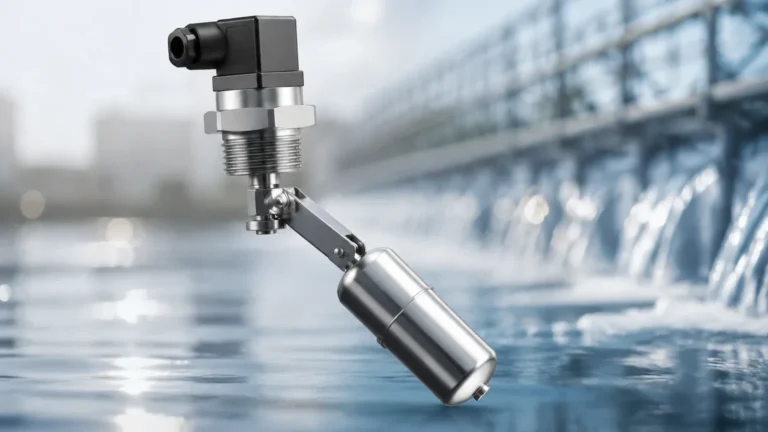
Float switches operate on Archimedes' principle. A float, typically constructed from stainless steel or high-density plastics, remains on the surface of the liquid. As the liquid level rises or falls, the float moves accordingly. Inside the float or the mounting stem, a permanent magnet triggers a reed switch or a microswitch when it reaches the actuation point. This is a purely mechanical-to-electrical interface, requiring no external power for the sensing element itself.
2. Vibrating Fork (Tuning Fork) Principle
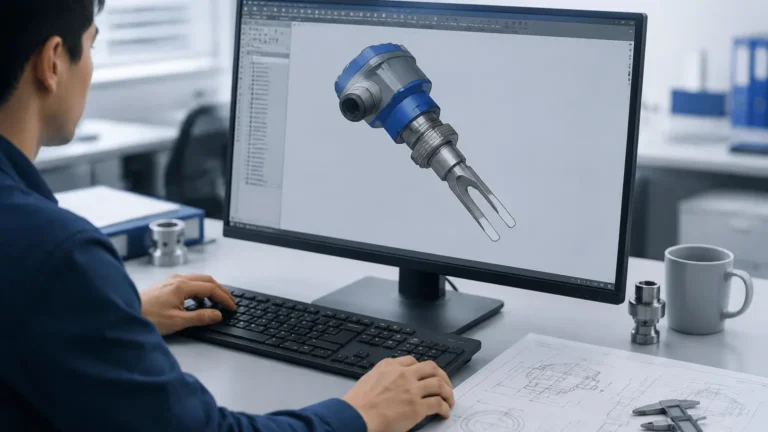
These switches utilize a dual-pronged fork that is vibrated at its natural resonant frequency by a piezoelectric crystal. When the fork is immersed in a liquid or solid, the frequency of vibration changes or the amplitude is dampened. The internal electronics detect this shift and toggle the output state. This technology is highly resistant to changes in pressure, temperature, and density, making it a versatile choice for a "new order" of industrial reliability.
3. Capacitive Level Switching
Capacitance switches treat the sensor probe and the tank wall as two plates of a capacitor. The process media acts as the dielectric material. As the level rises and covers the probe, the dielectric constant changes, leading to a measurable change in capacitance. This principle is particularly effective for detecting interface levels between two different liquids or for sensing bulk solids.
4. Ultrasonic Gap Switching
Ultrasonic switches use a pair of crystals separated by a small gap. One crystal transmits a high-frequency sound wave, and the other receives it. When the gap is filled with air or gas, the sound wave is attenuated and does not reach the receiver. When liquid fills the gap, the sound wave travels through it efficiently, triggering the switch. This is an excellent choice for non-contact-adjacent applications where mechanical movement is undesirable.
Technical Comparison of Primary Level Switch Technologies
Selecting the appropriate Level Switches requires a detailed analysis of the process media and environmental constraints. The following table provides a comparison of common technologies used in first-level detection systems.
| Technology | Media Type | Max Temperature | Max Pressure | Best Use Case |
| :— | :— | :— | :— | :— |
| Float Switch | Clean Liquids | 150°C | 40 bar | Simple sump or tank high/low alarms. |
| Vibrating Fork | Liquids/Solids | 250°C | 64 bar | Overfill protection in turbulent tanks. |
| Capacitance | Acids/Alkalis | 200°C | 100 bar | Sticky media or interface detection. |
| Ultrasonic Gap | Clear Liquids | 150°C | 70 bar | Highly aerated or foaming liquids. |
| Conductivity | Water/Conductive | 100°C | 10 bar | Low-cost multi-point water detection. |
Engineering Guide: Selection and Application of Level Switches
When designing the Wolfenstein New Order first level switches configuration, engineers must look beyond the basic measurement principle and consider the long-term operational stability of the system. The selection process should involve the following criteria:
Media Compatibility
The chemical composition of the liquid or solid is the most critical factor. For corrosive chemicals like sulfuric acid, PTFE-coated capacitance probes or plastic float switches are required. For food and beverage applications, 316L stainless steel with a high-polish finish (Ra < 0.8 μm) is necessary to prevent bacterial growth.
Process Conditions
* Pressure: High-pressure reactors (exceeding 40 bar) often require heavy-duty vibrating forks or specialized magnetic level gauges with integrated switches.
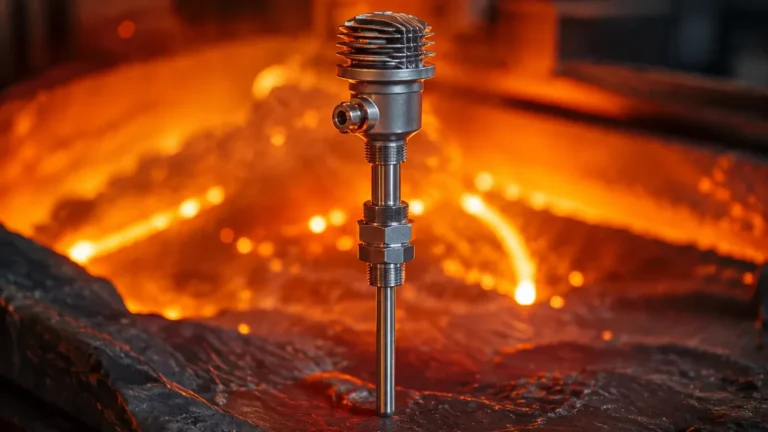
* Temperature: Standard switches often fail at temperatures above 100°C due to electronics degradation. Remote-mounted electronics or high-temperature cooling fins are essential for steam or hot oil applications.
* Viscosity: Highly viscous liquids can "bridge" the gap in tuning forks or cause floats to stick. In these scenarios, capacitance or non-contact radar-based switching is preferred.
Electrical Output Requirements
Modern control systems (PLCs/DCS) require specific signal types. Options include:
* Relay (SPDT/DPDT): Ideal for direct pump control.
* Transistor (PNP/NPN): Used for high-speed switching in DC circuits.
* Two-wire (NAMUR): Standard for intrinsically safe (Ex) environments.
* Contactless Electronic Switch: Offers the highest longevity due to the absence of moving parts.

Installation Best Practices for Reliable Process Control
The reliability of Wolfenstein New Order first level switches depends heavily on correct installation. Even the most advanced sensor will fail if placed in a position prone to interference.
1. Avoid Turbulence: Do not install switches directly under a fill pipe. The force of the incoming liquid can cause false triggers or mechanical damage. If placement near an inlet is unavoidable, a stilling well or a baffle plate must be used.
2. Orientation Matters: Side-mounted switches should be tilted slightly downward to allow liquid to drain off the sensing element, preventing false "high" readings due to residue buildup.
3. Cable Entry Protection: Always point cable entries downward and use drip loops. This prevents moisture from migrating into the housing via capillary action, which is a leading cause of electronic failure in outdoor installations.
4. Dead Zones: Be aware of the "dead zone" or non-responsive area near the mounting threads. Ensure the switch probe is long enough to reach the actual target detection level.
Addressing Limitations and Maintenance Requirements
While industrial level switches are designed for durability, they are not immune to failure. Understanding these limitations is part of a robust engineering strategy.
* Coating and Buildup: In applications involving wastewater or slurries, material can accumulate on the sensor. Vibrating forks with "active shield" technology or capacitance probes with coating rejection logic are necessary to mitigate this risk.
* Mechanical Wear: Float switches have moving parts that can eventually fatigue or become stuck due to calcification. A scheduled inspection every 6 to 12 months is recommended for mechanical systems.
* Density Sensitivity: Buoyancy-based switches are calibrated for a specific specific gravity (SG). If the process fluid changes (e.g., switching from water to oil), the float may no longer actuate at the correct point.
To ensure a fail-safe operation, it is a best practice to implement "normally closed" (NC) logic for high-level alarms. This ensures that if a wire is cut or power is lost, the system defaults to an alarm state, preventing a potential overflow.
FAQ: Optimizing First-Level Detection Systems
Q: Can a level switch be used for continuous level measurement?
A: No. A level switch only provides a point-level signal (on/off). For continuous tracking (0-100%), you would require a radar or ultrasonic level transmitter.
Q: What is the difference between an intrinsically safe switch and an explosion-proof switch?
A: Intrinsically safe (IS) switches limit the electrical energy to the sensor so that a spark cannot occur. Explosion-proof (Ex d) switches are designed to contain an internal explosion so that it does not ignite the surrounding atmosphere.
Q: How do I prevent "chattering" in my pump control circuit?
A: Chattering occurs when surface waves cause the switch to toggle rapidly. This can be solved by using a switch with a built-in time delay (typically 1-5 seconds) or by using two switches to create a hysteresis loop (one for "start pump" and one for "stop pump").
Q: Are vibrating forks suitable for dry bulk solids?
A: Yes, but you must select a heavy-duty fork designed for solids. Fine powders require high-frequency forks, while large granulates require robust, low-frequency versions to prevent damage from material impact.
By carefully selecting and installing the appropriate technologies, facility managers can ensure that their Wolfenstein New Order first level switches provide the reliable, accurate, and cost-effective performance required for modern industrial automation. Whether managing water treatment facilities or complex chemical reactors, these primary detection layers remain the most critical components in the safety and efficiency hierarchy.
Download Wolfenstein New Order First Level Switches as a PDF