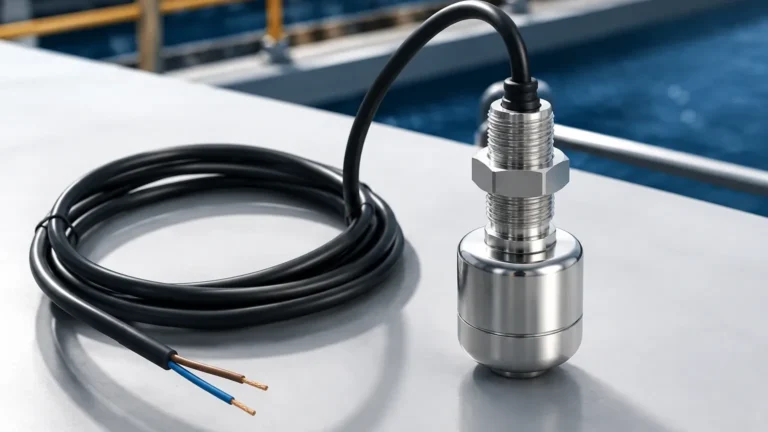
Level 1 Switch
Level 1 Switch
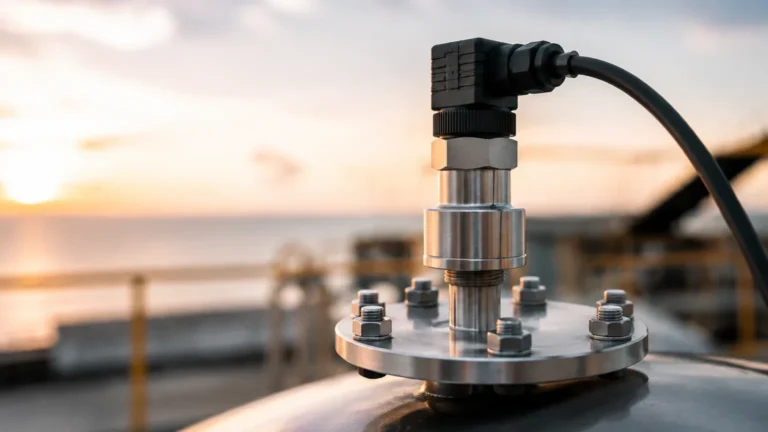
In the field of industrial automation and process control, point level detection serves as the fundamental layer of safety and operational logic. A level 1 switch, often designated as the primary detection point in a vessel or tank, is a critical component used to trigger alarms, control pumps, or initiate emergency shutdowns. Whether it is preventing a tank from overflowing or ensuring a pump does not run dry, selecting the correct technology for a level 1 switch is a prerequisite for system reliability and plant safety.
This guide provides a technical overview of the principles, selection criteria, and installation practices for point level detection, focusing on the requirements of a level 1 switch in various industrial environments.
Understanding Point Level Detection and the Level 1 Switch
Unlike continuous level transmitters that provide a constant stream of data regarding the exact height of a medium, a level switch is a binary device. It changes state—typically from open to closed or vice versa—when the material reaches a specific physical point.
In many engineering schematics, a "level 1 switch" refers to the first threshold in a multi-point detection system. For example, in a high-level alarm configuration, Level 1 might represent the "High" alarm, while Level 2 represents the "High-High" emergency shutdown. Conversely, in a sump pump application, Level 1 might be the low-level cutoff point to protect the pump from cavitation. Because these switches are often the first line of defense, their mechanical and electronic integrity is paramount.
Core Measurement Principles for Level Switches
To select an effective level 1 switch, engineers must first understand the physics behind the various detection methods. Each technology interacts differently with the process media, whether it be a liquid, slurry, or granular solid.
1. Float-Based Level Switches
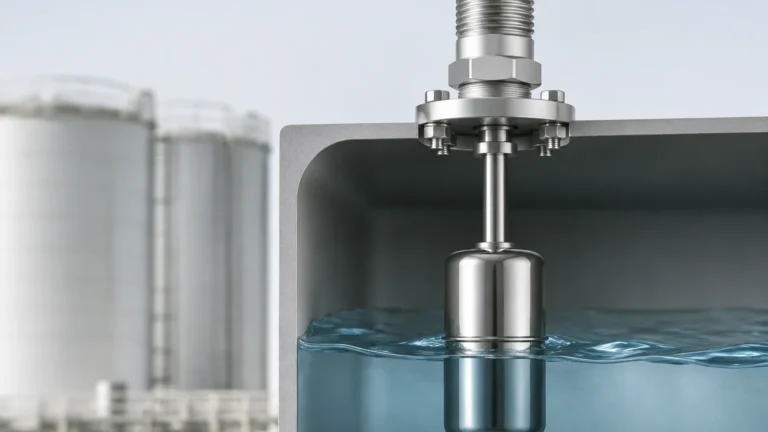
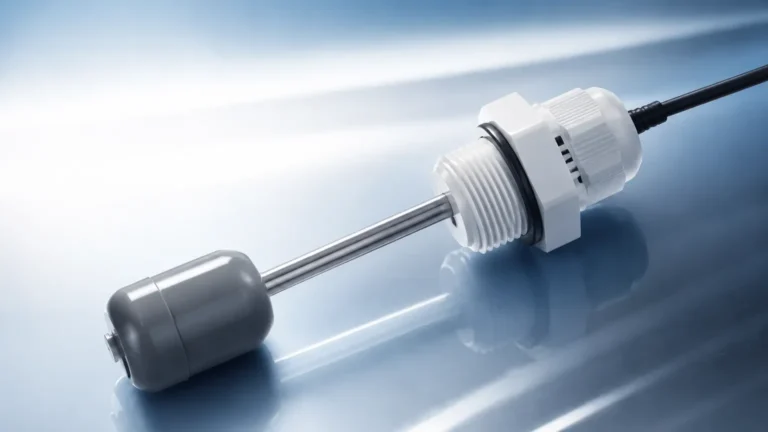
Float switches operate on the principle of buoyancy. A float, typically made of stainless steel or specialized plastics, moves with the liquid level. When the float reaches a predetermined height, it triggers a mechanical microswitch or a magnetic reed switch.
* Advantages: Simple, cost-effective, and requires no external power for mechanical versions.
* Limitations: Susceptible to mechanical wear and fouling if the liquid contains solids or is highly viscous.
2. Vibrating Fork (Tuning Fork) Technology
Vibrating level switches utilize a piezoelectric crystal to vibrate a metal fork at its natural resonance frequency. When the fork is submerged in a medium, the frequency of vibration changes. The internal electronics detect this shift and trigger the switch output.
* Advantages: Highly reliable, unaffected by bubbles, foam, or flow. It is often the preferred choice for a level 1 switch in safety-critical applications.
* Limitations: Not suitable for extremely high-viscosity materials that may bridge the gap between the forks.
3. Capacitance Level Switches
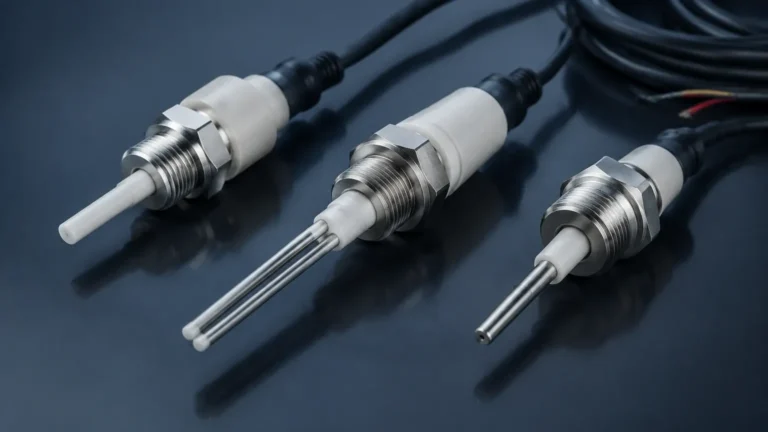
Capacitance switches measure the change in electrical capacitance between the sensor probe and the tank wall (or a reference probe). As the medium displaces air, the dielectric constant changes, altering the capacitance.
* Advantages: No moving parts; can handle high temperatures and pressures.
* Limitations: Requires calibration and can be affected by changes in the dielectric constant of the medium or material build-up on the probe.
4. Ultrasonic Point Level Switches
These sensors use ultrasonic waves to detect the presence of a medium. In a gap-style ultrasonic switch, a signal is transmitted across a small gap. When the gap is filled with liquid, the signal strength increases, triggering the switch.
* Advantages: Excellent for non-contact applications (in some configurations) and highly corrosive liquids.
* Limitations: Can be affected by heavy foam or high-pressure vapors that attenuate the ultrasonic signal.
Comparing Technologies: A Selection Guide
Selecting the right Level Switches requires a detailed analysis of the process conditions. The following table summarizes the suitability of common technologies for a level 1 switch application.
| Technology | Suitable Media | Max Temp (Approx.) | Max Pressure (Approx.) | Key Advantage |
| :— | :— | :— | :— | :— |
| Float Switch | Clean Liquids | 150°C (302°F) | 40 bar (580 psi) | Low cost, simple logic |
| Vibrating Fork | Liquids/Solids | 250°C (482°F) | 64 bar (928 psi) | Maintenance-free, versatile |
| Capacitance | Liquids/Powders | 800°C (1472°F) | 100 bar (1450 psi) | High temp/pressure capability |
| Conductivity | Conductive Liquids | 100°C (212°F) | 10 bar (145 psi) | Very simple, multiple points |
| Rotary Paddle | Bulk Solids | 80°C (176°F) | Atmospheric | Reliable for heavy solids |
Engineering Considerations for Level 1 Switch Installation
The performance of a level 1 switch is heavily dependent on its physical installation. Even the most advanced sensor will fail if placed in an environment where it cannot accurately interact with the medium.
Mounting Orientation
Level switches can be mounted horizontally (through the side of the tank) or vertically (from the top).
* Horizontal Mounting: Ideal for precise point detection at a specific height. However, it requires a penetration in the side of the vessel, which may not be desirable in high-pressure or glass-lined tanks.
* Vertical Mounting: Common for low-level detection or when side access is restricted. Long probes or cable-suspended floats are often used in these scenarios.
Turbulence and Agitation
In tanks with mixers or high-velocity inflow, turbulence can cause "chatter"—the rapid opening and closing of the switch. To mitigate this, engineers should:
1. Use a stillwell (a pipe surrounding the switch) to dampen surface movement.
2. Select a switch with a time delay function in the electronics to ignore momentary level fluctuations.
3. Position the level 1 switch away from the direct path of the inlet flow.
Electrical and Signal Integration
A level 1 switch must be integrated into the control system (PLC/DCS). Common output types include:
* Relay (SPDT/DPDT): Directly switches a high-current load like a small pump or a light.
* Transistor (PNP/NPN): Used for high-speed switching into a PLC.
* Two-wire (NAMUR): Used in intrinsically safe circuits for hazardous areas.

Operational Limitations and Maintenance
While level switches are designed for durability, certain operational risks must be managed to prevent false readings or failure to trip.
Material Build-up and Coating
In applications involving wastewater, syrups, or sticky chemicals, material can accumulate on the sensor probe. For a level 1 switch using capacitance or vibrating fork technology, heavy coating can simulate the presence of the medium even when the tank is empty. Choosing a switch with "active shield" technology or a fork design that sheds material is essential in these cases.
Specific Gravity and Density
Mechanical float switches are sensitive to the specific gravity (SG) of the liquid. If the liquid density drops (e.g., due to temperature increase), a float designed for water (SG 1.0) may sink, causing a false low-level alarm. Always verify the minimum SG requirement of the switch against the process fluid's properties.
Maintenance Protocols
Routine testing is the only way to ensure a level 1 switch will function during an actual event.
* Proof Testing: Manually raising the level or removing the switch to simulate a trip.
* Cleaning: Periodically removing build-up from probes or floats.
* Seal Inspection: Checking cable glands and housing seals to prevent moisture ingress, which is a leading cause of electronic failure in industrial level instruments.
Frequently Asked Questions (FAQs)
Q: Can a level 1 switch be used for continuous level measurement?
A: No. A level switch is a point-detection device. If you need to know the level at all times (e.g., 25%, 53%, 80%), you require a level transmitter, such as a radar or ultrasonic sensor.
Q: What is the difference between a "Normally Open" (NO) and "Normally Closed" (NC) level switch?
A: This refers to the state of the electrical contact when the switch is in its "normal" or non-activated state. For safety-critical high-level alarms, a Normally Closed (NC) configuration is often preferred because it is "fail-safe"—if the wire breaks, the system sees an open circuit and triggers an alarm.
Q: How do I handle a level 1 switch in a hazardous (Explosive) area?
A: You must select a switch with the appropriate certification, such as ATEX, IECEx, or UL Class/Division ratings. These switches are designed to be either explosion-proof (containing any internal spark) or intrinsically safe (operating at such low energy that a spark cannot occur).
Q: Can one switch provide multiple level points?
A: Some technologies, such as conductivity probes or multi-float rods, can provide multiple switch points (e.g., Level 1 and Level 2) in a single process connection. However, for critical safety redundancy, separate instruments are often recommended.
Conclusion
The level 1 switch is a cornerstone of industrial process safety and efficiency. By understanding the specific requirements of the application—ranging from chemical compatibility to the physical dynamics of the tank—engineers can select a technology that provides reliable, long-term service. Welk provides a comprehensive range of industrial level measurement solutions, including radar, ultrasonic, and various Level Switches designed to meet the rigorous demands of water treatment, chemical processing, and oil and gas operations.
Before finalizing a specification, always confirm the process temperature, pressure, and media characteristics to ensure the chosen level 1 switch aligns with the intended safety and operational goals.