Jlg Gauge
Jlg Gauge
In the operation of industrial aerial work platforms and mobile equipment, the term "jlg gauge" typically refers to the critical instrumentation used to monitor fuel levels, hydraulic oil pressure, battery state-of-charge, or engine hours. These components are essential for ensuring the safety and operational efficiency of machinery produced by JLG Industries. However, from a broader engineering perspective, these instruments fall under the category of local level indicators and process gauges.
For maintenance managers and equipment engineers, understanding the technology behind these gauges—and knowing when to upgrade to more robust industrial solutions—is vital for preventing downtime. This article examines the principles of local level measurement, the specific types of gauges found on mobile industrial equipment, and how they compare to high-performance Magnetic & Local Level Gauges used in stationary industrial applications.
Understanding Local Level Measurement Principles
Before selecting or replacing a jlg gauge, it is important to understand the physical principles that allow these instruments to translate a fluid level or pressure into a readable display. Local level measurement generally relies on three primary methods:
1. Mechanical Buoyancy (Float-Based)
Most fuel and hydraulic gauges in mobile equipment utilize a float mechanism. A float rests on the surface of the liquid; as the level changes, the float moves an arm connected to a potentiometer (for electronic gauges) or a mechanical linkage (for direct-reading gauges). The change in resistance or mechanical position is then reflected on the dial.
2. Hydrostatic Pressure
In some hydraulic systems, level is inferred by measuring the pressure exerted by the liquid column at the bottom of the tank. The pressure is proportional to the height of the fluid and its density. This method is common in sealed systems where a mechanical float might be difficult to install.
3. Magnetic Coupling
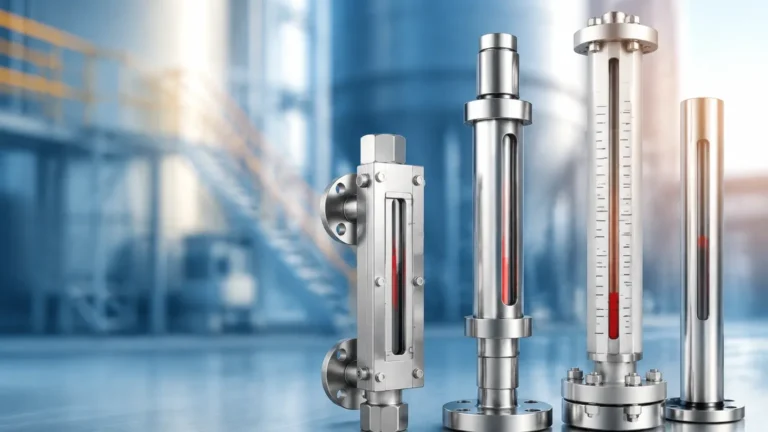
Advanced local indicators, such as magnetic level gauges, use a float containing a permanent magnet. This magnet acts upon an external indicator (flaps or a follower) located outside the pressure chamber. This ensures a total seal between the process fluid and the operator, which is a significant safety advantage in high-pressure or corrosive environments.
Types of Gauges Used in Industrial Mobile Equipment
Mobile platforms like those from JLG require specific instrumentation to handle the rigors of construction sites and industrial facilities. The most common varieties of a jlg gauge include:
* Fuel Level Gauges: These are typically 52 mm (2-inch) diameter gauges that receive an Ohmic signal from a fuel sender unit. They are designed to withstand high vibrations and wide temperature fluctuations, often ranging from -40°C to +85°C (-40°F to 185°F).
* Hydraulic Oil Indicators: Often simple sight glasses or mechanical float gauges, these allow operators to verify that there is sufficient fluid to power the lift cylinders and drive motors.
* Battery Discharge Indicators (BDI): For electric models, these gauges measure the voltage of the battery pack to provide a percentage of remaining energy. Accuracy here is critical to prevent deep discharge, which can damage expensive lead-acid or lithium-ion batteries.
* Hour Meters: While not a level gauge in the fluid sense, these are often grouped with other gauges to track maintenance intervals based on engine or motor run time.
Comparison of Local Level Gauges
When evaluating a replacement jlg gauge or considering an upgrade for a stationary tank in a facility, the following table compares the most common technologies:
| Feature | Standard Mechanical Float | Electronic Sender Gauge | Magnetic Level Gauge |
| :— | :— | :— | :— |
| Measurement Principle | Buoyancy / Linkage | Resistance / Voltage | Magnetic Coupling |
| Durability | Moderate (moving parts) | High (solid state) | Very High (no contact) |
| Visibility | Local only | Remote + Local | High-visibility Local |
| Power Required | None | 12V / 24V DC | None (for local indication) |
| Pressure Rating | Atmospheric | Atmospheric | Up to 200 bar (2900 psi) |
| Typical Application | Small fuel tanks | Mobile equipment dashboards | Process vessels / Chemical tanks |
Selection Criteria for Replacement Gauges
If you are sourcing a replacement jlg gauge or a similar local level indicator for industrial use, several factors must be confirmed to ensure compatibility and longevity:
1. Signal Type: For electronic gauges, you must match the resistance range of the sender unit. Common standards include 0–90 Ohms, 10–180 Ohms (European standard), or 240–33 Ohms (American standard).
2. Mounting Diameter: Most dashboard gauges use a standard 52 mm (2.05 in) cutout. Ensure the bezel design matches the existing panel for a flush fit.
3. Environmental Sealing: Look for an IP67 rating if the gauge will be exposed to rain, dust, or high-pressure washing. Fog-resistant glass is also a standard requirement for outdoor equipment.
4. Voltage Compatibility: Mobile equipment typically operates on 12V or 24V DC systems. Using a 12V gauge on a 24V system without a resistor or converter will result in immediate component failure.
For applications involving large storage tanks or hazardous chemicals where a standard mobile-grade gauge is insufficient, professional Magnetic & Local Level Gauges provide a more robust, industrial-grade solution that eliminates the risk of leaks associated with direct-contact mechanical gauges.

Installation and Maintenance Considerations
Proper installation is the primary factor in the accuracy of any jlg gauge. For float-based systems, the orientation of the sender unit is critical. If the float arm is restricted by the tank wall or internal baffles, the gauge will provide "stuck" or erratic readings.
Installation Steps:
* Tank Preparation: Ensure the tank is depressurized and drained below the mounting point before removing an old gauge or sender.
* Gasket Integrity: Always use a new nitrile or Viton gasket to prevent leaks. In hydraulic systems, even a small leak can lead to significant fluid loss over time.
* Wiring: Use marine-grade connectors and heat-shrink tubing for electronic gauges. Corrosion at the terminal is the most common cause of gauge failure in outdoor equipment.
* Calibration: Some digital gauges allow for calibration to account for non-linear tank shapes. This ensures that "half full" on the dial actually represents 50% of the volume.
Maintenance Checklist:
* Inspect gauge faces for cracks or moisture ingress annually.
* Clean the sender unit terminals to prevent resistance build-up.
* Verify that the ground connection is secure; a poor ground often causes the needle to jump or read incorrectly high.
Limitations of Standard Local Gauges
While a standard jlg gauge is effective for mobile machinery, it has inherent limitations that engineers must recognize:
* Tilt Sensitivity: Since most rely on buoyancy, the readings can become highly inaccurate when the machine is operating on a slope. This is why many aerial lifts have "tilt alarms" that are independent of the level gauges.
* Fluid Density: Mechanical and hydrostatic gauges are calibrated for a specific fluid density (e.g., diesel vs. hydraulic oil). Switching fluids without recalibrating the gauge will result in errors.
* Lack of Redundancy: Standard local gauges rarely offer dual output (local dial plus 4-20mA signal). In critical industrial processes, a magnetic level gauge with an integrated transmitter is often preferred to provide both a visual check for operators and data for a PLC or SCADA system.
Frequently Asked Questions (FAQs)
Q: Why is my jlg gauge reading full even when the tank is empty?
A: This is usually caused by a short to ground in the signal wire or a failed sender unit where the internal resistor has broken. It can also happen if the float is physically stuck in the "up" position due to debris in the tank.
Q: Can I use a fuel gauge for a water tank?
A: Generally, no. Fuel gauges and senders are typically made of materials that may corrode in water. Furthermore, the density difference between fuel and water will cause the float to sit at a different level, leading to inaccurate readings.
Q: How do I know if I need a magnetic level gauge instead of a standard mechanical one?
A: If your application involves high pressure (above 2 bar / 29 psi), extreme temperatures, or hazardous chemicals that must be hermetically sealed, a magnetic level gauge is the appropriate choice. Standard mechanical gauges are best suited for atmospheric tanks and non-corrosive fluids like fuel and oil.
Q: What is the standard lifespan of an industrial level gauge?
A: In a mobile environment, a high-quality gauge should last 5 to 10 years. However, exposure to extreme UV radiation, salt spray, or constant high-amplitude vibration can shorten this lifespan to 2 or 3 years.
For engineers seeking high-precision measurement for industrial tanks, Welk offers a range of advanced solutions. While a jlg gauge is perfect for its specific mobile application, larger process requirements often demand the reliability of Magnetic & Local Level Gauges to ensure safety and continuous operation.