3.6m in Inches
3.6m in Inches
In industrial level measurement, precision is the cornerstone of operational efficiency. When designing storage systems or selecting instrumentation, engineers frequently encounter the need to bridge the gap between metric and imperial units. Converting 3.6m in inches is a common requirement for mid-sized industrial tanks, particularly those used in water treatment, chemical processing, and food production.
To be precise, 3.6 meters is equivalent to approximately 141.73 inches. In the context of level sensing, this measurement often represents either the total height of a vessel or the maximum sensing range required for a transmitter. Understanding the nuances of this conversion, alongside the physical principles of level measurement at this scale, ensures that the selected equipment performs reliably within its specified parameters.
Understanding the Conversion: 3.6m in Inches
The conversion from meters to inches is based on the international yard and pound agreement of 1959, which defined one inch as exactly 25.4 millimeters. To calculate 3.6m in inches, the following mathematical steps are applied:
1. Convert Meters to Millimeters: 3.6 meters × 1,000 = 3,600 millimeters.
2. Convert Millimeters to Inches: 3,600 millimeters ÷ 25.4 = 141.732283… inches.
For most engineering applications, rounding to two decimal places—141.73 inches—provides sufficient accuracy. In larger architectural or structural contexts, this may be expressed as 11 feet and 9.73 inches. When configuring a digital level controller or a PLC (Programmable Logic Controller), inputting the exact decimal value is often necessary to minimize cumulative errors in volume calculations.
Measurement Principles for a 3.6m Range
Selecting the right technology for a 3.6-meter application requires an understanding of how different sensors interact with the medium and the environment. At this specific distance, several technologies are highly effective, each operating on distinct physical principles.
Ultrasonic Level Measurement
Ultrasonic sensors are a popular choice for a 3.6m range. These devices emit high-frequency sound pulses that travel through the air, reflect off the liquid surface, and return to the transducer. The sensor calculates the distance based on the "Time of Flight" (ToF).
For a 3.6m (141.73 inches) depth, ultrasonic sensors offer a non-contact solution that is cost-effective. However, engineers must account for the speed of sound, which varies with air temperature. Most high-quality sensors, such as those found on the Main Page of professional instrumentation providers, include integrated temperature compensation to maintain accuracy.
Radar Level Measurement
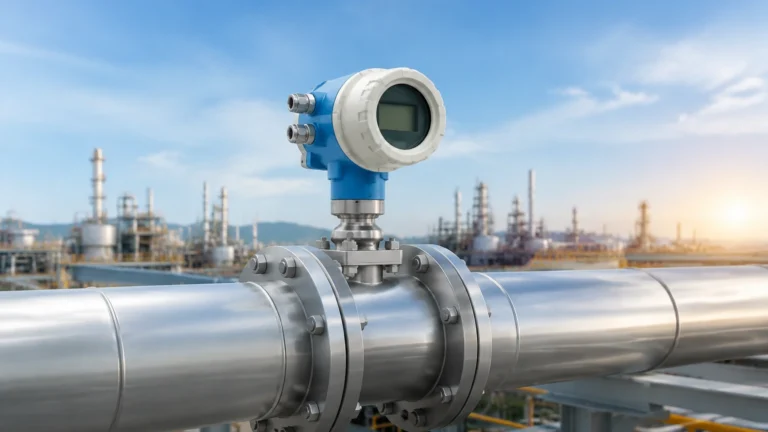
Radar transmitters also use Time of Flight but employ electromagnetic microwave pulses instead of sound waves. Radar is particularly advantageous for 3.6m applications where the atmosphere inside the tank might be dusty, prone to vapor, or subject to pressure changes—conditions that can attenuate ultrasonic signals. Radar is unaffected by air temperature or vacuum conditions, making it a robust choice for chemical reactors or volatile liquid storage.
Hydrostatic Pressure Sensing
Hydrostatic transmitters measure the pressure exerted by the liquid column. The principle is based on the formula: *Pressure (P) = Density (ρ) × Gravity (g) × Height (h)*. For a 3.6m height of water, the pressure at the bottom would be approximately 0.353 bar (5.12 psi). This method is highly reliable for vented tanks and is often used in deep sumps or water reservoirs where non-contact sensors might face mounting challenges.
Selecting Level Sensors for 3.6m Applications
When evaluating instruments for a 3.6m (141.73 inches) range, technical specifications must be matched to the specific properties of the liquid and the tank geometry. The following table provides a comparison of common technologies used for this measurement range.
| Technology | Typical Accuracy | Best Suited For | Limitations |
| :— | :— | :— | :— |
| Ultrasonic | ±0.25% of range | Water, wastewater, open channels | Affected by heavy foam and steam |
| Radar (80GHz) | ±2 mm | Chemicals, oils, high-precision needs | Higher initial investment cost |
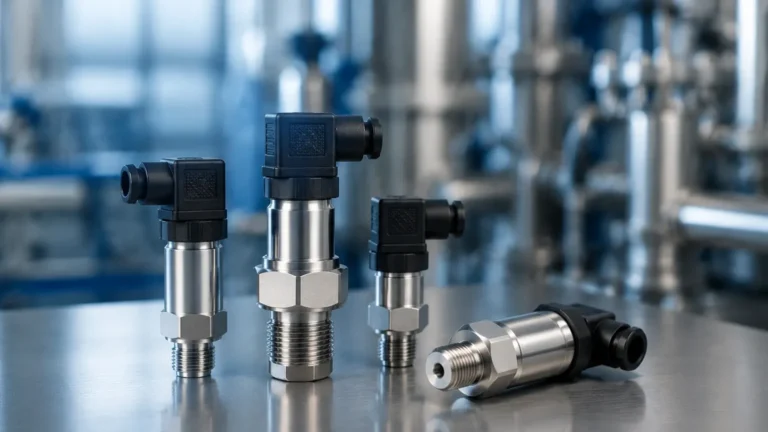
| Hydrostatic | ±0.1% to 0.5% | Deep tanks, underground sumps | Requires contact with the liquid |
| Magnetic Gauge | Visual + Switch | High-pressure boilers, toxic liquids | Mechanical parts require maintenance |
For a 3.6m vessel, the choice often depends on whether contact with the medium is permissible. In the food and beverage industry, non-contact radar or ultrasonic sensors are preferred to maintain hygiene. In contrast, for fuel storage, hydrostatic or magnetostrictive sensors are frequently utilized for their high repeatability and durability.
Installation Best Practices for 3.6m Depth Measurements
Correct installation is as critical as sensor selection. When dealing with a 3.6m (141.73 inches) measurement range, several geometric and physical factors must be considered to prevent signal interference.
The "Dead Zone" or Blocking Distance
Every non-contact sensor has a "dead zone" (also known as a blanking distance) directly beneath the transducer where measurements cannot be taken. For an ultrasonic sensor optimized for a 5m range, the dead zone might be 0.2m to 0.3m. If your tank is exactly 3.6m high, and you mount the sensor at the very top, you may not be able to measure the top 20-30cm of the liquid. Engineers should verify the dead zone specifications on the Main Page of the manufacturer's technical documentation to ensure the sensor is mounted high enough (perhaps using a nozzle or standpipe) to capture the full 3.6m range.
Beam Angle and Obstructions
Non-contact sensors emit signals in a cone shape. At a distance of 3.6m, the beam spreads significantly. For example, a sensor with a 10-degree beam angle will have a beam diameter of approximately 0.63 meters (24.8 inches) at the bottom of a 3.6m tank. If there are ladders, agitators, or inflow pipes within this cone, they will cause false echoes. Selecting a sensor with a narrower beam angle, such as high-frequency 80GHz radar, can help avoid these obstructions.
Mounting Orientation
The sensor must be mounted perpendicular to the liquid surface. Even a slight tilt can cause the signal to reflect away from the receiver rather than back to it, leading to signal loss (LOE). For hydrostatic sensors, ensuring the vent tube in the cable is not kinked or blocked is vital for accurate atmospheric pressure compensation.
Environmental Factors and Accuracy Limitations
While 3.6m in inches is a straightforward mathematical conversion, maintaining accuracy in a real-world B2B environment involves managing external variables.
1. Temperature Gradients: In tall tanks (3.6m and above), temperature stratification can occur. Since ultrasonic speed depends on temperature, a single point of compensation at the sensor head might not account for cooler air near the liquid surface. Radar is the preferred alternative if high accuracy is required across varying temperatures.
2. Surface Turbulence: If the 3.6m tank is being filled rapidly or has an active agitator, the surface will be turbulent. This can scatter ultrasonic and radar signals. Software filters (damping) or the use of a stilling well can mitigate these effects.
3. Vapor and Condensation: In chemical storage, condensation on the sensor face can attenuate signals. Some sensors feature self-cleaning faces or drip-off designs to prevent moisture buildup from affecting the 141.73-inch measurement path.
Frequently Asked Questions about 3.6m Level Measurement
Q: Is 3.6m a standard size for level sensor calibration?
A: While not a "standard" in the sense of a fixed category, many mid-range sensors are designed with a 5m or 6m maximum limit, making 3.6m a very comfortable operating range where the signal strength remains high and reliable.
Q: How do I convert 3.6m in inches for a volume calculation?
A: To calculate volume, first convert 3.6m to inches (141.73). If the tank is a vertical cylinder, use the formula *Volume = π × r² × h*. Ensure the radius (r) and height (h) are both in inches to get the result in cubic inches, which can then be converted to gallons (1 US gallon = 231 cubic inches).
Q: Can I use a 3.6m hydrostatic probe in a pressurized tank?
A: Standard hydrostatic probes measure relative pressure (vented to the atmosphere). If the tank is pressurized, you must use a differential pressure (DP) transmitter to subtract the headspace pressure from the total bottom pressure to accurately measure the 3.6m liquid level.
Q: What is the benefit of using 80GHz radar for a 141.73-inch range?
A: The primary benefit is the narrow beam angle and high resolution. This allows the sensor to ignore internal tank structures and provide a precise measurement even in narrow vessels or those with complex internals.
By understanding the technical requirements of measuring 3.6m in inches, engineering teams can better specify instrumentation that reduces maintenance and increases process safety. For detailed product specifications and application-specific advice, visiting the Main Page of an industrial level measurement specialist is the recommended next step in the procurement process.