80ghz
80ghz
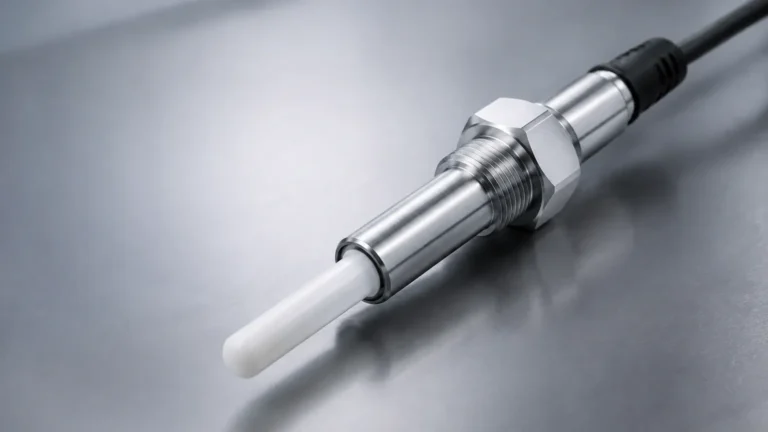
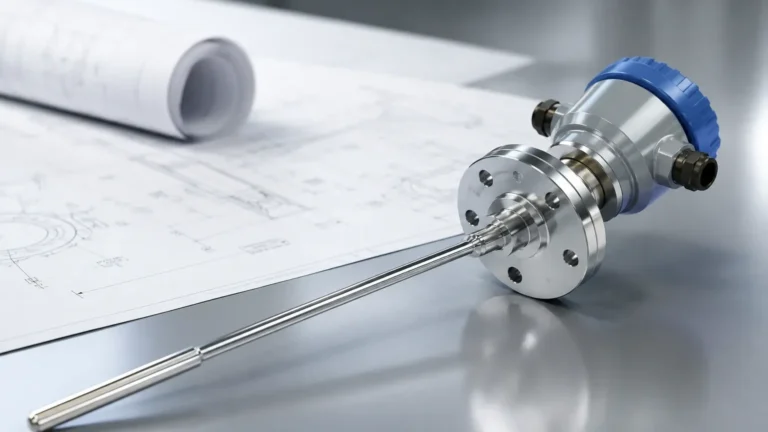
In the field of industrial process automation, the demand for high-precision, non-contact level measurement has led to the rapid adoption of high-frequency radar technology. Specifically, 80GHz radar level meters have become the benchmark for challenging applications involving narrow tanks, complex internal structures, and volatile materials. As a professional manufacturer, Welk provides advanced 80GHz solutions designed to deliver accuracy and reliability where traditional measurement methods often fail.
Understanding the technical nuances of 80GHz technology is essential for engineers and procurement professionals seeking to optimize their level measurement systems. This guide explores the measurement principles, technical advantages, and practical installation considerations of 80GHz radar sensors.
Understanding the 80GHz FMCW Measurement Principle
Radar level measurement generally falls into two categories: Pulse radar and Frequency Modulated Continuous Wave (FMCW) radar. Most modern 80GHz sensors utilize the FMCW principle due to its superior signal processing capabilities and higher accuracy.
The FMCW Process
In an FMCW system, the radar sensor emits a continuous signal with a frequency that increases linearly over time (a frequency sweep or "chirp"). This signal travels to the surface of the medium, reflects, and is received by the sensor antenna. Because the emitted frequency is constantly changing, there is a distinct difference between the frequency being emitted and the frequency being received at any given moment.
This difference, known as the "beat frequency," is directly proportional to the distance the signal has traveled. By using Fast Fourier Transform (FFT) algorithms, the sensor converts this frequency difference into a precise distance measurement.
The Significance of 80GHz
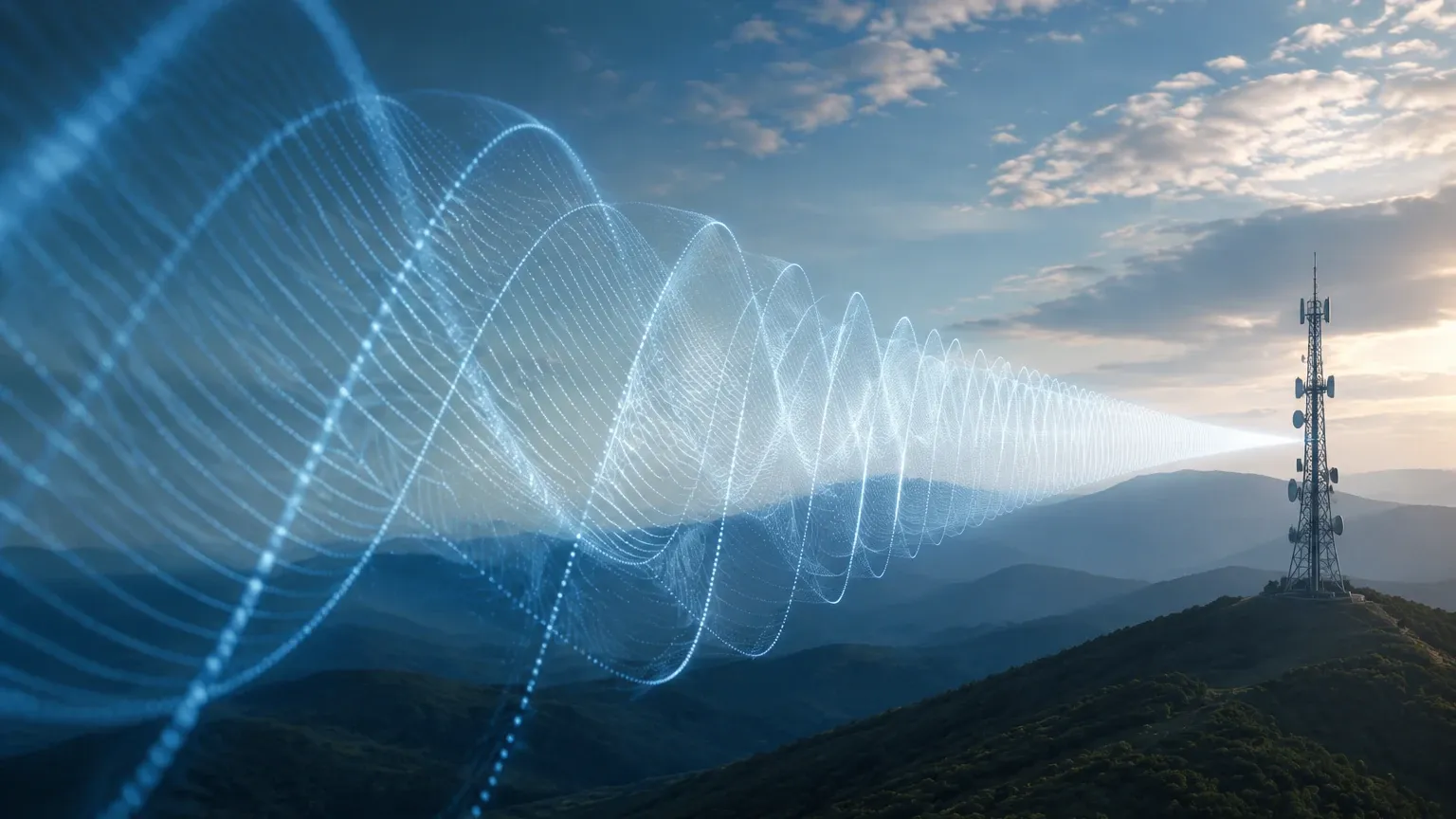
The "80GHz" refers to the center frequency of the microwave signal. At this frequency, the wavelength is approximately 3.75 mm. In contrast, a 26GHz radar has a wavelength of about 11 mm. The shorter wavelength of 80GHz signals allows for better reflection off uneven surfaces, such as bulk solids or turbulent liquids, and enables the use of much smaller antenna components while maintaining a highly focused beam.
Key Advantages of 80GHz Radar Level Meters
The transition from lower frequencies (6GHz or 26GHz) to 80GHz offers several transformative benefits for industrial applications. These advantages stem from the physics of high-frequency wave propagation.
Narrow Beam Angle
One of the most significant advantages of 80GHz technology is the narrow beam angle. A standard 80GHz sensor can achieve a beam angle as narrow as 3°, whereas a 26GHz sensor typically manages 8° to 10° with a similarly sized antenna.
* Obstacle Avoidance: A narrow beam can easily bypass internal tank obstructions like agitators, heating coils, ladders, and reinforcement struts. This reduces the risk of false echoes that can interfere with measurement accuracy.
* Small Vessel Compatibility: Because the beam does not spread significantly, it can be used in tall, narrow silos or tanks without hitting the side walls, which is a common cause of signal attenuation in lower-frequency devices.
Higher Precision and Resolution
80GHz radar sensors offer a wider bandwidth (often up to 4GHz or more). Bandwidth is directly linked to range resolution—the ability of the sensor to distinguish between two objects that are close together.
* Measurement Accuracy: High-frequency sensors often provide accuracy within ±1 mm or ±2 mm, making them suitable for custody transfer and high-precision inventory management.
* Small Blind Zone: The near-range resolution is significantly improved, allowing for accurate measurements even when the tank is nearly full. Many 80GHz units have a "dead zone" or blind zone of less than 10 cm (approx. 4 inches).
Enhanced Signal Sensitivity
The shorter wavelength of 80GHz is more sensitive to small reflections. This is particularly useful when measuring media with low dielectric constants (εr), such as hydrocarbons, plastic pellets, or liquefied gases. The sensor can detect a return signal from these materials more reliably than lower-frequency radars.
Technical Comparison: 80GHz vs. 26GHz and 6GHz Radar
To select the right instrument, it is helpful to compare the performance characteristics across different frequency bands used in industrial level measurement.
| Feature | 6GHz Radar | 26GHz Radar | 80GHz Radar |
| :— | :— | :— | :— |
| Beam Angle | Wide (approx. 20°+) | Medium (8° – 12°) | Narrow (3° – 6°) |
| Wavelength | ~50 mm | ~11 mm | ~3.75 mm |
| Accuracy | ±10 mm to ±30 mm | ±3 mm to ±5 mm | ±1 mm to ±2 mm |
| Antenna Size | Large | Medium | Small (compact) |
| Dust/Steam Resistance | Excellent | Good | Moderate to High |
| Obstacle Immunity | Low | Moderate | Excellent |
| Typical Application | Large outdoor basins | General process tanks | Small tanks, solids, high-precision |
While 80GHz is superior in most precision-based scenarios, 6GHz and 26GHz radars still hold value in applications with extreme steam or very heavy foam, where the longer wavelengths can penetrate the interference more effectively.
Application Scenarios and Industry Use Cases
Welk’s 80GHz radar level meters are utilized across diverse industries to solve complex measurement challenges. For a broader look at available measurement technologies, you can visit the Main Page of our product catalog.
1. Chemical and Petrochemical
In chemical processing, tanks are often cluttered with agitators and baffles. The narrow beam of the 80GHz sensor allows for installation in existing nozzles without the need for extensive modifications. It is also ideal for measuring aggressive chemicals where non-contact measurement is required to prevent sensor corrosion.
2. Food and Beverage
Hygiene is paramount in food production. 80GHz sensors can be equipped with flush-mounted, food-grade antennas (such as PTFE or PEEK) that are easy to clean and comply with CIP (Clean-in-Place) and SIP (Steam-in-Place) requirements. The high precision ensures accurate batching and inventory control for expensive ingredients.
3. Bulk Solids and Mining
Measuring the level of solids in a silo is notoriously difficult due to dust and the uneven "cone" shape of the material surface. The 80GHz signal reflects better off the slanted surfaces of grain, cement, or plastic pellets, providing a stable reading where ultrasonic or lower-frequency radar might struggle.
4. Water and Wastewater
In wastewater treatment, 80GHz radar is used for open channel flow measurement and pump station level monitoring. Its immunity to ambient temperature changes and wind makes it more reliable than ultrasonic sensors for outdoor applications.
Selection and Installation Guidelines for 80GHz Sensors
To ensure the best performance from an 80GHz radar level meter, engineers should follow specific installation best practices.
Nozzle Considerations
Because 80GHz radar has a narrow beam, it can often be installed on taller and narrower nozzles than 26GHz radar. However, the antenna should ideally extend slightly beyond the bottom of the nozzle to prevent internal reflections within the pipe. If the nozzle is very long, a sensor with an integrated antenna extension may be necessary.
Mounting Position
* Avoid the Center: Do not mount the sensor in the exact center of a dome-roofed tank, as this can cause multiple reflections to converge at the sensor, leading to signal interference.
* Distance from Wall: Maintain a minimum distance from the tank wall (typically at least 200 mm or 8 inches) to prevent side-wall interference, although 80GHz is much more forgiving in this regard than lower frequencies.
* Inflow Avoidance: Ensure the beam does not cross the path of the falling material during tank filling, as this will cause significant signal noise.
Orientation
The sensor should be mounted vertically, perpendicular to the surface of the medium. For solids applications where the material forms a steep angle of repose, an adjustable flange (swivel holder) can be used to aim the radar beam directly at the material for a stronger return signal.
Overcoming Limitations: Dust, Foam, and Dielectric Constants
While 80GHz technology is highly versatile, it is not a universal solution for every process condition. Understanding its limitations is key to successful implementation.
Dust and Condensation
High-frequency signals can be attenuated by heavy dust or thick condensation on the antenna. Welk 80GHz sensors often feature an air purge connection to blow away dust or a convex lens antenna design that allows condensation to drip off naturally without obstructing the signal.
Foam
Foam can either reflect, absorb, or allow the radar signal to pass through, depending on its density and dielectric properties. For thick, dense foam, 80GHz may struggle to reach the liquid surface. In such cases, a lower frequency (like 26GHz) or a contact-based technology like a guided wave radar or hydrostatic transmitter might be recommended.
Dielectric Constant (εr)
Materials with a dielectric constant below 1.4 are difficult to measure with non-contact radar. While 80GHz is more sensitive than 26GHz, extremely low-εr liquids (like liquid nitrogen) may require a stilling well or a guided wave radar to concentrate the signal energy.
Engineering Checklist for 80GHz Implementation
Before finalizing the selection of an 80GHz radar level meter, confirm the following project details:
1. Medium Properties: What is the dielectric constant? Is the surface turbulent, foaming, or prone to dust?
2. Tank Geometry: What is the height and diameter? Are there internal obstructions (agitators, pipes)?
3. Process Conditions: What are the maximum and minimum operating pressures and temperatures? (80GHz units are available for high-pressure/high-temperature environments).
4. Mounting Requirements: What is the nozzle size and height? Is a hygienic connection required?
5. Output Signals: Do you require 4-20mA HART, Modbus RS485, or Profibus communication?
Conclusion
The shift toward 80GHz technology represents a significant advancement in industrial level measurement. By offering a narrower beam, higher precision, and smaller form factors, 80GHz radar level meters solve many of the historical limitations of non-contact measurement. Whether you are managing bulk solids in a silo or volatile liquids in a chemical reactor, the 80GHz frequency provides the resolution and reliability needed for modern process control.
For technical support or to explore specific product configurations, engineers are encouraged to Review product options and application support to find the optimal solution for their specific industrial requirements. By adhering to proper selection and installation guidelines, 80GHz radar can provide years of maintenance-free, high-accuracy level data.