Endress+hauser News
Endress+hauser News
In the rapidly evolving landscape of industrial automation, staying informed about industry leaders is essential for maintaining operational efficiency and competitive advantage. Monitoring Endress+Hauser news provides engineers and procurement specialists with insights into the latest shifts in process instrumentation, digitalization, and sustainability trends. As a global heavyweight in measurement instrumentation, the developments reported in Endress+Hauser news often set the benchmark for technical standards and regulatory compliance across the water treatment, chemical, and oil and gas sectors.
However, understanding the implications of these industry updates requires a foundational knowledge of the measurement principles themselves. Whether a facility is integrating the latest IIoT-enabled sensors or seeking cost-effective alternatives from manufacturers like Welk, the selection process must remain rooted in physical realities and application-specific requirements.
Understanding Level Measurement Principles
Before evaluating the latest innovations highlighted in Endress+Hauser news, it is critical to understand the core technologies that dominate the market. Level measurement is generally divided into continuous measurement and point level detection.
Radar Level Measurement (Time of Flight)
Radar level meters utilize electromagnetic pulses, typically in the microwave range. These pulses are emitted by an antenna, reflected off the surface of the medium, and received back by the sensor. The distance is calculated based on the time of flight. Modern trends often discussed in industry news involve the shift toward 80 GHz high-frequency radar, which allows for smaller beam angles and better performance in narrow tanks with internal obstructions.
Ultrasonic Level Sensors
Ultrasonic sensors function similarly to radar but use mechanical sound waves instead of electromagnetic pulses. These are ideal for non-contact measurement in atmospheric tanks, particularly in water and wastewater applications. However, they are sensitive to air temperature fluctuations and vapor layers, which can alter the speed of sound.
Hydrostatic Level Transmitters
Hydrostatic measurement relies on the principle that the pressure at a specific depth in a liquid is proportional to the height of the liquid column above it ($P = \rho gh$). This method is highly reliable for vented tanks and deep-well applications. It is a contact-based method where the sensor is submerged or mounted at the bottom of the vessel.
Magnetic Level Gauges
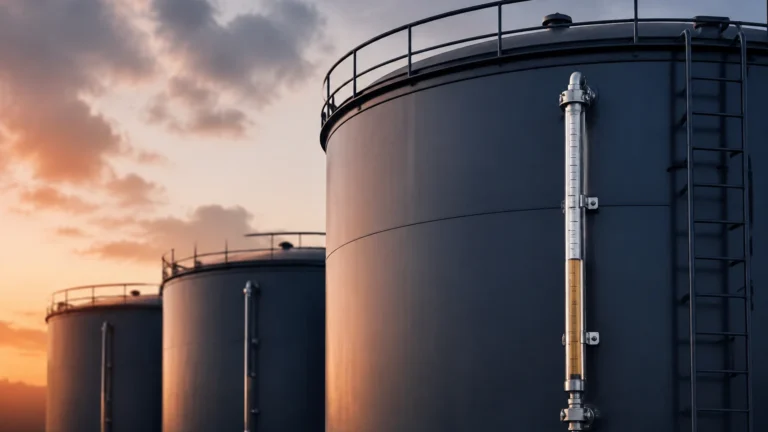
Magnetic level gauges provide both a visual indication and a remote signal. A float containing a magnet moves with the liquid level, flipping colored flaps on an external scale. This is a robust solution for high-pressure or high-temperature environments where electronic displays might fail or where local visual verification is required for safety.
The Role of Endress+Hauser News in Market Trends
When professionals track Endress+Hauser news, they are often looking for advancements in "Smart Instrumentation." The industry is currently moving toward Ethernet-APL (Advanced Physical Layer) and enhanced diagnostic capabilities. For example, news regarding "Heartbeat Technology" or similar self-diagnostic suites emphasizes the industry’s move from reactive to predictive maintenance.
These updates influence how engineers draft specifications. If a major player introduces a new communication protocol or a more stringent safety certification (such as SIL3), it often becomes the new standard for high-risk chemical or oil and gas projects. For those managing budgets, keeping an eye on such news helps in deciding when to invest in premium features and when a standardized, high-quality solution from a specialist manufacturer like Welk is more appropriate.
Key Evaluation Criteria for Level Instruments
Selecting the right instrument involves more than just following the latest headlines. Engineers must confirm several technical factors before procurement:
1. Media Properties: The dielectric constant (DC) of the liquid or solid is vital for radar. For hydrostatic sensors, the density must be constant. Corrosive media require specific housing materials like PTFE or Hastelloy.
2. Process Conditions: Temperature and pressure are the primary constraints. While some radar units can handle up to 450°C and 160 bar, ultrasonic sensors are typically limited to lower temperatures and atmospheric pressures.
3. Accuracy Requirements: Custody transfer applications require millimeter-level precision, whereas simple pump control in a sump might only need ±10mm accuracy.
4. Tank Geometry: Internal structures like agitators, heating coils, or baffles can create false echoes for non-contact sensors. In these cases, guided wave radar or magnetic gauges may be superior.
To explore a wide range of industrial solutions that meet these criteria, professionals often Review product options and application support to find the balance between advanced features and cost-effectiveness.
Selection Table: Comparing Measurement Technologies
| Technology | Measurement Type | Contact/Non-Contact | Best For | Limitations |
| :— | :— | :— | :— | :— |
| 80GHz Radar | Continuous | Non-Contact | Corrosive liquids, solids, narrow tanks | High initial cost |
| Ultrasonic | Continuous | Non-Contact | Water, wastewater, open channels | Affected by foam and vacuum |
| Hydrostatic | Continuous | Contact | Deep wells, vented tanks | Requires constant density |
| Magnetic Gauge | Continuous/Visual | Contact | High temp/pressure, visual check | Moving parts can wear |
| Level Switch | Point Level | Contact | Overfill protection, pump dry-run | Only detects specific levels |

Common Risks and Limitations
Even the most advanced technology reported in Endress+Hauser news has limitations. Failure to account for these can lead to measurement errors or total sensor failure:
* Foam and Turbulence: Heavy foam can absorb ultrasonic and radar signals, leading to a "loss of echo." In such environments, hydrostatic or guided wave radar is often preferred.
* Build-up and Scaling: In the chemical industry, media can crystallize or build up on the sensor face. Non-contact radar is less susceptible than contact probes, but even it can fail if the antenna becomes heavily coated.
* Vapor and Gas Layers: High-pressure steam or heavy chemical vapors can change the dielectric properties of the space above the liquid, potentially slowing down signal transmission in certain radar or ultrasonic applications.
* Installation Errors: The "dead zone" (blocking distance) is a frequent oversight. If the liquid reaches the sensor face, the measurement becomes invalid. Proper nozzle height and sensor positioning are critical.
Installation and Maintenance Considerations
Successful implementation requires adhering to strict engineering guidelines. For radar and ultrasonic installations, the sensor must be mounted perpendicular to the liquid surface to ensure the signal returns directly to the receiver. For hydrostatic sensors, the capillary tube in the cable must remain unobstructed to allow for atmospheric pressure compensation.
Maintenance cycles should be determined by the criticality of the loop. While many modern sensors feature self-diagnostics, manual verification against a secondary source (like a magnetic level gauge or a manual dip tape) is still standard practice in many high-reliability industries.
Information Confirmation Before Procurement
Before taking the next step based on industry news or technical guides, the intended project audience should confirm the following:
* Certification Requirements: Does the site require ATEX/IECEx for explosive atmospheres? Is a SIL (Safety Integrity Level) rating mandatory for the safety instrumented system?
* Integration Compatibility: Will the device communicate via 4-20mA HART, Modbus RTU, Profibus, or Foundation Fieldbus?
* Total Cost of Ownership (TCO): Beyond the purchase price, consider the cost of installation, commissioning, and spare parts. Often, a reliable, standard-compliant meter from a dedicated manufacturer provides a better TCO than a complex, over-engineered solution.
Frequently Asked Questions (FAQ)
Q: How does Endress+Hauser news impact the availability of older sensor models?
A: Major manufacturers frequently phase out older models in favor of newer digital versions. Keeping an eye on news helps facilities plan for "end-of-life" (EOL) transitions to avoid sudden lack of spare parts.
Q: Can I replace a radar meter from one brand with a Welk radar meter?
A: Yes, provided the process connections (flange or thread size), communication protocols, and technical specifications (frequency, pressure rating) match. Industrial level meters are generally designed to meet international standards for interchangeability.
Q: Why is 80 GHz radar becoming the focus of so much industry news?
A: The 80 GHz frequency allows for a much narrower beam (often 3 to 6 degrees). This makes it easier to install in tanks with many internal obstacles and provides a stronger reflection from media with low dielectric constants.
Q: Are ultrasonic sensors still relevant given the rise of cheap radar?
A: Absolutely. For simple water applications and open-channel flow measurement, ultrasonic sensors remain a cost-effective and highly reliable solution with a long track record of performance.
By staying updated with Endress+Hauser news and understanding the fundamental engineering principles of level measurement, professionals can make informed decisions that ensure safety, accuracy, and long-term reliability in their industrial processes. For those seeking a direct partner for high-quality level measurement hardware, visiting the Main Page provides access to a comprehensive range of industrial solutions tailored for global applications.