Aa580
Aa580
In the evolving landscape of industrial process control, the demand for high-precision, non-contact level measurement has led to the widespread adoption of high-frequency radar technology. The AA580 series represents a significant advancement in this field, specifically utilizing 80GHz Frequency Modulated Continuous Wave (FMCW) technology. Designed to address the limitations of traditional 6GHz and 26GHz radar systems, the AA580 offers enhanced resolution and a narrower beam angle, making it a preferred choice for complex industrial environments ranging from narrow chemical tanks to large-scale bulk solid silos.
Understanding the Measurement Principle of AA580
The AA580 series operates on the Frequency Modulated Continuous Wave (FMCW) principle. Unlike pulse radar, which measures the time of flight of a single microwave pulse, FMCW radar transmits a continuous signal with a frequency that varies over time (a linear ramp).
When the transmitted signal hits the surface of the medium, it is reflected back to the sensor. By the time the reflected signal reaches the receiver, the transmitter is already emitting a signal at a different frequency. The difference between the transmitted frequency and the received frequency is directly proportional to the distance between the sensor and the material surface. This frequency difference is processed using Fast Fourier Transform (FFT) algorithms to provide a highly accurate distance measurement.
The use of the 80GHz frequency band is the defining characteristic of the AA580. Higher frequencies result in shorter wavelengths, which allow for a much smaller antenna size while maintaining a very narrow beam angle. This narrow beam is critical for avoiding false reflections from tank internals like ladders, agitators, or heating coils.
Key Performance Advantages of 80GHz Radar
The transition to 80GHz technology in the AA580 series provides several distinct engineering advantages over lower-frequency alternatives:
1. Narrow Beam Angle: While a standard 26GHz radar might have a beam angle of 10° to 15°, the AA580 typically achieves a beam angle as narrow as 3°. This concentration of energy ensures that the signal remains focused on the target surface, significantly reducing interference from vessel walls and internal obstructions.
2. High Range Resolution: The wider bandwidth available at 80GHz allows for a higher range resolution. This means the AA580 can distinguish between the actual material level and a nearby obstruction or the bottom of the tank, even when the tank is nearly empty.
3. Small Blind Zone: The AA580 features a much smaller dead zone (blind zone) at the top of the sensor, often as low as 50mm (approx. 2 inches). This allows for maximum utilization of the vessel's storage capacity.
4. Improved Signal Penetration: Despite the higher frequency, the signal processing in the AA580 is optimized to handle heavy dust, steam, and condensation, which are common in industries like cement production and chemical processing.
Technical Specifications and Selection Criteria
Selecting the correct AA580 configuration requires an understanding of the process medium, temperature, and pressure requirements. The following table provides a general overview of the selection criteria for the AA580 series in various industrial contexts.
| Feature | Specification (Liquid Version) | Specification (Solid Version) |
| :— | :— | :— |
| Measuring Range | Up to 30m (98 ft) | Up to 120m (393 ft) |
| Accuracy | ±1mm (0.04 in) | ±5mm (0.2 in) |
| Process Temperature | -40°C to +200°C | -40°C to +250°C |
| Process Pressure | -0.1 to 4.0 MPa | -0.1 to 0.3 MPa |
| Beam Angle | 3° | 3° to 4° |
| Signal Output | 4-20mA / HART / RS485 Modbus | 4-20mA / HART / RS485 Modbus |
| Frequency Range | 76GHz – 81GHz | 76GHz – 81GHz |
| Enclosure Rating | IP67 / IP68 | IP67 |
When evaluating these instruments, engineers should consult the Main Page for specific model variations and to ensure the selected instrument meets the hazardous area certifications (such as ATEX or IECEx) required for their specific site.
Installation Guidelines for Optimal Performance
Proper installation is paramount to ensuring the long-term reliability of the AA580. Even with a narrow beam angle, certain geometric rules must be followed to prevent signal degradation.
Positioning and Clearance
The sensor should be installed at a distance from the tank wall that is at least 1/10th of the tank's total height. For example, in a 10-meter (32.8 ft) tank, the sensor should be placed at least 1 meter (3.3 ft) from the wall. This prevents the side lobes of the radar signal from reflecting off the wall and creating noise.
Nozzle Considerations
Because the AA580 has a narrow beam, it can be installed on longer and narrower nozzles than 26GHz radars. However, the antenna should ideally extend slightly beyond the bottom of the nozzle to prevent "ringing" or internal reflections within the nozzle. If the nozzle is exceptionally long, a PTFE extension or a specific nozzle-compensation software setting may be required.
Avoiding Obstructions
While the 3° beam is excellent at avoiding obstructions, the sensor should still be positioned away from the direct path of the inflow. Material falling through the radar beam can cause erratic readings. If an agitator is present, the AA580 should be mounted in a position where the beam does not hit the blades, or the "false signal suppression" feature should be mapped while the agitator is in motion.
Application Scenarios in Process Industries
The AA580 series is versatile, but its strengths are most evident in challenging applications where traditional level measurement fails.
* Chemical and Petrochemical: In tanks containing corrosive liquids or those with heavy agitation, the non-contact nature of the AA580 prevents sensor degradation. Its high accuracy is essential for inventory management of expensive chemical precursors.
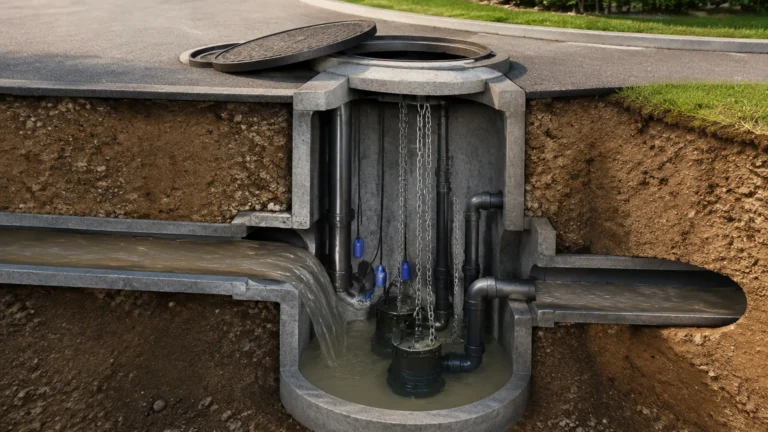
* Water and Wastewater Treatment: The AA580 is used for monitoring levels in deep wells, pump stations, and chemical dosing tanks. Its ability to ignore condensation on the antenna makes it superior to ultrasonic sensors in humid environments.
* Solid Bulk Storage: In silos containing cement, flour, or plastic pellets, dust is a major factor. The high-frequency signal of the AA580 penetrates dust clouds more effectively than lower-frequency radars, providing a stable reading even during filling and emptying cycles.
* Small Vessel Measurement: Due to the small blind zone and narrow beam, the AA580 is ideal for small process vessels or buffer tanks where space is limited and accuracy is critical.
Limitations and Operational Risks
Despite its advanced technology, the AA580 is not a universal solution for every process. Engineers must be aware of the following limitations:
1. Dielectric Constant ($ε_r$): Radar relies on the reflection of electromagnetic waves. Materials with a very low dielectric constant (e.g., certain liquefied gases or dry powders) reflect less energy. While the AA580 is highly sensitive, a minimum $ε_r$ of 1.4 to 1.6 is typically required for reliable measurement without a stilling well.
2. Heavy Foam: Extremely thick, dense foam can absorb the radar signal rather than reflecting it. In applications with heavy protein-based or chemical foam, a guided wave radar or a hydrostatic pressure transmitter might be more appropriate.
3. Extreme Temperatures: While the AA580 can handle up to 250°C (482°F) with specialized cooling fins or high-temperature ceramics, standard models are limited. Exceeding these limits can damage the internal electronics.
Maintenance and Troubleshooting
The AA580 is designed for low maintenance, as it has no moving parts. However, in applications with heavy buildup (such as sticky resins or bitumen), the antenna may require occasional cleaning. Most AA580 units include self-diagnostic features that can alert operators to a "weak signal" or "hardware fault" via the HART protocol or Modbus interface.
If the signal is lost, the first step is to check for buildup on the antenna face. If the antenna is clean, the issue may be a change in the material surface (e.g., extreme turbulence) or a change in the dielectric constant of the medium. Adjusting the sensitivity or the dampening constant in the software can often resolve these issues.
Frequently Asked Questions (FAQs)
Q: Can the AA580 be used in vacuum tanks?
A: Yes, the AA580 is suitable for vacuum applications. However, the process seal must be checked to ensure it is rated for vacuum service to prevent air ingress or damage to the sensor.
Q: How does the AA580 compare to ultrasonic level sensors?
A: Unlike ultrasonic sensors, the AA580 is not affected by air temperature, pressure, or gas composition. This makes it significantly more accurate in outdoor silos or tanks where the vapor space temperature fluctuates.
Q: Is it possible to use the AA580 for custody transfer?
A: With an accuracy of ±1mm, the AA580 is often used for high-precision inventory control. While specific local regulations govern "legal for trade" custody transfer, the technical precision of the AA580 meets the requirements for many high-value inventory applications.
Q: Does the 80GHz frequency interfere with other wireless signals?
A: No. The 80GHz band used by the AA580 is dedicated to industrial radar and does not interfere with standard Wi-Fi, cellular, or radio communications.
For further technical documentation, wiring diagrams, and to compare different radar series for your specific application, please refer to the Main Page. Selecting the right instrument involves balancing technical requirements with cost-effectiveness, and the AA580 series provides a robust platform for modern industrial level measurement.