Absolute Pressure Sensors
Absolute Pressure Sensors
In industrial process control and fluid management, precision is the cornerstone of safety and efficiency. Among the various instruments used to monitor system health, absolute pressure sensors occupy a critical niche. Unlike standard gauge sensors that measure pressure relative to the shifting weight of the Earth's atmosphere, absolute pressure sensors provide a measurement relative to a perfect vacuum. This distinction is vital in applications ranging from vacuum distillation and semiconductor manufacturing to high-accuracy hydrostatic level measurement in sealed tanks.
For engineers and procurement specialists, understanding the underlying physics, selection criteria, and installation nuances of these devices is essential for ensuring long-term reliability. This guide provides a technical deep dive into absolute pressure technology, its role in level measurement, and practical advice for industrial implementation.
Understanding Absolute Pressure Measurement Principles
To effectively deploy absolute pressure sensors, one must first grasp the fundamental measurement principle. Pressure is defined as force applied over a specific area ($P = F/A$). However, the "zero" point of that measurement determines the type of sensor required.
The Vacuum Reference
An absolute pressure sensor is designed with an internal reference chamber that has been evacuated to a near-perfect vacuum (0 Pa or 0 bar absolute). This chamber is typically sealed behind a sensing diaphragm. When process pressure is applied to the opposite side of the diaphragm, the resulting deflection is measured against the constant vacuum reference.
Transduction Technologies
Most modern industrial absolute pressure sensors utilize one of three primary transduction methods:
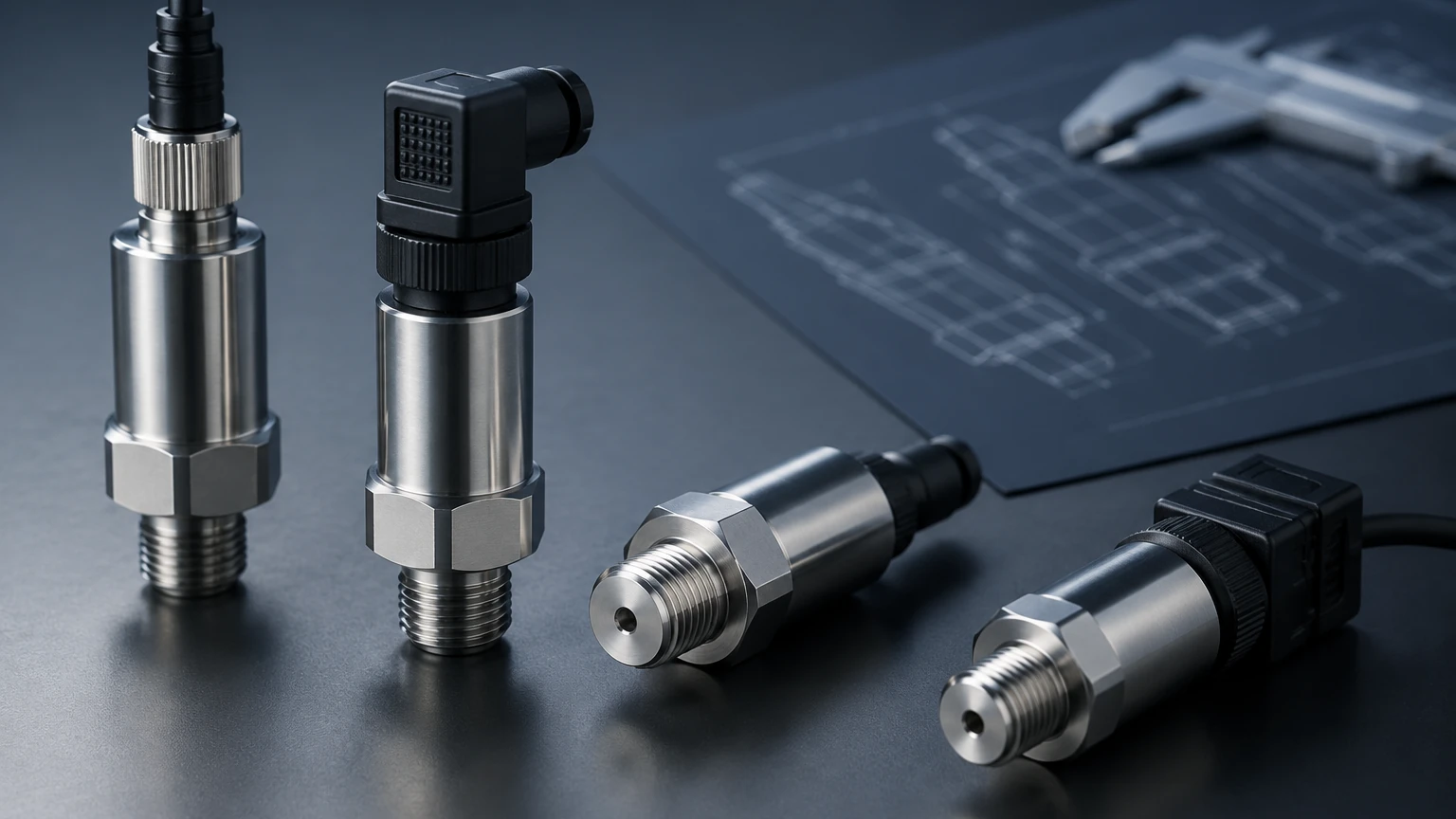
1. Piezoresistive Silicon: A silicon chip with integrated resistors is mounted on a flexible diaphragm. As the diaphragm deflects, the resistance changes (the piezoresistive effect). These sensors are highly sensitive and compact, making them ideal for a wide range of industrial applications.
2. Ceramic Capacitive: This technology uses a ceramic diaphragm that forms one plate of a capacitor. As pressure moves the diaphragm closer to a fixed ceramic substrate, the capacitance changes. Ceramic sensors are exceptionally robust and resistant to corrosive chemicals and mechanical abrasion.
3. Strain Gauge: Metal foil or thin-film strain gauges are bonded to a stainless steel diaphragm. While often used for higher pressure ranges, they offer excellent long-term stability and vibration resistance.
Because the reference is a vacuum, the output of the sensor includes the ambient atmospheric pressure. For instance, at sea level, an absolute pressure sensor exposed to the atmosphere will read approximately 1.013 bar (101.3 kPa), whereas a gauge sensor would read zero.
Absolute vs. Gauge Pressure: Key Differences for Industrial Applications
Choosing between absolute and gauge pressure is not merely a matter of preference; it is a technical requirement dictated by the process environment.
Gauge Pressure ($P_g$): Measures pressure relative to local atmospheric pressure. It is the standard choice for vented tanks and most hydraulic systems where the goal is to monitor the pressure difference against the outside air.
Absolute Pressure ($P_{abs}$): Measures pressure relative to zero pressure (vacuum). This is required whenever the atmospheric pressure itself is a variable that could interfere with the measurement accuracy, or when the process occurs in a vacuum.
| Feature | Absolute Pressure Sensor | Gauge Pressure Sensor |
| :— | :— | :— |
| Reference Point | Perfect Vacuum (0 bar a) | Ambient Atmosphere |
| Atmospheric Influence | Included in the reading | Cancelled out by the sensor design |
| Common Applications | Vacuum processes, altimeters, weather stations, sealed tank level | Pump discharge, compressed air lines, vented tank level |
| Low-Pressure Accuracy | High (not affected by weather) | Can drift with barometric changes |
| Sensor Venting | Not required (sealed unit) | Requires a vent tube or breather |
For those seeking to compare specific models for their facility, reviewing the Main Page of an industrial instrument manufacturer can provide detailed performance curves and housing options for both sensor types.
Role of Absolute Pressure Sensors in Level Measurement
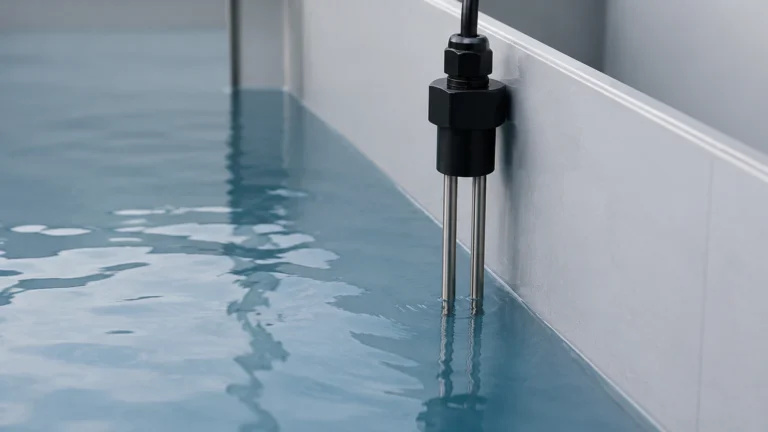
In the context of level measurement, absolute pressure sensors are primarily used in hydrostatic applications. Hydrostatic pressure is the pressure exerted by a fluid at equilibrium at a given point within the fluid, due to the force of gravity. The formula is $P = \rho gh$, where $\rho$ is fluid density, $g$ is gravity, and $h$ is the height of the liquid.
Sealed Tank Applications
In a sealed (non-vented) tank, the pressure at the bottom is the sum of the liquid's hydrostatic pressure and the pressure of the gas or vapor in the headspace. To calculate the level accurately using absolute sensors, two units are often employed:
1. Sensor A (Bottom): Measures the total absolute pressure (Liquid + Headspace).
2. Sensor B (Top): Measures only the absolute pressure of the headspace.
By subtracting the reading of Sensor B from Sensor A, the control system isolates the hydrostatic pressure of the liquid, allowing for an accurate level calculation regardless of fluctuations in tank pressure or external barometric changes.
Advantages in Low-Level Detection
Because absolute pressure sensors do not rely on a vent tube to the atmosphere, they are less susceptible to errors caused by clogged vents or moisture ingress into the sensor housing. In environments with high humidity or where sensors are frequently submerged, the sealed nature of an absolute sensor provides a significant reliability advantage.
Selection Criteria for Industrial Absolute Pressure Sensors
Selecting the right sensor requires an evaluation of the process media, environmental conditions, and required output signals. Engineers should prioritize the following criteria:
1. Pressure Range and Overpressure Rating
Determine the maximum expected pressure in the system. The sensor’s operating range should ideally be 1.2 to 1.5 times the maximum working pressure. Furthermore, check the overpressure limit—the maximum pressure the sensor can withstand without permanent damage or calibration shift.
2. Material Compatibility
The wetted parts (diaphragm and process connection) must be compatible with the process fluid.
* 316L Stainless Steel: Standard for water and mild chemicals.
* Hastelloy C or Tantalum: Required for highly corrosive acids or chlorides.
* Ceramic (Al2O3): Excellent for abrasive slurries and aggressive chemicals.
3. Accuracy and Total Error Band (TEB)
Industrial sensors usually specify accuracy as a percentage of Full Scale (e.g., ±0.25% FS). However, it is more practical to look at the Total Error Band, which includes errors from temperature effects, linearity, and hysteresis over a specific temperature range.
4. Output Signal and Communication
* 4-20 mA (Analog): The industry standard for long-distance transmission and noise immunity.
* HART Protocol: Allows for digital communication over the 4-20 mA loop for diagnostics and remote calibration.
* Modbus RTU/RS485: Preferred for digital integration into PLC/SCADA systems with multiple sensors on a single bus.
Technical Specifications and Selection Table
When evaluating absolute pressure sensors for procurement, the following table summarizes typical specifications for various industrial grades.
| Specification | General Purpose | High Precision | Chemical/Corrosive |
| :— | :— | :— | :— |
| Measurement Range | 0–2 bar to 0–400 bar | 0–1 bar to 0–100 bar | 0–0.5 bar to 0–50 bar |
| Accuracy (FS) | ±0.5% | ±0.1% to ±0.05% | ±0.2% |
| Operating Temp. | -20°C to +80°C | -40°C to +105°C | -10°C to +120°C |
| Diaphragm Material | 316L Stainless Steel | 316L or Ceramic | Hastelloy / Tantalum |
| Ingress Protection | IP65 / IP67 | IP67 / IP68 | IP68 |
| Typical Output | 4-20mA | 4-20mA + HART | Modbus RTU |
Installation Best Practices and Considerations
Correct installation is as important as sensor selection. Even the most accurate absolute pressure sensor will provide faulty data if installed improperly.
Mounting Orientation
While absolute sensors are generally less sensitive to orientation than very low-range gauge sensors, it is best practice to mount them vertically. This prevents the accumulation of sediment or air bubbles against the diaphragm, which can cause erratic readings.
Temperature Management
Extreme temperatures can cause the fill fluid inside the sensor to expand or contract, leading to a "thermal shift" in the zero point. If the process temperature exceeds the sensor's rated operating range, use a cooling element or a capillary tube to dissipate heat before it reaches the sensing element.
Sealing and Process Connections
Ensure that the process connection (e.g., G1/2, 1/2" NPT, or Flanged) is sealed with compatible gaskets or O-rings. For absolute sensors, a leak in the process connection will not only cause a fluid leak but will also introduce atmospheric pressure into the measurement, defeating the purpose of using an absolute reference.
Electrical Shielding
In industrial environments with heavy machinery or variable frequency drives (VFDs), electromagnetic interference (EMI) can distort the 4-20mA signal. Always use shielded cabling and ensure the shield is grounded at the control cabinet end only to prevent ground loops.
Limitations and Common Risks
Despite their versatility, absolute pressure sensors have limitations that must be managed:
* Zero Drift: Over time, the vacuum reference in the sensor can degrade slightly due to outgassing or microscopic leaks. Periodic calibration against a known laboratory vacuum standard is recommended.
* Overpressure Sensitivity: Because the internal reference is a vacuum (0 bar), an absolute sensor is effectively always under 1 bar of pressure at sea level. Users must be careful not to exceed the burst pressure during system cleaning or pressure testing.
* Cost: Absolute sensors are typically more expensive to manufacture than gauge sensors due to the complexity of creating and maintaining the internal vacuum seal.
* Barometric Confusion: In applications where the user actually wants to know the pressure relative to the room (like a pressurized cleanroom), using an absolute sensor can be confusing because the reading will change as weather systems move through the area, even if the room pressure remains constant.
Frequently Asked Questions (FAQ)
Q: Can I use an absolute pressure sensor to measure vacuum?
A: Yes. In fact, absolute pressure sensors are the preferred method for measuring deep vacuum. A reading of 0 bar a indicates a perfect vacuum, while 0.5 bar a indicates a partial vacuum.
Q: How often should absolute pressure sensors be calibrated?
A: For most industrial applications, an annual calibration check is sufficient. However, in critical pharmaceutical or semiconductor processes, semi-annual calibration may be required to account for potential sensor drift.
Q: Why is my absolute pressure sensor reading 1.01 bar when the tank is empty?
A: This is normal. The sensor is measuring the weight of the atmosphere. If the tank is vented and located at sea level, the sensor should read approximately 1.013 bar absolute.
Q: What happens if the vacuum seal in the sensor fails?
A: If the internal vacuum reference leaks and reaches atmospheric pressure, the sensor will begin to behave like a gauge pressure sensor, but its calibration will be significantly offset, leading to large measurement errors.
Conclusion
Absolute pressure sensors are indispensable tools for modern industrial automation, providing the stable, vacuum-referenced data necessary for complex chemical processes and high-accuracy level monitoring. By understanding the physics of the vacuum reference and carefully matching sensor materials and specifications to the application, engineers can ensure robust system performance. For further technical documentation and to explore a wide range of measurement solutions, professionals are encouraged to consult the Main Page for updated product specifications and engineering support.