Intermediate Storage
Intermediate Storage
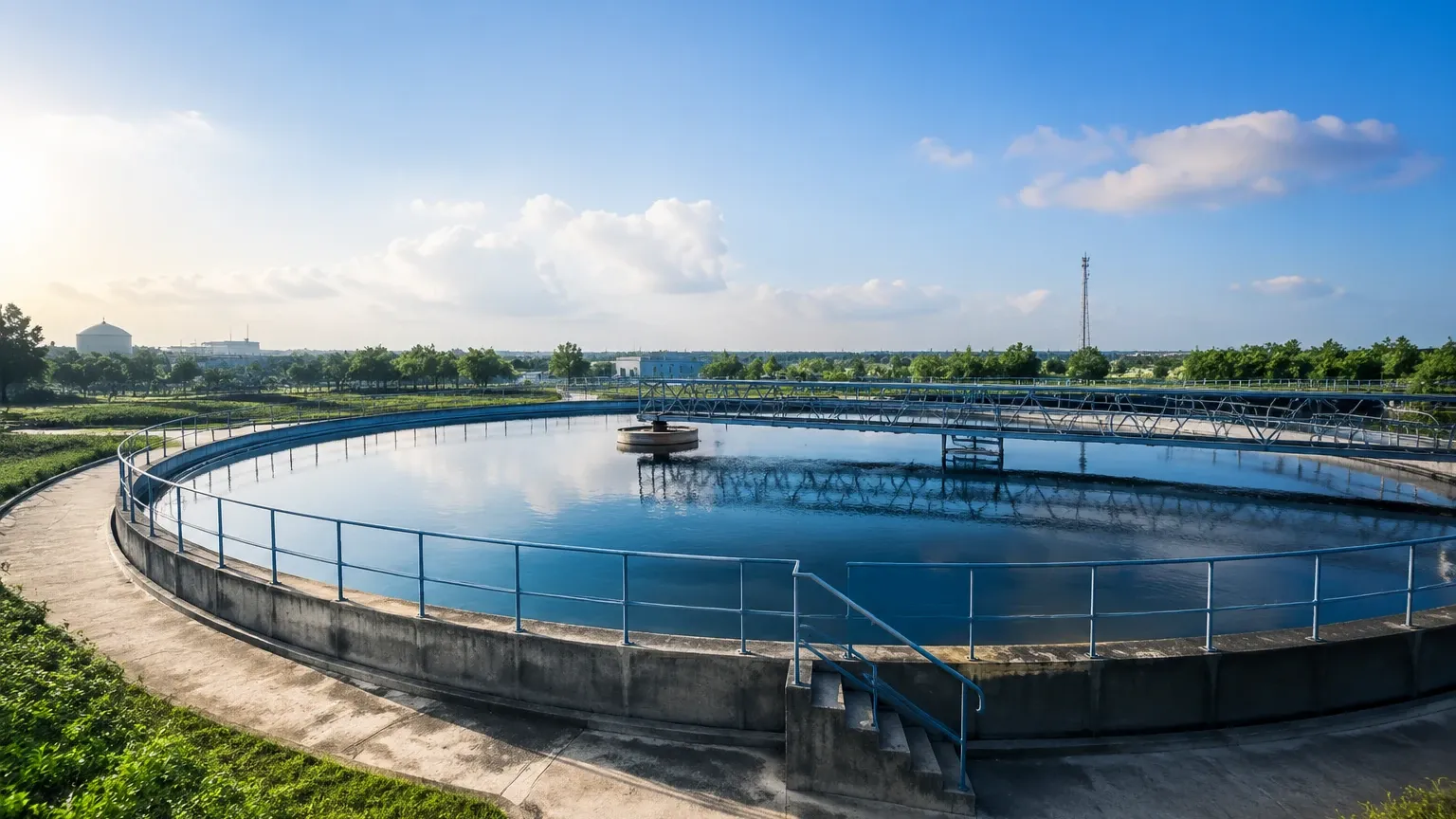
In industrial process engineering, intermediate storage serves as a critical buffer between different stages of production. Whether it is a surge tank in a chemical plant, a day tank in a water treatment facility, or a hopper in a food processing line, these vessels decouple upstream supply from downstream demand. Effective management of intermediate storage requires precise level measurement to prevent overflows, ensure a continuous supply of raw materials, and optimize the efficiency of the entire production chain.
Selecting the appropriate instrumentation for intermediate storage depends on the physical characteristics of the stored media, the vessel geometry, and the environmental conditions of the process. This guide explores the measurement principles, selection criteria, and installation best practices for level sensors used in these essential process nodes.
Understanding Level Measurement Principles
Before selecting a sensor for intermediate storage, it is vital to understand how different technologies interact with the process medium. The following principles represent the most common methods used in modern industrial automation.
Radar Level Measurement (Non-Contact)
Radar level meters operate using high-frequency electromagnetic waves, typically in the 26 GHz or 80 GHz range. These waves are emitted by the antenna, reflected off the surface of the medium, and received back at the sensor. The distance is calculated based on the time of flight or frequency shift (FMCW). Because radar waves do not require a physical medium for travel, they are largely unaffected by changes in temperature, pressure, or the presence of vapors and dust. This makes them ideal for intermediate storage containing volatile chemicals or materials stored at varying temperatures.
Ultrasonic Level Measurement
Ultrasonic sensors emit acoustic pressure waves that reflect off the material surface. The sensor measures the time interval between the emission of the pulse and the reception of the echo. Since the speed of sound is affected by air temperature, these sensors usually include integrated temperature compensation. Ultrasonic technology is cost-effective and highly reliable for liquid intermediate storage at atmospheric pressure, such as water buffer tanks or wastewater sumps.
Hydrostatic Level Measurement
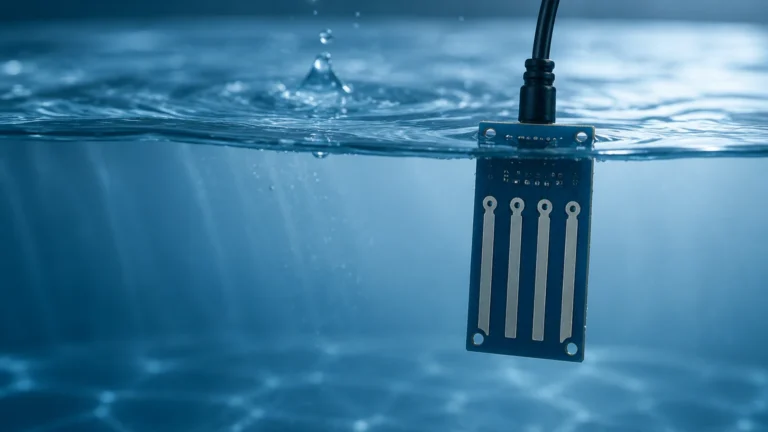
This principle relies on the relationship between the height of a liquid column and the pressure it exerts at the base of the tank. A pressure transmitter, often referred to as a hydrostatic level sensor, is mounted at the bottom of the vessel. The level is calculated using the formula $P = \rho \cdot g \cdot h$, where $P$ is pressure, $\rho$ is the density of the liquid, $g$ is gravity, and $h$ is the height of the liquid. This method is exceptionally reliable for vented tanks where the liquid density remains constant.
Magnetic Level Gauges
Magnetic level gauges utilize a float containing a permanent magnet that moves with the liquid level inside a bypass chamber. Outside the chamber, a series of magnetic flaps or a continuous transmitter tracks the position of the float. This provides both a local visual indication and a remote signal. They are frequently used in intermediate storage for hazardous or high-pressure liquids where a direct visual check is required for safety.
Technology Selection for Intermediate Storage
Choosing the right sensor for intermediate storage requires a balance between accuracy, process conditions, and budget. The following table provides a comparison of the primary technologies used in these applications.
Selection Comparison Table
| Technology | Suitable Media | Max Pressure | Accuracy | Key Advantage |
| :— | :— | :— | :— | :— |
| Radar | Liquids, Slurries, Solids | Up to 40 bar+ | ±2 mm | Unaffected by vapor/vacuum |
| Ultrasonic | Clean Liquids, Wastewater | Atmospheric | ±0.25% of range | Low cost, non-contact |
| Hydrostatic | Most Liquids | High | ±0.1% to 0.5% | Simple installation, high reliability |
| Magnetic | Clean Liquids, Fuels | Up to 160 bar | ±5 mm | Visual and electronic output |
| Level Switch | Liquids/Solids | Variable | N/A (Point) | Critical high/low alarm backup |
When evaluating intermediate storage needs, engineers must consider if the vessel is pressurized or open to the atmosphere. For pressurized tanks, radar or differential pressure (hydrostatic) sensors are preferred. For simple atmospheric day tanks, ultrasonic sensors offer a robust and economical solution. To explore specific product configurations for these technologies, you may visit the Main Page for detailed technical specifications.
Installation and Engineering Considerations
Proper installation is as important as technology selection. Even the most advanced sensor will fail to provide accurate data if it is poorly positioned within the intermediate storage vessel.
1. Nozzle Placement: For non-contact sensors like radar and ultrasonic, the sensor should be mounted away from the tank wall to avoid false reflections. A general rule is to maintain a distance of at least 200 mm from the wall for every 5 meters of tank height.
2. Obstruction Avoidance: Intermediate storage tanks often contain internal components such as ladders, heating coils, or agitators. Sensors must be positioned so that their signal beam does not intersect these objects. If obstructions are unavoidable, many modern radar units offer "false echo suppression" software to ignore these signals.
3. Turbulence and Agitation: In surge tanks where liquid enters at high velocities, the surface may be turbulent. In these cases, a stilling well or a bypass pipe can be used to provide a calm surface for the sensor to measure. Alternatively, hydrostatic sensors are less affected by surface turbulence as they measure the weight of the liquid column.
4. Dead Zones: All non-contact sensors have a "blocking distance" or "dead zone" directly beneath the antenna where measurement is not possible. Ensure the maximum fill level of the intermediate storage does not enter this zone to prevent signal loss.
Limitations and Risk Mitigation
While modern level sensors are highly versatile, certain conditions can impact their performance in intermediate storage applications.
* Foam: Heavy foam on the surface of a liquid can absorb ultrasonic and radar signals, leading to inaccurate readings. If foam is a persistent issue, hydrostatic sensors or radar sensors with specialized high-sensitivity electronics are recommended.
* Vapor and Condensation: In chemical intermediate storage, condensation can form on the sensor face. While radar is resistant to vapor, heavy droplets on an ultrasonic transducer can attenuate the signal. Selecting a sensor with a PTFE-faced antenna or a self-cleaning function can mitigate this risk.
* Dust and Build-up: In solids intermediate storage (such as silos or hoppers), dust can interfere with ultrasonic signals. High-frequency radar (80 GHz) is generally the better choice here as it can penetrate dust clouds effectively.
* Dielectric Constant: Radar sensors depend on the dielectric constant ($ε_r$) of the material. Materials with a very low $ε_r$, such as certain oils or liquefied gases, reflect less energy. In these scenarios, a guided wave radar (GWR) or a high-sensitivity non-contact radar is necessary.
Frequently Asked Questions (FAQs)
Q: How do I handle intermediate storage with multiple different liquids?
A: If the liquids have different densities, hydrostatic measurement will be inaccurate unless the density is compensated in real-time. Non-contact radar is usually the best choice here, as it measures the top surface regardless of liquid density or composition.
Q: Is it necessary to have a redundant level system for intermediate storage?
A: For critical processes where an overflow would cause environmental damage or production shutdown, redundancy is highly recommended. A common configuration is to use a continuous transmitter (like radar) for process control and a separate point-level switch (like a tuning fork or float switch) for high-high alarm and emergency pump shutdown.
Q: Can I use the same sensor for both liquids and solids in intermediate storage?
A: Some high-end radar sensors are designed for both, but the antenna design and software algorithms usually differ. It is best to specify the material type during the selection phase to ensure the correct lens or horn antenna is provided.
Q: What maintenance is required for sensors in intermediate storage?
A: Non-contact sensors are generally maintenance-free. However, for hydrostatic sensors or magnetic gauges in contact with corrosive or coating media, periodic cleaning of the diaphragm or float may be required to prevent drift or sticking.
Conclusion
Intermediate storage is the heartbeat of many industrial processes, providing the necessary flexibility to manage fluctuating production rates. By understanding the physics behind radar, ultrasonic, and hydrostatic measurement, and by following rigorous installation standards, plant engineers can ensure that these storage vessels operate safely and efficiently. Selecting the right technology involves assessing the media properties, the physical constraints of the vessel, and the required precision for the application. For further assistance in selecting the right instrument for your specific process, consulting with a specialist or reviewing comprehensive product documentation is the recommended next step.