Advantages of On-site Monitoring for Industrial Water System Maintenance
Advantages of On-site Monitoring for Industrial Water System Maintenance
In the landscape of modern industrial automation, the management of water systems—ranging from cooling towers and boiler feed water to wastewater treatment and process water storage—is a critical operational pillar. Effective maintenance of these systems relies heavily on the accuracy and reliability of level measurement data. Transitioning from manual inspections to automated, on-site monitoring provides a foundation for predictive maintenance and operational efficiency.
As a professional manufacturer of industrial level measurement instruments, Welk provides high-precision radar level meters, ultrasonic sensors, and hydrostatic transmitters designed to meet the rigorous demands of industrial water environments. Understanding the advantages of on-site monitoring for industrial water system maintenance allows plant engineers to optimize resource allocation and prevent costly downtime.
Measurement Principles of Level Instrumentation
Before evaluating the systemic advantages of monitoring, it is essential to understand the underlying physical principles of the instruments used in industrial water systems. Different technologies are suited to specific fluid characteristics and vessel geometries.
Radar Level Measurement
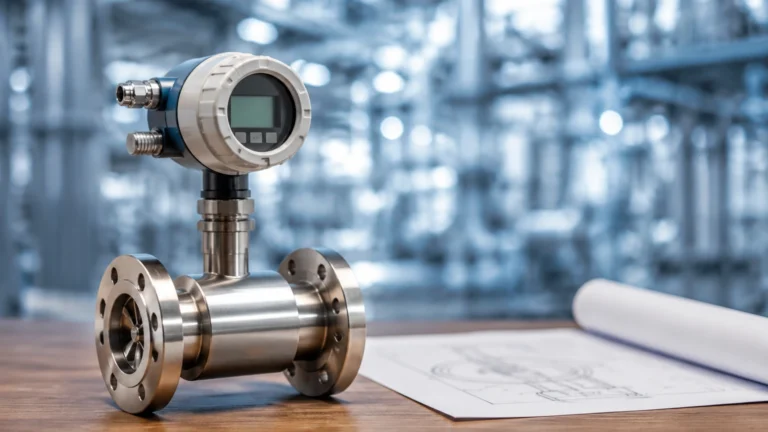
Radar level meters, such as those offered on the Welk Main Page, utilize high-frequency electromagnetic waves (typically in the 26 GHz or 80 GHz range). These instruments emit a signal toward the liquid surface, which is then reflected back to the sensor. The time-of-flight (ToF) or Frequency Modulated Continuous Wave (FMCW) shift is used to calculate the distance. Because radar waves do not require a physical medium, they are unaffected by temperature fluctuations, pressure changes, or the presence of vapors, making them ideal for high-precision industrial water applications.
Ultrasonic Level Measurement
Ultrasonic sensors function by emitting high-frequency sound pulses. The sensor measures the time taken for the echo to return from the liquid surface. While cost-effective and non-contact, ultrasonic measurement is sensitive to the speed of sound, which can vary with air temperature and gas composition. These are best suited for open channels, sumps, and atmospheric tanks where conditions remain relatively stable.
Hydrostatic Level Measurement
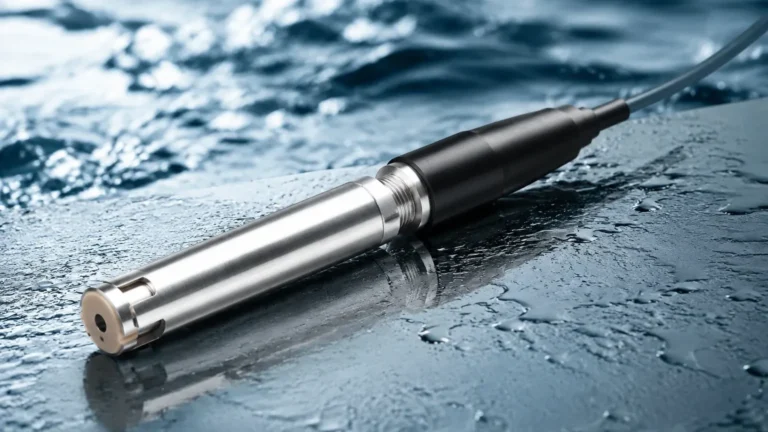
Hydrostatic transmitters measure the pressure exerted by a liquid column at a specific point. Based on the principle that $P = \rho gh$ (where $P$ is pressure, $\rho$ is density, $g$ is gravity, and $h$ is height), the transmitter converts the pressure reading into a level measurement. This is a contact-based method often used in deep wells, reservoirs, and pressurized vessels where non-contact sensors might face installation hurdles.
Core Advantages of On-site Monitoring for Industrial Water System Maintenance
Implementing automated on-site monitoring transforms water system maintenance from a reactive task to a proactive strategy. The following points highlight the primary benefits observed in industrial settings.
1. Real-Time Data and Trend Analysis
Manual measurements are snapshots in time, often missing intermittent issues like sudden surges or slow leaks. On-site monitoring provides a continuous stream of data. This allows maintenance teams to identify trends, such as a gradual increase in water consumption that might indicate a subsurface pipe failure or a failing valve. By analyzing these trends, facilities can schedule repairs before a minor leak becomes a catastrophic failure.
2. Prevention of Overflow and Dry-Run Scenarios
In industrial water treatment, protecting pumps and infrastructure is paramount. On-site level switches and continuous transmitters act as the first line of defense. High-level alarms prevent environmental overflows and chemical spills, while low-level monitoring prevents pumps from running dry, which can cause thousands of dollars in mechanical damage. The integration of Welk level meters into a SCADA system ensures that these safeguards are active 24/7.
3. Chemical and Resource Optimization
Many industrial water systems require chemical dosing for pH balance, scale inhibition, or disinfection. Accurate on-site monitoring ensures that dosing pumps operate based on actual volume rather than estimates. This reduces chemical waste, lowers operational costs, and ensures that the water quality remains within specified parameters for process use or discharge.
4. Enhanced Personnel Safety
Manual level gauging often requires technicians to climb tanks, work near open sumps, or enter confined spaces. One of the significant advantages of on-site monitoring for industrial water system maintenance is the reduction of physical risks. By transmitting data directly to a central control room, the need for hazardous manual inspections is minimized, aligning with modern EHS (Environment, Health, and Safety) standards.
Technology Selection for Water System Applications
Selecting the right instrument is crucial for realizing the benefits of on-site monitoring. The table below provides a practical comparison of common technologies used in industrial water management.
| Technology | Best Use Case | Advantages | Limitations |
| :— | :— | :— | :— |
| 80 GHz Radar | Small tanks, turbulent surfaces, high precision | Extremely accurate, narrow beam angle, ignores internal obstructions | Higher initial cost than ultrasonic |
| Ultrasonic | Open channels, wastewater sumps, plastic tanks | Non-contact, cost-effective, easy to install | Affected by heavy foam, steam, and wind |
| Hydrostatic | Deep wells, vented tanks, underground reservoirs | Robust, simple principle, unaffected by surface foam | Contact-based; requires density compensation if fluid changes |
| Magnetic Gauge | Boiler feed water, high-pressure vessels | Visual indication + electronic output, no power required for visual | Mechanical parts; requires bypass chamber installation |

Practical Installation Considerations
To ensure that on-site monitoring provides accurate data for maintenance, proper installation is mandatory. Even the most advanced radar level meter will fail if installed incorrectly.
* Nozzle Positioning: For radar and ultrasonic sensors, the instrument should be mounted away from the tank wall to avoid false reflections. A distance of at least 200 mm (approx. 8 inches) from the wall is generally recommended.
* Avoiding Obstructions: Ensure the signal path is clear of ladders, heating coils, or agitators. If obstructions are unavoidable, high-frequency radar (80 GHz) is preferred due to its narrow beam, which can "miss" these obstacles.
* Dead Zones (Blocking Distance): Every non-contact sensor has a minimum distance it cannot measure (the dead zone). For an ultrasonic sensor, this might be 0.25 m to 0.5 m (10 to 20 inches). The sensor must be mounted high enough so the liquid never enters this zone.
* Stilling Wells: In applications with heavy foam or extreme turbulence, installing the sensor inside a stilling well or bypass pipe can provide a calm surface for accurate measurement.
Limitations and Risk Mitigation
While the advantages of on-site monitoring for industrial water system maintenance are numerous, engineers must be aware of technical limitations to avoid data errors.
1. Foam Interference: Heavy, dense foam can absorb ultrasonic signals and scatter radar waves. In such cases, hydrostatic transmitters or guided wave radar (GWR) are often better alternatives.
2. Vapor and Condensation: In hot water systems, condensation can form on the sensor face. Welk radar meters often feature drip-off antenna designs or PTFE covers to prevent moisture buildup from affecting the signal.
3. Signal Interference: In large metal tanks, multiple reflections can occur. Modern digital signal processing (DSP) in advanced level meters allows for "false echo suppression," where the instrument learns to ignore fixed internal structures.
Frequently Asked Questions (FAQ)
Q: How often should on-site level meters be calibrated?
A: For most industrial water applications, an annual calibration check is sufficient. However, for systems involving billing (custody transfer) or critical environmental compliance, semi-annual calibration may be required. Hydrostatic sensors may require more frequent checks if the liquid density varies significantly.
Q: Can one sensor type be used for all water systems in a plant?
A: Generally, no. While radar is highly versatile, a sump with heavy foam might require a hydrostatic probe, while a clean process water tank is perfectly suited for a standard ultrasonic sensor. A mixed-technology approach is often the most cost-effective and reliable.
Q: What is the impact of temperature on on-site monitoring?
A: Temperature primarily affects ultrasonic sensors because the speed of sound changes with air density. Radar is virtually unaffected by temperature. For hydrostatic sensors, temperature changes can affect liquid density, which must be compensated for in the PLC/SCADA system to maintain accuracy.
Q: How does on-site monitoring assist in regulatory compliance?
A: Many regions require strict reporting on water intake and wastewater discharge. Automated on-site monitoring provides a verifiable data log that can be exported for audits, ensuring the facility remains compliant with local environmental regulations.
By integrating robust level measurement technologies, industrial facilities can leverage the full advantages of on-site monitoring for industrial water system maintenance. This transition not only protects expensive infrastructure but also drives the sustainability and profitability of the entire operation. For technical specifications and product selection, engineers are encouraged to consult the Welk Main Page for a comprehensive overview of available measurement solutions.
Download Advantages of On-site Monitoring for Industrial Water System Maintenance as a PDF