Amperometric Dissolved Oxygen Sensor
Amperometric Dissolved Oxygen Sensor
In industrial process control and environmental monitoring, the measurement of dissolved oxygen (DO) is a fundamental requirement for ensuring product quality, biological activity, and regulatory compliance. Among the various technologies available, the amperometric dissolved oxygen sensor remains a cornerstone of electrochemical analysis. While industrial facilities often focus on physical parameters like those found on the Main Page of level measurement systems, the chemical composition of the process media—specifically oxygen concentration—is equally critical for operational success.
This guide provides a technical overview of amperometric DO sensors, their operating principles, selection criteria, and the engineering considerations necessary for successful deployment in B2B environments such as wastewater treatment, chemical manufacturing, and power generation.
1. Measurement Principles of Amperometric Sensors
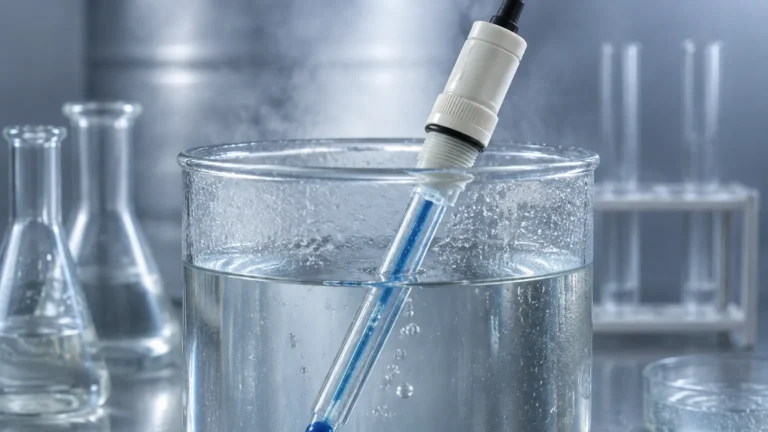
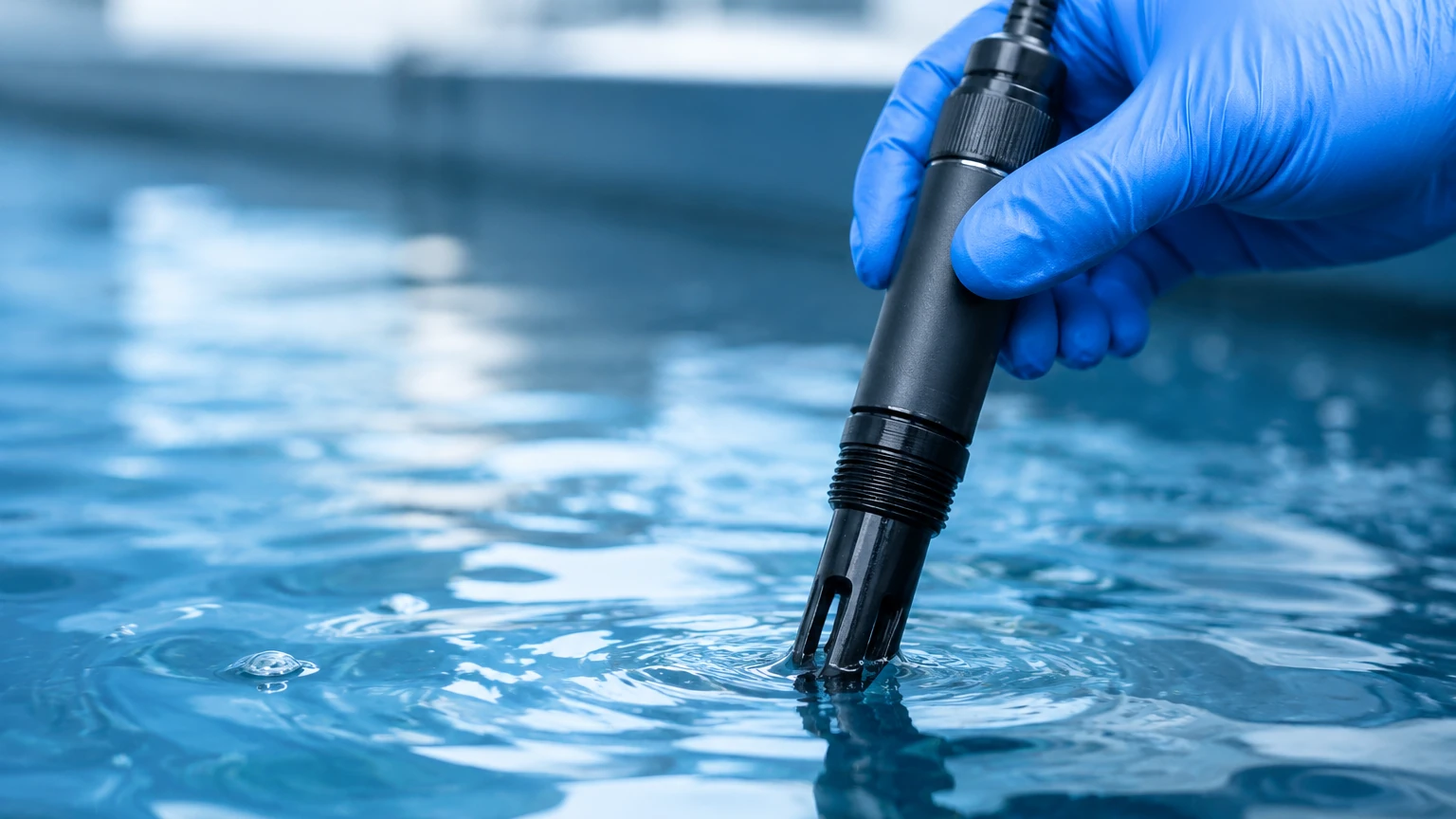
An amperometric dissolved oxygen sensor operates on the principle of polarography or the Clark cell. It is an electrochemical device that converts the partial pressure of oxygen into a measurable electrical current. Unlike optical sensors that use fluorescence quenching, amperometric sensors rely on a chemical reaction at the electrode surface.
The Clark Cell Structure
A standard amperometric sensor consists of three primary components:
1. The Cathode: Typically made of a noble metal such as gold or platinum.
2. The Anode: Usually composed of silver/silver chloride (Ag/AgCl).
3. The Electrolyte: A conductive solution, often potassium chloride (KCl), that facilitates ion transport.
4. The Semi-Permeable Membrane: A thin film (often PTFE or FEP) that allows oxygen molecules to pass through while blocking liquid water, ions, and solids.
The Electrochemical Reaction
When a constant polarizing voltage is applied to the electrodes, oxygen molecules that diffuse through the membrane are reduced at the cathode. The reaction follows this general path:
* At the Cathode: $O_2 + 2H_2O + 4e^- \rightarrow 4OH^-$
* At the Anode: $4Ag + 4Cl^- \rightarrow 4AgCl + 4e^-$
The flow of electrons from the anode to the cathode creates a current. Because the reduction of oxygen at the cathode is nearly instantaneous, the concentration of oxygen at the electrode surface is zero. This creates a concentration gradient that drives more oxygen through the membrane. The resulting current is directly proportional to the partial pressure of oxygen in the medium.
2. Polarographic vs. Galvanic Amperometric Sensors
Amperometric sensors are generally categorized into two types based on how the polarizing voltage is generated.
Polarographic Sensors
Polarographic sensors require an external power source to apply a constant polarizing voltage (typically between -0.6V and -0.8V).
* Advantages: High stability and long-term accuracy.
* Disadvantages: They require a "warm-up" or polarization time (often 15 to 60 minutes) before they can provide accurate readings. If the power is disconnected, the polarization process must be repeated.
Galvanic Sensors
In a galvanic sensor, the electrode materials are chosen such that they have a natural potential difference sufficient to drive the oxygen reduction reaction without an external voltage. Usually, a lead or zinc anode is paired with a gold cathode.
* Advantages: No warm-up time; the sensor is always ready for use.
* Disadvantages: The anode is consumed more quickly than in polarographic designs, leading to a shorter lifespan and more frequent electrolyte replacement.
3. Key Selection Criteria for Industrial Applications
Selecting the right amperometric dissolved oxygen sensor requires an evaluation of the process environment. Engineers must consider the following factors to ensure reliability.
Temperature and Pressure
Oxygen solubility is highly dependent on temperature. As temperature increases, the partial pressure of oxygen increases, but its solubility decreases. Most industrial sensors include an integrated NTC or PT100/PT1000 temperature element to provide automatic temperature compensation. Furthermore, the membrane is sensitive to pressure fluctuations. In deep-tank applications or pressurized pipelines, sensors must be rated for the specific process pressure (typically up to 6 bar or 10 bar for reinforced models).
Flow Rate and the "Stirring Effect"
Amperometric sensors consume oxygen during the measurement process. If the sample is stagnant, a depleted zone forms around the membrane, leading to artificially low readings. This is known as the stirring effect. To obtain accurate data, a minimum flow velocity (usually 0.3 m/s) must be maintained across the sensor head. In applications with low flow, a flow cell or a motorized stirrer may be required.
Chemical Compatibility and Interference
The presence of certain gases can interfere with the electrochemical reaction. For instance, Hydrogen Sulfide ($H_2S$) and Carbon Dioxide ($CO_2$) can permeate the membrane. $H_2S$ can poison the noble metal cathode, while $CO_2$ can shift the pH of the electrolyte, affecting the sensor's sensitivity and zero point.
4. Practical Selection Table
The following table outlines typical specifications for industrial-grade amperometric sensors used in various sectors.
| Feature | Wastewater Treatment | Boiler Feed Water | Chemical Processing |
| :— | :— | :— | :— |
| Measurement Range | 0–20 mg/L | 0–200 μg/L (Trace) | 0–40 mg/L |
| Accuracy | ±1% of reading | ±0.1 μg/L | ±0.5% of reading |
| Response Time ($T_{90}$) | < 60 seconds | < 30 seconds | < 45 seconds |
| Pressure Rating | Up to 2 bar | Up to 10 bar | Up to 6 bar |
| Temperature Range | 0 to 50°C | 0 to 80°C | -5 to 100°C |
| Maintenance Interval | 3–6 months | 6–12 months | 1–3 months |
5. Installation and Engineering Considerations
Proper installation is as critical as sensor selection. Incorrect mounting can lead to air pocket formation or excessive fouling, both of which degrade measurement performance.
Orientation and Mounting
* Angle: Sensors should ideally be installed at a 45-degree angle to the horizontal. This prevents air bubbles from accumulating on the membrane surface, which would cause erratic high readings.
* Submersion Depth: In open tanks, the sensor should be submerged deep enough to avoid surface turbulence but high enough to stay away from sludge blankets at the bottom.
* Flow Cells: For bypass line installations, use a dedicated flow cell that maintains a constant velocity and provides easy access for calibration.
Cable Management
Because the raw signal from an amperometric sensor is in the nano-ampere range, it is highly susceptible to electromagnetic interference (EMI). High-quality shielded cables should be used, and cable runs should be kept as short as possible. In modern B2B setups, many engineers prefer sensors with integrated transmitters that convert the signal to 4-20mA, Modbus RTU, or HART directly at the sensor head.
6. Maintenance and Limitations
Unlike non-contact level measurement technologies, the amperometric dissolved oxygen sensor is a "wet" sensor that requires periodic intervention.
Common Maintenance Tasks
1. Membrane Replacement: The membrane can become fouled with biofilm, oils, or scale. It should be cleaned regularly and replaced if punctured or stretched.
2. Electrolyte Refilling: The electrolyte is consumed or can dry out over time. Regular replenishment ensures the ionic path remains conductive.
3. Anode Cleaning: In polarographic sensors, the silver anode can become coated with silver chloride, increasing internal resistance. Periodic cleaning with a mild abrasive or chemical dip may be necessary.
Limitations
* Consumables: The need for electrolyte and membranes increases the total cost of ownership (TCO) compared to optical sensors.
* Calibration Drift: Amperometric sensors drift as the electrolyte ages and the membrane fouls. Weekly or monthly air-calibration is usually required.
* Sensitivity to Flow: As mentioned, they cannot measure in completely still water without mechanical assistance.
7. Frequently Asked Questions (FAQs)
Q: How often should I calibrate my amperometric DO sensor?
A: For most industrial water applications, a weekly calibration check is recommended. In stable, clean water environments, this might be extended to once a month. Always calibrate after replacing the membrane or electrolyte.
Q: Can I use an amperometric sensor in saltwater?
A: Yes, but you must account for salinity. Salt reduces the solubility of oxygen (the "salting-out" effect). Most modern transmitters allow you to input the salinity value (in PSU or g/kg) to correct the mg/L calculation.
Q: What is the difference between % Saturation and mg/L?
A: % Saturation measures the partial pressure of oxygen relative to the maximum amount of oxygen that can dissolve in water at that specific temperature and pressure. mg/L (or ppm) is the actual mass concentration. Amperometric sensors naturally measure partial pressure (% Saturation) and convert it to mg/L using solubility tables.
Q: Why is my sensor reading high even in oxygen-free water?
A: This is usually due to a "zero current" error. It can be caused by a contaminated cathode, exhausted electrolyte, or a small tear in the membrane. Performing a zero-point calibration in a sodium sulfite ($Na_2SO_3$) solution can help identify if the sensor is capable of reaching a true zero.
8. Conclusion
The amperometric dissolved oxygen sensor remains a reliable and cost-effective solution for many industrial processes. By understanding the underlying electrochemical principles and adhering to strict installation and maintenance protocols, engineers can achieve high levels of accuracy and process stability. While the transition toward optical DO technology is growing, the robustness and established track record of amperometric systems ensure their continued relevance in heavy industry and water management.
For professionals looking to integrate liquid analysis with broader process monitoring, it is essential to partner with providers who understand the nuances of both chemical sensing and physical instrumentation. For more information on industrial measurement solutions and hardware, you may Review product options and application support to find the right fit for your specific facility requirements.