Pressure Temperature Transmitter
Pressure Temperature Transmitter
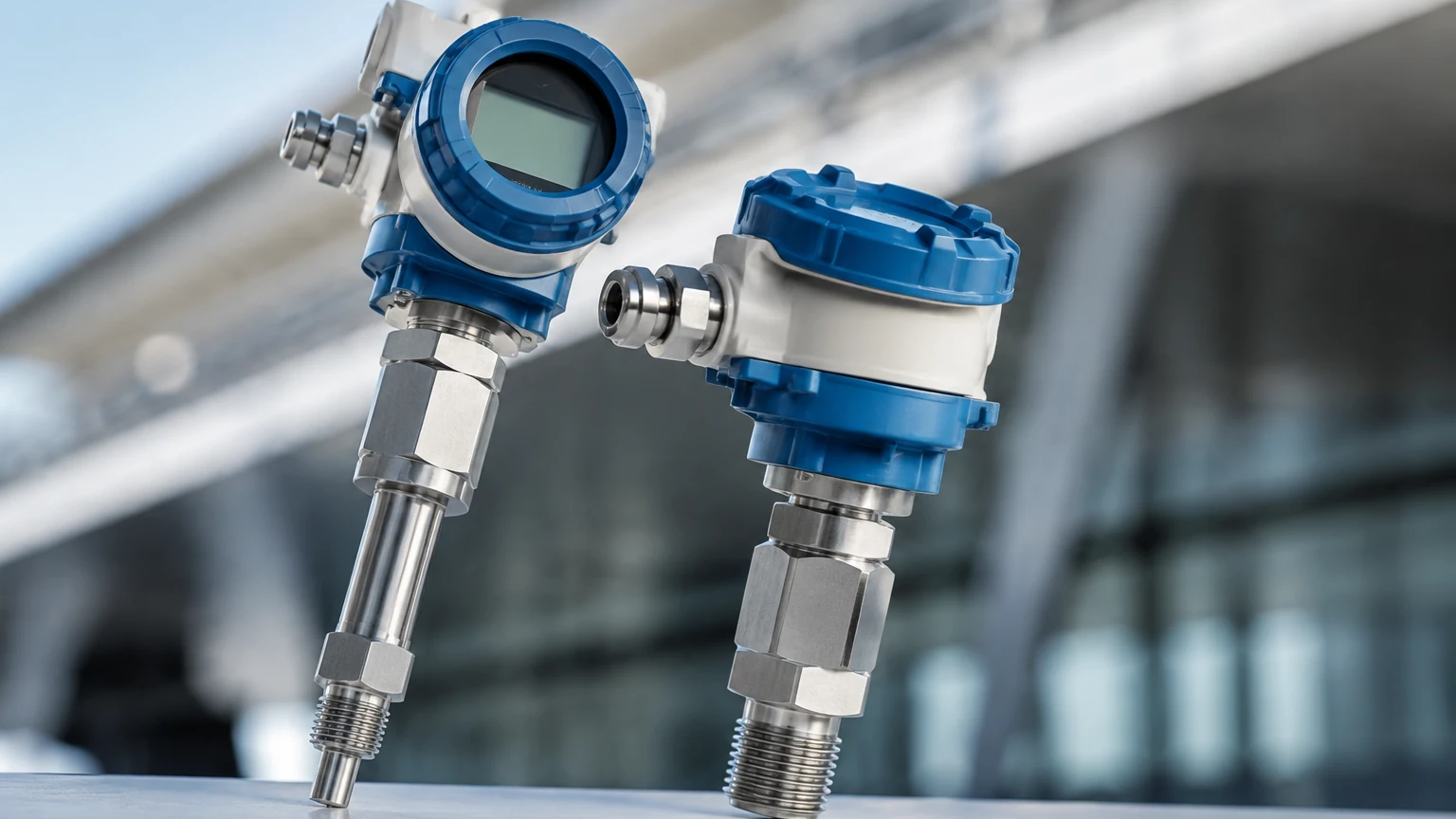
In the landscape of modern industrial automation, the demand for high-density data and process efficiency has led to the evolution of multi-variable sensing. A pressure temperature transmitter is a specialized instrument designed to measure both fluid pressure and process temperature simultaneously through a single process connection. By integrating two distinct sensing elements into one housing, these devices reduce the number of required process penetrations, minimize potential leak points, and simplify wiring and integration in complex systems.
For engineers and plant managers, understanding the synergy between pressure and temperature measurement is critical, especially in applications where fluid density varies with thermal changes. This guide explores the underlying principles, selection criteria, and practical applications of these dual-purpose instruments.
Measurement Principles of Combined Transmitters
To appreciate the utility of a pressure temperature transmitter, one must first understand how two fundamentally different physical properties are captured in a single probe.
Pressure Sensing Mechanisms
Most industrial pressure temperature transmitters utilize one of two primary pressure sensing technologies: piezoresistive or capacitive.
1. Piezoresistive Sensors: These consist of a micro-machined silicon diaphragm with integrated strain gauges. When process pressure is applied, the diaphragm deflects, causing a change in the electrical resistance of the strain gauges (the piezoresistive effect). This change is proportional to the pressure and is converted into an electronic signal. Piezoresistive sensors are highly sensitive and suitable for a wide range of pressures, from low-pressure water systems to high-pressure oil and gas lines.
2. Capacitive Sensors: These use a metallic or ceramic diaphragm that acts as one plate of a capacitor. As pressure moves the diaphragm, the capacitance changes relative to a fixed reference plate. Capacitive sensors are known for their robustness and ability to handle significant overpressure conditions.
Temperature Sensing Mechanisms
The temperature component is typically handled by a Resistance Temperature Detector (RTD), most commonly a Pt100 or Pt1000 platinum element.
* RTD Principle: The electrical resistance of platinum increases predictably as temperature rises. By passing a small, constant current through the element and measuring the voltage drop, the transmitter can calculate the temperature with high precision (often within ±0.1°C to ±0.5°C depending on the class).
* Integration: In a combined transmitter, the RTD is usually placed in close proximity to the pressure diaphragm or within the oil-filled cavity of a diaphragm seal to ensure it reflects the actual process temperature rather than the ambient environment.
Signal Processing and Output
The transmitter’s internal electronics receive raw signals from both the pressure and temperature elements. A microprocessor then applies calibration coefficients to linearize the data and compensate for thermal drift. The output is typically provided via a digital protocol like HART, RS485 (Modbus), or dual 4-20mA analog loops, allowing the control system to receive both variables over a single cable or digital bus.
The Role in Hydrostatic Level Measurement
One of the most significant applications for a pressure temperature transmitter is in hydrostatic level measurement. Welk, a professional manufacturer of industrial level measurement instruments, often emphasizes the importance of accuracy in liquid volume calculations.
Hydrostatic level measurement relies on the formula:
P = ρ × g × h
Where:
* P is the hydrostatic pressure.
* ρ (rho) is the density of the liquid.
* g is the gravitational constant.
* h is the height (level) of the liquid.
In many industrial processes, the density (ρ) of the liquid is not constant; it changes as the temperature fluctuates. For example, in a chemical storage tank, a 20°C rise in temperature might decrease the fluid density enough to cause a 1% to 2% error in level measurement if the density is assumed to be fixed. By using a pressure temperature transmitter, the control system can perform real-time density compensation. The integrated temperature data allows the PLC or DCS to adjust the density value in the calculation, ensuring the reported level remains accurate regardless of thermal cycles.
To explore more about how these sensors integrate into broader level control strategies, you can review product options and application support on our Main Page.
Technical Selection Criteria
Selecting the right pressure temperature transmitter requires a detailed analysis of the process environment. Engineers should evaluate the following factors:
1. Pressure and Temperature Ranges
It is vital to select a device where the operating range falls within 25% to 75% of the instrument's full scale.
* Pressure Range: Consider both the working pressure and the maximum potential surge (overpressure). Standard ranges often span from 0–100 mbar up to 0–600 bar.
* Temperature Range: Standard industrial units typically handle -40°C to +125°C. For steam or high-temperature chemical reactions, specialized units with cooling fins or capillary seals may be required to protect the electronics.
2. Material Compatibility
The wetted parts—the parts of the transmitter in direct contact with the fluid—must be chemically compatible with the process media.
* 316L Stainless Steel: The standard for water, air, and mild chemicals.
* Hastelloy C or Tantalum: Required for highly corrosive acids or chlorides.
* Ceramic Diaphragms: Excellent for abrasive slurries or aggressive chemicals where metal might pit.
3. Accuracy and Stability
Total Error Band (TEB) is a more useful metric than simple accuracy. TEB includes the effects of linearity, hysteresis, repeatability, and temperature compensation errors over the specified range. For critical custody transfer or precise chemical dosing, a TEB of <0.1% is often required.
4. Output Protocols
* 4-20mA with HART: The most common B2B standard, allowing digital communication over a traditional analog loop.
* Modbus RTU (RS485): Ideal for remote locations or multi-drop installations where many sensors are connected to a single gateway.
* IO-Link: Gaining popularity in factory automation for its plug-and-play capabilities and deep diagnostics.
Practical Selection Table
| Feature | Standard Industrial | Chemical/Corrosive | High Temperature |
| :— | :— | :— | :— |
| Pressure Range | 0 to 40 bar | 0 to 100 bar | 0 to 25 bar |
| Temperature Range | -20°C to 85°C | -40°C to 120°C | -20°C to 200°C |
| Wetted Material | 304/316 SS | Hastelloy/PTFE Coating | 316L with Cooling Fins |
| Accuracy | 0.5% FS | 0.25% FS | 0.5% FS |
| Typical Application | Water distribution | Acid storage tanks | Steam line monitoring |
Installation and Engineering Considerations
Proper installation is paramount to ensuring the longevity and accuracy of a pressure temperature transmitter.
Mounting Orientation
For liquid applications, the transmitter should ideally be mounted on the side or bottom of the pipe or tank to ensure the sensing diaphragm remains wetted and free of air pockets. In gas applications, mounting on the top of the pipe prevents condensate from collecting on the sensor face.
Process Connections and Sealing
Ensure the thread type (NPT, G, or Flanged) matches the process port. Use appropriate sealants (like PTFE tape or bonded seals) that are compatible with the process fluid. For hygienic applications in food or pharmaceuticals, Tri-Clamp connections are mandatory to prevent bacterial growth in thread gaps.
Environmental Protection
Transmitters are often installed in harsh outdoor or wash-down environments. Ensure the housing has an appropriate IP rating (IP65, IP67, or IP68). If the transmitter is located in a hazardous area (flammable gases or dust), it must be certified as Intrinsically Safe (Ex ia) or Explosion-Proof (Ex d).
Wiring and Shielding
To prevent electromagnetic interference (EMI) from motors and VFDs, use shielded twisted-pair cabling. The shield should be grounded at the control cabinet end only to avoid ground loops.
Limitations and Risks
While highly efficient, pressure temperature transmitters are not a universal solution for every scenario.
* Single Point Failure: If the electronics housing fails, you lose both pressure and temperature data. In safety-critical systems (SIL rated), redundant separate sensors may still be preferred.
* Thermal Lag: Because the temperature sensor is often housed within the pressure assembly, there may be a slight delay (thermal lag) compared to a dedicated thermowell-mounted RTD that is deeply immersed in the flow stream.
* Maintenance Access: If one element fails (e.g., the pressure diaphragm is damaged by a pressure spike), the entire unit must be replaced, even if the temperature element is still functional.
Frequently Asked Questions (FAQs)
Q: Can a pressure temperature transmitter be used for steam applications?
A: Yes, but with precautions. Steam can exceed the temperature limits of standard silicon sensors. A siphon or a diaphragm seal with a capillary tube should be used to dissipate heat before it reaches the transmitter body.
Q: How often should these devices be calibrated?
A: Most industrial standards recommend an annual calibration check. However, in stable environments, modern digital transmitters can maintain accuracy for two to three years. Always follow the specific regulatory requirements of your industry.
Q: What is the benefit of RS485 over 4-20mA for these sensors?
A: RS485 (Modbus) allows you to read multiple variables (Pressure, Temperature, and often Device Status) over just two wires. It also supports much longer cable runs without the signal degradation associated with analog voltage drops.
Q: Does the temperature measurement affect the pressure reading?
A: Physically, yes; temperature changes affect the sensor's properties. However, a high-quality pressure temperature transmitter uses the internal temperature data to digitally compensate the pressure reading, resulting in a more accurate output than a standalone pressure sensor without compensation.
Conclusion
The integration of pressure and temperature sensing into a single transmitter represents a significant step forward in process instrumentation. By providing critical data for density compensation, reducing installation costs, and simplifying system architecture, these devices have become a staple in water treatment, chemical processing, and industrial automation. When selecting a unit, prioritize material compatibility and the required communication protocol to ensure long-term reliability. For further technical specifications and to find the ideal measurement solution for your project, visit the Main Page to view our full range of industrial instruments.