Anaerobic Digestion Equipment
Anaerobic Digestion Equipment
Anaerobic digestion (AD) is a sophisticated biological process used to treat organic waste while simultaneously generating renewable energy in the form of biogas. As global industries shift toward circular economy models, the deployment of anaerobic digestion equipment has become a cornerstone for wastewater treatment plants, agricultural operations, and food processing facilities. This process relies on a complex ecosystem of microorganisms that break down biodegradable material in the absence of oxygen.
Selecting the right equipment is not merely a matter of capacity; it requires a deep understanding of the chemical and physical environment within the digester. From the corrosive nature of hydrogen sulfide (H2S) to the physical challenges of surface foam and thick sludge, every component must be engineered for durability and precision. This guide explores the fundamental principles of level measurement within AD systems and provides technical insights for selecting and installing essential monitoring equipment.
Core Components of Anaerobic Digestion Systems
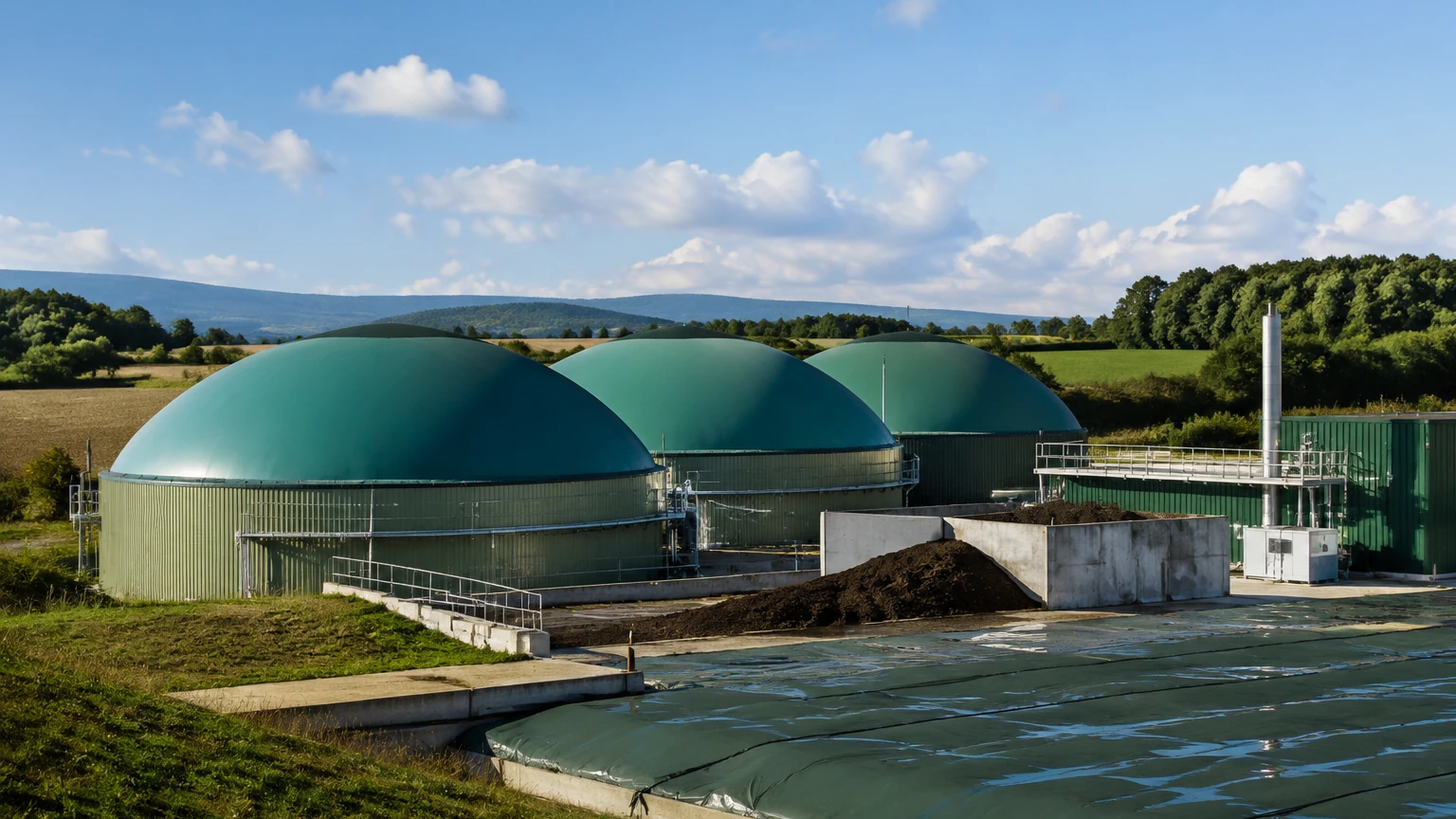
A functional AD plant consists of several specialized units, each requiring specific monitoring technologies. The primary anaerobic digestion equipment includes:
1. The Digester Tank (Bioreactor): The heart of the system where the biological breakdown occurs. These can be concrete or steel tanks, often insulated to maintain mesophilic (approx. 35-40°C) or thermophilic (approx. 50-55°C) temperatures.
2. Mixing Systems: Mechanical agitators or gas recirculation systems that ensure the feedstock is homogenous and prevent the formation of a scum layer.
3. Heating Systems: Heat exchangers or internal coils that maintain the optimal temperature for microbial activity.
4. Gas Storage: Double-membrane gas holders or floating covers that collect the produced biogas (primarily methane and carbon dioxide).
5. Instrumentation and Control: Sensors for temperature, pH, pressure, and level measurement that provide the data necessary for process automation.
Level Measurement Principles in Anaerobic Digestion
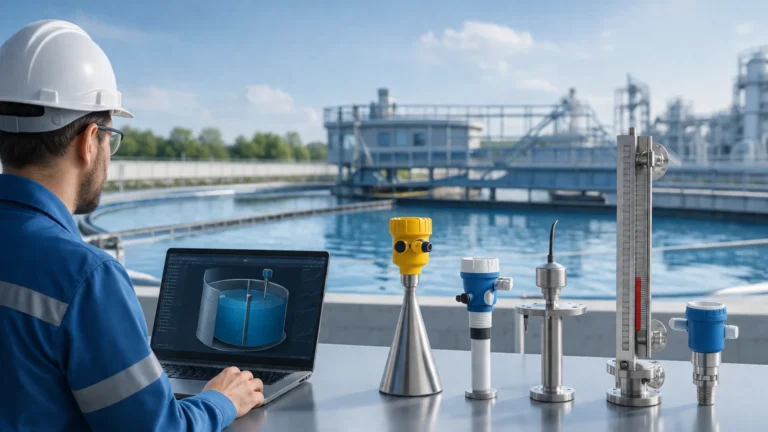
Accurate level measurement is critical for preventing overfills, managing feedstock intake, and protecting agitators from running dry. In the context of anaerobic digestion equipment, three primary measurement principles are commonly employed: Radar, Ultrasonic, and Hydrostatic pressure.
1. Radar Level Measurement (FMCW)
Frequency Modulated Continuous Wave (FMCW) radar is widely considered the gold standard for AD applications. The sensor emits a continuous signal with a changing frequency. The signal reflects off the surface of the sludge or liquid and returns to the antenna. The difference in frequency between the emitted and received signal is proportional to the distance.
Why it works for AD: Radar signals are unaffected by the gas composition in the headspace (methane, CO2, H2S) or by temperature fluctuations. High-frequency radar (such as 80GHz) offers a narrow beam angle, which is essential for avoiding internal obstructions like agitators or heating pipes.
2. Ultrasonic Level Measurement
Ultrasonic sensors work on the Time-of-Flight (ToF) principle. The sensor sends an ultrasonic pulse that bounces off the material surface and returns. The time taken for the pulse to travel is used to calculate the distance.
Limitations in AD: While cost-effective, ultrasonic waves are mechanical longitudinal waves that require a medium (air/gas). In a digester, the gas density can change significantly, and the presence of heavy foam can absorb the signal, leading to inaccurate readings or signal loss.
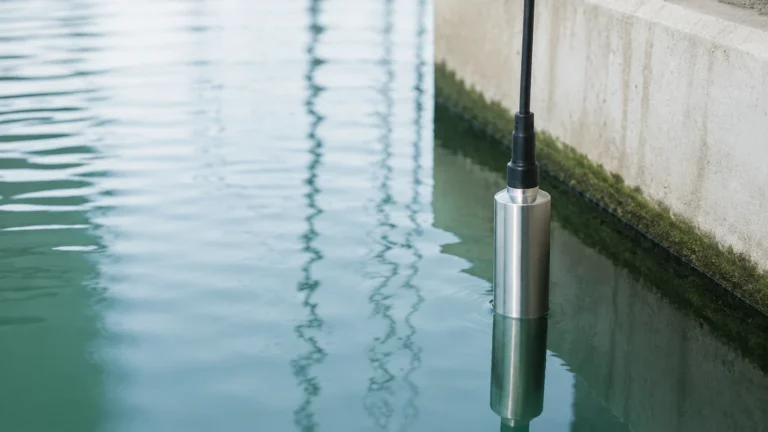
3. Hydrostatic Level Measurement
This principle measures the pressure exerted by the liquid column at the bottom of the tank. The pressure is directly proportional to the height of the liquid and its density ($P = \rho \cdot g \cdot h$).
Considerations: Hydrostatic sensors are excellent for measuring the "true" liquid level regardless of surface foam. However, in a sealed digester, the sensor must be a differential pressure type or a gauge pressure sensor compensated for the gas pressure in the headspace. If the sludge density varies significantly due to feedstock changes, the sensor may require recalibration.
Selecting Instrumentation for AD Environments
When evaluating anaerobic digestion equipment for level monitoring, engineers must account for the specific challenges of the biogas environment. For a comprehensive overview of available technologies, you can visit the Main Page of our industrial measurement catalog.
Environmental Challenges
* Foaming: AD processes often produce a thick layer of foam. Non-contact sensors like radar must be powerful enough to penetrate or detect the true liquid level through foam, or hydrostatic sensors should be used.
* Corrosion: The presence of H2S and moisture creates a highly corrosive atmosphere. Wetted parts should be made of 316L stainless steel, Hastelloy, or PTFE-coated materials.
* Explosive Atmosphere: Since methane is flammable, all electronic equipment installed on or near the digester must carry appropriate ATEX or IECEx certifications for Zone 0 or Zone 1 environments.
Selection Table: Level Technology Comparison
| Feature | 80GHz Radar | Ultrasonic | Hydrostatic | Magnetic Gauge |
| :— | :— | :— | :— | :— |
| Accuracy | High (±2mm) | Moderate | Moderate | High (Visual) |
| Foam Handling | Excellent | Poor | Excellent | Good |
| Gas Headspace | No Impact | High Impact | No Impact | No Impact |
| Build-up | Minimal Impact | High Impact | Moderate Impact | Moderate Impact |
| Installation | Top-mounted | Top-mounted | Side/Bottom | Side-mounted |
Installation and Maintenance Best Practices
Proper installation of anaerobic digestion equipment is as vital as the selection of the technology itself. Poorly placed sensors can lead to false echoes and unreliable data.
Installation Considerations
1. Nozzle Geometry: For radar and ultrasonic sensors, the nozzle should be as short as possible. If the nozzle is too long or narrow, it can create internal reflections that interfere with the signal.
2. Agitator Interference: Sensors should be positioned away from the path of mechanical mixers. If using radar, the narrow beam of an 80GHz unit can often be directed between the blades and the tank wall.
3. Stilling Wells: In cases of extreme turbulence or heavy foam, a stilling well (a vertical pipe) can be installed to provide a calm surface for the sensor to measure. However, these require regular cleaning to prevent sludge buildup.
4. Condensation Management: In the humid environment of a digester, condensation will form on sensor faces. Choosing a radar with a convex lens or a PTFE drip-off flange helps shed water droplets and maintain signal integrity.
Maintenance Guidelines
* Regular Cleaning: Sensors should be inspected for "crusting" or sludge buildup, which can happen if the digester is overfilled or if splashing occurs.
* Calibration Checks: Hydrostatic sensors should be checked annually against a manual dip-tape measurement to account for any shifts in sludge density.
* Seal Integrity: Ensure that cable glands and housing covers are tightened to prevent corrosive gases from entering the sensor electronics.
Limitations of Level Measurement in Digesters
While modern anaerobic digestion equipment is highly reliable, there are inherent limitations. No single technology is perfect for every AD plant. For instance, hydrostatic sensors cannot detect the top of a foam layer, which might be necessary for foam suppression systems. Conversely, radar might struggle with extremely low-dielectric foams if they are particularly thick and dry.
In many large-scale industrial AD projects, redundancy is the preferred strategy. Combining a non-contact radar (for headspace and surface monitoring) with a hydrostatic transmitter (for liquid volume and density checks) provides a fail-safe system that ensures continuous operation even during process upsets.
Frequently Asked Questions (FAQ)
Q: Can I use ultrasonic sensors in a closed anaerobic digester?
A: It is not recommended. The changing concentrations of methane and CO2 alter the speed of sound, which leads to significant measurement errors. Radar is a much more reliable non-contact alternative.
Q: How does H2S affect level sensors?
A: H2S is highly corrosive. If it penetrates the sensor housing, it can destroy the circuit boards. Always ensure the sensor has a high IP rating (IP67/68) and that the materials of construction are chemically resistant.
Q: What is the best way to monitor the level in a double-membrane gas holder?
A: For membrane gas holders, laser or ultrasonic sensors are often used to measure the height of the inner membrane, which corresponds to the volume of gas stored. Radar can also be used if the membrane material allows for signal reflection.
Q: Does temperature affect radar level meters?
A: No. Radar signals are electromagnetic and do not rely on the air as a medium, making them immune to the temperature and pressure changes typical in anaerobic digestion equipment.
Conclusion
Effective management of anaerobic digestion equipment requires a technical approach to instrumentation. By understanding the measurement principles of radar, ultrasonic, and hydrostatic sensors, plant operators can select the most appropriate tools for their specific feedstock and tank configurations. Reliable level monitoring not only optimizes the biogas yield but also serves as a critical safety barrier in the demanding environment of organic waste processing. For further technical specifications and product selection, reviewing the Main Page of a specialized manufacturer is the recommended next step for engineering professionals.