API 2350 5th Edition Overfill Prevention Process Opp Requirements
API 2350 5th Edition Overfill Prevention Process Opp Requirements
In the management of atmospheric storage tanks for petroleum products, safety protocols are governed by rigorous standards to prevent environmental disasters and personnel injury. The American Petroleum Institute (API) Standard 2350, specifically the 5th edition, represents the current industry benchmark for overfill protection. Central to this standard is the Overfill Prevention Process (OPP), a systematic approach that integrates management practices, hardware redundancy, and operational discipline. For engineers and facility managers, understanding the api 2350 5th edition overfill prevention process opp requirements is essential for maintaining regulatory compliance and operational integrity.
Principles of Level Measurement in Safety Systems
Before selecting instrumentation to meet API 2350 requirements, it is necessary to understand the underlying measurement principles. Overfill prevention relies on two primary types of level detection: continuous level measurement and point level detection.
Continuous Level Measurement
Continuous level measurement provides a real-time signal of the liquid surface position across the entire height of the tank. The most common technologies include:
* Radar (Non-Contact): Radar level meters emit electromagnetic pulses (either pulsed or Frequency Modulated Continuous Wave – FMCW). These pulses reflect off the liquid surface and return to the sensor. By measuring the time-of-flight, the device calculates the distance to the product. Radar is preferred in API 2350 applications because it is unaffected by density changes, vapors, or pressure.
* Ultrasonic: These sensors emit sound waves that reflect off the liquid surface. While cost-effective, ultrasonic sensors are sensitive to temperature gradients and heavy vapors, which can alter the speed of sound and affect accuracy. They are typically used in water treatment or stable chemical storage rather than volatile hydrocarbon tanks.
* Hydrostatic Pressure: This method measures the pressure exerted by the liquid column. While reliable for inventory, it requires accurate knowledge of the liquid density to determine the actual level, which can be a limitation in tanks with varying product temperatures or grades.
Point Level Detection
Point level detection is used specifically for alarm triggering. These devices do not measure the entire range but indicate when the liquid has reached a specific height.
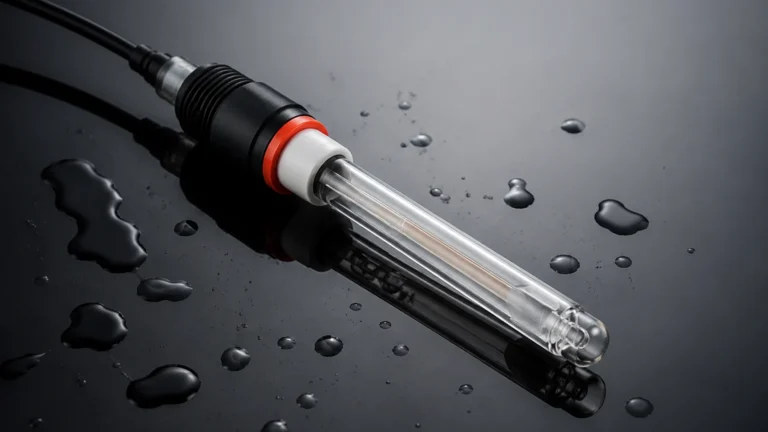
* Vibrating Tuning Forks: A probe vibrates at its resonant frequency. When submerged in liquid, the frequency shifts, triggering an electronic switch. These are highly reliable for "High-High" (HH) alarms because they have no moving parts.
* Float Switches: A mechanical float moves with the liquid level to actuate a switch. While simple, they are prone to mechanical failure due to coating or corrosion, making them less ideal for critical safety functions compared to solid-state alternatives.
Overview of API 2350 5th Edition Requirements
The 5th edition of API 2350 shifted the focus from purely hardware-based solutions to a comprehensive management system. It categorizes tanks based on their level of automation and requires a formal Overfill Prevention Process (OPP).
Tank Categories
API 2350 defines three categories of tanks based on how they are monitored and controlled:
1. Category 1 (Manual): These tanks rely on manual gauging and human intervention. They require the longest response times and have the most restrictive operating margins.
2. Category 2 (Semi-Automated): These tanks are equipped with an independent high-level alarm (HLA) that alerts an operator, who then takes manual action to stop the flow.
3. Category 3 (Fully Automated): These tanks feature an independent high-high level alarm (HHLA) connected to an Automated Overfill Prevention System (AOPS) that can automatically terminate the receipt of product without human intervention.
The Overfill Prevention Process (OPP)
The OPP is a documented procedure that includes risk assessment, the definition of tank levels, and the establishment of response times. The api 2350 5th edition overfill prevention process opp requirements mandate that every facility must have a written OPP that details how overfills are prevented through a combination of equipment and administrative controls.
Key Evaluation Criteria for OPP Compliance
To meet the OPP requirements, engineers must evaluate several critical factors during the design and upgrade phases of a tank farm.
1. Definition of Critical Levels
API 2350 requires the clear definition of four specific levels within a tank:
* Maximum Working Level (MWL): The highest level to which a tank is filled during normal operations.
* High Level Alarm (HLA): The level at which an alarm is triggered to notify the operator that the tank is reaching capacity.
* High-High Level Alarm (HHLA): The critical safety level. If reached, this level indicates that an overfill is imminent. In Category 3 tanks, this level triggers the AOPS.
* Critical High Level (CHL): The level at which the tank actually overflows or is damaged. The goal of the OPP is to ensure the liquid never reaches the CHL.
2. Response Time Calculations
A fundamental requirement of the OPP is calculating the required response time. This is the duration between the activation of an alarm (HLA or HHLA) and the complete cessation of flow into the tank. This calculation must account for the maximum possible flow rate and the time required for valves to close or pumps to stop. For manual operations, this must also include the time required for personnel to reach the site and take action.
3. Redundancy and Independence
For Category 2 and 3 tanks, the standard emphasizes the independence of the overfill prevention system from the basic process control system (BPCS). If a radar gauge is used for inventory (BPCS), a separate, independent sensor (such as a tuning fork switch or a second radar) should be used for the HHLA. This prevents a single point of failure from disabling both the monitoring and the safety functions.
Selection Table for Level Instrumentation
When selecting hardware to satisfy API 2350 5th edition overfill prevention process opp requirements, the following table provides a comparison of common technologies used in industrial automation.
| Technology | Measurement Type | Accuracy | Suitability for HHLA | Maintenance Needs |
| :— | :— | :— | :— | :— |
| 80GHz Radar | Continuous | ±1 mm | Excellent (High Reliability) | Low (Non-contact) |
| Guided Wave Radar | Continuous | ±2 mm | Good (Ideal for small tanks) | Medium (Probe cleaning) |
| Vibrating Fork | Point | N/A | Excellent (Safety Trip) | Low (Self-monitoring) |
| Ultrasonic | Continuous | ±5-10 mm | Moderate (Limited by Vapors) | Low |
| Displacer/Float | Continuous/Point | ±5-15 mm | Poor (Mechanical wear) | High |
For comprehensive technical specifications and to Review product options and application support, engineers should consult with manufacturers who specialize in API-compliant instrumentation.
Installation Considerations for Safety Systems
Proper installation is as critical as the hardware selection itself. Inaccurate installation can lead to nuisance alarms or, worse, a failure to trigger during an overfill event.
* Stilling Wells: For tanks with internal turbulence or floating roofs, radar level meters should be installed within stilling wells (pipes) to ensure a stable surface for measurement. The 5th edition requires that these wells be properly vented to prevent pressure differentials.
* Nozzle Geometry: For non-contact radar, the nozzle height and diameter must be optimized to prevent signal interference from the nozzle walls. Generally, the sensor should be positioned such that the antenna extends slightly into the tank or is flush with the tank roof.
* Dead Zones: Every level sensor has a "dead zone" or "blocking distance" near the top of the sensor where measurement is impossible. When setting the HHLA and CHL, engineers must ensure these levels do not fall within the sensor's dead zone.
* Environmental Protection: Level transmitters used in petroleum applications must be rated for hazardous areas (ATEX/IECEx) and should be equipped with lightning protection and surge arrestors to prevent damage during storms.
Common Risks and Limitations
Even with advanced instrumentation, several risks can compromise the Overfill Prevention Process:
1. Proof Testing Failures: API 2350 requires regular proof testing of the safety systems. If the testing interval is too long, or if the test does not simulate a real overfill condition, the system may fail when needed.
2. Bypassing Alarms: In some facilities, operators may bypass HHLA alarms to finish a transfer. A robust OPP must include administrative controls and logging to prevent unauthorized bypassing of safety functions.
3. Paraffin or Bitumen Buildup: In heavy oil applications, product can build up on sensors. For these applications, non-contact radar or heated probes are necessary to ensure the sensor remains functional.
4. Communication Latency: In large tank farms, the time it takes for a signal to travel from the tank to the central control room and then to the emergency shut-off valve must be factored into the response time. Digital protocols like HART or Foundation Fieldbus provide diagnostic data but must be configured for safety-critical speeds.
Frequently Asked Questions (FAQs)
Q: Does API 2350 5th Edition require SIL-rated equipment?
A: While API 2350 does not strictly mandate Safety Integrity Level (SIL) certification for all tanks, it aligns closely with IEC 61511. For Category 3 tanks (AOPS), using SIL 2 or SIL 3 rated components is highly recommended and often required by corporate risk management policies.
Q: Can I use the same radar gauge for inventory and overfill protection?
A: According to the principle of independence, the safety system (HHLA) should be separate from the tank gauging system (BPCS). While a single high-accuracy radar can provide data for both, a second independent device is required for Category 3 compliance to ensure redundancy.
Q: How often must I perform proof testing on my level switches?
A: The frequency of proof testing is determined by the Risk Assessment portion of the OPP. Typically, this is done annually, but it may be more frequent depending on the reliability of the device and the criticality of the tank.
Q: What is the difference between a "Safety" level and an "Operational" level?
A: An operational level (like the HLA) is used to manage the process and maximize storage capacity. A safety level (like the HHLA) is a final barrier intended only to prevent a catastrophic event. The OPP ensures these two levels are distinct and that the safety level is never reached during normal operations.
Conclusion
Adhering to the api 2350 5th edition overfill prevention process opp requirements is a multi-faceted challenge that requires a blend of high-precision hardware and disciplined management. By implementing independent level measurement technologies—such as 80GHz radar for continuous monitoring and vibrating tuning forks for point level trips—facilities can significantly reduce the risk of overfill incidents.
For engineers tasked with upgrading existing tank farms or designing new installations, the focus must remain on the three pillars of API 2350: formal risk assessment, independent instrumentation, and verified response times. To explore specific hardware solutions that meet these industrial standards, visit the Main Page for detailed product specifications and engineering support.
Download API 2350 5th Edition Overfill Prevention Process Opp Requirements as a PDF