Automatic Flushing Device for Municipal Water Systems
Automatic Flushing Device for Municipal Water Systems
Maintaining high water quality within municipal distribution networks is a constant challenge for water utility engineers. As water travels through miles of piping, it can stagnate in dead-end mains or low-demand areas, leading to increased water age, depletion of disinfectant residuals, and the potential for biofilm growth. Traditionally, manual flushing was the primary method to address these issues, but it is labor-intensive and often inefficient. The implementation of an automatic flushing device for municipal water systems has emerged as a superior technical solution, providing precise control over water freshness while optimizing operational resources.
To ensure these devices function reliably, they must be integrated with robust monitoring technologies. Accurate level and flow measurement are critical components in the design of automated flushing infrastructure, allowing for real-time data acquisition and system feedback.
Measurement Principles for Level Control in Flushing Systems
Before selecting an automatic flushing device for municipal water systems, it is essential to understand the measurement principles that govern the sensors used to monitor these systems. Level measurement instruments, such as those provided by Welk, are used to monitor water levels in storage tanks, drainage sumps, and flushing chambers to ensure the flushing cycle is executed safely and effectively.
Hydrostatic Level Measurement
Hydrostatic measurement is based on the principle that the pressure at a specific point in a static liquid is proportional to the height of the liquid column above it. The relationship is defined by the formula: $P = \rho \cdot g \cdot h$, where $P$ is pressure, $\rho$ is the density of the fluid, $g$ is gravity, and $h$ is the height of the liquid. In municipal flushing applications, hydrostatic transmitters are often submerged at the bottom of a tank or sump. They are highly reliable for deep-well monitoring or where surface turbulence might interfere with non-contact sensors.
Ultrasonic Level Measurement
Ultrasonic sensors operate on the "time-of-flight" principle. The sensor emits an ultrasonic pulse that travels through the air, reflects off the water surface, and returns to the transducer. By measuring the time taken for the signal to return, the device calculates the distance to the water level. This non-contact method is ideal for municipal water systems because it prevents sensor fouling from debris or corrosive chemicals. However, it can be affected by heavy foam or significant temperature fluctuations in the air gap.
Radar Level Measurement
Radar level meters, including both pulsed radar and Frequency Modulated Continuous Wave (FMCW) radar, also use time-of-flight but utilize electromagnetic waves instead of sound. Radar is particularly effective in municipal environments because it is unaffected by vacuum, pressure, dust, or steam. For high-precision applications in narrow flushing vaults, high-frequency radar (such as 80GHz) provides a narrow beam angle, avoiding interference from internal piping or ladder rungs.
Components and Operation of an Automatic Flushing Device for Municipal Water Systems
An automatic flushing device for municipal water systems is a self-contained unit designed to discharge a programmed volume of water from the distribution network based on specific triggers. These triggers can be time-based, volume-based, or driven by real-time water quality parameters such as chlorine residual levels or temperature.
Key Components
1. Controller: The "brain" of the unit, which manages the flushing schedule and processes data from level or quality sensors.
2. Solenoid Valve: A robust, pilot-operated valve that opens and closes to control the flow of water.
3. Level and Pressure Sensors: These ensure that the system does not flush if the receiving drain is full or if the system pressure is too low.
4. De-chlorination Chamber: Many municipal systems require the flushed water to be treated with de-chlorination tablets before it enters the storm drain or environment.
5. Power Supply: Usually battery-powered or solar-powered for remote locations, though AC power is used in permanent installations.
Operational Workflow
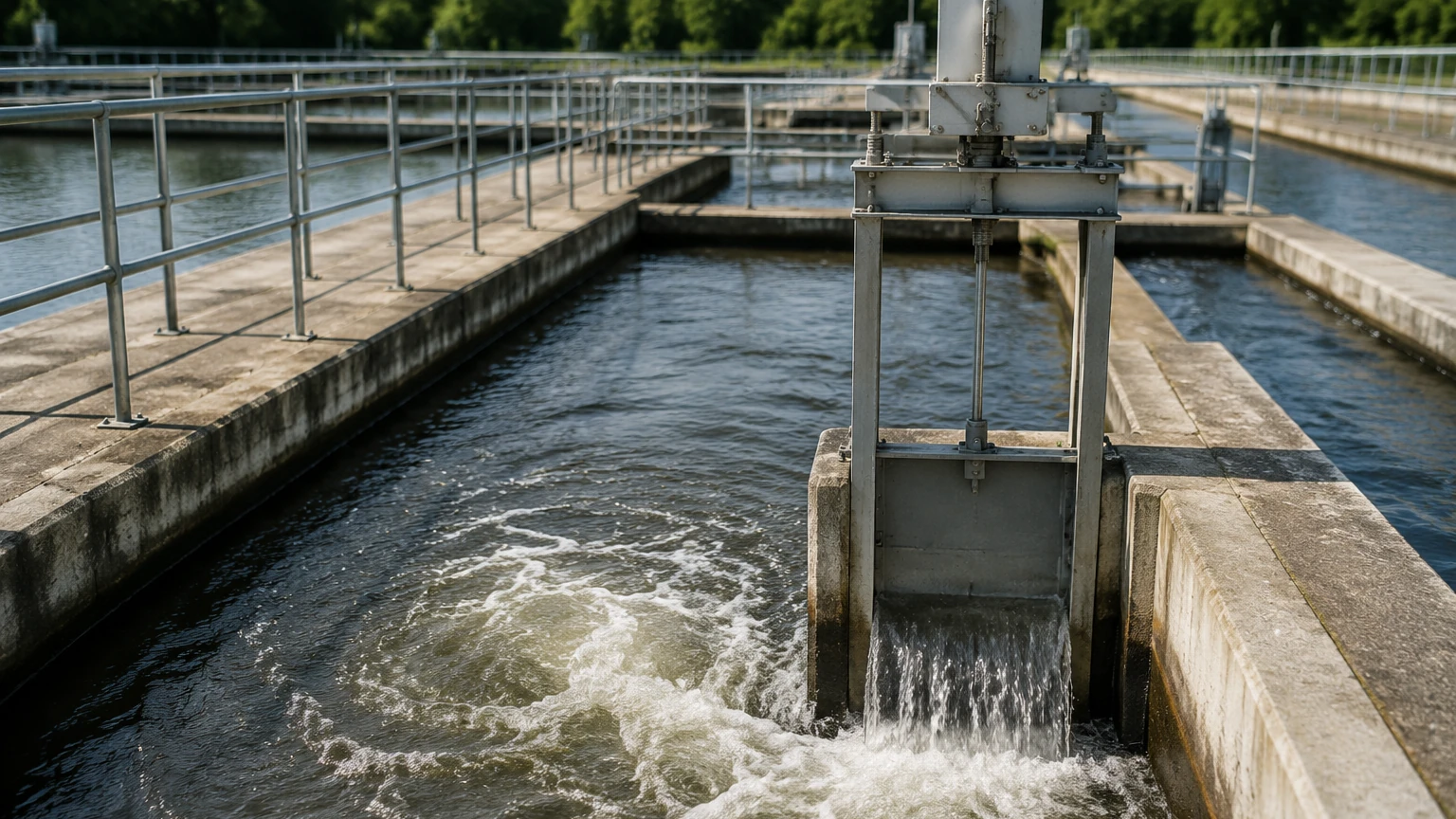
The device is typically installed at a hydrant or a dedicated blow-off point. When the controller reaches a programmed setpoint (e.g., Tuesday at 2:00 AM or when chlorine drops below 0.2 mg/L), it signals the valve to open. Water is discharged at a controlled rate. During this process, level sensors in the drainage area monitor for potential overflows. Once the required volume is flushed or the water quality reaches the target threshold, the valve closes, and the data is logged for regulatory compliance.
Selection Criteria for Municipal Systems
Choosing the right instrumentation and flushing hardware requires a comparison of environmental conditions and performance requirements. The following table provides a guide for selecting level measurement technologies to support an automatic flushing device for municipal water systems.
Selection Table: Level Measurement Technologies
| Feature | Hydrostatic Transmitters | Ultrasonic Sensors | Radar Level Meters |
| :— | :— | :— | :— |
| Measurement Type | Contact (Pressure) | Non-contact (Sound) | Non-contact (EM Waves) |
| Accuracy | ±0.25% to ±0.5% | ±0.25% | ±1 mm to ±3 mm |
| Range | Up to 200 m (656 ft) | 0.3 m to 15 m (1 ft to 49 ft) | 0.1 m to 120 m (0.3 ft to 393 ft) |
| Installation | Submerged/Threaded | Top-mounted | Top-mounted |
| Maintenance | Low (Check for clogging) | Medium (Clean transducer) | Very Low |
| Best For | Deep sumps, vented tanks | Open channels, small tanks | Harsh environments, high precision |
| Cost | Economical | Moderate | Higher Initial Investment |
When evaluating an automatic flushing device for municipal water systems, engineers should also consider the valve size (typically 25 mm to 50 mm or 1 to 2 inches) and the material of construction. Stainless steel or high-grade composites are preferred to resist the corrosive effects of treated municipal water.
Installation and Maintenance Considerations
Proper installation is vital for the longevity of both the flushing device and the associated level sensors. For professional-grade instrumentation and detailed technical specifications, engineers can refer to the Main Page to review product options and application support.
Installation Best Practices
* Positioning: The flushing device should be located at the lowest point of a dead-end main or in areas where water age is highest. Level sensors must be mounted away from the direct path of the water inlet to avoid turbulence-induced errors.
* Drainage: Ensure the discharge point can handle the flow rate (e.g., 150-300 liters per minute). If discharging into a sump, a hydrostatic level transmitter should be used to trigger a high-level alarm and shut off the flush if the sump pump fails.
* Venting: For hydrostatic sensors, the breather tube in the cable must be kept clear and dry to ensure accurate atmospheric pressure compensation.
* Dead Zones: For ultrasonic and radar sensors, be aware of the "dead zone" (the area directly beneath the sensor where measurement is impossible). Ensure the sensor is mounted high enough that the maximum water level never enters this zone.
Maintenance Checklist
1. Battery Replacement: For remote units, check battery voltage every 6 months.
2. Sensor Calibration: Verify level sensor accuracy annually using a manual tape measure.
3. Valve Inspection: Check the solenoid valve for debris or mineral buildup that could prevent a tight seal.
4. De-chlorination Replenishment: Ensure de-chlorination tablets are replaced according to the discharge volume.
Limitations and Operational Challenges
While an automatic flushing device for municipal water systems offers significant benefits, there are limitations to consider:
* Water Loss: Flushing inherently consumes treated water. While automated systems are more efficient than manual ones, they still contribute to non-revenue water (NRW) totals. Integrating water quality sensors (like chlorine probes) helps minimize this by flushing only when necessary.
* Environmental Impact: Discharging large volumes of chlorinated water can harm local aquatic life. De-chlorination is mandatory in many jurisdictions.
* Freezing Conditions: In cold climates, the device must be properly insulated or installed below the frost line in a vault to prevent the valve and sensors from freezing.
* Signal Interference: In deep underground vaults, wireless communication (for data logging) may be limited, requiring external antennas or hardwired connections.
Frequently Asked Questions (FAQs)
Q: How does an automatic flushing device save money compared to manual flushing?
A: It reduces labor costs and vehicle fuel expenses. Furthermore, by using sensors to flush only when water quality degrades, it reduces the total volume of water wasted compared to scheduled manual flushing.
Q: Can these devices be integrated into a SCADA system?
A: Yes. Most modern automatic flushing devices for municipal water systems offer 4-20mA outputs, Modbus, or cellular connectivity, allowing them to be monitored and controlled remotely via a central SCADA system.
Q: What is the typical lifespan of a level sensor in these applications?
A: With proper selection and maintenance, high-quality level sensors (like those from Welk) typically last 5 to 10 years. Radar and ultrasonic sensors often last longer due to their non-contact nature.
Q: Is it necessary to use a level sensor if the device is discharging to a storm drain?
A: While not always mandatory, a level sensor is highly recommended if there is any risk of the drain backing up. It provides a safety interlock to prevent localized flooding.
Q: How do I handle sediment buildup in the flushing line?
A: The flushing device should be designed with a high-velocity discharge capability to ensure that sediment is carried out of the system during the flush cycle. Regular inspection of the valve's internal screen is also advised.
By carefully selecting and installing an automatic flushing device for municipal water systems alongside precision level measurement instruments, water utilities can significantly improve public health outcomes, maintain regulatory compliance, and optimize their operational efficiency.
Download Automatic Flushing Device for Municipal Water Systems as a PDF