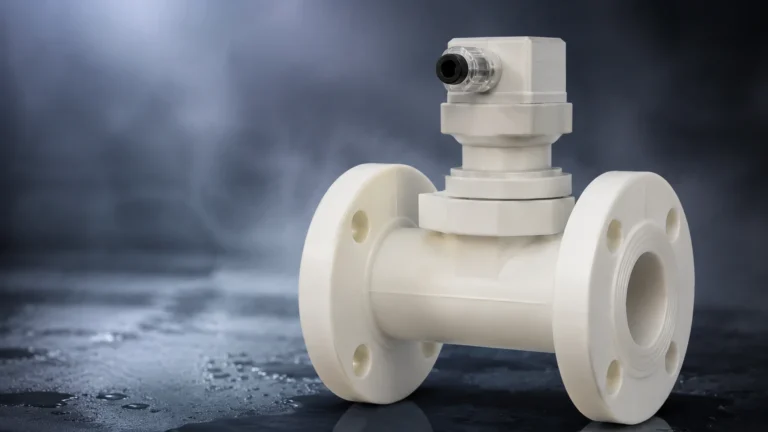
Dry Solid Impact Meter Manufacturer
Dry Solid Impact Meter Manufacturer
In the landscape of industrial bulk solids handling, the ability to measure the mass flow rate of dry materials accurately is essential for inventory control, process optimization, and consistent product quality. Selecting a qualified dry solid impact meter manufacturer involves more than just comparing hardware specifications; it requires an understanding of the underlying physics of impact measurement and the engineering support necessary to integrate these systems into complex material handling circuits.
Dry solid impact meters are specialized instruments designed to measure the flow of powders, granules, and pellets as they move through a process. Unlike traditional belt scales or loss-in-weight feeders, impact meters offer a compact, enclosed solution that is particularly effective in dust-prone environments. This guide explores the technical foundations of these instruments and provides a framework for evaluating manufacturers to ensure long-term operational success.
Fundamental Principles of Impact Flow Measurement
Before engaging with a dry solid impact meter manufacturer, engineers must understand how these devices derive flow data. The measurement is based on the principle of linear momentum. As bulk material falls under gravity, it is directed onto a sensing plate. The impact of the material creates a force that is proportional to the mass flow rate.
The Physics of Impact
When a stream of dry solids strikes a tilted sensing plate, the force generated can be decomposed into horizontal and vertical components. Most modern impact meters are designed to respond only to the horizontal force component. This design choice is critical because it eliminates the influence of material buildup on the plate (which would affect the vertical weight) and focuses solely on the kinetic energy of the moving stream.
The relationship is generally expressed by the formula:
F = Q × v × sin(θ)
Where:
* F is the horizontal force measured by the sensor.
* Q is the mass flow rate (e.g., kg/h).
* v is the velocity of the material at the point of impact.
* θ is the angle of the sensing plate relative to the flow.
Because the velocity (v) is typically constant (determined by the height of the fall) and the angle (θ) is fixed, the force (F) becomes directly proportional to the mass flow rate (Q). A high-quality manufacturer will provide precision-engineered sensing plates and robust transducers, such as LVDTs (Linear Variable Differential Transformers) or high-precision load cells, to capture these minute force changes.
Evaluating a Dry Solid Impact Meter Manufacturer
Choosing the right dry solid impact meter manufacturer requires a deep dive into their technical capabilities and their history with specific material types. Because solids vary significantly in density, moisture content, and abrasiveness, a "one size fits all" approach rarely succeeds.
Technical Expertise and Customization
A reputable manufacturer should offer a range of sensing plate geometries and coatings. For example, if you are measuring abrasive minerals, the manufacturer should provide plates lined with ceramic or tungsten carbide. Conversely, for food-grade applications, stainless steel with specific Ra surface finishes is required. The ability to provide OEM/ODM services, such as those offered by Welk, ensures that the meter housing and flange connections can be tailored to fit existing ductwork without extensive site modifications.
Application Testing and Calibration
Bulk solids do not behave like liquids. Factors such as particle size distribution and "flowability" can affect measurement accuracy. A leading dry solid impact meter manufacturer will often maintain a laboratory where customers can send material samples for testing. This allows the manufacturer to determine the optimal drop height and plate angle before the equipment is even shipped. You should confirm whether the manufacturer provides factory calibration certificates and whether they offer on-site commissioning support to verify the meter against a known reference, such as a truck scale or a static hopper.
Technical Selection Criteria for Bulk Solids
When selecting a meter, the physical properties of the dry solid are the primary drivers of the specification. The following table provides a general guideline for matching material characteristics with meter features:
| Material Characteristic | Impact Meter Requirement | Recommended Design Feature |
| :— | :— | :— |
| High Abrasiveness (e.g., sand, clinker) | Wear resistance | Ceramic or hardened steel plates |
| Cohesive/Sticky (e.g., moist clay) | Build-up prevention | PTFE coating or vibrating plate mechanisms |
| Low Bulk Density (e.g., plastic flakes) | High sensitivity | Lightweight sensing plates with LVDT sensors |
| Food Grade (e.g., flour, sugar) | Hygiene compliance | 316L Stainless Steel, no crevices, FDA seals |
| High Temperature (e.g., hot ash) | Thermal protection | Remote electronics and high-temp gaskets |
Flow Rate and Turn-down Ratio
It is essential to specify the minimum and maximum flow rates. Most impact meters operate effectively within a 10:1 turn-down ratio. If your process fluctuates significantly, the manufacturer must ensure that the sensor remains sensitive at the lower end of the scale without being damaged by the force of the maximum flow. On the Main Page of a professional manufacturer's catalog, you will typically find various model sizes categorized by their maximum throughput capacity, ranging from 1 t/h to over 800 t/h.
Installation Guidelines and Best Practices
The accuracy of a dry solid impact meter is highly dependent on how it is installed. Even the best instrument from a top-tier dry solid impact meter manufacturer will fail if the material presentation is inconsistent.
1. Pre-Feed Requirements: Material must be delivered to the meter at a constant velocity. This is usually achieved by using a vertical "pre-feed" pipe of at least 500 mm to 1000 mm in length. This allows the material to reach a consistent terminal velocity before hitting the plate.
2. Eliminating Turbulence: Airflow can significantly interfere with the measurement of light solids. The meter housing must be properly vented or equalized to prevent pressure differentials from exerting force on the sensing plate.
3. Mechanical Isolation: The meter should be isolated from external vibrations. If the meter is mounted directly to a vibrating conveyor or a large crusher, the noise will obscure the impact signal. Flexible couplings and dedicated support structures are standard requirements.
4. The "Dead Box" Design: For highly abrasive materials, manufacturers often recommend a "dead box" or a stone-box inlet. This allows material to build up on a ledge, so that subsequent material impacts a layer of itself rather than the metal housing, significantly extending the life of the equipment.
Limitations and Process Constraints
While impact meters are versatile, they are not suitable for every application. Understanding these limitations is a key part of the engineering selection process.
* Non-Homogeneous Material: If the material size varies wildly (e.g., large rocks mixed with fine dust), the impact force will be inconsistent, leading to higher error margins. Impact meters work best with relatively uniform particle sizes.
* Variable Moisture: Significant changes in moisture content can alter the way material slides off the sensing plate. If the moisture content is not stable, the meter may require frequent recalibration.
* Zero Drift: Because these sensors are highly sensitive, they can experience zero drift if dust accumulates on the internal mechanisms. Regular cleaning or the use of an automated air-purge system is often necessary in dusty environments.
Maintenance and Calibration Procedures
To maintain an accuracy of ±1% to ±2% of full scale, a routine maintenance schedule is required. A professional dry solid impact meter manufacturer will provide a manual detailing the following steps:
* Visual Inspection: Check the sensing plate for signs of wear, pitting, or material buildup. Even a small hole in the plate can change the impact dynamics.
* Zero Check: Ensure the meter reads zero when there is no material flow. This should be done daily or weekly in high-precision applications.
* Static Calibration: This involves hanging known weights on the sensing mechanism to verify that the electronics are correctly translating force into a signal. While this does not simulate the dynamic flow of material, it verifies the integrity of the transducer.
* Dynamic Calibration (Material Test): The most accurate way to calibrate is to run a known quantity of material through the meter and compare the integrated total against a certified scale. This should be performed during initial commissioning and annually thereafter.
Frequently Asked Questions (FAQ)
Q: Can an impact meter measure liquids?
A: No. Impact meters are specifically designed for dry, granular solids. For liquids, electromagnetic or ultrasonic flow meters are more appropriate.
Q: What is the typical accuracy of an impact flow meter?
A: Under ideal conditions with consistent material, most manufacturers guarantee an accuracy of ±1% of the flow rate. In more challenging applications with variable material, ±2% to ±5% is more realistic.
Q: How does an impact meter compare to a belt scale?
A: Impact meters require much less space and are completely enclosed, making them better for dust control. However, belt scales are generally capable of higher accuracy (±0.25% to ±0.5%) for high-capacity bulk transport.
Q: Is it possible to use an impact meter for custody transfer?
A: Generally, impact meters are used for process control and internal inventory rather than legal-for-trade custody transfer, as they are sensitive to changes in material velocity and density.
In conclusion, partnering with an experienced dry solid impact meter manufacturer ensures that you receive an instrument capable of withstanding the rigors of industrial use. By focusing on the measurement principles, material characteristics, and proper installation, facilities can achieve reliable flow data that drives efficiency and reduces waste in bulk solids processing.