Automatic Water Samplers
Automatic Water Samplers
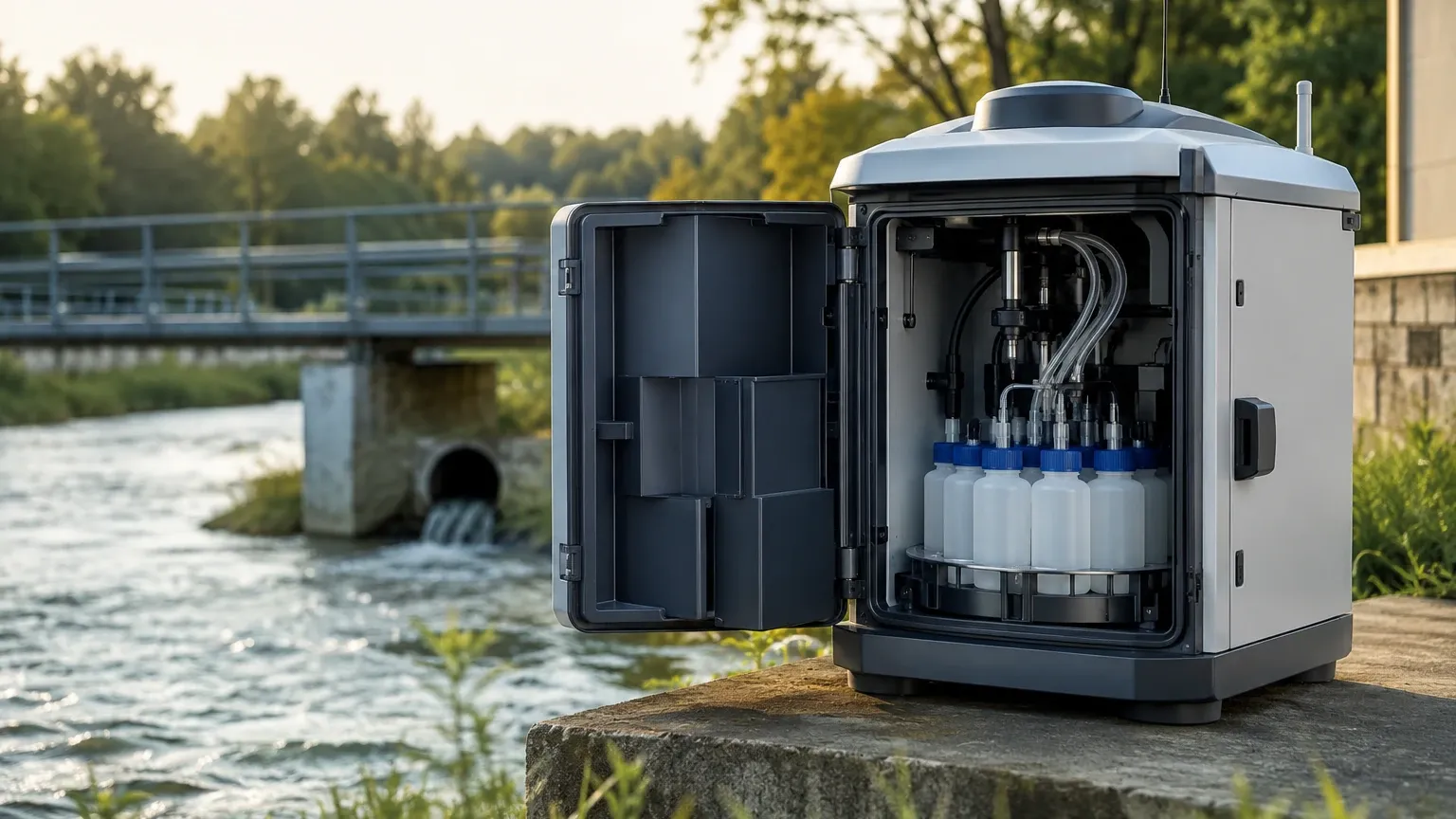
In industrial wastewater management and environmental monitoring, obtaining a representative sample is as critical as the accuracy of the analytical instruments used in the laboratory. Automatic water samplers are specialized instruments designed to collect water samples from a source—such as a sewer, a river, or an industrial process stream—at programmed intervals or in response to specific triggers. These devices ensure that the data used for regulatory compliance, process control, and environmental impact assessments are based on samples that truly reflect the conditions of the water body over time.
While chemical analysis happens post-collection, the reliability of the sampling process depends heavily on the integration of secondary instrumentation. For instance, to perform flow-proportional sampling, the sampler must receive precise data from level measurement devices that calculate flow in open channels. As a professional manufacturer of industrial level measurement instruments, Welk provides the foundational level and flow data necessary to drive these sampling systems efficiently. Understanding the synergy between level measurement and automatic sampling is essential for any facility aiming for high-precision water quality monitoring.
Measurement Principles and Sampling Methods
Automatic water samplers operate based on several mechanical and electronic principles to ensure the sample remains uncontaminated and representative. The core of the system is the intake mechanism, which typically utilizes one of two primary methods: peristaltic pumping or vacuum-pressure sampling.
Peristaltic Pump Sampling
This is the most common method used in modern automatic samplers. A rotating roller assembly compresses a flexible tube, creating a vacuum that draws the liquid up from the source.
* Principle: The pump moves a fixed volume of air and liquid through the tube. By counting the revolutions of the pump or using liquid sensors, the controller determines when the sample has reached the distribution arm.
* Advantages: The liquid only contacts the tubing, reducing the risk of cross-contamination. It is also highly effective at handling suspended solids.
* Limitations: The suction lift is typically limited to approximately 7 to 8 meters (23 to 26 feet). High vertical lifts can reduce the velocity of the sample, potentially leading to the settling of solids within the intake line.
Vacuum-Pressure Sampling
This method uses a vacuum pump to draw the sample into a calibrated chamber. Once the chamber is full, the system uses pressure to discharge the excess liquid back to the source and then release the measured sample into the collection bottle.
* Principle: A vacuum is created in a volumetric chamber. Once the liquid reaches a conductive probe, the vacuum is cut off, and the sample is gravity-fed or pressure-fed into the container.
* Advantages: It often provides higher transport velocities than peristaltic pumps, which is beneficial for maintaining the suspension of heavy solids.
* Limitations: The mechanical complexity is higher, and the internal chamber requires frequent cleaning to prevent carry-over between samples.
Sampling Logic: Time vs. Flow
Samplers can be programmed to trigger based on different logic models:
1. Time-Proportional: Samples are taken at fixed time intervals (e.g., every 60 minutes). This is suitable for stable streams but fails to account for fluctuations in pollutant loading during high-flow events.
2. Flow-Proportional: Samples are taken based on the volume of water passing a point (e.g., every 1,000 cubic meters). This requires a signal from a flow meter, often derived from a Main Page level sensor installed in a flume or weir.
3. Event-Based: Sampling is triggered by a specific condition, such as a pH spike, a temperature change, or a rapid rise in water level detected by an ultrasonic or radar level meter.
Key Evaluation Criteria for Selection
Choosing the right automatic water sampler requires a thorough analysis of the application environment and the specific parameters being monitored. The following table provides a comparison of key features to consider during the selection process.
Selection Comparison Table
| Feature | Portable Samplers | Stationary/Refrigerated Samplers |
| :— | :— | :— |
| Primary Use | Field studies, temporary monitoring, remote sites. | Permanent industrial outfalls, WWTP influent/effluent. |
| Power Source | 12V DC Battery / Solar. | 110V/220V AC Mains. |
| Sample Preservation | Ice or passive cooling. | Active compressor-based refrigeration (4°C). |
| Bottle Configuration | Single composite or small multi-bottle sets. | Large multi-bottle arrays (up to 24 x 1L). |
| Durability | Lightweight, impact-resistant plastic. | Heavy-duty, weather-protected stainless steel or fiberglass. |
| Integration | Basic pulse inputs for flow. | Advanced Modbus, 4-20mA, and digital I/O. |
| Suction Lift | Typically up to 6-7 meters. | Can be optimized for higher lifts with vacuum systems. |
Refrigeration and Preservation
For regulatory compliance (such as EPA or ISO standards), samples must often be maintained at 4°C (39°F) to inhibit biological activity and chemical degradation. Stationary samplers equipped with active refrigeration are mandatory for long-term monitoring where the operator cannot manually change ice packs daily.
Controller Capabilities
The "brain" of the sampler should offer intuitive programming. Modern units feature backlit LCDs, data logging capabilities, and the ability to store multiple sampling programs. For industrial automation, look for controllers that can interface with SCADA systems via RS485 or Ethernet.
Integration with Level Measurement Systems
In many B2B industrial applications, the automatic water sampler does not operate in isolation. It is part of a larger monitoring station where flow measurement is the primary driver. This is where the synergy between level measurement technology and sampling becomes critical.
Flow-Paced Sampling via Level Sensors
Most industrial discharge is measured in open channels using primary devices like Parshall flumes or V-notch weirs. To calculate the flow rate, a level meter—such as a Welk ultrasonic level sensor or a high-frequency radar level meter—measures the head (height) of the water. The level meter converts this height into a flow rate using pre-programmed discharge curves.
* The Pulse Signal: The level meter or flow computer sends a pulse to the automatic water sampler every time a specific volume of water (e.g., 500 liters) passes through the channel.
* Accuracy Requirements: If the level meter is inaccurate, the sampling will not be truly flow-proportional. For instance, a 5% error in level measurement can lead to a significant discrepancy in the total mass loading calculations of pollutants. Using reliable hydrostatic level transmitters or non-contact radar ensures that the sampler is triggered at the correct intervals.
Level-Triggered Event Sampling
In storm-water monitoring or emergency overflow applications, the sampler remains in standby mode until a specific water level is reached. A radar level meter can monitor the rising water in a collection basin without contacting the fluid, triggering the sampler to begin a high-frequency sampling cycle as soon as the level exceeds a critical threshold. This ensures that the "first flush" of a storm event—which often contains the highest concentration of pollutants—is captured accurately.
Installation Considerations and Best Practices
Proper installation is the difference between a successful monitoring program and a series of invalidated samples. Engineers should adhere to the following guidelines:
1. Intake Line Placement: The intake strainer should be positioned in the center of the flow stream, ideally at a depth where it will not suck in surface oils or bottom sediments. It should be placed in a reach of the channel with high turbulence to ensure the sample is well-mixed.
2. Line Velocity: To prevent the settling of suspended solids in the intake tube, the sampler must maintain a minimum transport velocity of 0.6 m/s (2.0 ft/s). For heavy industrial solids, velocities above 0.9 m/s are recommended.
3. Avoid Loops and Kinks: The intake tubing should have a continuous slope from the sampler down to the source. Any "pockets" or loops in the line will trap liquid, leading to cross-contamination of the next sample and potential freezing in cold climates.
4. Vertical Lift: Minimize the vertical distance between the sampler and the water source. As the lift increases, the pump's flow rate decreases, and the strain on the peristaltic tube increases.
5. Power Supply: For remote sites using portable samplers, calculate the power budget carefully. A sampler drawing 100 samples a day with a long intake line will deplete a standard lead-acid battery quickly. Solar panels are a recommended addition for long-term remote deployments.
Limitations and Common Risks
While automatic water samplers are robust, they are subject to environmental and mechanical limitations that must be managed.
* Cross-Contamination: Even with a purge cycle (where the pump runs in reverse before and after sampling), a small amount of residual liquid may remain in the tubing. In high-precision applications, tubing should be replaced frequently.
* Volatile Organic Compounds (VOCs): Standard peristaltic samplers may cause "off-gassing" of VOCs due to the vacuum created during suction. If VOCs are the primary target, specialized bladder pumps or discrete sampling methods may be required.
* Blockages: Large debris or fibrous material in wastewater can clog the intake strainer. Regular inspection and the use of "self-cleaning" strainers can mitigate this risk.
* Temperature Extremes: In very cold environments, intake lines must be heat-traced or insulated to prevent freezing. Conversely, in extremely hot climates, even refrigerated samplers may struggle to maintain 4°C if they are placed in direct sunlight without a sunshade.
Frequently Asked Questions (FAQs)
Q: How often should the pump tubing be replaced?
A: For a standard peristaltic pump, tubing should typically be replaced every 500 to 1,000 sampling cycles, or every 3 to 6 months, depending on the abrasiveness of the liquid and the frequency of use. Visible cracks or permanent deformation (set) are signs that replacement is needed.
Q: Can automatic samplers be used for pressurized pipes?
A: Standard automatic samplers are designed for atmospheric pressure sources (open channels or tanks). Sampling from a pressurized line requires a specialized pressure-reduction valve or a bypass assembly to bring the sample to atmospheric pressure before it enters the sampler intake.
Q: What is the maximum length for an intake hose?
A: While some samplers can handle up to 30 meters (approx. 100 feet) of horizontal tubing, the increased friction and travel time can affect sample integrity. It is best practice to keep the total line length under 15 meters whenever possible.
Q: How do I synchronize my level meter with the sampler?
A: Most level meters provide a 4-20mA output or a relay pulse output. For flow-proportional sampling, the relay output is configured to close for a short duration (e.g., 100ms) every time a specific volume is reached. This pulse is wired directly to the sampler's external trigger input.
By understanding these technical nuances and ensuring a reliable integration with level measurement hardware, facilities can maintain rigorous monitoring standards. For more information on the sensors that provide the critical data for these systems, you may Review product options and application support to find the right level and flow solutions for your specific industrial environment.