Beta Diester
Beta Diester
In the realm of industrial chemical processing and synthetic lubricant manufacturing, the management of beta diester compounds requires precise instrumentation. Beta diesters, often utilized as intermediates in organic synthesis or as high-performance synthetic base oils, possess specific physical and chemical properties that challenge standard level measurement configurations. Ensuring accurate inventory control and process safety requires an understanding of how these fluids interact with different sensing technologies.
This guide examines the technical requirements for monitoring beta diester levels, comparing the efficacy of radar, ultrasonic, and hydrostatic technologies to help engineers select the most reliable solution for their specific application.
Understanding Measurement Principles for Beta Diester
Before selecting a level transmitter, it is essential to understand the physical principles that govern how different sensors "see" the liquid surface of a beta diester.
Dielectric Constant and Radar Reflection
Radar level meters operate on the Time-of-Flight (ToF) principle. They emit electromagnetic pulses that travel at the speed of light, reflect off the liquid surface, and return to the sensor. The strength of this reflection is primarily determined by the dielectric constant (εr) of the medium.
Beta diesters typically exhibit dielectric constants in the range of 2.0 to 5.0. While this is significantly higher than pure hydrocarbons (which can be as low as 1.4), it is much lower than water (approximately 80). Consequently, the reflected signal is weaker, requiring high-sensitivity electronics and, in some cases, specific antenna designs to ensure a reliable signal-to-noise ratio.
Acoustic Impedance in Ultrasonic Sensing
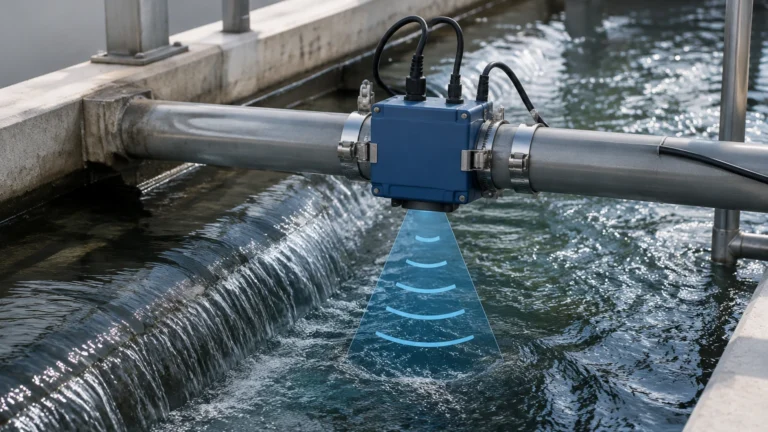
Ultrasonic sensors use sound waves rather than electromagnetic waves. The measurement depends on the time it takes for a sound pulse to bounce off the liquid surface. The efficiency of this reflection depends on the density difference between the air/gas space and the liquid beta diester. While ultrasonic sensors are cost-effective, they are sensitive to the vapor composition in the tank. If the beta diester is stored at high temperatures, the resulting vapors can change the speed of sound in the headspace, leading to measurement errors unless temperature compensation is accurately applied.
Hydrostatic Pressure and Density
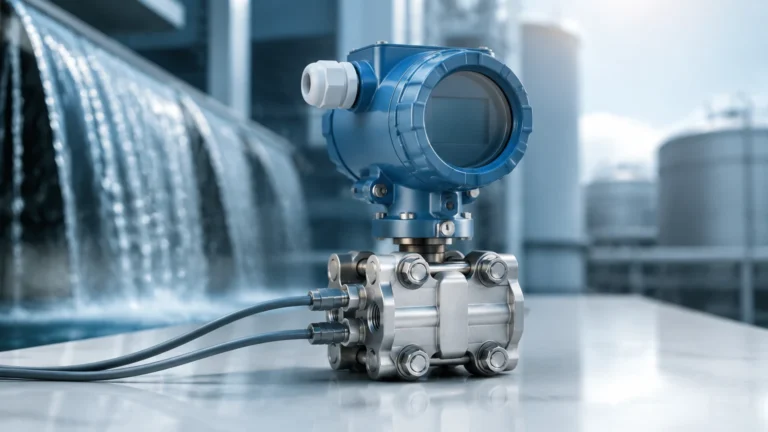
Hydrostatic level transmitters measure the pressure exerted by the liquid column. The formula $P = ρ · g · h$ (where $P$ is pressure, $ρ$ is density, $g$ is gravity, and $h$ is height) demonstrates that the measurement is directly proportional to the fluid's density. Beta diesters often have densities ranging from 0.9 to 1.1 g/cm³. If the process involves temperature fluctuations that significantly alter the density of the beta diester, the hydrostatic reading will drift unless a dual-pressure system or a density-compensated transmitter is utilized.
Comparative Analysis of Level Measurement Technologies
Choosing the right technology for beta diester depends on the tank geometry, process temperature, and the specific chemical grade of the diester being monitored.
80GHz High-Frequency Radar
Modern 80GHz radar transmitters are often the preferred choice for beta diester applications. The high frequency allows for a very narrow beam angle (often as small as 3 degrees), which minimizes interference from tank internals like agitators or heating coils. Because beta diesters have a relatively low dielectric constant, the focused energy of an 80GHz signal ensures a much stronger return echo than older 6GHz or 26GHz models.
Guided Wave Radar (GWR)
For applications involving heavy foam or extremely low dielectric versions of beta diester, Guided Wave Radar is highly effective. By utilizing a probe (cable or rod) to guide the microwave pulse directly to the liquid surface, the energy loss is minimized. GWR is particularly useful in small, narrow tanks where a non-contact radar beam might reflect off the walls.
Ultrasonic Level Sensors
Ultrasonic technology is suitable for beta diester storage in atmospheric tanks at stable temperatures. However, it is generally not recommended for vacuum tanks or high-pressure reactors, as sound waves require a medium (air or gas) to travel. If the beta diester process generates heavy vapors, the sound pulses can be attenuated, leading to signal loss.
Selection Criteria for Beta Diester Level Sensors
When evaluating hardware, engineers should refer to the following table to match the technology with their specific process conditions:
| Feature | 80GHz Radar | Guided Wave Radar | Ultrasonic | Hydrostatic |
| :— | :— | :— | :— | :— |
| Suitability for Beta Diester | Excellent | Excellent | Good (Stable conditions) | Good (Constant density) |
| Min. Dielectric Constant | 1.4 | 1.2 | N/A | N/A |
| Contact with Medium | Non-contact | Contact (Probe) | Non-contact | Contact (Diaphragm) |
| Effect of Vapors | Negligible | Negligible | Significant | None |
| Effect of Agitation | Low | Low | High | None |
| Maintenance Needs | Very Low | Low (Probe cleaning) | Low | Moderate (Diaphragm) |
For a comprehensive overview of available technologies and detailed technical specifications, you may visit the Main Page to review product options and application support.
Installation Considerations and Best Practices
Proper installation is as critical as sensor selection. For beta diester applications, follow these engineering guidelines:
1. Nozzle Positioning: For non-contact radar and ultrasonic sensors, the nozzle should be located away from the tank wall to avoid false reflections. Ideally, the sensor should be placed at 1/4 to 1/6 of the tank diameter from the wall.
2. Nozzle Height and Diameter: Ensure the nozzle height does not exceed the sensor's "blind zone" or "dead band." For 80GHz radar, this zone is typically very small (under 50 mm), but for ultrasonic sensors, it can be up to 300 mm.
3. Stilling Wells: If the beta diester is stored in a tank with high turbulence or heavy surface foam, installing the sensor inside a stilling well or bypass chamber can stabilize the liquid surface and concentrate the signal.
4. Material Compatibility: Beta diesters can be aggressive toward certain elastomers. Ensure that O-rings and gaskets are made of compatible materials like Viton (FKM) or Kalrez (FFKM). The wetted parts of the sensor should typically be 316L Stainless Steel or PTFE.
5. Venting: In closed tanks, ensure proper venting to prevent pressure build-up, which could affect hydrostatic sensors or lead to condensation on the faces of non-contact sensors.

Limitations and Troubleshooting
While modern sensors are highly reliable, specific conditions in beta diester processing can lead to measurement challenges.
* Condensation and Build-up: If the process involves high temperatures, beta diester vapors may condense on the sensor antenna. While 80GHz radar is relatively immune to thin films of condensation, heavy build-up can cause signal attenuation. Sensors with a PTFE "drip-off" lens antenna are recommended to mitigate this.
* Foaming: Beta diesters can produce surface foam during rapid filling or agitation. Ultrasonic signals are often absorbed by foam, leading to "lost echo" errors. Radar, particularly Guided Wave Radar, is much better at penetrating foam to find the true liquid level.
* Temperature Gradients: In very tall tanks, temperature layering can occur. Since the density of beta diester changes with temperature, a hydrostatic sensor at the bottom may provide an inaccurate level reading if the average density is not known. In these cases, top-down radar is superior as it is independent of density.
Frequently Asked Questions (FAQs)
Q: Does the viscosity of beta diester affect radar level measurement?
A: No. Radar technology is independent of viscosity. However, very high viscosity may lead to material build-up on the probes of Guided Wave Radar, which might require periodic cleaning.
Q: Can I use a plastic sensor housing for beta diester applications?
A: It depends on the environment. While the housing does not contact the medium, the presence of beta diester vapors in a closed area can degrade certain plastics over time. Stainless steel or aluminum housings with high IP ratings (IP66/67) are generally preferred for industrial chemical environments.
Q: How does a vacuum affect the measurement?
A: Radar and hydrostatic sensors work perfectly in a vacuum. Ultrasonic sensors do not work in a vacuum because sound waves require a gas medium to propagate.
Q: Is calibration required for different grades of beta diester?
A: For radar and ultrasonic sensors, calibration is based on the distance from the sensor to the tank bottom and usually does not need adjustment for different fluid grades. For hydrostatic sensors, you must recalibrate if the density of the new grade differs from the previous one.
Conclusion
Measuring the level of beta diester requires a balanced approach that considers the fluid's dielectric properties, density, and the physical environment of the tank. For most modern industrial applications, 80GHz non-contact radar provides the highest accuracy and lowest maintenance requirements. However, in specialized cases involving extreme foam or complex tank geometries, Guided Wave Radar remains a robust alternative. By adhering to proper installation standards and selecting compatible materials, operators can ensure long-term reliability in their beta diester processes.
For further technical assistance and to explore specific instrument models, please refer to the Main Page for additional resources and expert consultation.