Pressure Differential Sensor
Pressure Differential Sensor
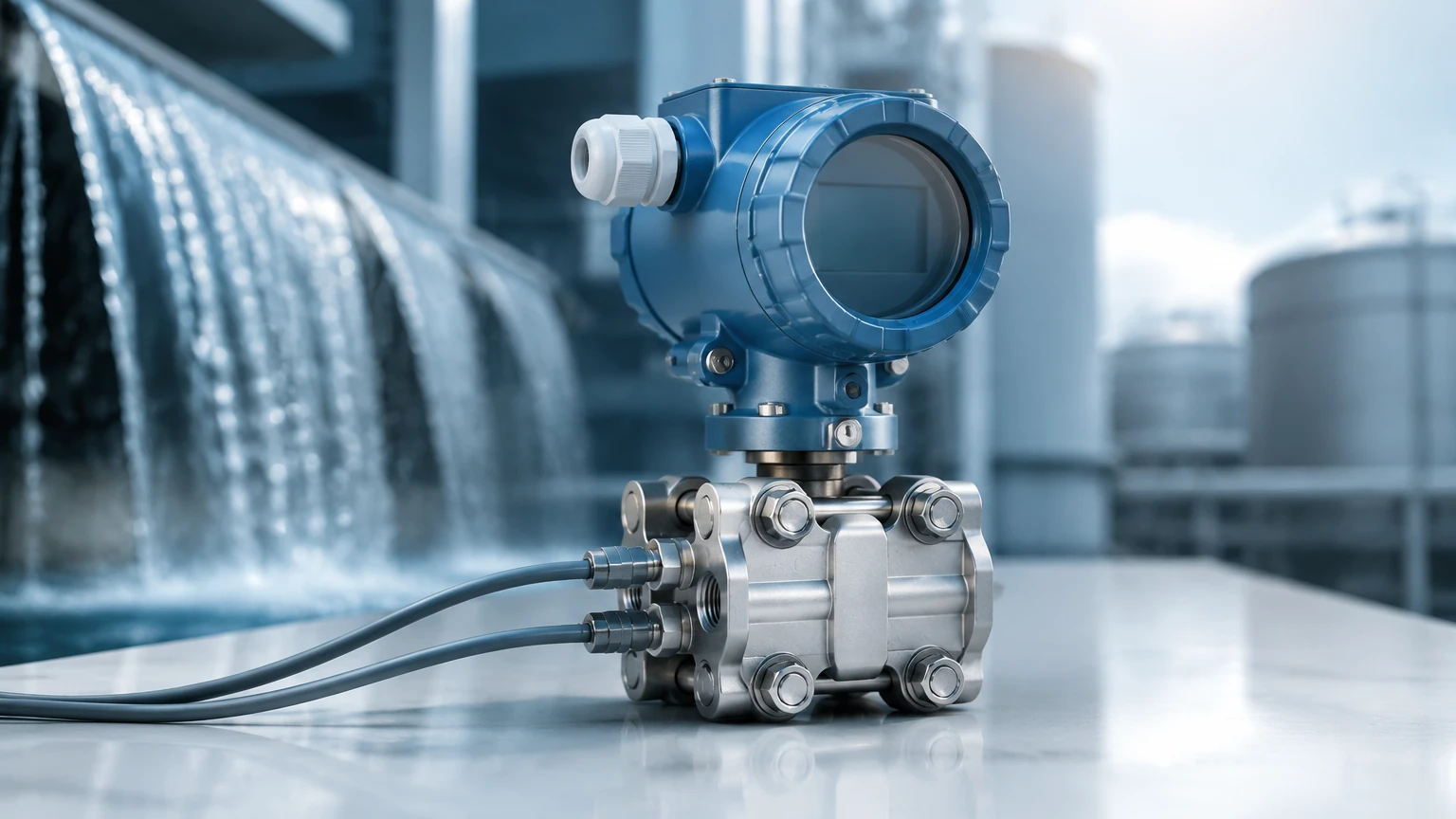
In the landscape of industrial process control, the pressure differential sensor stands as one of the most versatile and widely implemented instruments for level measurement. By calculating the difference in pressure between two distinct points, these sensors provide critical data for monitoring liquid levels in both vented and pressurized vessels. For engineers and plant managers, understanding the nuances of differential pressure (DP) technology is essential for ensuring operational safety, accuracy, and long-term reliability.
As a professional manufacturer of industrial level measurement instruments, Welk provides a comprehensive range of solutions designed to meet the rigorous demands of water treatment, chemical processing, and oil and gas industries. This guide explores the fundamental principles, selection criteria, and installation requirements for pressure differential sensors in modern industrial environments.
Understanding the Measurement Principle
The operation of a pressure differential sensor in level applications is rooted in hydrostatic pressure theory. According to Pascal’s Law, the pressure exerted by a liquid column is directly proportional to its height and density. The basic formula used is:
P = ρ × g × h
Where:
* P is the hydrostatic pressure.
* ρ (rho) is the density of the liquid (kg/m³).
* g is the acceleration due to gravity (approximately 9.81 m/s²).
* h is the height of the liquid column (meters).
Open (Vented) Tanks
In an open tank, the surface of the liquid is exposed to atmospheric pressure. A pressure differential sensor can be used here by connecting the "High Pressure" (HP) side to the bottom of the tank and leaving the "Low Pressure" (LP) side open to the atmosphere. The sensor measures the hydrostatic head of the liquid, which is then converted into a level reading.
Closed (Pressurized) Tanks
In closed systems, the space above the liquid is often filled with pressurized gas or vapors. To measure the level accurately, the sensor must compensate for this internal vessel pressure. The HP side is connected to the bottom of the vessel, while the LP side is connected to the top (the gas space). The sensor subtracts the gas pressure from the total pressure measured at the bottom, leaving only the pressure exerted by the liquid column.
Types of Pressure Differential Sensors for Level Measurement
Depending on the application environment and the nature of the media, different sensor configurations are required. Selecting the right type is crucial for maintaining accuracy and protecting the instrument from corrosive or viscous fluids.
1. Direct Mount Sensors
These sensors are connected directly to the process via impulse piping or small valves. They are ideal for clean, non-corrosive liquids where the risk of clogging is minimal. Direct mount configurations are cost-effective but require careful maintenance of the impulse lines to prevent freezing or sediment buildup.
2. Remote Diaphragm Seal Systems
For hazardous, highly corrosive, or high-temperature media, remote diaphragm seals are used. In this setup, a flexible diaphragm is mounted at the process connection. The pressure is transmitted to the sensor body through a capillary tube filled with a transmission fluid (such as silicone oil). This protects the internal sensing element from the process media.
3. Submersible Pressure Transmitters
While often categorized separately, submersible sensors function on differential pressure principles by comparing the hydrostatic head at the bottom of a tank or well against atmospheric pressure via a vented cable. These are commonly used in water treatment and deep-well monitoring.
Key Selection Criteria for Industrial Applications
Choosing a pressure differential sensor requires a detailed analysis of the process conditions. Failure to account for variables such as static pressure or chemical compatibility can lead to premature sensor failure or inaccurate readings.
Pressure Ranges and Static Pressure
It is vital to distinguish between the "Differential Pressure Range" (the span of the level being measured) and the "Maximum Static Pressure" (the total pressure the vessel can reach). A sensor might measure a differential of only 500 mbar (50 kPa) while operating in a system with a static pressure of 100 bar (10,000 kPa). The sensor must be rated to withstand the full static pressure of the vessel without zero-shift or damage.
Material Compatibility
The wetted parts of the sensor, particularly the diaphragm, must be compatible with the process media. Common materials include:
* 316L Stainless Steel: Standard for water and mild chemicals.
* Hastelloy C: Required for highly corrosive acids and chlorides.
* Tantalum: Used for extremely aggressive chemical environments.
* Monel: Preferred for seawater and hydrofluoric acid applications.
Accuracy and Turndown Ratio
Industrial applications typically require accuracy levels between 0.075% and 0.1% of the span. The turndown ratio—the ratio between the maximum and minimum measurable span—allows a single sensor to be calibrated for different tank heights, providing flexibility in inventory management.
Selection Table: Configuration Comparisons
The following table provides a quick reference for selecting the appropriate sensor configuration based on common industrial scenarios.
| Feature | Direct Mount DP | Remote Diaphragm Seal | Submersible DP |
| :— | :— | :— | :— |
| Primary Use | Clean liquids, pressurized tanks | Corrosive, viscous, or hot media | Open reservoirs, deep wells |
| Maintenance | High (Impulse line cleaning) | Low (Sealed system) | Moderate (Cable protection) |
| Cost | Lower | Higher | Moderate |
| Temperature Limit | Limited by sensor body | High (up to 400°C with seals) | Low (usually < 80°C) |
| Installation | Rigid piping | Capillary routing | Suspended by cable |
For more detailed technical specifications and to explore our full range of industrial instrumentation, visit our Main Page.
Installation Guidelines and Best Practices
The accuracy of a pressure differential sensor is heavily dependent on the quality of the installation. Poorly routed impulse lines or incorrect mounting positions are the most common causes of measurement error.
1. Impulse Line Routing
Impulse lines connect the process to the sensor. To ensure accurate readings:
* Slope: Lines should be sloped at least 1:12 to allow gas bubbles to escape back into the tank (for liquid service) or to allow condensate to drain (for gas service).
* Length: Keep impulse lines as short as possible to reduce response time and minimize the impact of ambient temperature changes.
* Insulation: In cold climates, impulse lines may require heat tracing or insulation to prevent the process fluid from freezing or becoming too viscous.
2. Wet Leg vs. Dry Leg
In closed tanks with condensable vapors, the LP impulse line can fill with liquid over time.
* Dry Leg: Used when the gas in the top of the tank will not condense at ambient temperatures. The LP line remains filled with gas.
* Wet Leg: Used when vapors are likely to condense. The LP line is intentionally filled with a reference liquid (usually the process fluid or a stable oil). This creates a constant head pressure on the LP side that must be accounted for during calibration (Zero Elevation/Suppression).
3. Manifold Valves
A 3-valve or 5-valve manifold should always be installed between the process and the sensor. These manifolds allow the sensor to be isolated, vented, or equalized for zero-point calibration without shutting down the process.
Operational Limitations and Environmental Factors
While highly reliable, pressure differential sensors have specific limitations that engineers must manage:
* Density Variations: Since the sensor measures pressure, any change in the liquid's density (caused by temperature fluctuations or concentration changes) will result in a level error. If density varies significantly, temperature compensation or a multi-parameter controller may be required.
* Sedimentation: In processes with high solids content, sediment can settle in the impulse lines or against the diaphragm, leading to sluggish response or "frozen" readings. Diaphragm seals with flushing rings are recommended in these cases.
* Mechanical Vibration: Excessive vibration in the piping can cause electronic noise or mechanical fatigue in the sensor. Remote mounting using capillaries can isolate the sensor from vibration sources.
Frequently Asked Questions (FAQ)
How often should a pressure differential sensor be calibrated?
In most industrial applications, an annual calibration check is recommended. However, in critical safety loops or highly corrosive environments, semi-annual checks may be necessary. Modern digital sensors with HART or Profibus protocols often feature self-diagnostics that can alert operators to drift.
Can a DP sensor measure the level of a liquid with foam?
Yes. Unlike ultrasonic or radar sensors, which may struggle with signal absorption or reflection on foamy surfaces, a DP sensor measures the actual weight (hydrostatic head) of the liquid. It is generally unaffected by surface foam, making it an excellent choice for fermentation or chemical mixing tanks.
What is "Zero Suppression" and "Zero Elevation"?
* Zero Suppression: Used when the sensor is mounted below the bottom of the tank. The weight of the liquid in the impulse line creates a positive pressure even when the tank is empty. This must be "suppressed" so the sensor reads zero.
* Zero Elevation: Used in wet leg applications where the LP side has a constant liquid head. This creates a negative differential when the tank is empty, which must be "elevated" to zero.
What happens if the capillary tube on a diaphragm seal is kinked?
Kinking or crushing a capillary tube will restrict the flow of the transmission fluid, causing the sensor to become unresponsive or highly inaccurate. Capillaries should be protected in armored conduit and secured to prevent movement.
Conclusion
The pressure differential sensor remains a cornerstone of industrial level measurement due to its robustness and adaptability. By carefully considering the media properties, vessel pressure, and installation geometry, engineers can implement a solution that provides years of accurate service. For organizations seeking to optimize their process monitoring, Welk offers a diverse portfolio of level measurement technologies tailored to specific industrial challenges. To review product options and application support, please visit our Main Page.