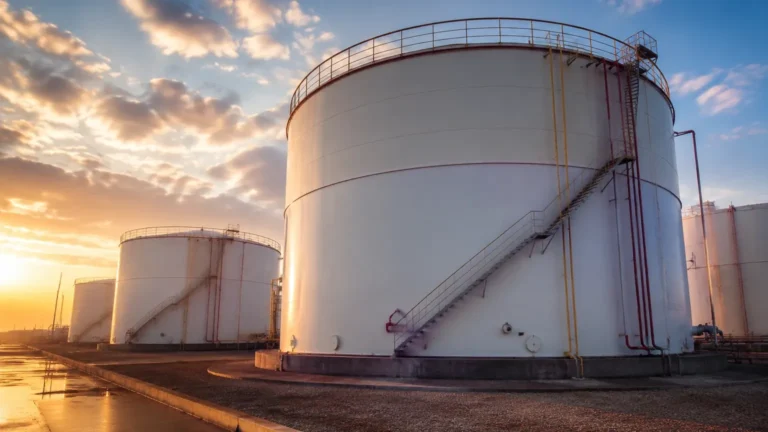
Beverage Quality Control
Beverage Quality Control
In the beverage industry, maintaining consistent product standards is a multi-faceted challenge that spans raw material sourcing, processing, and final packaging. Beverage quality control (QC) ensures that every bottle or can meeting the consumer's hand is safe, flavorful, and compliant with regulatory standards. While chemical analysis and sensory testing are vital, the role of precise process instrumentation—specifically level measurement—is fundamental to operational efficiency and batch consistency. Accurate level monitoring prevents product loss, ensures correct mixing ratios, and maintains the integrity of Clean-in-Place (CIP) cycles, all of which are essential components of a robust quality control framework.
The Role of Level Measurement in Beverage Quality Control
Quality control in beverage production is not limited to the laboratory; it begins on the factory floor. Level measurement instruments provide the real-time data necessary to manage inventory, control blending processes, and monitor waste. When level sensors fail or provide inaccurate readings, the consequences range from minor process inefficiencies to significant quality deviations, such as incorrect ingredient concentrations or microbial contamination due to improper tank cleaning.
For engineers and plant managers, selecting the right level measurement technology is a prerequisite for maintaining high standards. Instruments must not only be accurate but also meet stringent sanitary requirements, such as 3-A Sanitary Standards or EHEDG certification, to ensure that the equipment itself does not become a source of contamination.
Core Measurement Principles for Beverage Applications
Before selecting a specific device, it is essential to understand the physics behind common level measurement technologies used in beverage processing. Each principle has distinct advantages and limitations depending on the physical properties of the liquid, such as viscosity, foam, or carbonation.
1. Non-Contact Radar (Frequency Modulated Continuous Wave – FMCW)
Radar level meters emit high-frequency electromagnetic waves (typically in the 80 GHz range) toward the liquid surface. The instrument measures the frequency shift between the emitted and received signals to calculate the distance.
* Advantages: Since the sensor does not touch the medium, there is no risk of cross-contamination. 80 GHz radar is particularly effective in beverage quality control because its narrow beam angle avoids internal tank obstructions like agitators or spray balls.
* Suitability: Ideal for finished beverages, syrups, and storage tanks where high precision is required.
2. Ultrasonic Level Sensors
Ultrasonic sensors function by emitting sound pulses that reflect off the liquid surface. The time-of-flight (ToF) determines the level.
* Advantages: Cost-effective and easy to install for non-contact measurement.
* Limitations: Sound waves are affected by air temperature, steam, and heavy foam. In beverage production, where CIP processes often involve high-temperature steam, ultrasonic sensors may lose accuracy during cleaning cycles.
3. Hydrostatic Pressure Measurement
This method measures the pressure exerted by the liquid column at the bottom of the tank. Since pressure is proportional to the height of the liquid and its density, the level can be calculated precisely.
* Advantages: Highly reliable for vented tanks and unaffected by foam or surface turbulence.
* Suitability: Frequently used in fermentation tanks and milk storage where surface foam is common.
4. Capacitance Level Switches
Capacitance sensors detect changes in the dielectric constant between the sensor probe and the tank wall. They are primarily used for point-level detection (high/low alarms).
* Advantages: Excellent for detecting the presence of liquids in pipes to prevent pumps from running dry or to signal the end of a batch.
Practical Selection for Beverage Processes
Choosing the correct instrument requires an analysis of the specific beverage type and the stage of production. The following table summarizes common applications and the recommended measurement technologies.
Level Technology Selection Table
| Application | Recommended Technology | Key Reason |
| :— | :— | :— |
| Syrup/Concentrate Storage | 80 GHz Radar | High accuracy for expensive ingredients; non-contact. |
| Fermentation Tanks | Hydrostatic Pressure | Unaffected by the thick foam blankets typical of brewing. |
| Carbonated Soft Drinks | Radar (Non-contact) | Unaffected by CO2 gas layers or pressure changes. |
| Milk/Dairy Silos | Hydrostatic (Sanitary) | Reliable for high-viscosity liquids; easy to clean. |
| Wastewater Treatment | Ultrasonic | Cost-effective for large open basins or sumps. |
| CIP Chemicals | Radar or Ultrasonic | Resistant to corrosive cleaning agents. |
For a comprehensive look at how these technologies integrate into broader industrial automation, you can Review product options and application support to see specific hardware configurations.
Key Evaluation Criteria for Quality Assurance
To ensure beverage quality control is maintained, the following criteria must be evaluated when integrating level sensors into the production line:
Precision and Repeatability
In blending operations, a deviation of even 10 mm (approx. 0.4 inches) in a large tank can result in hundreds of liters of incorrect ingredient ratios. High-frequency radar offers accuracy up to ±1 mm, ensuring that batches remain within the specified flavor and alcohol-by-volume (ABV) profiles.
Sanitary Design and CIP/SIP Compatibility
Beverage equipment must withstand Clean-in-Place (CIP) and Steam-in-Place (SIP) cycles. Sensors must be constructed from 316L stainless steel and feature high-grade seals (such as EPDM or FKM). The process connections must be hygienic (e.g., Tri-Clamp or Varivent) to eliminate "dead zones" where bacteria could grow.
Foam and Turbulence Management
Many beverages, particularly beer and fruit juices, produce foam during filling or agitation. Non-contact radar and hydrostatic sensors are generally preferred over ultrasonic sensors in these environments, as ultrasonic waves can be absorbed or scattered by foam, leading to false "tank empty" readings.

Installation Considerations and Best Practices
Correct installation is as critical as the choice of technology. Even the most advanced sensor will fail to support beverage quality control if it is poorly positioned.
1. Avoid the Filling Stream: Never install a level sensor directly above the inlet pipe. The turbulence and splashing from the incoming liquid will cause erratic readings.
2. Nozzle Height and Diameter: For radar sensors, ensure the nozzle is short enough that the radar beam can clear the bottom edge of the nozzle without interference. A standard 50 mm (2 inch) or 80 mm (3 inch) diameter nozzle is typical.
3. Agitator Interference: If the tank has internal mixers, use radar sensors with a narrow beam angle (e.g., 3° to 6°) to "miss" the blades, or use software-based "false signal suppression" to ignore the agitator's reflection.
4. Mounting Position: Sensors should generally be mounted at 1/6th to 1/4th of the tank diameter from the wall to ensure the best signal return while avoiding wall reflections.
Common Risks in Beverage Level Measurement
Ignoring the specific environmental factors of a beverage plant can lead to several risks:
* Condensation: In cold-fill applications, condensation often forms on the sensor face. Modern radar sensors use PTFE or PEEK lenses that are convex or "drip-off" shaped to prevent water droplets from blocking the signal.
* Temperature Shocks: Rapid transitions from 5°C (41°F) product to 85°C (185°F) CIP solution can cause thermal drift in some sensors. Choosing instruments with built-in temperature compensation is vital for maintaining calibration.
* Build-up: Sugary syrups can leave a sticky residue on probes. Non-contact sensors are the primary defense against this, as they do not provide a surface for build-up to occur within the medium.
Frequently Asked Questions (FAQ)
Q: Can one sensor type be used for all beverage applications?
A: While 80 GHz radar is highly versatile, it may be over-engineered for simple water storage, where ultrasonic sensors are more economical. Conversely, hydrostatic sensors remain the gold standard for tanks with heavy, persistent foam.
Q: How often do level sensors need recalibration in a beverage plant?
A: Most modern digital sensors are designed for long-term stability. However, for beverage quality control, an annual verification or calibration check is recommended, especially for instruments involved in fiscal measurement or critical blending.
Q: Do radar waves affect the quality or taste of the beverage?
A: No. Radar level meters use low-power micro-pulses that have no thermal or chemical effect on the product.
Q: What is the "dead zone" in level measurement?
A: The dead zone (or blocking distance) is the area immediately below the sensor where it cannot take a measurement. For example, if a sensor has a 100 mm dead zone, the tank can only be accurately measured up to 100 mm from the sensor face. This must be accounted for during tank design to prevent overfilling.
Conclusion
Effective beverage quality control relies on the precision of the data coming from the factory floor. By understanding the principles of radar, ultrasonic, and hydrostatic measurement, and by selecting instruments that meet sanitary standards and process conditions, manufacturers can ensure product consistency and minimize waste. For engineers looking to optimize their production lines, the next step involves a detailed audit of current tank configurations and a review of available high-precision instrumentation.
Reliable measurement is the foundation of a predictable process. For more information on technical specifications and selecting the right hardware for your facility, visit the Main Page to explore professional-grade level measurement solutions tailored for industrial automation.