Bluetooth Sensor
Bluetooth Sensor
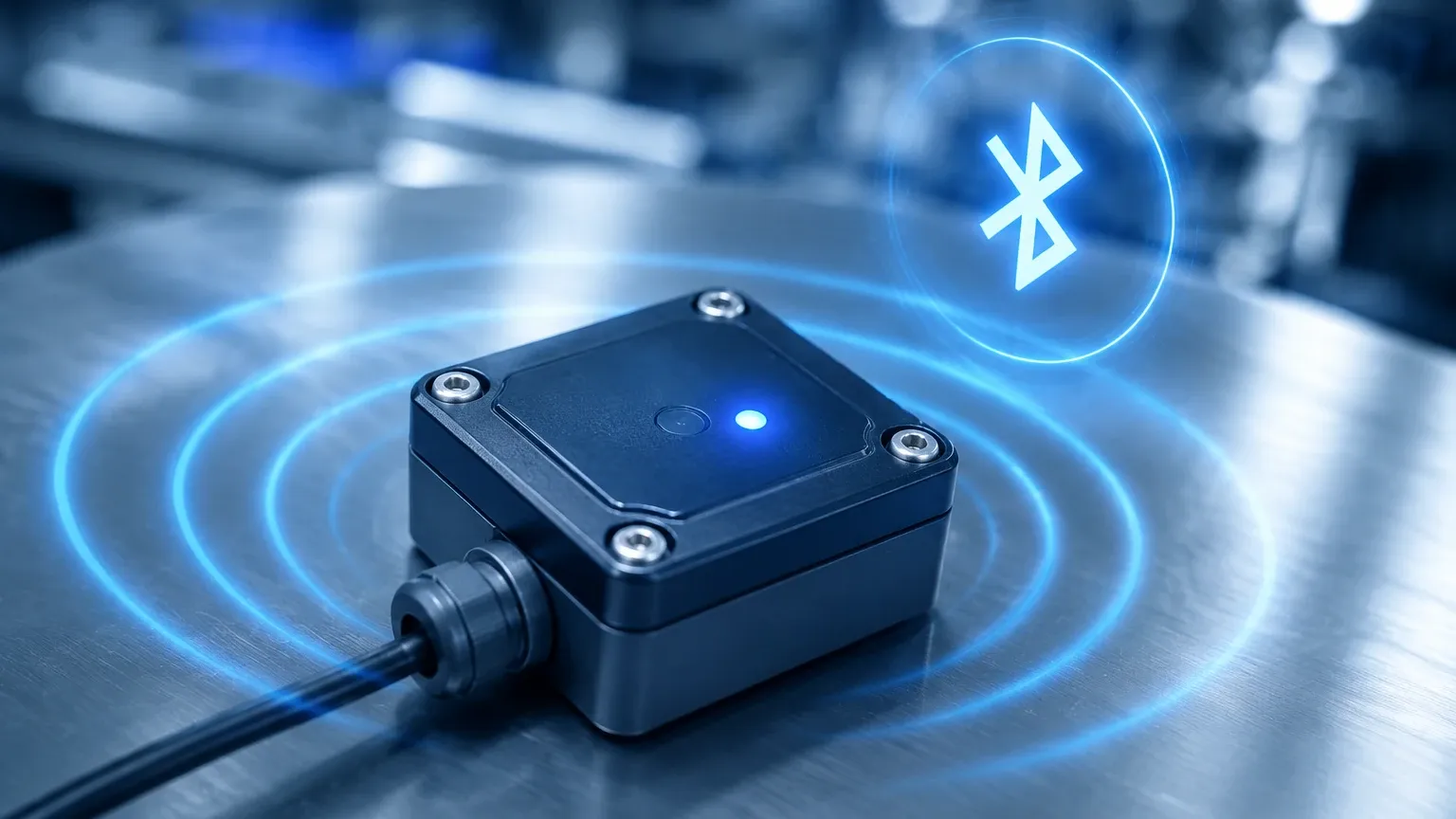
In the evolving landscape of industrial automation, the integration of wireless communication into field instrumentation has revolutionized how engineers interact with process data. A Bluetooth sensor in the context of level measurement is no longer a novelty but a strategic tool for enhancing safety, reducing commissioning time, and simplifying maintenance in complex environments. By combining traditional sensing technologies—such as radar, ultrasonic, or hydrostatic pressure—with Bluetooth Low Energy (BLE) modules, manufacturers like Welk provide a bridge between physical process variables and digital diagnostic tools.
This guide explores the technical principles, selection criteria, and practical implementation of Bluetooth-enabled level sensors within industrial frameworks, focusing on their role in modernizing liquid and solid level monitoring.
Core Measurement Principles and Bluetooth Integration
To understand the value of a Bluetooth sensor, one must first understand the underlying measurement physics it supports. Bluetooth is not the sensing mechanism itself; rather, it is the communication layer that transmits data derived from various physical principles.
1. Radar Level Measurement (ToF)
Radar sensors utilize the Time-of-Flight (ToF) principle. The device emits high-frequency microwave pulses (typically in the 26GHz or 80GHz range). These pulses reflect off the surface of the medium and return to the sensor antenna. The distance is calculated based on the time interval between emission and reception. When a Bluetooth module is integrated, the complex echo curves generated by the radar can be visualized in real-time on a smartphone or tablet, allowing for precise "false echo suppression" without needing a physical connection to a laptop.
2. Ultrasonic Level Measurement
Ultrasonic sensors function similarly to radar but use sound waves instead of electromagnetic waves. A transducer emits an ultrasonic pulse that bounces off the target surface. The sensor measures the time taken for the echo to return. Because ultrasonic speed is affected by air temperature, these sensors include integrated temperature compensation. A Bluetooth sensor interface allows the user to input specific tank geometries and environmental offsets directly from the factory floor, ensuring the calculated volume is accurate.
3. Hydrostatic Pressure Sensing
Hydrostatic transmitters measure the pressure exerted by a liquid column at a specific depth. This pressure is directly proportional to the height of the liquid and its density. In these systems, Bluetooth is often housed within the transmitter head or a separate display unit. This is particularly useful for submersible sensors where the sensing element is deep within a tank or well, but the configuration must be managed at the surface.
Key Advantages in Industrial Environments
The transition to Bluetooth-enabled instrumentation offers several tangible benefits for B2B operations, particularly in the chemical, water treatment, and oil and gas sectors.
Enhanced Personnel Safety
One of the primary drivers for adopting Bluetooth technology is safety. Traditionally, configuring a sensor mounted on top of a 10-meter tall silo or a hazardous chemical tank required technicians to climb ladders and open housing covers to access local display buttons or plug in HART modems. With a Bluetooth sensor, the technician can remain on the ground, up to 15 or 20 meters away from the vessel, and perform all necessary calibrations via a secure mobile application.
Simplified Commissioning and Maintenance
Commissioning multiple sensors across a large facility can be time-consuming. Bluetooth allows for rapid parameter duplication. Once one sensor is configured for a specific tank geometry, those settings can often be saved as a template and uploaded to other identical units. Furthermore, diagnostic data—such as signal strength, battery status, and error logs—are instantly accessible, facilitating predictive maintenance strategies.
Cost-Efficiency
By eliminating the need for specialized handheld communicators or expensive proprietary display units for every sensor, companies can reduce their capital expenditure. Most personnel already carry a compatible device (smartphone or tablet), which serves as a high-resolution interface for the instrument.
Selection Criteria for Bluetooth-Enabled Level Meters
Selecting the right Bluetooth sensor requires a balance between the sensing technology and the communication requirements. When evaluating options on the Welk Main Page, consider the following technical factors:
| Feature | Ultrasonic Bluetooth Sensor | Radar Bluetooth Sensor | Hydrostatic Bluetooth Sensor |
| :— | :— | :— | :— |
| Measurement Range | 0.25m to 15m | 0.1m to 30m (standard) | 0m to 200m (H2O) |
| Accuracy | ±0.2% of full scale | ±2mm to ±5mm | ±0.1% to ±0.5% FS |
| Process Temperature | -40°C to +80°C | -40°C to +200°C+ | -20°C to +80°C |
| Media Suitability | Standard liquids/solids | Corrosive, foam, dust | Clean or waste liquids |
| Bluetooth Version | BLE 4.2 / 5.0 | BLE 4.2 / 5.0 | BLE 4.0+ |
| Typical Range | 10m – 15m | 15m – 25m | 10m (at transmitter) |
Environmental and Housing Considerations
Industrial sensors must withstand harsh conditions. Ensure the sensor carries the appropriate Ingress Protection (IP) rating, such as IP66 or IP67, for outdoor or wash-down environments. If the application involves explosive atmospheres, the Bluetooth module must be part of an intrinsically safe (Ex i) or flameproof (Ex d) certified assembly.
Installation and Commissioning Guidelines
Successful deployment of a Bluetooth sensor depends on both the physical installation of the sensing element and the optimization of the wireless signal.
1. Sensing Path Obstructions: For radar and ultrasonic sensors, the "beam angle" is critical. Ensure there are no internal tank structures (ladders, agitators, or pipes) within the signal path. Bluetooth allows you to view the echo curve during installation to confirm a clear line of sight to the product surface.
2. Bluetooth Signal Range: While BLE is robust, it operates on the 2.4 GHz frequency, which can be attenuated by thick concrete walls or dense metal structures. Install the sensor such that the housing (where the antenna is located) is not completely shielded by metal enclosures if remote monitoring is required from outside a room.
3. Power Supply: Most industrial Bluetooth sensors are 2-wire loop-powered (4-20mA) or battery-powered. Ensure the power supply is stable, as the Bluetooth radio draws a small amount of additional current during active communication sessions.
4. Security Protocols: Always change the default PIN or password during the first connection. Modern industrial Bluetooth sensors utilize encrypted communication to prevent unauthorized access to process parameters.
Technical Limitations and Security
While highly effective, Bluetooth sensors are not a universal replacement for wired digital protocols like Profibus or Foundation Fieldbus in all applications.
* Distance Constraints: Bluetooth is designed for short-range communication. If data needs to be transmitted over kilometers, a LoRaWAN or cellular (NB-IoT) solution is more appropriate.
* Data Throughput: Bluetooth is excellent for configuration and periodic monitoring but may not be suitable for high-speed control loops requiring millisecond-level latency across the wireless link.
* Cybersecurity: Although BLE 5.0 offers strong encryption, the "human factor" remains a risk. Strict administrative controls over who has access to the sensor's mobile app are necessary to maintain site integrity.
Frequently Asked Questions (FAQ)
Q: Does the Bluetooth signal interfere with other wireless networks like Wi-Fi?
A: Bluetooth uses Adaptive Frequency Hopping (AFH) to minimize interference. It identifies "bad" channels (those being used by Wi-Fi) and excludes them from its hopping sequence, allowing both to coexist in the same industrial space.
Q: Can I leave the Bluetooth connection active 24/7?
A: For loop-powered sensors, the Bluetooth module can remain active, though many manufacturers include a timeout feature to enhance security. For battery-powered units, it is recommended to set the Bluetooth to "wake on touch" or use a timer to preserve battery life.
Q: What happens if the Bluetooth module fails? Will the sensor still output a 4-20mA signal?
A: Yes. In professional designs, the sensing logic and the communication logic are isolated. A failure in the Bluetooth radio will not typically affect the primary analog output or the physical measurement capability of the device.
Q: Is a special app required for every sensor?
A: Most manufacturers provide a dedicated app that supports their entire range of Bluetooth-enabled instruments. These apps are generally available for both Android and iOS platforms.
Conclusion
The integration of Bluetooth technology into industrial level meters represents a significant step toward more accessible and safer process automation. By allowing engineers to interact with complex measurement data from a distance, the Bluetooth sensor reduces the risks associated with manual tank gauging and high-altitude maintenance. Whether utilizing radar for precision or hydrostatic sensors for depth, the addition of a wireless interface ensures that critical data is always within reach.
For technical specifications and to explore the full range of wireless measurement solutions, engineers are encouraged to review product options and application support on the Welk Main Page. Selecting the right instrument today ensures a more resilient and manageable process environment for the future.