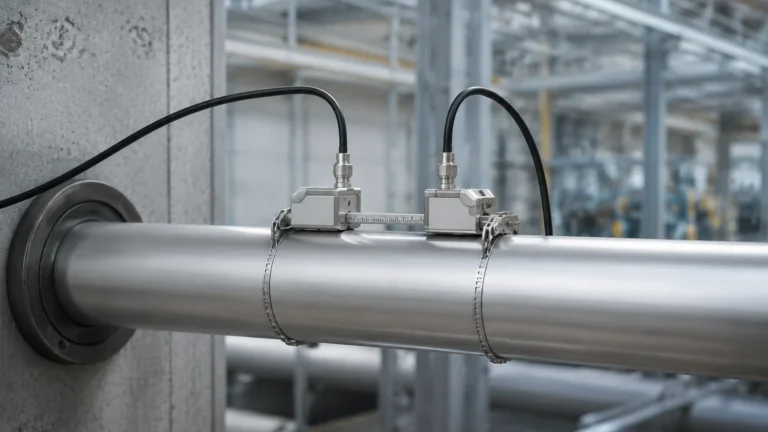
Bluetooth Tank Level Sensor
Bluetooth Tank Level Sensor
In the landscape of industrial automation and inventory management, the requirement for real-time data has shifted from a luxury to an operational necessity. The Bluetooth tank level sensor represents a significant evolution in localized monitoring, providing engineers and facility managers with a non-contact, wireless method to track liquid and solid levels without the extensive infrastructure costs associated with traditional wired systems. By leveraging Bluetooth Low Energy (BLE) technology, these instruments allow for seamless data acquisition via smartphones, tablets, or industrial gateways, bridging the gap between manual inspections and complex SCADA integration.
Core Measurement Principles for Bluetooth Sensors
Before selecting a bluetooth tank level sensor, it is essential to understand the underlying physics that govern how these devices determine the distance to a material surface. While the communication protocol is Bluetooth, the measurement itself typically relies on one of two primary technologies: Ultrasonic or Radar (Radio Detection and Ranging).
Ultrasonic Measurement Principle
Ultrasonic sensors function by emitting high-frequency sound pulses (typically between 40 kHz and 200 kHz) from a transducer. These sound waves travel through the air, bounce off the surface of the medium, and return to the sensor. The device measures the "Time of Flight" (ToF)—the duration between the emission of the pulse and the reception of the echo.
Since the speed of sound in air is approximately 343 meters per second (at 20°C), the distance (D) can be calculated using the formula:
D = (Speed of Sound × Time) / 2
Because the speed of sound is affected by air temperature, professional-grade ultrasonic sensors include integrated temperature compensation to maintain accuracy. However, ultrasonic technology is sensitive to heavy vapors, foam, and extreme turbulence, which can scatter or absorb the sound waves.
Radar (Microwave) Measurement Principle
Radar-based bluetooth tank level sensors, particularly those operating at high frequencies like 80 GHz, utilize electromagnetic waves rather than sound. These waves travel at the speed of light and are largely unaffected by air temperature, pressure, or the presence of vapors and dust.
Modern radar sensors often use Frequency Modulated Continuous Wave (FMCW) technology. Instead of sending a single pulse, the sensor transmits a continuous signal with a constantly changing frequency. The difference in frequency between the transmitted signal and the reflected signal is proportional to the distance. This allows for extremely high precision (often within ±2 mm) and the ability to filter out "false echoes" caused by internal tank structures like agitators or ladders.
Key Advantages in Industrial B2B Applications
The adoption of Bluetooth-enabled sensors in B2B environments is driven by several practical factors that impact the total cost of ownership (TCO) and operational safety.
1. Simplified Commissioning: Traditional level transmitters require physical access to the sensor head for calibration via buttons or a small LCD. With a bluetooth tank level sensor, technicians can configure parameters—such as tank height, zero point, and span—from a safe distance (up to 20 or 50 meters) using a mobile application. This is particularly valuable for sensors mounted on high silos or in hazardous areas.
2. Reduced Infrastructure Costs: Wiring is often the most expensive component of an instrument installation, especially in brownfield sites where cable trays are full or distances to the control room are vast. Bluetooth sensors eliminate the need for signal cabling for local monitoring, though they may still require power unless battery-operated.
3. Enhanced Safety: By allowing remote data retrieval, personnel are less frequently required to climb tanks or enter confined spaces to take manual readings. This directly supports workplace safety initiatives and reduces the risk of falls or exposure to fumes.
4. Local Data Logging: Many Bluetooth sensors include internal memory to log level trends. Users can download this historical data directly to a mobile device for analysis without needing a centralized server.
Technical Selection Criteria and Comparison
Choosing the right sensor requires an evaluation of the chemical properties of the medium, the physical dimensions of the tank, and the environmental conditions. The following table provides a comparison of common technologies used in Bluetooth-integrated level measurement.
Selection Table: Bluetooth Level Measurement Technologies
| Feature | Ultrasonic Bluetooth | Radar (80 GHz) Bluetooth | Hydrostatic (via BT Gateway) |
| :— | :— | :— | :— |
| Typical Accuracy | ±0.25% of range | ±2 mm (0.08 in) | ±0.1% to ±0.5% of span |
| Maximum Range | Up to 10–15 meters | Up to 30–120 meters | Depth dependent (up to 200m) |
| Media Compatibility | Water, wastewater, oils | Chemicals, solids, corrosive liquids | Clean liquids, fuel, water |
| Effect of Vapor/Dust | High interference | Negligible | None (submerged) |
| Power Source | Battery or 24V DC | 24V DC (Loop-powered) | Battery or 24V DC |
| Installation | Top-mounted, non-contact | Top-mounted, non-contact | Bottom-mounted or submerged |
When evaluating options, it is recommended to Review product options and application support to ensure the selected hardware meets the specific dielectric constant requirements of the material being measured.
Installation Guidelines and Best Practices
Correct installation is critical to the performance of any level sensor. Even the most advanced radar or ultrasonic unit will provide inaccurate data if the signal path is compromised.
1. Positioning and Orientation
The sensor should be mounted in a position where the signal beam has a clear, unobstructed path to the liquid surface. For ultrasonic sensors, the beam angle is typically wider (around 10° to 12°), meaning it must be placed further away from the tank wall to avoid side-wall interference. High-frequency radar sensors have much narrower beam angles (3° to 4°), allowing for installation in tighter spaces or closer to walls.
2. The "Dead Zone" (Blocking Distance)
Every non-contact sensor has a "dead zone" immediately below the transducer face where measurements cannot be taken. For ultrasonic sensors, this is usually 0.2m to 0.5m. For radar, it is much smaller, often only a few centimeters. Ensure the maximum expected liquid level does not enter this zone, or the sensor will report an error or a fixed "full" reading.
3. Avoiding Obstructions
Internal structures such as heating coils, reinforcement struts, or agitator blades can create false reflections. While modern software can "map out" these static echoes, it is best practice to install the sensor in a location where these obstructions are minimized. If an agitator is present, the sensor should be mounted in a position where the beam does not hit the blades, or the software must be configured to ignore the periodic interference.
4. Mounting Nozzles
If the sensor is mounted on a nozzle (standpipe), the diameter and height of the nozzle must be considered. If the nozzle is too long or too narrow, the signal may bounce off the internal walls of the pipe before reaching the tank. Radar sensors are generally more forgiving of nozzle mounting than ultrasonic sensors.
Limitations and Operational Constraints
While the bluetooth tank level sensor offers significant flexibility, there are factual boundaries to its application that must be respected:
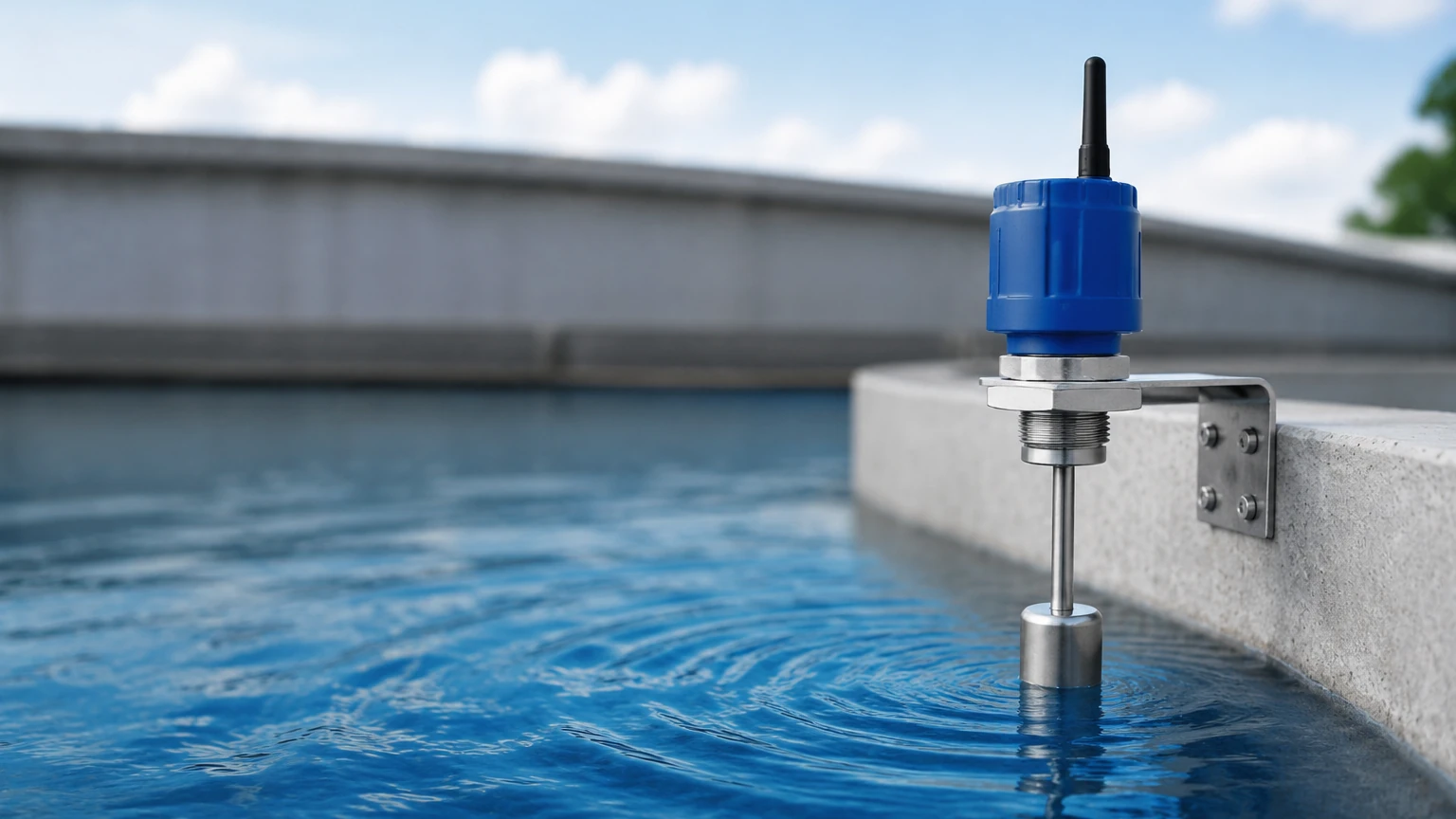
* Signal Range: Bluetooth signals are typically limited to 10–50 meters in open air. In industrial environments with heavy metal shielding (such as inside a thick steel building or between dense rows of tanks), this range may be significantly reduced.
* Security Protocols: In B2B environments, data security is paramount. Ensure the sensor utilizes encrypted Bluetooth communication and requires a secure PIN or password for configuration to prevent unauthorized access to process data.
* Hazardous Areas: If the tank contains flammable liquids (e.g., fuels, solvents), the sensor must be certified for use in explosive atmospheres (ATEX, IECEx, or Class/Division ratings). The Bluetooth radio must be part of the intrinsically safe design.
* Power Management: Battery-powered Bluetooth sensors are convenient but require a trade-off between measurement frequency and battery life. For high-frequency reporting (e.g., every minute), a hard-wired power supply is usually preferred.
Maintenance and Troubleshooting FAQ
Q: How often does a Bluetooth level sensor need recalibration?
A: Under stable conditions, non-contact sensors like radar do not drift and rarely require recalibration. However, ultrasonic sensors may need periodic checks if the air composition changes significantly or if there is heavy buildup on the transducer face.
Q: Can I monitor multiple tanks from one mobile device?
A: Yes, most professional apps allow for the management of multiple sensors. Each sensor is identified by a unique ID or name, and the user can toggle between them within the Bluetooth range.
Q: What happens if the Bluetooth signal is lost?
A: The sensor continues to measure locally. If the device is part of a larger network via a Bluetooth-to-Cellular or Bluetooth-to-Ethernet gateway, the data will be buffered or transmitted once the connection is restored. For critical control loops, a wired 4-20mA or Modbus connection is still recommended as the primary signal path.
Q: Does foam on the liquid surface affect the reading?
A: Foam is a challenge for both technologies but affects them differently. Ultrasonic waves are often absorbed by foam, leading to a loss of signal. Radar waves can sometimes penetrate light foam to reach the liquid below, but thick, dense foam may be detected as the surface level. In high-foam applications, specialized radar frequencies or stilling wells are required.
Conclusion
The integration of Bluetooth technology into industrial level measurement has streamlined the way facilities manage their inventory and monitor process vessels. By understanding the differences between ultrasonic and radar principles and adhering to strict installation guidelines, B2B users can implement a reliable, cost-effective solution for local tank monitoring. For complex applications involving high pressures, extreme temperatures, or specialized chemical compatibility, it is always advisable to consult with a professional manufacturer to verify the suitability of the instrument for the intended environment. For further technical specifications and to explore a full range of industrial measurement solutions, visit the Main Page of our product catalog.