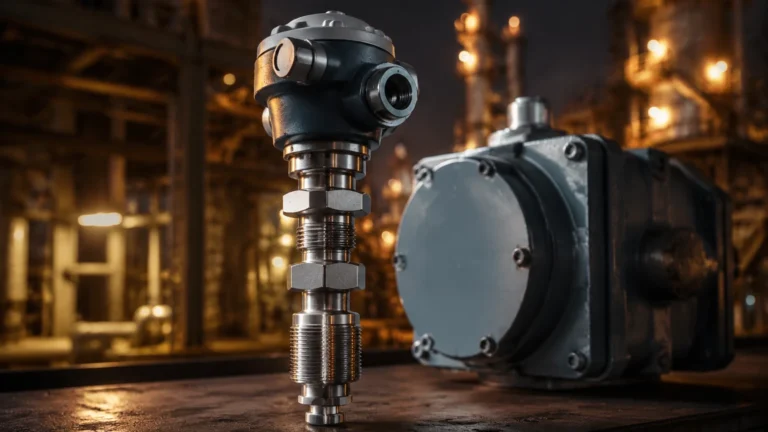
Capacitive Level Probes
Capacitive Level Probes
In the landscape of industrial automation, capacitive level probes represent one of the most versatile and durable technologies for monitoring the presence or volume of liquids and solids. Unlike mechanical systems that rely on moving parts, capacitive sensors utilize electrical field variations to determine level, making them ideal for high-pressure, corrosive, or high-temperature environments. For engineers and procurement specialists evaluating instrumentation, understanding the underlying physics and application boundaries is essential for ensuring long-term reliability.
As a professional manufacturer of industrial level measurement instruments, Welk provides a comprehensive range of solutions, including radar level meters and ultrasonic sensors. However, capacitive level probes remain a cornerstone for applications where cost-effectiveness must meet high-performance standards in challenging process conditions. This guide provides a technical overview of how these probes function, how to select them, and the critical factors to consider during installation.
Measurement Principles of Capacitance
The operation of capacitive level probes is based on the principle of a capacitor. In a basic electrical circuit, a capacitor consists of two conductive plates separated by an insulating material known as a dielectric. The ability of this setup to store an electrical charge is defined as capacitance ($C$).
In an industrial tank, the probe (electrode) acts as one plate of the capacitor, and the vessel wall (if metallic) acts as the second plate. If the tank is non-metallic, a second reference electrode or a ground rod must be used. The material being measured—whether it is water, oil, or a dry solid—acts as the dielectric medium between these two "plates."
The Dielectric Constant ($ε$)
The fundamental equation for capacitance is:
$$C = ε · (A / d)$$
Where:
* $C$ is the capacitance.
* $ε$ (Epsilon) is the dielectric constant of the material between the plates.
* $A$ is the surface area of the plates.
* $d$ is the distance between the plates.
In a level measurement application, the area ($A$) and distance ($d$) remain constant. Therefore, the capacitance is directly proportional to the dielectric constant ($ε$) of the material in the tank. Air has a dielectric constant of approximately 1.0. Most process materials have a significantly higher $ε$. For example, water has a dielectric constant of approximately 80, while oils typically range from 1.8 to 5. As the level of the material rises, it displaces the air, changing the total capacitance measured by the probe. The electronics in the probe head convert this change into a switching signal (for point level) or a 4-20mA analog signal (for continuous level).
Types of Capacitive Level Probes
Capacitive technology is categorized into two primary functional types based on the output required by the control system.
1. Point Level Switches
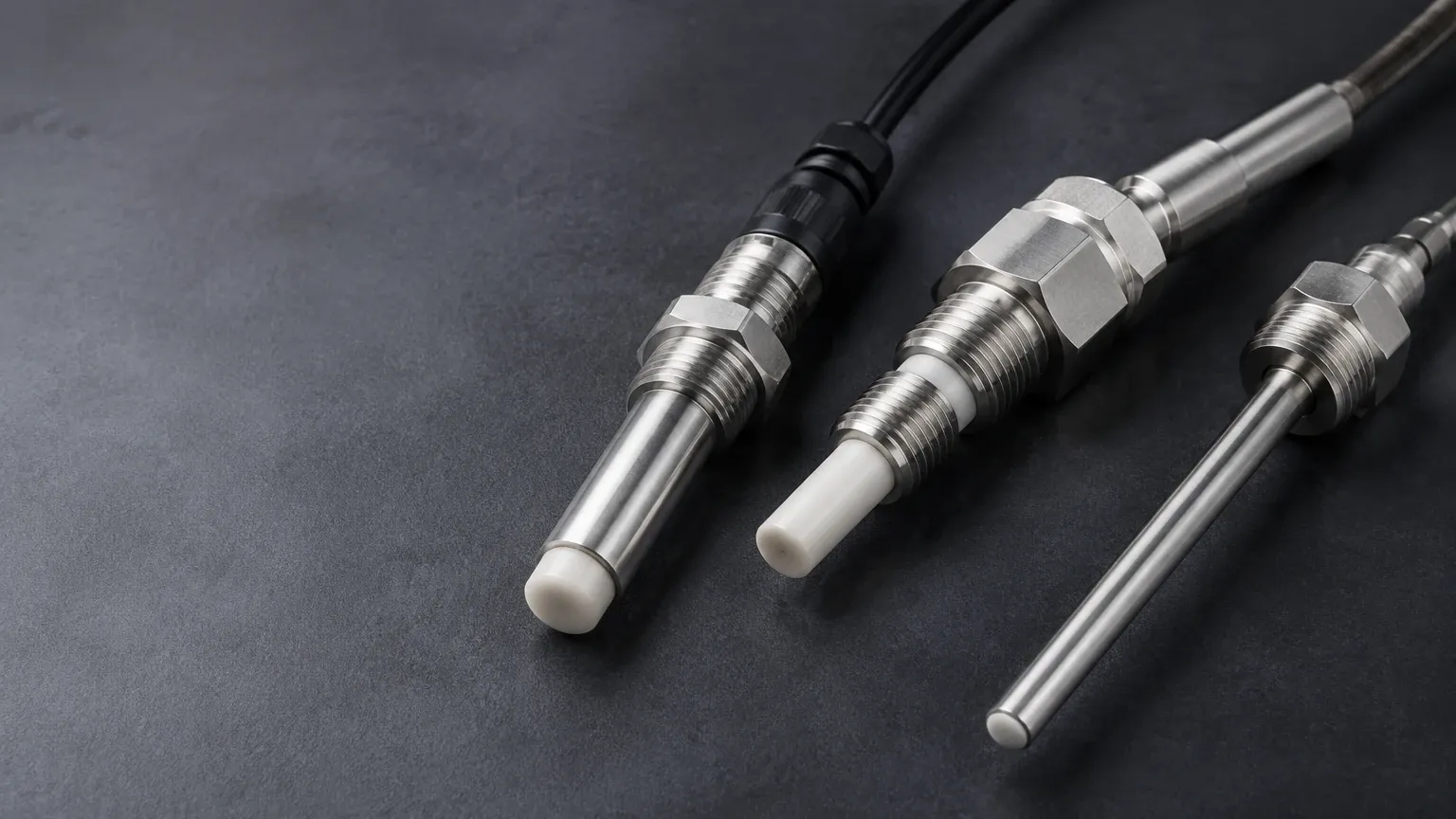
These probes are used to detect a specific level, such as high-level alarms to prevent overfills or low-level alarms to protect pumps from running dry. They are often preferred over float switches because they have no moving parts that can jam or corrode. Many modern capacitive switches feature "active shield" technology, which allows the sensor to ignore material buildup or coating on the probe, a common issue in viscous or sticky applications.
2. Continuous Level Transmitters
Continuous capacitive level probes provide a real-time measurement of the level throughout the height of the tank. They are typically rod-shaped for shorter tanks (up to 3m / 10ft) or cable-based for deep silos and large storage tanks (up to 30m / 100ft). These transmitters require calibration at two points—usually the empty and full states—to map the capacitance range to the desired output signal.
Key Evaluation Criteria for Selection
Selecting the right capacitive probe requires a detailed analysis of the process media and the vessel environment. Engineers should consult the Main Page of the manufacturer's technical documentation to verify compatibility with specific chemical compositions.
Dielectric Constant and Conductivity
The dielectric constant of the medium is the most critical factor. If the material has a low $ε$ (less than 2.0), the change in capacitance may be too small for standard probes to detect accurately. Furthermore, if the liquid is conductive (like water-based acids or alkalis), the probe must be fully insulated with a material like PTFE (Teflon) or PFA to prevent a short circuit between the electrode and the liquid.
Tank Geometry and Material
* Metallic Tanks: The tank wall serves as the ground reference. This is the simplest installation.
* Non-Metallic Tanks (Plastic/Fiberglass): Because the wall is not conductive, a double-electrode probe or a separate ground strap/rod must be installed to complete the capacitive circuit.
* Internal Obstructions: Agitators, heating coils, or ladders can interfere with the electrical field. Probes should be installed at a distance from these structures to avoid false readings.
Temperature and Pressure
Capacitive probes are robust. Standard models can often handle temperatures from -40°C to 200°C (-40°F to 392°F) and pressures up to 40 Bar (580 PSI). Specialized ceramic-insulated probes are available for even more extreme conditions, such as power plant fly ash or high-pressure steam drums.
Practical Selection Table
| Application Type | Material State | Recommended Probe Type | Key Benefit |
| :— | :— | :— | :— |
| Water Treatment | Conductive Liquid | PTFE Insulated Rod | Corrosion resistance; high sensitivity. |
| Oil Storage | Non-conductive Liquid | Bare Metal Rod/Cable | Cost-effective; high accuracy for low $ε$. |
| Grain Silos | Dry Bulk Solid | Heavy-duty Cable Probe | High tensile strength to withstand pull forces. |
| Chemical Mixing | Corrosive/Viscous | RF Admittance Probe | Ignores coating and buildup on the sensor. |
| Small Vessels | Liquid/Solid | Compact Integrated Switch | Space-saving; easy integration with PLCs. |
Installation and Engineering Considerations
Correct installation is paramount to the accuracy of capacitive level probes. Failure to follow engineering best practices often leads to signal instability or premature failure.
1. Grounding: Ensure a low-resistance electrical connection between the probe housing and the metallic tank. If using a flange mount, the flange must be metal-to-metal with the tank nozzle. If the tank is lined with plastic, a ground reference must be provided.
2. Mounting Position: Probes should be mounted vertically from the top of the tank whenever possible. Side-mounting is acceptable for point level switches, but the probe should be angled slightly downward to allow liquid to drain off, preventing false "high" signals due to droplets.
3. The "Dead Zone": Every probe has a small inactive area near the mounting thread where it cannot measure level. This must be accounted for in the tank's working volume calculations.
4. Cable Probes in Solids: When using cable probes in silos containing grains or powders, the downward "pull" force on the cable during discharge can be several tons. The roof of the silo must be structurally reinforced to handle this load.
Limitations and Risks
While highly versatile, capacitive level probes are not a "one-size-fits-all" solution. Practitioners should be aware of the following risks:
* Changing Dielectric Constants: If the tank is used for different materials with varying $ε$ values (e.g., switching from an oil-based product to a water-based one), the probe will require recalibration. In such cases, a radar level meter might be a more stable choice as it is less dependent on $ε$.
* Moisture Content in Solids: In bulk solids, a change in moisture content significantly alters the dielectric constant. A capacitive probe measuring dry sand will give a different reading if the sand becomes damp.
* Heavy Buildup: While RF admittance technology mitigates this, extreme bridging (where material connects the probe to the tank wall) can still cause false triggers.
Frequently Asked Questions (FAQ)
Q: Can capacitive probes be used in plastic tanks?
A: Yes, but they require a reference electrode. This can be a dual-rod probe or a single probe installed alongside a grounded metal pipe or rod.
Q: How does foam affect the measurement?
A: This depends on the foam's density and conductivity. Generally, capacitive probes are sensitive to foam. If the foam is conductive, the probe may read it as the liquid level. If foam suppression is required, ultrasonic or radar sensors with advanced logic may be preferred.
Q: Is calibration difficult?
A: Most modern probes from manufacturers like Welk feature push-button calibration or digital interfaces (HART/Modbus). You typically only need to set the "Empty" point (0%) and "Full" point (100%).
Q: What is the difference between Capacitance and RF Admittance?
A: RF Admittance is an advanced form of capacitance measurement that uses a high-frequency signal and an extra "shield" element. It is specifically designed to ignore the effects of material coating or buildup on the probe.
Conclusion
Capacitive level probes offer a reliable, no-moving-parts solution for a vast array of industrial level sensing needs. By understanding the dielectric properties of the process media and ensuring rigorous installation standards, facilities can achieve precise control over their inventory and processes. For those requiring technical specifications or customized OEM/ODM services, reviewing the full catalog of measurement technologies on the Main Page is the recommended next step for project planning.