Instrument Used to Measure Hydrogen Ion Activity in Solutions
Instrument Used to Measure Hydrogen Ion Activity in Solutions
In industrial process control and laboratory analysis, the concentration of hydrogen ions is a fundamental parameter that dictates chemical reactivity, biological activity, and material compatibility. The specific instrument used to measure hydrogen ion activity in solutions is the pH meter. While often discussed in terms of concentration, pH is technically a measurement of the "activity" of hydrogen ions, which accounts for the effective concentration in real-world, non-ideal solutions.
For engineers and plant operators, selecting the correct pH instrumentation is as critical as choosing the right Main Page level measurement tools. Accurate pH monitoring ensures product quality, protects expensive infrastructure from corrosion, and ensures compliance with environmental discharge regulations. This guide provides a technical overview of pH measurement principles, hardware selection, and industrial application best practices.
Understanding the Principle of pH Measurement
The term pH is derived from "potenz Hydrogen," representing the negative logarithm of hydrogen ion activity. The scale typically ranges from 0 to 14, where 7 is neutral. Values below 7 indicate acidity (high hydrogen ion activity), and values above 7 indicate alkalinity.
The Nernst Equation
Most modern instruments operate on the electrochemical principle defined by the Nernst Equation. This equation describes the relationship between the electrical potential of an electrode and the activity of the ions in the solution:
$$E = E_0 – \frac{2.303RT}{nF} \log(a_{H+})$$
Where:
* E: Total potential (measured in millivolts).
* E0: Standard potential of the electrode.
* R: Gas constant.
* T: Absolute temperature in Kelvin.
* n: Charge of the ion (for H+, n=1).
* F: Faraday constant.
* aH+: Activity of the hydrogen ion.
In practical terms, a pH sensor generates a voltage (mV) proportional to the hydrogen ion activity. At 25°C (77°F), a change of one pH unit corresponds to a change of approximately 59.16 mV.
The Electrode System
A complete pH measurement system requires two primary elements: a measuring electrode and a reference electrode.
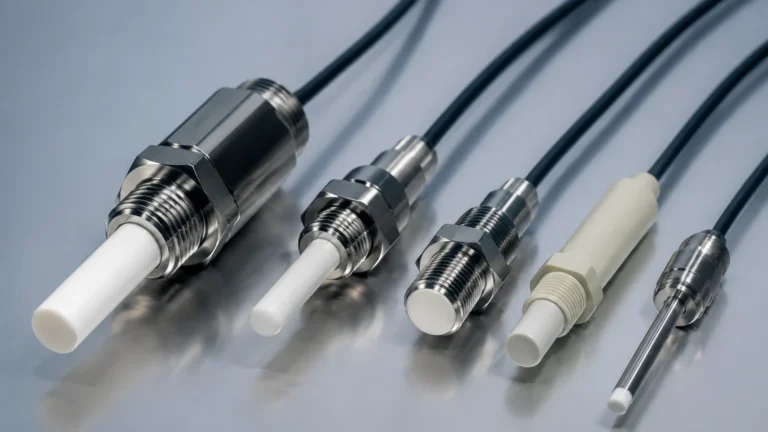
1. Measuring (Glass) Electrode: This electrode features a specialized pH-sensitive glass membrane. When immersed in a solution, a hydrated layer forms on the outer surface of the glass. Hydrogen ions in the solution exchange with ions in the glass, creating a potential difference relative to the internal buffer solution of the electrode.
2. Reference Electrode: To measure the potential of the glass electrode, a stable reference point is required. The reference electrode provides a constant voltage, regardless of the solution's pH. It typically uses a silver/silver chloride (Ag/AgCl) system immersed in a potassium chloride (KCl) electrolyte.
3. The Junction: The reference electrode must maintain electrical contact with the process liquid through a porous junction (ceramic, Teflon, or wood). This allows a small amount of electrolyte to leak out, completing the electrical circuit.
Types of Industrial pH Instruments
Depending on the environment and the required data frequency, the instrument used to measure hydrogen ion activity in solutions can take several forms.
1. Industrial Process Transmitters
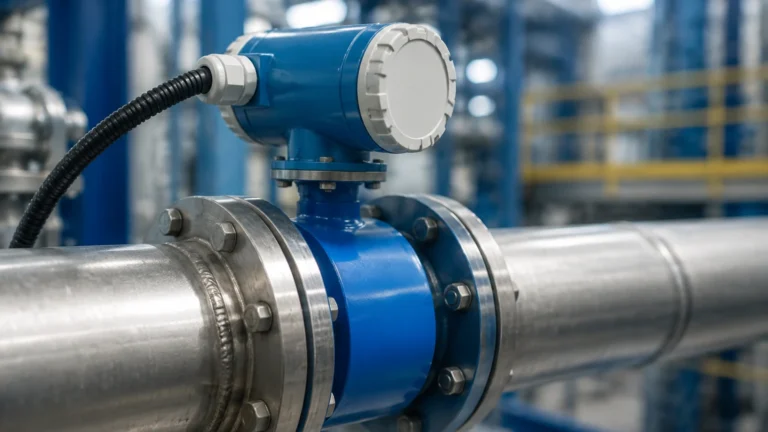
In B2B industrial settings, such as water treatment plants or chemical refineries, pH transmitters are permanently installed. These devices convert the high-impedance mV signal from the sensor into a robust 4-20mA, HART, or Modbus signal for integration into a PLC or DCS. They are often paired with industrial-grade level meters to automate chemical dosing.
2. Handheld and Portable Meters
Used for field spot-checks and environmental monitoring, these battery-operated devices are ruggedized for use outside the lab. While convenient, they require frequent manual calibration and are not suitable for continuous process control.
3. ISFET (Ion-Sensitive Field-Effect Transistor) Sensors
Unlike traditional glass electrodes, ISFET sensors use a solid-state semiconductor to measure ion activity. These are advantageous in industries where glass breakage is a safety risk, such as food and beverage production, though they can be more susceptible to electrical interference.
Selection Criteria for Industrial Applications
Choosing the right pH instrumentation requires an analysis of the process conditions. Use the following table as a baseline for selection:
| Application Requirement | Recommended Sensor Feature | Rationale |
| :— | :— | :— |
| High Temperature (>80°C) | High-temp glass & pressurized reference | Prevents electrolyte boiling and glass degradation. |
| Oily or Greasy Media | Flat surface glass & large junction | Minimizes fouling and makes cleaning easier. |
| High Pressure (>5 bar / 72 psi) | Pressure-compensated reference | Prevents process fluid from backing into the electrode. |
| Pure/Deionized Water | Liquid-earth / Grounding pin | Reduces static interference in low-conductivity liquids. |
| Hydrofluoric Acid (HF) | Antimony or HF-resistant glass | Standard glass dissolves rapidly in the presence of HF. |
Installation and Engineering Considerations
Proper installation is paramount for the longevity of the instrument used to measure hydrogen ion activity in solutions. Unlike non-contact radar level meters, pH sensors are wetted instruments that interact chemically with the process.
Mounting Positions
* Submersion Mounting: Used in open tanks or basins. The sensor is mounted at the end of a pipe (immersion assembly). It is vital to ensure the sensor is deep enough to represent the bulk liquid but high enough to avoid sludge at the bottom.
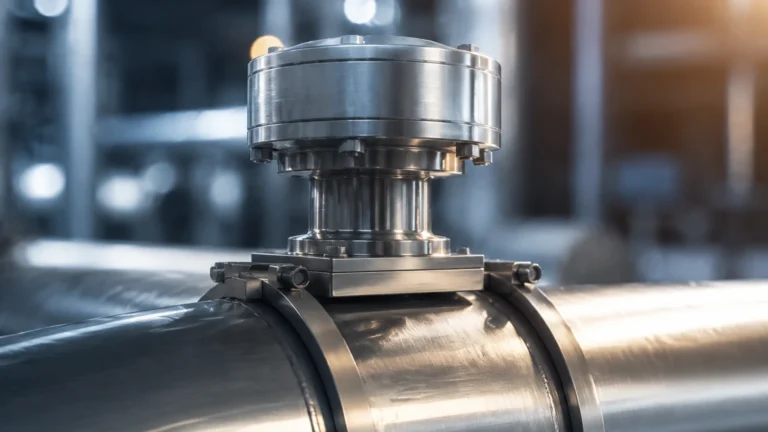
* In-Line (Flow-Through) Mounting: The sensor is installed directly into a pipe via a T-piece or a retractable housing. Retractable housings allow the sensor to be removed for cleaning and calibration without shutting down the process line.
Orientation
Standard glass electrodes should never be installed horizontally or upside down. They must be mounted at least 15° above the horizontal plane to ensure the internal electrolyte remains in contact with the glass membrane and that air bubbles do not get trapped inside the electrode tip.
Distance to Level Instrumentation
In chemical dosing tanks, pH sensors should be placed far enough from the chemical inlet to allow for proper mixing, but close enough to provide a timely feedback loop. When used alongside Main Page ultrasonic or radar level sensors, ensure that the pH mounting hardware does not interfere with the level meter's signal beam.
Maintenance, Calibration, and Troubleshooting
Unlike many physical sensors, pH electrodes are "consumables" with a finite lifespan, typically 6 to 18 months in industrial use.
Calibration Protocols
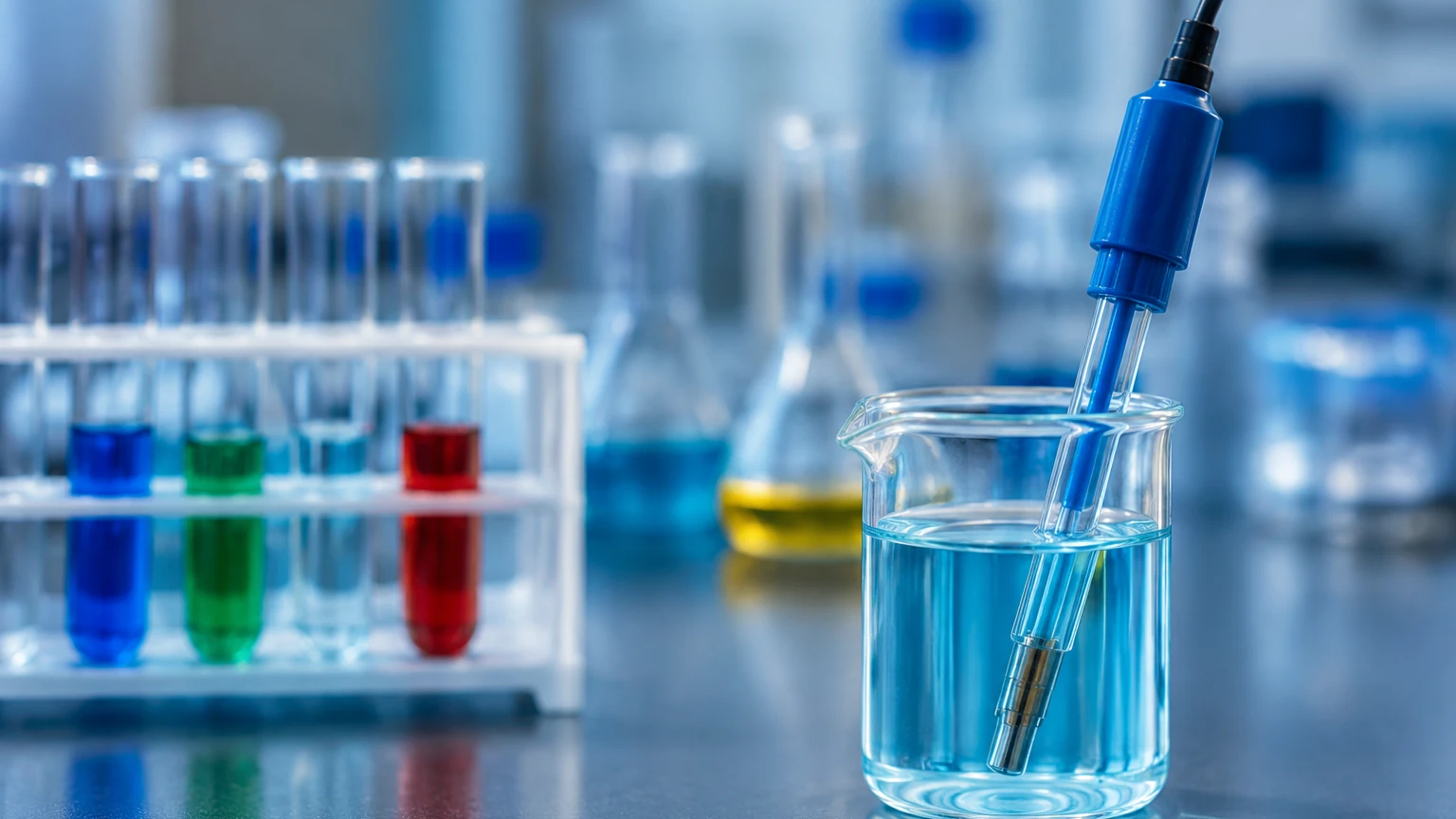
Calibration must be performed regularly using standard buffer solutions (usually pH 4.0, 7.0, and 10.0).
1. Slope: This indicates the efficiency of the electrode. A new electrode should have a slope between 95% and 102%. If the slope drops below 85%, the electrode should be replaced.
2. Zero Point (Offset): This is the mV reading at pH 7.0. Ideally, this should be 0 mV. An offset greater than ±30 mV suggests contamination or aging of the reference electrode.
Cleaning Procedures
Fouling is the most common cause of measurement drift.
* Inorganic Scale: Clean with 5% Hydrochloric acid (HCl).
* Oils and Grease: Use a mild detergent or isopropyl alcohol.
* Proteins: Use a mixture of HCl and pepsin.
Limitations of pH Measurement Technology
Engineers must be aware of the inherent limitations of the instrument used to measure hydrogen ion activity in solutions:
1. Temperature Sensitivity: As shown in the Nernst equation, the millivolt output of the electrode changes with temperature. Automatic Temperature Compensation (ATC) is mandatory for any process with temperature fluctuations exceeding 5°C.
2. Sodium Error: At very high pH levels (pH >12), the electrode may respond to sodium ions ($Na^+$) instead of hydrogen ions, leading to a falsely low pH reading. Specialized "low sodium error" glass is required for these ranges.
3. High Impedance: The signal from a pH glass electrode is extremely weak (high impedance). This means the cable between the sensor and the transmitter must be high-quality, shielded, and kept dry. Moisture in the connector will cause the signal to drift or fail entirely.
The Role of pH Measurement in Industrial Automation
pH measurement rarely exists in isolation. In a modern B2B environment, it is part of a comprehensive automation strategy. For instance, in a wastewater neutralization tank, a Main Page hydrostatic level transmitter monitors the volume of the tank, while the pH meter controls the speed of the acid or caustic dosing pumps.
By integrating these data points, facilities can achieve:
* Reduced Chemical Consumption: Precise dosing based on real-time hydrogen ion activity.
* Asset Protection: Preventing acidic corrosion in downstream piping and pumps.
* Environmental Compliance: Automated logging of discharge pH for regulatory reporting.
Frequently Asked Questions (FAQ)
Q: How often should I calibrate my industrial pH sensor?
A: This depends on the process. In stable water treatment applications, once a month may suffice. In harsh chemical processes with high fouling, weekly or even daily calibration may be necessary.
Q: Can I use a pH sensor to measure the concentration of an acid?
A: Only indirectly. pH measures activity (ion intensity), not total acidity (concentration). For high concentrations of acids (e.g., 98% Sulfuric Acid), conductivity or refractive index sensors are more appropriate.
Q: Why is my pH reading drifting even after calibration?
A: The most common causes are a clogged reference junction, a ground loop in the electrical system, or significant temperature swings without a functioning ATC (Automatic Temperature Compensation) probe.
Q: What is the difference between a combination electrode and a separate electrode pair?
A: A combination electrode houses both the measuring and reference elements in a single body, which is the standard for most modern industrial applications due to its compact size and ease of installation. Separate pairs are used only in niche laboratory or highly specialized research settings.
For more information on integrating liquid analysis with industrial level measurement solutions, visit our Main Page to explore our full range of process instrumentation.
Download Instrument Used to Measure Hydrogen Ion Activity in Solutions as a PDF