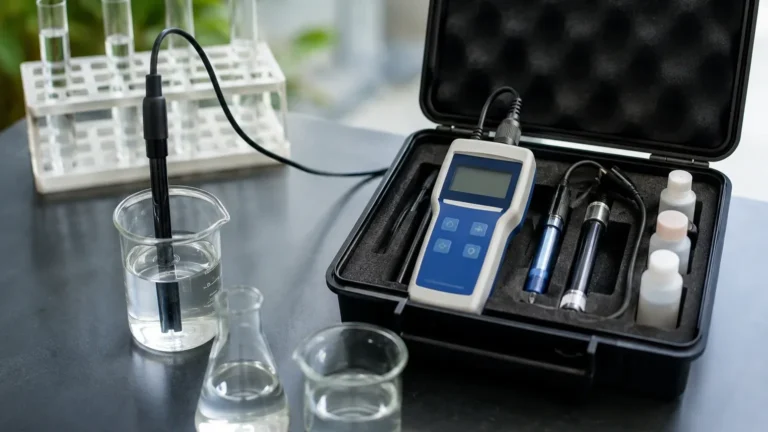
Capital Controls Chlorine Analyzer
Capital Controls Chlorine Analyzer
In industrial water treatment and process automation, the precise measurement of residual chlorine is a critical requirement for disinfection, biofouling control, and regulatory compliance. The Capital Controls chlorine analyzer, a legacy name now integrated into broader water technology portfolios such as De Nora, represents a standard in amperometric and colorimetric measurement. For engineers and facility managers, selecting and maintaining these instruments requires a deep understanding of electrochemical principles, hydraulic requirements, and the integration of these sensors into larger process control loops.
Effective chlorine management is not an isolated task; it involves a synergy between analytical measurement and chemical inventory management. While the analyzer provides the "quality" data, industrial level instruments ensure the "quantity" of disinfectants remains available. For comprehensive details on the hardware used to monitor chemical storage tanks, engineers often refer to the Main Page of specialized instrumentation providers to coordinate their analytical and level measurement strategies.
Measurement Principles: Amperometric vs. Colorimetric
Before selecting a Capital Controls chlorine analyzer, it is essential to understand the two primary methodologies used for detecting free or total residual chlorine.
Amperometric Measurement
Most Capital Controls systems utilize the amperometric principle. This is an electrochemical technique where the concentration of chlorine is determined by measuring the current generated during a redox reaction at a sensing electrode.
In a typical cell, a gold cathode and a copper anode (or similar noble metal combinations) are immersed in the sample stream. Chlorine molecules diffuse across a membrane or interact directly with the electrodes, causing a reduction reaction. The resulting electrical current is directly proportional to the concentration of hypochlorous acid (HOCl) or total chlorine in the water.
* Advantages: Continuous real-time measurement, no reagents required for many models, and fast response times.
* Limitations: Highly dependent on pH and temperature; requires stable flow rates.
Colorimetric (DPD) Measurement
Colorimetric analyzers use the DPD (N,N-diethyl-p-phenylenediamine) method. The instrument automatically mixes a sample of water with a reagent that turns pink in the presence of chlorine. A photometer then measures the intensity of the color to determine the concentration.
* Advantages: Highly accurate at low concentrations and less sensitive to changes in sample pH or temperature.
* Limitations: Requires ongoing reagent replacement and generates a small waste stream of chemically treated water.
Technical Evaluation Criteria
When specifying a chlorine analyzer for a B2B application, several technical parameters must be verified against the project’s specific water chemistry.
1. Measurement Range: Most industrial units cover 0–5 mg/L, 0–10 mg/L, or 0–20 mg/L. For wastewater applications, a higher range may be necessary, whereas drinking water applications require high resolution at the 0.1 mg/L level.
2. pH Compensation: Chlorine speciation (the ratio of HOCl to OCl-) is pH-dependent. If the process pH fluctuates above 7.5, an analyzer with an integrated pH sensor for software-based compensation or a CO2/acid buffering system is required to maintain accuracy.
3. Sample Temperature: Standard operating ranges typically span 0°C to 50°C. Automatic temperature compensation (ATC) is a mandatory feature for outdoor installations or processes with variable thermal loads.
4. Output and Communication: Modern units should provide 4-20mA analog outputs and digital protocols like Modbus RS485 or Profibus for integration into SCADA systems.
Selection Table for Chlorine Analyzers
The following table provides a general guideline for choosing an analyzer based on the application environment and operational priorities.
| Feature | Amperometric (Membrane) | Amperometric (Bare Electrode) | Colorimetric (DPD) |
| :— | :— | :— | :— |
| Primary Application | Clean Water / Cooling Towers | Wastewater / High Fouling | Laboratory / Potable Water |
| Reagent Use | None | Optional (Buffer) | Required |
| Response Time | < 60 Seconds | < 30 Seconds | 2–5 Minutes (Batch) |
| Maintenance Frequency | Monthly (Membrane check) | Weekly (Electrode cleaning) | Monthly (Reagent refill) |
| pH Sensitivity | High | Moderate | Low |
| Typical Accuracy | ± 5% of reading | ± 2% of reading | ± 2% of reading |
Installation and Engineering Considerations
A Capital Controls chlorine analyzer is only as accurate as its installation. Proper hydraulic design is the most common failure point in industrial deployments.
Sample Delivery
The sample must be representative of the process. The intake point should be located downstream of the chemical injection point, allowing sufficient mixing time (usually 10 to 30 pipe diameters). The sample line should be as short as possible to minimize lag time, typically using 1/4" or 6mm tubing to maintain a high velocity and prevent biofouling within the line.
Flow and Pressure Control
Amperometric cells require a constant flow rate to maintain a stable diffusion layer at the electrode. Most analyzers include a "constant head" flow cell or a pressure regulator to ensure that fluctuations in the main process line do not affect the sensor reading. The typical required flow rate is between 250 mL/min and 500 mL/min.
Drainage
Since these analyzers usually operate on a flow-through basis, a gravity drain must be available. For colorimetric units, the waste stream contains DPD reagents and must be disposed of in accordance with local environmental regulations, often requiring it to be routed back to the headworks of a treatment plant.

Integrating Chlorine Monitoring with Level Measurement
In a complete industrial automation framework, the chlorine analyzer acts as the feedback mechanism for a dosing pump. However, the system is incomplete without monitoring the chemical feedstock. If a chlorine gas cylinder or a sodium hypochlorite tank runs dry, the analyzer will report a low chlorine alarm, but by then, the process may already be compromised.
This is where the integration of level measurement instruments becomes vital. Technologies such as ultrasonic level sensors or hydrostatic transmitters are used to monitor the volume of disinfectants in storage. By cross-referencing the chlorine residual data from the analyzer with the consumption rate measured by level sensors, operators can detect dosing pump inefficiencies or leaks. For engineers designing these integrated systems, exploring the various sensor types available on the Main Page allows for a more robust fail-safe design, ensuring that chemical levels are always sufficient to meet the demand signaled by the chlorine analyzer.
Common Risks and Maintenance Limitations
Despite their reliability, Capital Controls chlorine analyzers face specific operational challenges that must be managed through a preventative maintenance program.
* Biofouling: In cooling water or wastewater applications, biological growth can coat the electrodes or membranes, leading to sluggish response times and false low readings. Regular cleaning with a dilute acid solution or specialized surfactants is necessary.
* Interfering Substances: Amperometric sensors can be sensitive to other oxidants such as bromine, ozone, or chlorine dioxide. If these chemicals are present in the sample, they may be reported as "chlorine," leading to over-estimation of the residual.
* Calibration Drift: Sensors naturally drift over time due to electrode polarization or membrane aging. Weekly or bi-weekly calibration against a handheld DPD photometer is a standard industry best practice to ensure the online analyzer remains within its specified accuracy limits.
* Air Bubbles: If the sample stream experiences entrained air, bubbles can settle on the sensor surface, breaking the electrical circuit in amperometric cells and causing erratic readings.
Frequently Asked Questions (FAQs)
Q: How often should the electrodes in an amperometric analyzer be replaced?
A: In most standard applications, the gold cathode is permanent, while the copper anode may require replacement every 2 to 5 years depending on the water chemistry and cleaning frequency.
Q: Can a chlorine analyzer measure both Free and Total chlorine simultaneously?
A: Most single-channel analyzers measure one or the other. To measure both, a dual-channel controller or two separate sensor heads are required. Total chlorine measurement usually requires the addition of a potassium iodide reagent or a specific total chlorine membrane.
Q: What is the maximum distance the analyzer can be from the sample point?
A: While there is no hard limit, distances over 15 meters (50 feet) are discouraged due to the significant time lag it introduces into the control loop. If long distances are unavoidable, a fast-loop bypass system should be installed to ensure fresh sample reaches the analyzer quickly.
Q: Does the analyzer require a dedicated power supply?
A: Most industrial analyzers operate on 100-240 VAC or 24 VDC. It is highly recommended to use a surge protector or an uninterruptible power supply (UPS) to prevent data loss or board damage during power fluctuations.
By adhering to these selection and installation guidelines, industrial operators can ensure that their Capital Controls chlorine analyzer provides the accurate, reliable data necessary for safe and efficient water treatment. Combining this analytical precision with reliable level monitoring for chemical inventory creates a comprehensive solution for modern process control.