Relationship of Density and Pressure
Relationship of Density and Pressure
In the field of industrial process control, understanding the relationship of density and pressure is fundamental to achieving accurate level measurements. For engineers and technicians, these two physical properties are inextricably linked, particularly when utilizing hydrostatic measurement techniques. Whether managing a water treatment facility, a chemical processing plant, or an oil storage terminal, the ability to interpret how fluid density influences pressure readings—and vice versa—is critical for operational safety and inventory precision.
This article explores the scientific principles governing this relationship, its practical implications in level measurement, and the criteria for selecting the appropriate instrumentation from the Main Page of industrial solution providers.
Fundamental Measurement Principles
To understand the relationship of density and pressure, one must first look at the hydrostatic principle. Hydrostatic pressure is the pressure exerted by a fluid at equilibrium at a given point within the fluid, due to the force of gravity.
Pascal’s Law and the Hydrostatic Equation
The core of this relationship is expressed in the standard hydrostatic formula:
P = ρ · g · h
Where:
* P is the hydrostatic pressure (measured in Pascals, Pa, or bar).
* ρ (rho) is the density of the liquid (measured in kg/m³).
* g is the acceleration due to gravity (approximately 9.81 m/s²).
* h is the height of the liquid column (measured in meters, m).
From this equation, it is evident that pressure is directly proportional to both the height of the liquid and its density. If the height remains constant but the density increases, the pressure at the bottom of the vessel will increase proportionally. Conversely, if the density decreases (perhaps due to an increase in temperature), the pressure will drop even if the physical level of the liquid remains unchanged.
Density Defined
Density is the mass per unit volume of a substance. In liquids, density is relatively stable compared to gases, but it is not immutable. It is influenced primarily by temperature and, to a lesser extent, by chemical composition and concentration. In industrial applications, a change in the relationship of density and pressure often stems from thermal expansion, where a liquid becomes less dense as it heats up.
The Relationship of Density and Pressure in Practice
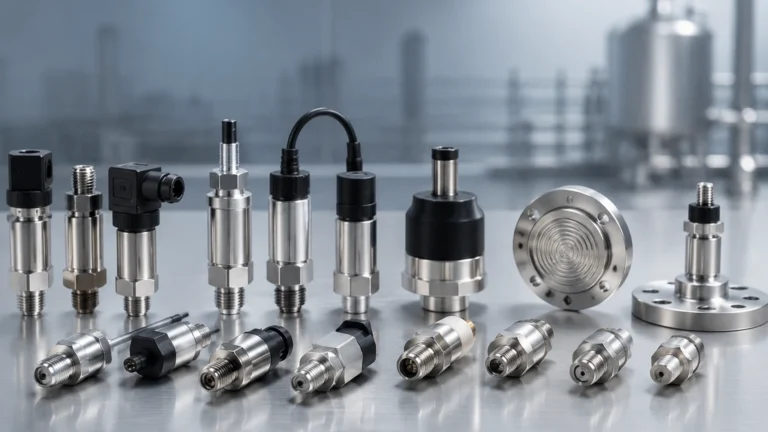
In a practical industrial environment, pressure sensors (hydrostatic level transmitters) do not actually "see" the liquid level; they measure the force exerted by the liquid's weight. Therefore, the relationship of density and pressure becomes the primary variable that must be managed during system calibration.
Impact of Temperature on Density
As temperature increases, most liquids expand, causing their density to decrease. For example, water at 20°C has a density of approximately 998 kg/m³, but at 80°C, its density drops to about 971 kg/m³. If a pressure-based level transmitter is calibrated for 20°C water but the process operates at 80°C, the sensor will report a lower pressure, leading the control system to indicate a level lower than the actual physical height of the liquid.
Concentration and Multi-Component Fluids
In the chemical industry, the relationship of density and pressure is often used to monitor the concentration of solutions. In a mixing tank where a salt or acid is added to water, the density of the resulting solution increases. By measuring the pressure at a fixed height, engineers can infer the density and, consequently, the concentration of the mixture. This requires precise instrumentation that can distinguish minute pressure changes.
Selection Criteria for Level Measurement Technologies
Choosing the right instrument requires an understanding of how sensitive the process is to density fluctuations. The following table compares common technologies based on their interaction with the relationship of density and pressure.
Technology Comparison Table
| Technology | Measurement Principle | Sensitivity to Density Changes | Ideal Application |
| :— | :— | :— | :— |
| Hydrostatic Transmitter | Pressure at bottom | High: Requires constant density for accuracy. | Constant temperature water tanks, fuel storage. |
| Radar (Non-Contact) | Time-of-flight (Microwaves) | Zero: Independent of density/pressure. | Corrosive chemicals, high-temp reactors, foaming liquids. |
| Ultrasonic Sensor | Sound wave reflection | Zero: Independent of density. | Open sumps, wastewater, solids. |
| Differential Pressure (DP) | Pressure drop across two points | High: Used to calculate density or level. | Pressurized boilers, cryogenic tanks. |
| Magnetic Level Gauge | Buoyancy of a float | High: Float must be weighted for specific density. | Visual monitoring of oil/water interfaces. |
| Radar (Guided Wave) | Microwave along a probe | Zero: Unaffected by density shifts. | Small vessels with internal obstructions. |
Installation Considerations and Best Practices
When the relationship of density and pressure is the basis for measurement, installation precision is paramount. Even the highest quality sensor will provide inaccurate data if the physical installation fails to account for environmental variables.
1. Mounting Position: For hydrostatic sensors, the transmitter should be mounted at the lowest possible point of the tank. Any liquid below the sensor diaphragm is "invisible" to the measurement.
2. Stilling Wells: In tanks with high turbulence or agitation, density can become inconsistent due to aeration (bubbles). A stilling well helps provide a stable column of liquid for the pressure sensor to measure.
3. Temperature Compensation: High-end hydrostatic transmitters often include integrated temperature sensors. By monitoring the temperature, the system can use a look-up table or algorithm to adjust the density value in real-time, maintaining level accuracy despite thermal shifts.
4. Venting: In atmospheric tanks, the sensor must be vented to the atmosphere to cancel out the effect of barometric pressure changes. If the tank is pressurized, a differential pressure (DP) transmitter must be used to subtract the headspace pressure from the total bottom pressure.

Limitations and Common Risks
While leveraging the relationship of density and pressure is cost-effective, it has inherent limitations that engineers must recognize:
* Layering/Stratification: In large crude oil tanks or chemical separators, liquids of different densities may layer. A single pressure sensor at the bottom will measure the total weight of all layers but cannot distinguish the interface level between them.
* Sedimentation: If a liquid contains suspended solids that settle over time, the density near the bottom of the tank may increase significantly, leading to an overestimation of the liquid level.
* Gas Solubility: In high-pressure systems, gases may dissolve into the liquid, changing its density. If the pressure drops suddenly, these gases may "flash" or bubble out, causing rapid density fluctuations and unstable pressure readings.
Frequently Asked Questions (FAQs)
1. Can I use a pressure transmitter if the density of my liquid changes frequently?
Yes, but it requires compensation. You can either use a secondary pressure sensor at a fixed higher point to calculate the density in real-time (Density = ΔP / (g · Δh)) or switch to a density-independent technology like radar.
2. How does the relationship of density and pressure affect gas level measurement?
In gases, density is highly dependent on pressure (Boyle's Law). Unlike liquids, gases are compressible. Therefore, measuring the "level" of a gas is usually expressed as mass or volume at standard conditions, requiring both pressure and temperature monitoring.
3. Why is my hydrostatic level reading different from my manual dip tape measurement?
This is often due to density error. If the manual measurement is higher than the sensor reading, the actual density of the liquid is likely lower than the density used for sensor calibration (e.g., the liquid is warmer than expected).
4. Is the relationship of density and pressure relevant for solids?
To a degree. For powders and granulates in silos, the "bulk density" can change based on compaction at the bottom of the silo. However, pressure-based level measurement is rarely used for solids due to the uneven distribution of force (bridging and rat-holing).
Conclusion
The relationship of density and pressure is a cornerstone of industrial fluid mechanics. For many applications, hydrostatic pressure provides a reliable, low-maintenance, and cost-effective method for monitoring tank levels. However, the accuracy of this method is entirely dependent on the stability or compensation of the fluid's density.
When designing a system, engineers must evaluate whether the process conditions—such as temperature swings or chemical variations—will shift the density enough to compromise safety or quality. In cases where density is too volatile, moving toward non-contact technologies available on the Main Page of specialized manufacturers is the recommended path forward. By matching the right measurement technology to the physical realities of the fluid, industrial operators can ensure long-term precision and reliability in their automation processes.