Chemical Ender
Chemical Ender
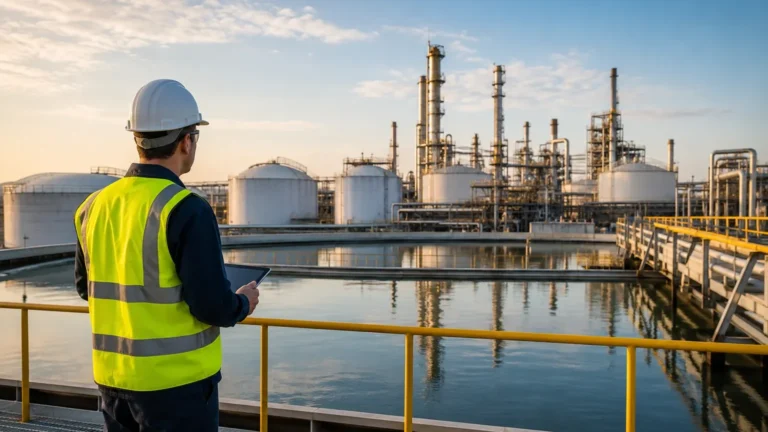
In the complex landscape of industrial chemical production, the term "chemical ender" refers to the terminal stages of a process where reactions are finalized, products are stabilized, or waste streams are prepared for disposal or recycling. These end-stage processes are critical because they represent the final point of quality control and the primary interface for environmental safety. Level measurement within these "ender" vessels—whether they are neutralization tanks, final product storage units, or discharge basins—requires a high degree of precision and chemical compatibility to prevent overfills, ensure accurate inventory, and maintain process integrity.
Accurate level monitoring at the chemical ender stage is not merely a matter of volume tracking; it is a fundamental safety requirement. Many final-stage chemicals are highly concentrated, corrosive, or volatile. Failure to monitor levels accurately can lead to environmental contamination, hazardous spills, and significant financial losses. This guide explores the technical principles, selection criteria, and installation requirements for level instrumentation used in chemical end-stage applications.
Measurement Principles for End-Stage Chemical Vessels
Before selecting a device for a chemical ender application, it is essential to understand the underlying physics of the most common measurement technologies. Each method interacts differently with the chemical properties of the medium.
1. Radar Level Measurement (Non-Contact)
Non-contact radar, particularly high-frequency 80GHz radar, is often the preferred choice for chemical end-stage processing. The principle is based on the Time-of-Flight (ToF) of electromagnetic pulses. The sensor emits a microwave signal that travels to the surface of the chemical, reflects, and returns to the sensor.
* Advantages: Because the sensor does not touch the medium, it is immune to the corrosive effects of acids, bases, and solvents. It is also unaffected by changes in pressure, temperature, or the presence of vapors and dust.
* Beam Angle: Modern 80GHz radar units offer a very narrow beam angle (often as low as 3 degrees), which allows them to be installed in vessels with internal obstructions like agitators or heating coils without interference.
2. Ultrasonic Level Measurement
Ultrasonic sensors function by emitting high-frequency sound waves. The time taken for the sound wave to reflect off the liquid surface and return to the transducer determines the distance.
* Application: These are cost-effective solutions for open-air chemical ender basins or atmospheric tanks.
* Limitations: Ultrasonic waves are sensitive to air temperature gradients, heavy foam, and dense vapors, which can attenuate the signal. Therefore, they are less suitable for pressurized chemical reactors or vessels containing volatile organic compounds (VOCs).
3. Hydrostatic Pressure Measurement
This principle measures the weight of the liquid column above a sensor placed at the bottom of the tank. The pressure is directly proportional to the height of the liquid and its specific gravity.
* Chemical Resistance: For chemical ender applications, the diaphragm of the hydrostatic transmitter must be made of chemically inert materials such as Hastelloy C, Tantalum, or Ceramic to withstand aggressive reagents.
* Configuration: This is a contact-based method, making it highly reliable for vented tanks where surface turbulence or foam might interfere with top-down radar or ultrasonic signals.
4. Magnetic Level Gauges
Magnetic gauges utilize a float containing a magnet that moves with the liquid level inside a bypass chamber. This magnet flips external flags or interacts with a reed-switch transmitter.
* Visibility: They provide a clear, mechanical visual indication of the level, which is vital for manual safety checks at the end of a process line. They are often used as a redundant backup to electronic sensors on the Main Page of a facility's control strategy.
Selection Criteria for Chemical Ender Applications
Choosing the right instrument for the final stage of chemical handling requires a deep dive into the process conditions. Engineers must evaluate the following factors:
Chemical Compatibility
The "ender" stage often involves the most aggressive chemical concentrations. All wetted parts (the parts of the sensor that touch the chemical or its vapors) must be compatible with the medium. Common materials include:
* PTFE/PFA: Excellent for strong acids and bases.
* 316L Stainless Steel: Suitable for mild chemicals and water treatment.
* Ceramic: Highly resistant to abrasion and chemical attack in hydrostatic sensors.
Process Conditions
* Temperature: If the chemical ender involves a cooling or stabilization phase, the sensor must handle the maximum process temperature, which can range from -40°C to over 200°C (-40°F to 392°F).
* Pressure: Vacuum conditions or high-pressure stabilization require sensors with appropriate flange ratings and seal designs.
* Surface State: If the final reaction produces foam or turbulence, non-contact radar or stilling-well-equipped sensors are necessary.
Accuracy and Repeatability
In the final stage of production, even a 1% error can result in significant product loss or incorrect dosing of neutralization agents. High-precision radar sensors typically offer accuracy within ±2mm (0.08 in).
Practical Selection Table
| Technology | Chemical Compatibility | Best For | Limitations | Typical Accuracy |
| :— | :— | :— | :— | :— |
| 80GHz Radar | Excellent (PTFE Lens) | Corrosive tanks, narrow vessels | High initial cost | ±2 mm |
| Ultrasonic | Good (Plastic bodies) | Open basins, water-based waste | Affected by foam/vapor | ±0.25% of range |
| Hydrostatic | Variable (Depends on diaphragm) | Vented tanks, deep sumps | Density changes affect reading | ±0.1% to 0.5% |
| Magnetic Gauge | Excellent (Alloy chambers) | Visual monitoring, high pressure | Moving parts can stick | ±5 mm to 10 mm |
Installation Considerations for Chemical Ender Vessels
Proper installation is as important as selecting the right technology. For chemical ender applications, consider the following technical guidelines:
1. Nozzle Height and Diameter: For radar and ultrasonic sensors, the nozzle should be as short as possible to prevent the signal from reflecting off the nozzle walls. If a long nozzle is unavoidable, a radar with a narrow beam angle must be used.
2. Obstruction Avoidance: Ensure the sensor’s signal path is clear of ladders, agitator blades, and spray balls. In the chemical ender stage, agitators are common to ensure product homogeneity; radar sensors with "false signal suppression" software can ignore these fixed reflections.
3. Stilling Wells: If the liquid surface is extremely turbulent or covered in heavy foam, installing the sensor inside a stilling well (a vertical pipe) can provide a calm surface for accurate measurement. This is common in final-stage neutralization pits.
4. Venting: For hydrostatic sensors, ensure the atmospheric vent in the cable is not blocked, as this will cause significant measurement errors during barometric pressure changes.
Common Challenges and Limitations
Foam Interference
Foam is a frequent challenge in chemical ender vessels, especially during neutralization or when surfactants are present.
* Radar: High-frequency radar can often penetrate light foam, but dense, thick foam may absorb the signal.
* Ultrasonic: Generally performs poorly in foamy conditions as the sound waves are scattered.
* Solution: In heavy foam applications, hydrostatic transmitters or guided wave radar (GWR) are often more reliable.
Vapor and Condensation
Chemical reactions at the end of a process line often release vapors that can condense on the sensor face.
* Radar: 80GHz radar with a drip-off antenna design (curved PTFE face) allows condensation to roll off, maintaining signal integrity.
* Ultrasonic: Condensation on the transducer face can create a "ringing" effect that prevents the sensor from detecting the surface.
Build-up and Scaling
Certain chemicals may crystallize or scale at the end of the process as they cool. Non-contact sensors are superior here, as they do not provide a substrate for build-up within the medium. If using a contact-based probe, regular maintenance and cleaning schedules must be established.
Frequently Asked Questions (FAQ)
Q: Can I use a single level sensor for different chemicals in a multi-purpose chemical ender tank?
A: If using radar or ultrasonic, yes, provided the wetted materials are compatible with all chemicals used. If using hydrostatic pressure, you must recalibrate the sensor for each chemical's specific gravity to maintain accuracy.
Q: What is the "dead zone" in chemical level measurement?
A: The dead zone (or blocking distance) is the area directly below the sensor where it cannot take a measurement. For a chemical ender vessel that may be filled to the brim, it is critical to choose a sensor with a small dead zone or mount it on a nozzle to lift it above the maximum fill level.
Q: How do I handle level measurement in a vacuum-rated chemical ender?
A: Radar sensors with specialized hermetic seals (such as glass-to-metal seals) are required for vacuum applications. Hydrostatic sensors must be of the absolute pressure type or be referenced to the tank's internal vapor space using a differential pressure setup.
Q: Are wireless level sensors suitable for chemical ender applications?
A: Yes, wireless transmitters are increasingly used in remote chemical storage areas or large-scale waste treatment basins where running cable is cost-prohibitive. However, ensure the battery life and signal update rate meet the safety requirements of the process.
Conclusion
Managing the "chemical ender" stage of production requires a robust approach to level instrumentation. By understanding the principles of radar, ultrasonic, and hydrostatic measurement, and carefully matching material compatibility to the process media, engineers can ensure high levels of safety and efficiency. For those seeking specific product specifications and application support for these critical industrial components, visiting the Main Page of an established manufacturer is the recommended next step to review available technologies and customization options.